Valley Haven
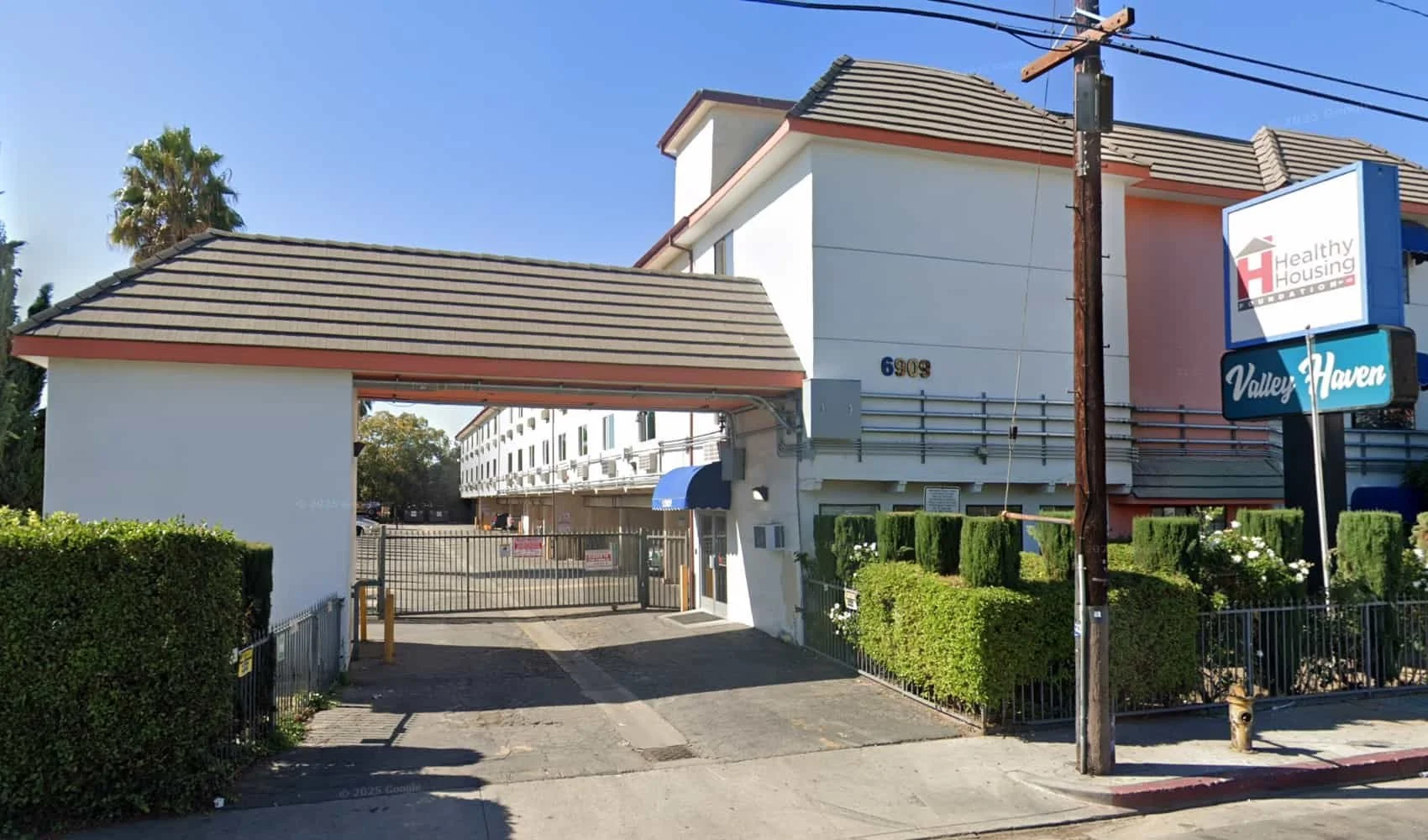
Image source: Google Maps Street View, used here for illustrative purposes.
On Sepulveda Boulevard in Van Nuys, a familiar roadside motel has changed its role. The former Travelodge Van Nuys at 6909 Sepulveda Blvd, Van Nuys, CA 91405 now operates as Valley Haven, a low-income housing site connected to the Healthy Housing Foundation (HHF). Instead of short hotel stays, the building is used for single-room housing and interim shelter for people with very low income and people exiting homelessness.
History: from Travelodge to Valley Haven
For many years this address appeared in hotel guides as Travelodge Van Nuys (also listed as Van Nuys / Sepulveda Travelodge) with a typical small-motel format and the same phone number. It worked like many other budget hotels along major roads in the San Fernando Valley.
In 2020, AIDS Healthcare Foundation (AHF), through its Healthy Housing Foundation, bought the 74-room hotel. The building was renamed Valley Haven Hotel and converted into housing for homeless and extremely low-income residents. AHF held an official opening in January 2020 and presented Valley Haven as new housing stock for greater Los Angeles.
During the early COVID-19 period, AHF also offered Valley Haven as ready-to-use space that the city or county could use to house homeless individuals or isolate people during the pandemic. A former roadside motel became part of the emergency response system.
Location and Surroundings
Valley Haven is located on Sepulveda Blvd in Van Nuys, in the heart of the San Fernando Valley. Nearby are:
the I-405 freeway;
bus lines running along Sepulveda;
small apartment buildings, single-family homes, shops and everyday services.
For residents, this means that grocery stores, low-cost cafes, laundromats and other basic services are within walking distance or a short bus ride away. For people who have lived without stable housing, the combination of a fixed address and accessible neighborhood services can be as important as the room itself.
Housing Model and Amenities
On the Healthy Housing Foundation website, Valley Haven is described as:
Housing type: permanent
Property type: SRO (Single Room Occupancy)
Bathrooms: shared
Kitchen: shared
Pets: not allowed
baseline rent for part of the stock starting around $500 per month (figures may change over time)
In practice, the building is made up of small rooms converted from former hotel units. Different sources mention both shared bathrooms and rooms with private bathrooms, which likely reflects a mix of layouts and program changes over time.
Commonly listed amenities include:
renovated rooms;
elevator access;
on-site laundry;
staffed front desk and security.
It is important to note that Valley Haven is not a typical open-market apartment building. Some rooms function as permanent low-income housing, while others are used within city and county programs.
Part of the Healthy Housing Foundation Network
Valley Haven is one example of AHF’s strategy: buying older hotels and motels and quickly turning them into housing. This approach is usually faster and cheaper than building new affordable housing from the ground up.
Healthy Housing Foundation has already acquired and converted multiple hotels and residential buildings, creating hundreds of housing units. Valley Haven was one of the early properties in this line: 74 rooms moved from “roadside motel” status into housing for people who were homeless or living on extremely low incomes.
Programs and the Role of LAHSA
Valley Haven does not operate like a regular hotel or a standard apartment complex where anyone can walk in and rent a unit. In Los Angeles city documents, the building appears as Valley Haven Interim Housing and as a property leased to LAHSA (Los Angeles Homeless Services Authority) under an emergency shelter and interim housing program.
In practice this means:
rooms are assigned through the homeless-services system, not through the open rental market;
people usually move in by referral from outreach teams, shelters, hospitals or social-service agencies;
many residents stay there under interim housing rules, with the goal of moving on to more stable long-term housing.
On paper, Valley Haven is a permanent SRO building, but programmatically it is actively used as part of the city’s network of temporary and bridge housing.
Who Lives at Valley Haven
According to public descriptions and AHF materials, Valley Haven serves:
people exiting street homelessness or encampments;
residents with extremely low income who cannot access regular rentals;
people with chronic illnesses who need stable housing to keep up with treatment;
participants in emergency shelter and interim housing programs.
A person usually does not get a room here by calling the front desk. Instead, the typical path is through:
LAHSA and its access points and outreach teams;
hospitals and clinics that coordinate with housing programs;
nonprofit organizations and social workers who help with referrals.
Day-to-day Life and Support
The basic promise of Valley Haven is simple: a private room, a door that locks, access to a bathroom and kitchen, and a sense of safety thanks to staffing and security.
Most additional support — social work, mental-health care, help with documents and income — comes from external teams:
outreach workers;
mental-health professionals;
case managers;
staff from city and county programs.
The building becomes a stable point where services can reliably find people. This is very different from trying to locate someone each time in a different camp, park or parking lot.
In-room Medical Help During a Stay
Many residents at Valley Haven live with chronic conditions, mobility issues or anxiety around clinic visits. For them, traveling to urgent care or sitting in a crowded waiting room can be difficult.
Because Valley Haven is a fixed address with individual rooms and controlled entry, it is a practical place to arrange in-room medical visits from independent doctors and nurses who serve the Van Nuys area. These providers work separately from Valley Haven and HHF: they are not employed by the building and their services are not managed by the housing program.
If needed, a resident can:
contact an independent home-visit doctor or nurse;
schedule a visit to their room at Valley Haven;
receive a basic exam, symptom check and medical advice without leaving the property.
This option does not replace emergency care, but it can help people get timely medical attention, avoid unnecessary trips to urgent care for mild or moderate issues, and feel safer during their stay. Any such visit is arranged directly between the resident (or their social worker) and the medical provider, on standard medical terms.
Medical Care More Broadly
Beyond in-room visits, Valley Haven’s location on Sepulveda and its access to public transport make it easier to reach:
nearby primary-care clinics;
mental-health and substance-use programs;
hospital services in the wider San Fernando Valley.
In many homelessness-response models, buildings like Valley Haven become “anchors” where mobile nurses, doctors and behavioral-health teams can meet people regularly, instead of losing contact once someone moves their tent or car.
Why Valley Haven Matters for the City
Valley Haven is more than a renamed motel. It shows how an old hotel building can become part of the city’s response to homelessness and the shortage of affordable housing.
One 74-room motel cannot solve the crisis on its own. But each building like this:
adds dozens of housing units much faster than new construction;
gives people a stable base where they can recover and engage with services;
demonstrates how existing urban buildings can be reused to support the most vulnerable residents.
The story of Valley Haven is the story of how a familiar property on Sepulveda Blvd stopped being just a place for travelers to sleep for a night and became a small but real step toward more safe housing in Los Angeles.
Check Out Additional Options