
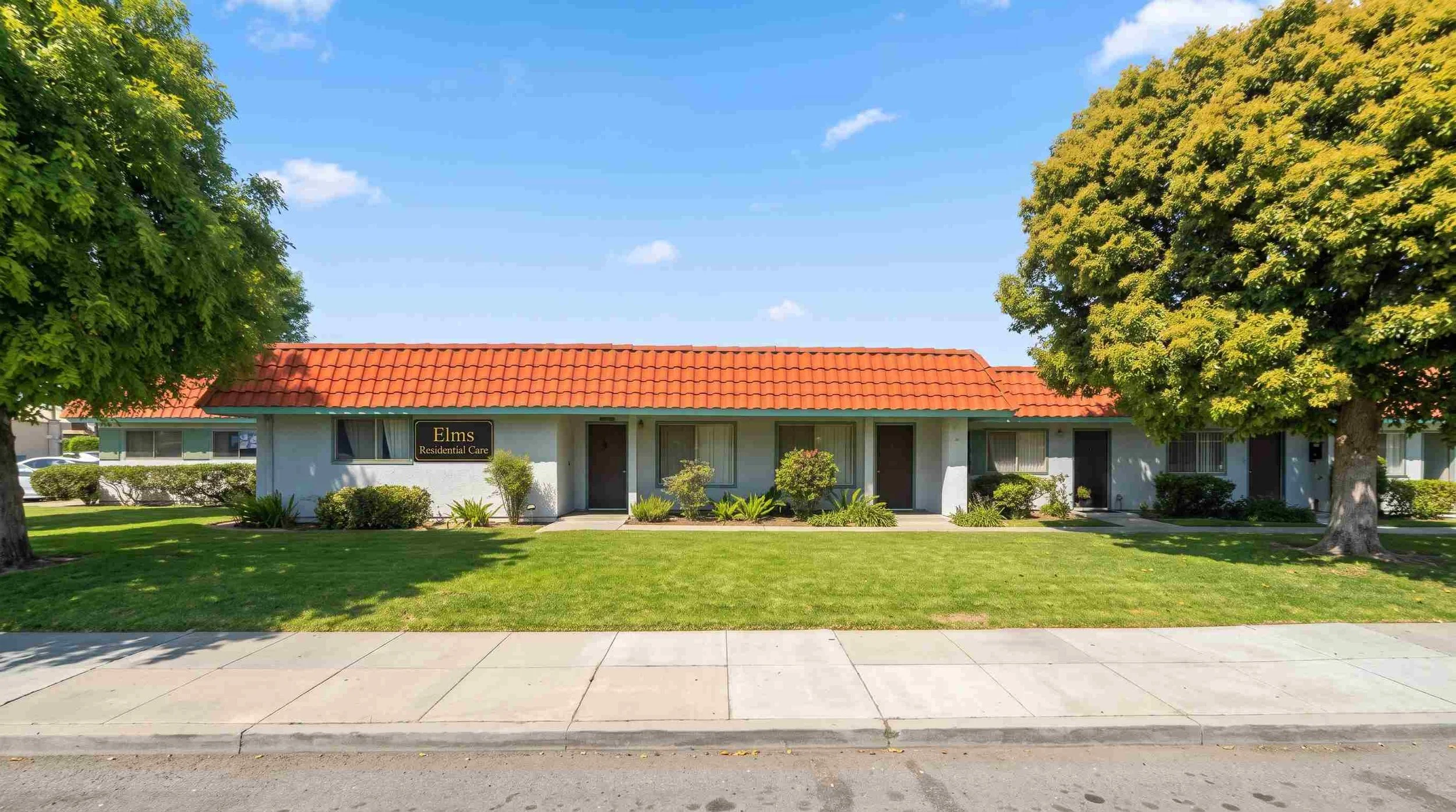
Elms Residential Care stands at 67 East Barnett Street in Ventura, CA 93001, in Ventura County, and it is one of the addresses families reach when they search for memory care in Ventura, CA. State licensing records list it under license number 561703573, with a licensed capacity of 54 residents, a status of licensed, and a license first issued on August 31, 1989.
That date is the detail worth pausing on. This home has held a license for more than thirty-five years, which puts it in a small group of California care homes with that much continuous history, and it changes what you should be reading before you tour.
What Does a License From 1989 Tell You?
It tells you there is a long paper trail, and that the paper trail is now your best research tool. A home licensed since 1989 has been through decades of state inspections, complaint investigations and renewals, and all of that sits in the facility file.
Ask for it in full rather than for a summary. Request the recent inspection reports and any substantiated complaints, and read them in order so you can see whether the same issue keeps reappearing or whether something was found once and fixed. A single old citation in thirty-five years means something very different from a pattern.
Longevity also tends to mean stable ownership, and here the licensing record lists Fe Lilia Higgins as both licensee and facility administrator. In a long-running home the administrator is usually the reason the place runs the way it does, so it is worth asking how long the current team has been in place and what has changed recently.
Does Elms Residential Care Provide Memory Care?
That is a question for the home, not for a directory. The state record shows this facility in the residential care category for the elderly without a separate memory care designation, so any dementia care it offers has to be confirmed in person.
In California, a care home that accepts residents with dementia has to meet specific requirements for staffing, training and the physical setting, including how exits and outdoor space are handled. Those are concrete things you can ask about: who is trained in dementia care, how many of them are on shift overnight, and what happens when a resident tries to leave.
Commercial listing sites often describe the same address as offering memory care, and sometimes they are right. They are not licensing records, though, so treat them as a prompt to ask rather than as an answer. The National Institute on Aging (2023) suggests asking directly whether a facility has a special unit for people with Alzheimer's disease or another dementia, and what services that unit provides.
What Does 54 Licensed Beds Mean Day to Day?
It places this home in assisted living territory rather than small board and care. The difference shows up in staffing patterns, in whether there is a real dining room, and in how much of the day has structure to it.
The National Institute on Aging (2023) draws the line clearly: board and care homes, also called residential care facilities or group homes, usually have 20 or fewer residents, while assisted living facilities range from as few as 25 residents to 100 or more. With 54 licensed beds, this home sits in the lower middle of that second group.
Scale cuts both ways, and the useful questions are about the quiet hours. Ask how many caregivers are awake and on the floor at three in the morning, not how many people the home employs. Ask to sit in the common room mid-afternoon, which is the hour that shows whether shared space is actually lived in.
How Does Medical Care Work in a Licensed Care Home?
Most of it comes from outside the building. A residential care facility for the elderly holds a housing and personal care license rather than a medical one, which means routine checkups, medication reviews and lab work stay with the resident's own doctor.
The National Institute on Aging describes this plainly for small residential homes: residents receive personal care and meals with staff available around the clock, and nursing and medical care are usually not provided on site. Larger assisted living homes add help with medications and 24-hour supervision, but the medical visits themselves still come from a physician.
In practice that leaves families with two options: drive to appointments, or arrange for the doctor to come to the resident. Clinicians who see patients where they live handle the second route, which also covers the LIC 602A form at move-in and the medication reviews that follow it.
What Is the Westside of Ventura Like for Visiting Family?
It is a flat, walkable part of town close to downtown Ventura and the coast. The address sits in the neighborhood locally known as the Avenue, on the city's Westside, inside the 93001 ZIP code and the Ventura Unified school district.
For visiting relatives that location is practical. Downtown Ventura, the beach and the pier are all a short drive away, which makes an afternoon outing simple to arrange, and street parking on the Westside is generally easier than in the downtown core.
Hospital access matters for the harder days. Community Memorial Hospital at 147 North Brent Street in Ventura runs the nearest full emergency department, roughly a ten-minute drive east across town, and that is the address most Westside addresses are routed to.
How Do Residents Get to Appointments?
Transport is usually the family's problem to solve, not the home's. Assisted living homes are not required to run medical transport, and the NIA's list of questions for a tour includes asking straight out how residents get to medical appointments.
Ask what the home actually does before assuming. Some arrange rides, some let a caregiver accompany a resident in a family car, and some simply hand the task back to relatives, which becomes a weekly commitment once dialysis or specialist follow-ups start.
MediZoom Transportation covers Ventura County and runs wheelchair-accessible vehicles with ramps and secured restraints, as well as ambulatory rides and hospital discharge transfers. For a resident who cannot transfer into a sedan, a service like MediZoom is often what makes a regular appointment schedule workable at all.
What to Ask Before You Sign
Visit twice, and make the second visit unannounced. The NIA recommends exactly that, along with turning up at a different time of day and stopping by at a mealtime to see the dining room in use and, if possible, to taste the food.
Bring a written list and use it in every home you see, so you are comparing the same things. How many care staff per resident, what training they have, how long the administrator and the heads of nursing and food service have been there, how often key staff turn over, whether a doctor checks on residents regularly, what the week's activities are, and whether there is a safe outdoor space.
Then read the contract slowly. Get the costs in writing with a clear list of what is included, ask which services carry extra charges, and find out what Medicare, Medicaid or a long-term care policy will and will not cover, because Medicare does not pay for assisted living.
Where to Go Next
If this home fits the geography but you are not sure it fits the care level, compare it against two or three others in Ventura County before deciding. A tour tells you more in forty minutes than a week of reading listings.
Families who are short on time, or who are coordinating from out of town, sometimes bring in a placement agency to shortlist homes that match the care level and budget and to arrange the tours. The service is usually paid by the home rather than the family, which is worth asking about directly.
Whichever home you choose, the LIC 602A has to be signed before the move-in date, and that form is the one thing families most often leave until the last week. Starting it early keeps a move-in date from slipping.
Sources Used
How To Choose a Nursing Home or Other Long-Term Care Facility – National Institute on Aging (2023)
Long-Term Care Facilities: Assisted Living, Nursing Homes, and Other Residential Care – National Institute on Aging (2023)

Written by Sofiia Puhach
October 23, 2026
Explore More Assisted Living Communities

Address: 67 East Barnett Street, Ventura, CA 93001 (Ventura County)