
Oak Creek
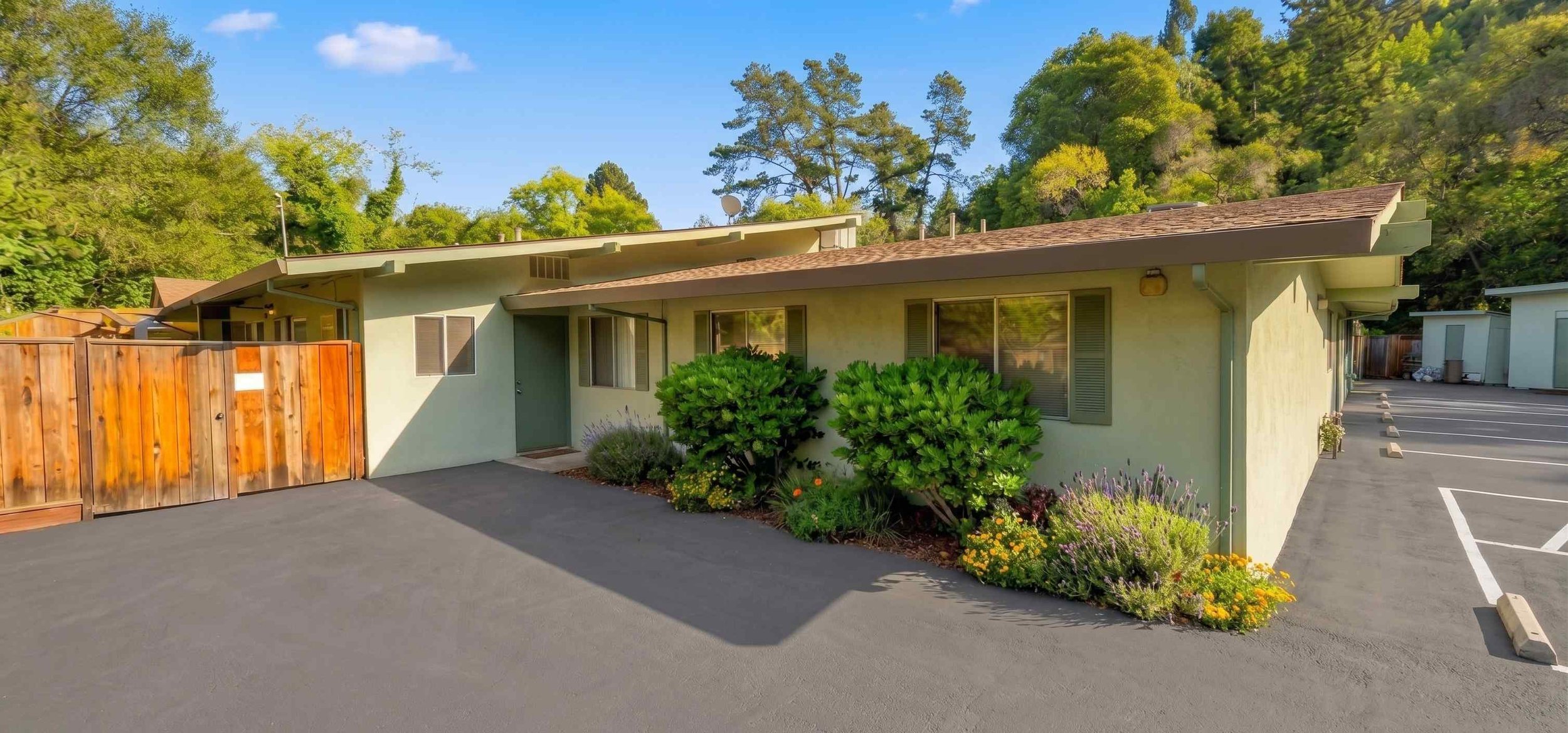
Photo enhanced with AI for illustrative purposes
Oak Creek is a 38-bed memory care community at 6127 E. Castro Valley Boulevard in Castro Valley, California, Alameda County.
The home is part of The Creeks Alzheimer's & Dementia Care Center, which has operated this location since 1991. The current CDSS license is held by Echo Senior Living LLC, with Roseline R. Prasad as administrator. The license number is 015601507.
The community sits on a hillside bordered by trees and lush greenery, with secured grounds, an aviary, an herbal garden, and raised flowerbeds. The setting is one of the things the home explicitly emphasizes – for residents with dementia, time outdoors in a calm, contained environment is part of the care plan.
Facility Snapshot
| Detail | Value |
| Address | 6127 E. Castro Valley Boulevard, Castro Valley, CA 94552 |
| County | Alameda |
| Licensed Capacity | 38 residents |
| License Number | 015601507 (CDSS) |
| License Date | January 19, 2013 |
| Licensee | Echo Senior Living LLC |
| Administrator | Roseline R. Prasad |
| Facility Type | Residential Care for the Elderly (RCFE) |
| Specialization | Memory Care (Alzheimer's & Dementia) |
| Established | 1991 |
| Phone | (510) 889-7515 |
What Type of Facility Is Oak Creek?
Oak Creek is a dedicated memory care community – its entire programming is built around residents with Alzheimer's disease and other forms of dementia. This differs from a general assisted living home that accepts memory care residents on a case-by-case basis. Every routine, staff training, and physical detail of Oak Creek is set up around cognitive needs from the start.
Oak Creek is part of The Creeks brand, which describes itself as a trusted source for memory care services in the Castro Valley area. The home opened in 1991, putting it among the longer-operating dedicated dementia care facilities in Alameda County.
How Long Has Oak Creek Been Operating?
The home has operated continuously since 1991 – more than three decades. The current CDSS license was issued in January 2013, when the facility came under Echo Senior Living LLC ownership. Continuity of operation matters in dementia care: residents and staff develop relationships that outlast turnover at larger campuses, and that consistency is therapeutic in itself.
What Is the Setting Like?
Outdoor Environment
The home sits on a wooded hillside in Castro Valley, with the building bordered by mature trees and landscaped greenery. The grounds are fully secured to prevent wandering – a primary safety concern in memory care communities.
Specific Outdoor Features
An aviary with songbirds
An herbal garden
Raised flowerbeds
A large flat patio with umbrella tables and chairs
Walking paths through the secured grounds
These details are not amenities in the marketing sense; they are clinical decisions. Time outdoors, sensory engagement (smelling herbs, watching birds), and unhurried walking through familiar grounds reduce agitation, lower the frequency of sundowning episodes, and slow the daily decline that residents with dementia often face when their environment becomes monotonous.
What Does Memory Care at Oak Creek Look Like?
The home accepts residents at all stages of Alzheimer's and other dementias. According to The Creeks' published care philosophy, the team focuses on creating an environment where residents feel safe and comfortable, and on engaging them in activities designed to keep their minds active.
This includes:
24-hour supervision and supervised care
Medication management
Assistance with activities of daily living (bathing, dressing, grooming, eating)
Three home-cooked meals per day
Coordination with healthcare providers
Activities tailored to residents' cognitive abilities
Staff training at Oak Creek emphasizes not just clinical care but the emotional reality of dementia – recognizing that the person is still present even as memory fades, and meeting residents where they are rather than where they used to be. The testimonials from family members on the home's website consistently emphasize this combination: technical care alongside humane attention.
How Do Smaller Dedicated Memory Care Communities Compare to Larger Campuses?
A 38-bed memory care home operates differently than a 100-bed campus with a separate locked memory care wing. The smaller home runs with a higher staff-to-resident ratio, fewer shift handoffs, and a layout residents can hold in mind. The larger campus relies on locked units, signage, and color-coded hallways to compensate for the building's complexity.
Both models work, but for different residents. A senior in the early-to-middle stages of dementia often benefits from a smaller home where caregivers know them by name and behaviour patterns. A senior with very advanced dementia who needs around-the-clock medical surveillance may need a larger facility with on-site clinical staff.
Oak Creek positions itself toward the smaller-home model, with the size to support proper kitchen, dining, and activity programming, but small enough that residents and staff recognize one another.
How Is On-Site Medical Care Arranged for Residents?
Doctor2me physicians visit residents directly at the home for routine checkups, chronic condition follow-ups, and urgent issues that don't warrant an ER trip. For residents with dementia, this matters more than for the general population – clinic visits are disorienting, often distressing, and frequently leave residents agitated for days afterward. A physician visiting at the home avoids that disruption.
Same-day or scheduled visits cover primary care work, alongside the LIC 602 evaluations admission requires. Families can pick a specific physician from the Doctor2me provider directory when continuity with a known doctor matters – useful when a resident has had a long-term relationship with a physician they trust.
Telehealth Consultations for Hospice and Late-Stage Care
For residents in late-stage Alzheimer's or dementia, in-person specialist visits become harder to arrange and harder on the resident. Telehealth fills that gap for hospice consultations, palliative care reviews, and family meetings with the care team. LIEM Hospice offers telehealth visits for hospice care alongside its in-person services, which makes it possible for families and care teams to consult without moving the resident or scheduling another visitor into a routine that already feels stretched.
What Other Services Often Come Up Around a Memory Care Move?
Placing a parent into a dedicated memory care community is a major transition for the whole family, not just the resident. Beyond the medical and clinical pieces, there is usually a separate set of logistics tied to the senior's existing home – clearing it out, deciding what to do with it long-term, and handling the paperwork that comes with selling or transferring property. These pieces tend to come up later than they should, often after the move-in date has been set.
Specialists such as Senior Home Transitional Services work with families on this side of the move – the property and estate-related logistics that sit alongside the care decision itself.
Where Is Oak Creek Located?
Oak Creek is on East Castro Valley Boulevard, in the eastern hillside section of Castro Valley. Castro Valley is an unincorporated community in Alameda County, sitting between Hayward and Dublin in the East Bay. The neighborhood is residential and quiet, with retail, pharmacy, and grocery access within a short distance.
Eden Medical Center, the closest acute-care hospital, is roughly four miles away. Other nearby healthcare resources include Kaiser Permanente Hayward Medical Center and Stanford Health Care Tri-Valley, both within a 15-minute drive.
The CDSS Community Care Licensing Division handles regional inspections of RCFEs through its Bay Area Regional Office under Title 22 of the California Code of Regulations.
Families based in Castro Valley, Hayward, San Lorenzo, San Leandro, Dublin, Pleasanton, or further into the East Bay find the home within easy visiting distance.
Explore More Assisted Living Communities

Address: 1440 Fairview St., Orland, CA 95963