
Before a move-in, an Arizona assisted living home has to know what level of care a person needs, and that rests on current medical information. If getting to an office is hard, a physician can examine the person at home and supply the paperwork.
Paradise Valley Care Home, LLC is licensed by the Arizona Department of Health Services as an assisted living home at 6838 N. Rocking Road, Scottsdale, AZ 85250. Its license number is AL10820H, the maximum licensed capacity is 10 residents, and both the facility and the license were showing as Active on the state lookup today.
The license dates back to August 2018, with the current term running from August 2026 to July 2027. The listed manager is Ariel Michelle Rogoveanu, holding manager license ALM-013625, and the chief administrative officer is David Rogoveanu. The state record lists the phone as (480) 404-6701, while the home's own site lists (480) 848-8086.
One detail is worth saying plainly, because the name suggests otherwise. The home is in Scottsdale, in the 85250 ZIP code, not inside the town limits of Paradise Valley, though it sits close to the boundary between the two. That matters if you are comparing homes by city, since a search limited to Paradise Valley will miss this one entirely.
What Care Levels Is This Home Licensed For?
Arizona lists three service types for this home, and it holds all three: supervisory care, personal care, and directed care, with a capacity of 10 for directed care. That last one is a significant entry, because directed care is the level that covers residents with dementia.
The state defines the levels in Arizona Revised Statutes § 36-401. Supervisory care means general supervision, daily awareness of how a resident is doing, the ability to step in during a crisis, and help with taking their own prescribed medicines. Personal care means hands-on help with daily activities, plus medication and treatment given by a licensed nurse.
Directed care goes further. The statute describes it as programs and services for people who cannot recognize danger, summon help, express a need, or make basic care decisions. A home approved for directed care can keep a resident as dementia advances, instead of asking the family to move them again partway through.
How Is a Ten-Bed Care Home Different From a Large Community?
Size changes almost everything about daily life. Arizona defines an assisted living home as a facility with resident rooms for ten or fewer people, which is far smaller than the buildings most families tour. MedlinePlus (2023) describes assisted living facilities as ranging from as few as 25 residents up to 120 or more, so a ten-bed home sits well below the usual floor.
What you get in exchange is familiarity. The same two or three caregivers see the same ten residents every shift, meals happen at one table, and a change in someone's appetite or mood tends to get noticed the day it starts. For a resident who finds large groups confusing, that is often the deciding factor.
What you give up is scale. There is no activity department, no therapy gym, no on-site salon, and fewer organized outings than a large community can run. The National Institute on Aging (2023) notes that residential facilities vary widely in what they include, from housing and housekeeping only through to personal care, activities, meals, and medical services, so the list has to be checked building by building.
What Does Medical Care Look Like After a Move-In?
An assisted living home is not a medical facility. Nursing beyond what the license allows, imaging, and lab work are not part of it, so residents keep their own physicians and specialists, and anything clinical either comes in from outside or happens at an appointment.
Visiting clinicians are what make that workable, especially for someone at the directed care level. A doctor who sees patients where they live can handle routine follow-ups, medication reviews, and the forms a home needs without a car ride and a waiting room, which is where most of the difficulty sits for a resident with dementia.
Ask the manager how it works there now. Ten-bed homes vary a great deal: some already have a visiting physician group, a mobile lab, and a hospice relationship in place, and others leave the whole medical side to the family. Both answers are workable, but they mean very different amounts of coordination for you.
What Is the Neighborhood Like?
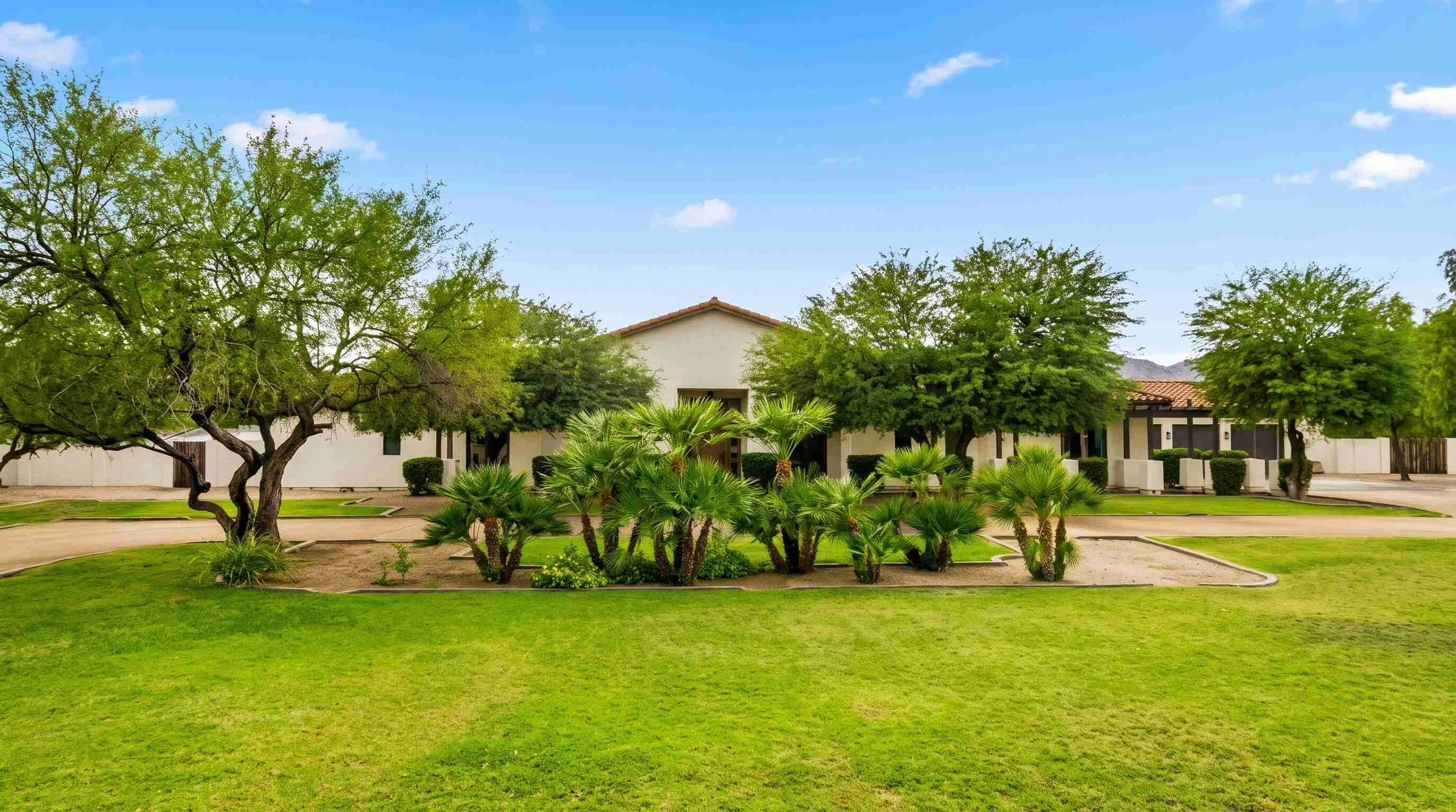
This is a house on a residential street, which is the point of a care home. Rocking Road sits in south-central Scottsdale among large single-family homes on wide lots, so arriving feels like visiting a neighbor rather than checking in somewhere. Street parking is simple, and visits do not run on a lobby schedule.
The location is convenient for families spread across the valley. The 85250 ZIP code is a short drive from the Scottsdale Road corridor and from the Paradise Valley town line, with Old Town Scottsdale, Phoenix, and Tempe all reachable without crossing the whole metro area.
For residents, the practical benefits of a neighborhood setting are quiet and outdoor access. Sitting outside in the shade, walking a short loop on a flat sidewalk, and hearing ordinary street noise rather than an intercom all suit people who were living in their own homes until recently.
Checking the Record and Planning a Visit
Verify the License Yourself
Arizona makes this easy, and it is worth ten minutes. AZ Care Check, the Department of Health Services lookup, is updated daily and lists every licensed facility. Search the facility name, choose the Health Care Facilities program type, then open the record.
The record has three tabs, and the second and third matter most. Details hold the license, capacity, manager, and service types. Inspections hold the state's visit history. Enforcements hold any action taken against the home. Read all three before a tour rather than after one.
What to Ask, and Where to Get Help
Ask how many residents are in the house right now, how many caregivers are on each shift including overnight, which care level your parent would be assessed at, and what would cause the home to say it can no longer meet their needs. Contact details and a virtual tour are on the home's own website.
If you are comparing several homes, a placement advisor can shorten the list, and the directory of placement agencies shows which ones work in the Doctor2me network and the areas they cover. For Arizona-specific help, your local Area Agency on Aging can also point to licensed homes and explain what public programs cover.
Sources Used
36-401 - Definitions; adult foster care – Arizona Revised Statutes
Assisted Living – MedlinePlus (2023)
AZ Care Check – Arizona Department of Health Services
Paradise Valley Care Home – Facility website
What Is Long-Term Care? – National Institute on Aging (2023)

Written by Sofiia Puhach
November 14, 2026
Explore More Assisted Living Communities

Address: 6838 N. Rocking Road, Scottsdale, AZ 85250