
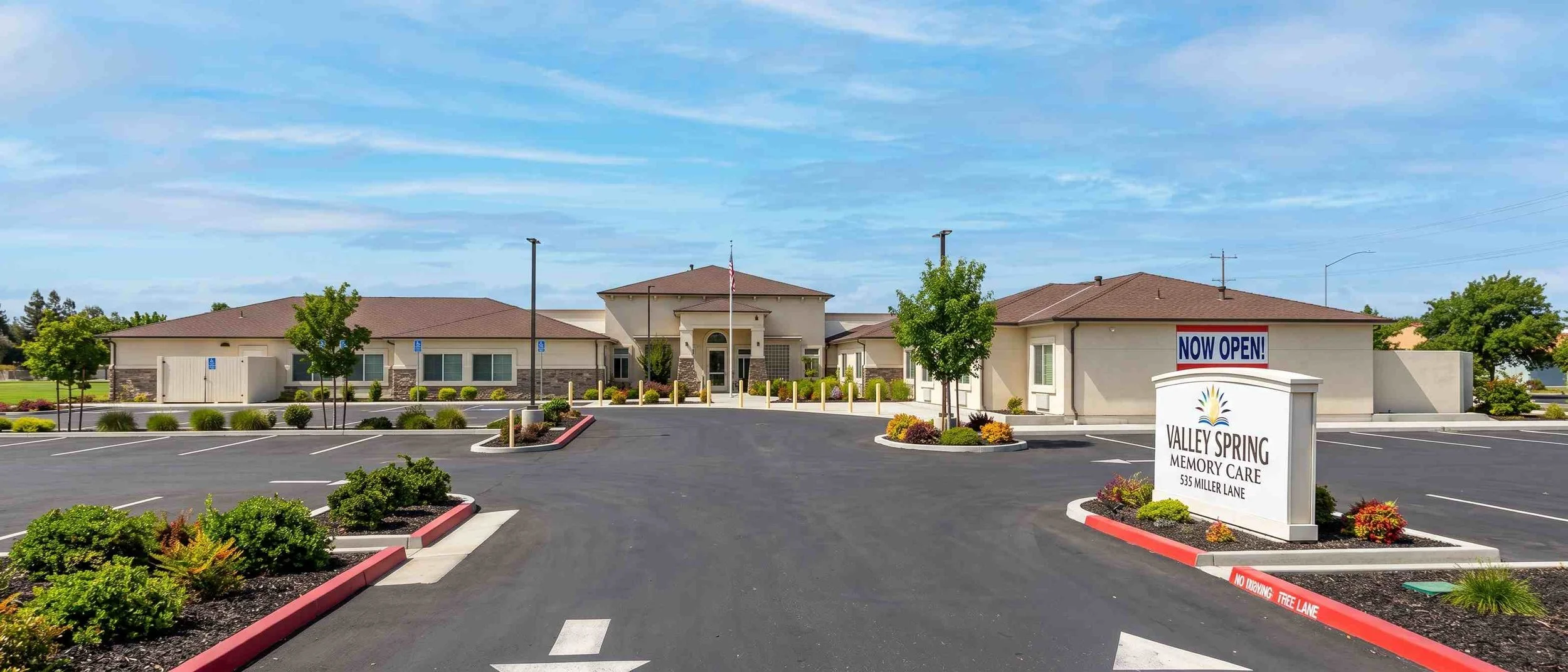
Valley Spring Memory Care is a licensed memory care community at 555 Miller Lane in Los Banos, California, License Number 247209172. For families looking at memory care in Los Banos, it is one of the few purpose-built options in Merced County, and tours are arranged by phone.
Alongside the physician’s report, the community will want the current medication list, insurance details, and the name of whoever holds power of attorney. Gathering all of that before the first tour usually saves a second trip, and it gives staff enough to tell you honestly whether they can meet the person’s needs.
What Kind of Community This Is
Valley Spring Memory Care is a memory care community rather than a general assisted living building, which shapes everything about it. It is licensed by the California Department of Social Services as a Residential Care Facility for the Elderly, with a licensed capacity of 50 residents.
It is also relatively new. The license was first issued in February 2022, which makes this one of the newer purpose-built memory care options in the area rather than a converted older building. The licensee is Valley Springs of Los Banos LLC, and the facility administrator on record is Elizabeth Reynaga.
Fifty beds places it in the mid-size range. That size usually means a staffed building with organized activity programming and secured exits, while still being small enough that staff get to know residents by name. Whether that is true of any particular community is something a visit answers better than a brochure.
Why the Location Matters for Merced County Families
Los Banos sits on the west side of Merced County, and for families there, local availability is the whole question. Memory care options thin out quickly outside Merced and Modesto, and a placement an hour away changes how often anyone actually visits.
Visiting frequency is not a sentimental detail. Residents whose families come often tend to be better monitored, because relatives notice changes in weight, mood and skin that a busy staff rotation can miss. A community fifteen minutes from home gets visited on a Tuesday evening. One ninety minutes away gets visited on a Sunday, sometimes.
Medical backup nearby matters too. Memorial Hospital Los Banos on West I Street is the local acute care hospital, which keeps emergency transfers short, and several primary care clinics operate in town. Families coming from Dos Palos, Gustine and Santa Nella are all within a reasonable drive.
What a Memory Care License Covers in California
A Residential Care Facility for the Elderly license covers housing, meals, help with daily tasks and supervision, not skilled nursing. Staff can assist with bathing, dressing, eating and medications, and the building must be staffed around the clock.
Memory care adds secured exits and dementia-trained staff on top of that. The National Institute on Aging notes that some assisted living facilities run special Alzheimer's units with staff who check on and care for people with dementia, and that this level of care usually costs more than a standard room.
What It Does Not Cover
An RCFE is not a nursing home. Ongoing medical treatment, wound care, IV therapy and skilled rehabilitation fall outside the license, and a resident whose needs grow into that territory may need to transfer. Asking early about what triggers a move-out notice saves a crisis later.
How the License Record Can Be Checked
Every licensed facility in California has a public record held by the Department of Social Services, showing the license number, capacity, status and any citations. Looking at that record before a deposit is a reasonable step, and it is free. The license number for this community is 247209172.
How Medical Care Works Once Someone Moves In
Residents keep their own doctor after moving in, and the community does not provide physician care. That means someone has to get them to appointments, or bring the appointments to them.
For a person with dementia, travel to a clinic is often the worst part of the month. Unfamiliar waiting rooms, long sits and a disrupted routine can undo days of settled behavior. A physician who visits the facility avoids all of that and can review medications in the setting where their effects actually show.
In-room visits also catch things a clinic cannot see. A doctor who walks into the room notices the half-eaten tray, the new bruise, and the walker left on the far side of the bed, and those details often matter more than the numbers taken at a desk.
Questions Worth Asking on a Tour
The useful questions are specific and usually unwelcome. Brochures describe the building on its best day, so the aim of a tour is to see an ordinary afternoon instead.
The National Institute on Aging suggests asking about staffing and daily life rather than amenities. A practical list for a memory care tour:
How many staff are on duty overnight, not just during the day
What a typical day looks like for a resident who does not join group activities
How many current residents have dementia, and how staff are trained for it
What happens when someone tries to leave, and how exits are secured
Whether there is a safe outdoor space residents can use without being escorted
What is included in the monthly fee and what is billed on top
What change in a resident's condition would trigger a move-out notice
Visiting twice, at different times of day, tells you more than a single long tour. Late afternoon is especially informative, because that is when agitation tends to peak and staffing is often thinnest.
Costs and Who Pays
Families should expect to pay privately for most of it. Medicare does not pay for assisted living, according to the National Institute on Aging (2023), and Medicaid coverage depends on the state and on eligibility. Some long-term care insurance policies cover part of the cost.
Memory care generally costs more than standard assisted living in the same building, because the staffing ratio and the training are different. Rates in the Central Valley usually sit below coastal California, though the gap varies and current pricing has to come from the community itself.
Ask how rates are structured before anything is signed. Some communities charge a flat all-inclusive rate and others add care levels on top, and the second kind can rise considerably as needs change. Ask how often rates have increased over the last three years, and by how much.
Contact Details and the Next Step
Valley Spring Memory Care is at 555 Miller Lane, Los Banos, CA 93635, in Merced County. The telephone number on the licensing record is (209) 710-4783, and the license number is 247209172. Tours are normally arranged by phone.
If you are comparing several communities at once, or are not sure that memory care is the right level yet, a placement agency can shortlist options and tell you which ones currently have beds. That is often faster than calling each building in turn, and it costs families nothing in most cases.
There is no need to decide everything this week. Visit, take notes, get the physician's report started, and give yourself a second visit before signing anything. Families who do that almost always feel better about the decision afterwards.
Sources Used
Alzheimer's Caregiving: Finding Long-Term Care – National Institute on Aging (2024)
How To Choose a Nursing Home or Other Long-Term Care Facility – National Institute on Aging (2023)
Long-Term Care Facilities: Assisted Living, Nursing Homes, and Other Residential Care – National Institute on Aging (2023)

Written by Sofiia Puhach
October 19, 2026
Explore More Assisted Living Communities

Address: 555 Miller Lane, Los Banos, CA 93635 (Merced County)