
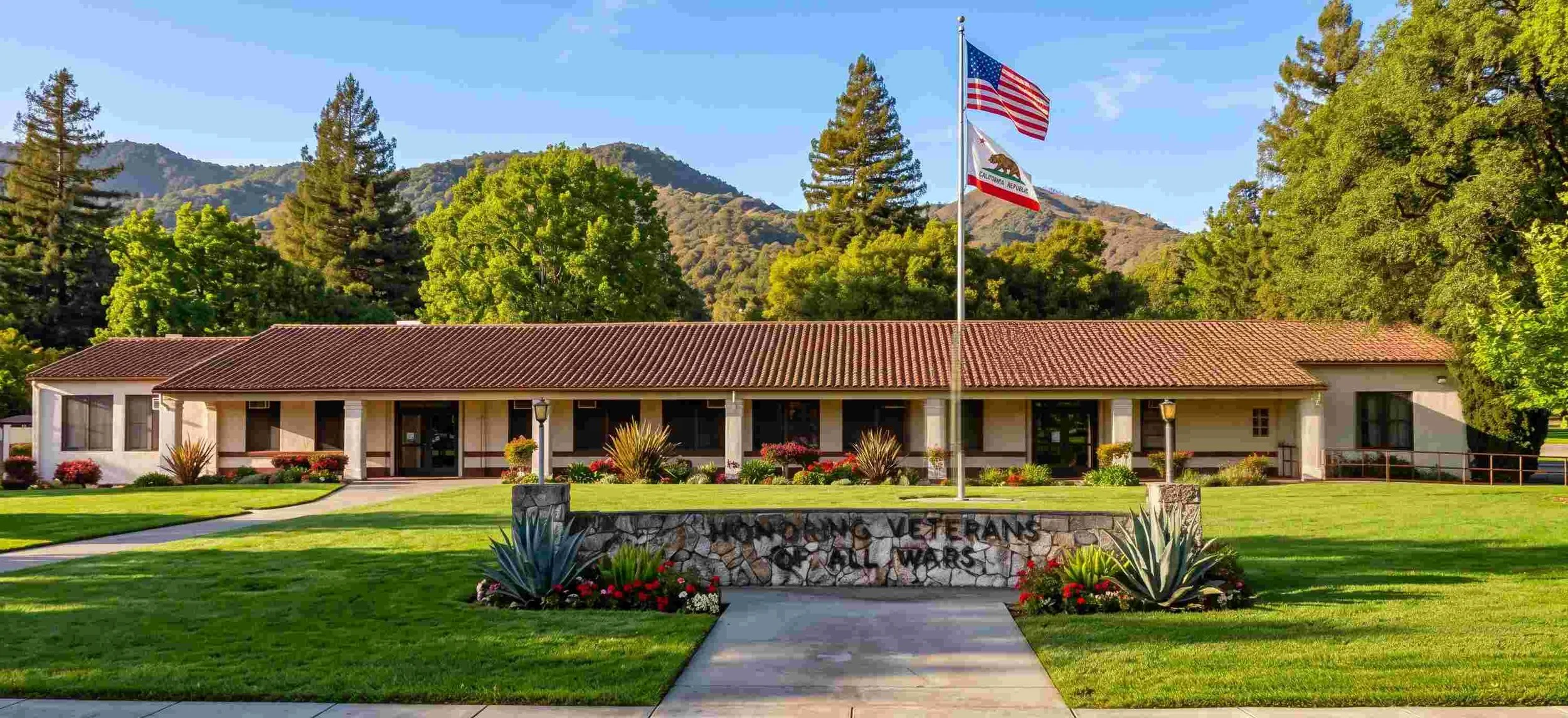
Truman Hall sits within the Veterans Home of California in Yountville, in the heart of the Napa Valley. The campus dates back to 1884 and is one of the largest veterans homes in the country. Truman Hall itself is licensed for up to 48 residents and offers assisted living care in a smaller, more personal setting.
A Home Built for Those Who Served
The Yountville campus is more than a care facility. It is a community of veterans who share a common past. That shared history shapes daily life in a way few other places can offer.
Residents live surrounded by others who understand military service. Meals, activities, and quiet afternoons happen among peers. For many veterans and their families, that sense of belonging is a big part of the appeal.
The setting adds to it. Yountville is a small town known for its calm pace, open space, and mild weather. Truman Hall gives residents the support of assisted living while keeping that easygoing valley feel close by.
The campus has grown over more than a century of caring for veterans. That long history shows up in the grounds, the traditions, and the pride residents take in the place. It is a community with deep roots.
Who Can Live at Truman Hall
Truman Hall serves California veterans who meet the state's eligibility rules. The Veterans Home program is run by CalVet, the California Department of Veterans Affairs, which reviews each application.
In general, a person needs to be a veteran who served on active duty and was discharged under honorable conditions. Age or a disability related to needing care also plays a part. Some eligible spouses and domestic partners may qualify for the campus as well.
Because rules can change, it is best to confirm current eligibility directly with CalVet. The admissions team can explain what documents are needed and how the review works. They can also help you figure out which level of care fits.
The Levels of Care on the Yountville Campus
One thing that sets the Yountville campus apart is the range of care in one place. A veteran can often move between levels as needs change, without leaving the community. Truman Hall is the assisted living piece of that larger picture.
Independent and Residential Living
Veterans who are active and mostly self-sufficient may start in independent living. They keep their own routines while having a supportive community around them. It suits people who want company and security but little hands-on help.
Assisted Living at Truman Hall
Truman Hall steps in when a resident needs daily support but not full-time nursing. Staff help with bathing, dressing, moving safely, and staying on top of medications. A 24-hour call system and on-site supervision give families peace of mind.
Higher Levels of Medical Care
The Yountville campus also offers skilled nursing and other medical care for veterans whose needs grow. Having those levels nearby means a resident does not have to start over somewhere new. Care can rise to meet the moment while familiar faces stay close.
This range is a comfort for families too. A spouse can visit the same place even as a loved one's care changes. Continuity like that is hard to find elsewhere.
Everyday Life and Daily Support
Life at Truman Hall balances help with independence. The goal is to support what a resident can still do, not take it over. That balance keeps daily life feeling dignified.
Support usually includes help with the tasks that get harder over time:
Bathing, grooming, and dressing at a comfortable pace
Help moving around and getting in and out of bed or chairs
Reminders and support with medications
Meals served in a shared dining room
A 24-hour call system for quick help
Supervision and support for memory changes
Beyond the basics, community life gives the days shape. Shared meals, outings, and time with fellow veterans build real friendships. For someone who spent years in service, that camaraderie can feel like home.
The pace is set by the residents, not a clock. Some fill their days with clubs and events, while others prefer a quiet routine. Both are welcome, and staff learn each person's likes over time.
Getting the Paperwork Ready
A smooth admission starts with good paperwork. Because this is a state program, the review looks at both service history and current health. Having documents ready keeps things moving.
A few items usually come into play during the process:
Proof of military service and discharge status
A recent physician's report on the veteran's health and care needs
Basic identification and residency details
Notes on any memory or mobility support the person needs
Families do not have to sort all of this out alone. The admissions team can explain each step and what to bring. A calm, early conversation beats a rushed one later.
Keeping Medical Care Within Reach
Good care means health support is never far away. On a campus this size, veterans have on-site medical services and staff who know their history. That closeness matters when small health changes come up.
Veterans and families also have benefits worth understanding. A clear look at VA home health care benefits can show what extra in-home support a veteran may be entitled to. Knowing the options early makes planning far less stressful.
For seniors who live off campus or want added support at home, a visiting physician can be a real help. You can arrange for a primary care doctor to make house calls so routine check-ins happen where the person is most comfortable. That keeps care steady between larger appointments.
What Families Often Weigh Before a Move
A move like this brings up plenty of questions, and that is normal. Touring in person answers many of them. Seeing the rooms, meeting staff, and sharing a meal tell you more than any brochure.
A few things are worth looking at closely during a visit:
How staff speak with residents and respond to needs
What a typical day and weekly activities look like
How medications and health changes are handled
What is included and what costs extra
How the community feels at mealtime and in shared spaces
It also helps to have someone in your corner during the search. A senior placement agency can compare options, explain paperwork, and point families toward the right fit. Their guidance can save weeks of guesswork.
Taking the Next Step
When you are ready to learn more, the campus team is the best place to start. They can confirm eligibility, walk you through admission, and schedule a tour of Truman Hall.
Truman Hall is located at 300 California Drive, Yountville, CA 94599, in Napa County, and is licensed under number 280109377. A short conversation can help you see whether this community is the right home for the veteran in your life.
Explore More Assisted Living Communities

Address: 300 California Drive, Yountville, CA 94599 (Napa County)