Why 2026 Is a Better Year Than You Think to Start Your Own Practice in California
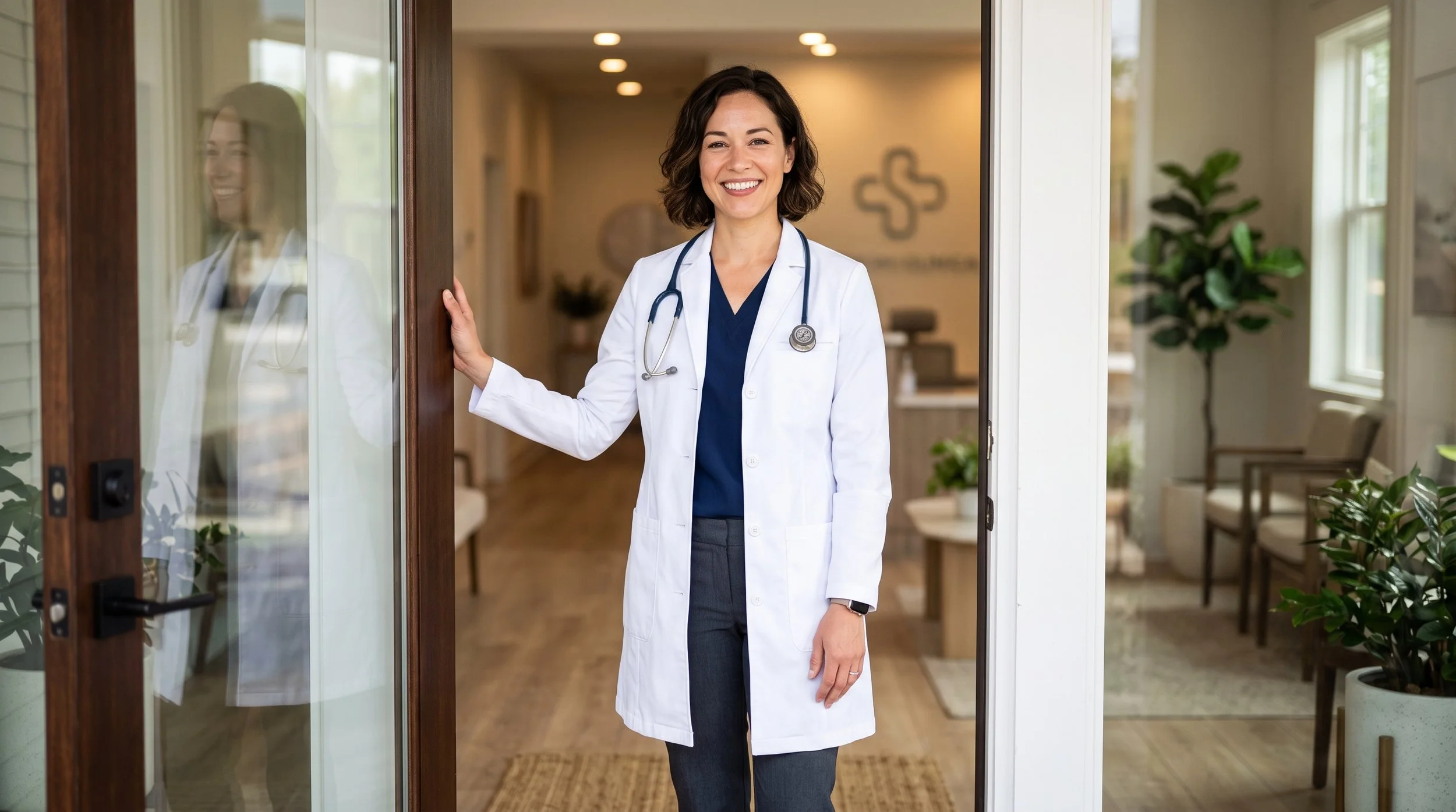
If you finished residency in the last few years, you've probably absorbed a quiet assumption along the way: owning your own practice isn't realistic anymore. Finish training, join a hospital or a corporate group, take the salary, accept the documentation load. Roughly eight in ten physicians now work for a hospital or corporate entity, and for a while independence started to look like a relic of an earlier era.
We want to push back on that assumption — not with a pep talk, but with what actually changed this year in California. Two things happened in 2026 that make independent practice more viable, and more protected, than it was a year ago.
California drew a line between medicine and money
On January 1, 2026, California's SB 351 took effect. Signed by Governor Newsom in October 2025, it codifies and sharpens the state's long-standing ban on the corporate practice of medicine — and it aims directly at private equity groups and hedge funds.
Under the law, those investors cannot control the clinical side of a practice. They can't decide how many patients a physician sees, how many hours a doctor works, which diagnostic tests are appropriate, or when a referral is needed. They can't hire or fire physicians based on “clinical productivity.” And — this is the part that matters most to a young doctor weighing options — the law bars the non-compete clauses that so often get buried in management agreements and quietly trap physicians for years after they want to leave.
Put plainly: California reaffirmed that the practice of medicine belongs to physicians, not to the people financing the building. For a doctor deciding between an employed contract and hanging your own shingle, that legal backdrop is meaningfully friendlier than it was in December.
(SB 351 is complex, and every situation is different — anyone structuring a practice should review it with a healthcare attorney. This is general information, not legal advice.)
The need has never been more obvious
The second change isn't a law. It's demand. California carries 661 primary care Health Professional Shortage Area designations — more than any other state in the country — with roughly 6.9 million Californians living in areas where primary care is hard to reach, according to 2026 HRSA data. Only about half of the primary care need in those areas is currently being met.
Here in Greater LA, that shortage isn't an abstraction. It's the patient who waited three weeks for a ten-minute visit. It's the family that drives across the county for a same-week appointment. It's the working adult with a Bronze plan who skips care entirely because they can't get in and can't read the bill.
The gap between how many patients need a doctor and how many doctors are reachable is exactly the space an independent practice is built to fill.
Independence isn't easy — but “hard” and “impossible” aren't the same word
Let's be honest about the other side. Starting a practice is hard. Capital is real. The safe salary is tempting, and the administrative learning curve is steep. None of that disappears because a law passed.
But a lot of young physicians have been sold “impossible” when the truth is “hard.” The models for going independent are more established than they used to be. Direct primary care — where patients or employers pay a flat, transparent price and the insurance billing machinery gets cut out — has grown from around 100 practices in 2009 to more than 2,000 nationwide, and membership has climbed sharply over the past several years. House-call and virtual-first practices lower the overhead of a traditional office. The tools that used to require a big group's back office are now available to a solo MD or DO.
The physicians we work with who went independent didn't do it because it was simple. They did it because they wanted to decide how they practice medicine — how much time to spend with a patient, what to charge, whether to answer the phone themselves. In 2026, California made that decision a little more protected than it was before.
Where Doctor2me fits
We build around independent, direct-pay physicians across Greater LA — the MDs and DOs who want to see patients on their own terms, price their care openly, and skip the insurance maze. If you're early in your career and weighing whether to start something of your own, or a resident who assumed the door was closed, we'd genuinely welcome the conversation.
The door isn't closed. Some people just forgot to check whether it was still locked.
Interested in what independent, direct-pay practice can look like in Southern California? Reach out to the Doctor2me team — we're happy to compare notes.
General information, not medical, legal, or financial advice. Consult the appropriate licensed professional about your own situation.