Tap Water Up the Nose and the Brain Eating Amoeba: A Calm Guide
Table of Content
The brain eating amoeba is real, but infections are very rare. The danger comes from unsafe water forced up the nose, not from drinking tap water.
You may have seen scary headlines about a brain-eating amoeba in tap water. Here is the calmer picture. According to the CDC (2026), only 180 U.S. cases were reported from 1937 to 2025 – between 0 and 8 a year.
This guide covers what Naegleria fowleri is, the simple rule for a safe nasal rinse, and why your morning glass of water is fine. It also walks through the symptoms to know and how to settle the worry the headlines can stir up. If the news left you anxious, read on for clear, steady steps.
What Is the Brain Eating Amoeba, Naegleria Fowleri?
The brain-eating amoeba, Naegleria fowleri, is a tiny single-celled organism that lives in warm fresh water. It is common in lakes, rivers, and hot springs, and it can also turn up in soil.
It earns its nickname because, in rare cases, it can reach the brain and cause a serious infection called primary amebic meningoencephalitis, or PAM. The amoeba does not feed on people in nature. It becomes a threat only when contaminated water travels high up the nose.
Warm, still water is where it thrives. Cases tend to cluster in summer and in warmer states, though the amoeba can live in many places.
How Does the Brain Eating Amoeba Get In, and Why the Nose?
The amoeba causes harm only when water goes up the nose, not when you swallow it. From the nasal passages, it can travel along the nerve that carries smell and reach the brain.
Drinking contaminated water will not give you this infection. As the FDA (2025) explains, tap water can carry tiny organisms that stomach acid destroys when you swallow, yet those same organisms may survive high in the nose.
This is why a nasal rinse deserves care. Swimming, diving, or jumping into warm lakes can also push water up the nose, which is why nose clips help in wild water. The same is true for water slides and untreated hot springs in the summer months.
Is Tap Water Safe to Drink?
Yes. Tap water from a treated public supply is safe to drink, to cook with, and to use for brushing your teeth.
Public water systems in the United States follow national standards. The EPA (2026) sets legally enforceable limits for contaminants in public drinking water, and utilities test and treat their supply to meet them.
The concern with Naegleria fowleri is never about drinking. It is about water pushed forcefully into the nose, where the amoeba can survive. Your stomach handles the rest, so a glass of tap water, ice, coffee, or tea is fine. Keep drinking your tap water with confidence.
How Rare Is a Brain Eating Amoeba Infection?
Infections are extremely rare. According to the CDC (2026), 180 cases were diagnosed in the United States from 1937 to 2025, ranging from 0 to 8 cases per year.
To put that in scale, that is a handful of cases across nearly nine decades, in a country of hundreds of millions. Most were linked to swimming in warm fresh water, and Texas and Florida saw the most.
Cases tied to nasal rinsing are rarer still. They have happened, but they are the exception, and they trace back to unsafe water rather than to safe practice.
What Are the Warning Symptoms of Naegleria Fowleri?
The early symptoms of a Naegleria fowleri infection resemble meningitis, and they come on fast. The first signs are usually a severe headache, fever, nausea, or vomiting, often a few days after water went up the nose.
As it progresses, a person may develop a stiff neck, confusion, a loss of balance, or seizures. Symptoms tend to appear within about one to two weeks of exposure. Because the illness moves quickly, getting care early is what counts most.
Keep this in perspective. A headache or stuffy feeling after a nasal rinse is far more likely to be a cold, allergies, or a normal sinus flare-up than anything rare. The aim here is awareness, not alarm, and knowing the signs is part of feeling in control.
The Neti Pot Rule: What Water Is Safe for a Nasal Rinse?
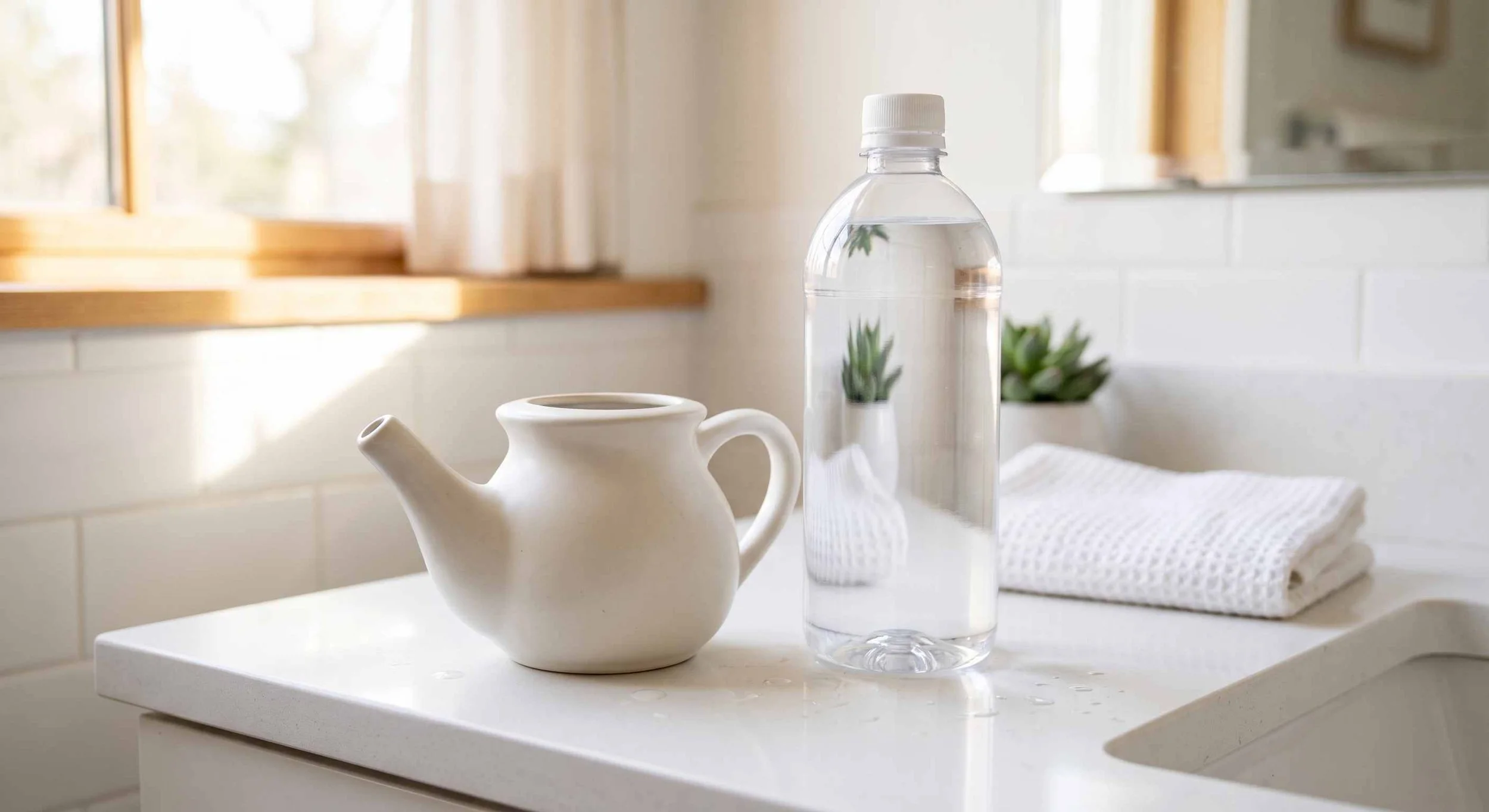
Never use plain tap water in a neti pot or any nasal rinse device. The CDC (2025) says to use store-bought distilled or sterile water, or tap water that has been boiled and cooled, or water run through a proper filter. People often reach for a rinse to ease a sinus infection, so the water rule matters for a very common habit.
Distilled or Sterile Water
The easiest choice is water labeled distilled or sterile from the store. It is inexpensive and ready to use straight from the bottle. No extra steps are needed.
Boiled and Cooled Tap Water
You can also make tap water safe by boiling it. Bring it to a rolling boil for one minute – three minutes above 6,500 feet – then let it cool to lukewarm. Keep any extra in a clean, covered container.
Filtered Water
A filter can work too, if it is built to trap germs this small. Look for a label that reads NSF 53, NSF 58, or an absolute pore size of 1 micron or smaller.
A quick note on cleaning: rinse the device with safe water after each use, then let it dry fully, since leftover moisture can let germs grow. Here is a quick side-by-side of the safe options and what to skip.
|
Water Option |
Is It Safe for Nasal Rinsing? |
|---|---|
|
Store-bought distilled or sterile water |
Safe. Ready to use, no prep. |
|
Boiled and cooled tap water |
Safe. Boil 1 minute (3 minutes above 6,500 feet), then cool. |
|
Filtered water (NSF 53/58 or 1 micron) |
Safe if the filter traps tiny germs. |
|
Plain tap or faucet water |
Not safe. Do not use straight from the tap. |
|
Regular bottled drinking water |
Not recommended unless the label says distilled or sterile. |
How to Do a Sinus Rinse Safely, Step by Step
A sinus rinse is simple once your water is safe. MedlinePlus (2025) lays out a clear routine you can follow at home.
The Basic Steps
Wash and dry your hands, and check that your device is clean and dry.
Fill a clean neti pot or nasal wash bottle with your safe, lukewarm saline solution.
Lean over a sink and tilt your head to one side.
Breathe through your open mouth and gently pour or squeeze the solution into the upper nostril.
Let it drain out the lower nostril, then repeat on the other side.
Gently blow your nose, then clean and air-dry the device.
Aftercare and Everyday Tips
Use a saltwater, or saline, mix rather than plain water, so the rinse feels gentle. You can buy premixed saline or a nasal wash bottle at the drugstore. Done right, saline nasal irrigation can ease sinus pressure and clear out mucus and allergens.
One habit helps a lot: rinse before you use any nasal spray, so your passages absorb it better.
Why the Fear Feels Bigger Than the Risk
If the headlines set off a spiral of worry, that reaction makes sense. Rare and frightening events grab our attention far more than their real odds.
If You Already Rinsed With Tap Water
First, take a breath. A single rinse with tap water is very unlikely to cause harm, and most tap water does not contain the amoeba at all. Watch how you feel over the next week or two, and carry on with your day.
Still, know the signs that call for fast care. Seek medical attention right away if a bad headache, fever, stiff neck, confusion, or vomiting comes on within about two weeks of a nasal rinse. In an emergency, call 911 or go to the nearest emergency room.
Calming the Health Anxiety Spiral
Health worry often grows when a scary story meets uncertainty. The steady facts help. The infection is rare, it is tied to water in the nose, and one simple water rule removes almost all of the risk. Reading a frightening story does not change your personal odds, which stay very low when you follow safe steps.
Try to notice when you are checking symptoms over and over. If the fear keeps returning or eats into your days, it is worth talking with a professional. You can also arrange a visit with a clinician who comes to your home, which helps when leaving the house feels like too much.
Putting the News Cases in Context
Real cases usually trace back to a clear, avoidable source. In one report, the CDC (2025) described a fatal case in Texas linked to nasal rinsing with poorly disinfected water from a recreational vehicle.
Stories like that are tragic, and they are also instructive. They point to unsafe water, not to normal home tap use for drinking or washing. Following the water rule is what keeps a rinse safe. If you switch to distilled or boiled and cooled water today, you have done the main thing that protects you.
FAQ
-
A properly chlorinated pool is not a risk, because chlorine kills the amoeba. The concern is warm, untreated fresh water like lakes and hot springs. Well-kept pools and treated water parks are considered safe.
-
Not automatically. Regular bottled water is not guaranteed to be free of tiny organisms, so it is not recommended for nasal rinsing. Choose a bottle clearly labeled distilled or sterile instead.
-
If an infection were to occur, symptoms usually begin within about one to two weeks. They tend to start suddenly, with severe headache, fever, and nausea. Remember that this outcome is extremely rare.
-
Some children can, but check with a pediatrician first, especially for very young kids. Use a device sized for the child and the same safe water rules. Stop if the child finds it too uncomfortable.
-
Only certain filters qualify. A filter must be labeled NSF 53, NSF 58, or have an absolute pore size of 1 micron or smaller to trap the amoeba. If yours does not, boil the water or use distilled instead.
-
Yes. Showering, bathing, and washing your face are fine, since the risk comes from water forced deep into the nose. Just avoid snorting or sniffing water up your nose in the shower.

Written by Sofiia Puhach
September 18, 2026
You May Also Like