Intertrigo: The Rash Under the Breast, Explained
Table of Content
That red, sore patch under your breast is usually intertrigo. It starts where warm skin rubs against skin and sweat gets trapped. The heat and moisture irritate the skin, and a rash forms. Most cases are mild and calm down once the area stays cool and dry.
It can itch, sting, or burn. It can also come back to the same spot again and again. The good news is that the fix is often simple, and you can do a lot at home.
This guide walks through what a rash under the breast really is, how to tell if a germ has joined in, and the small daily habits that clear it up and keep it away.
What Causes a Rash Under the Breast?
A rash under the breast is usually caused by skin rubbing on skin, made worse by heat and trapped sweat. This mix is what doctors call intertrigo, an inflammatory skin problem that shows up in folds. According to StatPearls, the skin under the breast, in the armpits, and in belly folds is a common spot because it stays warm and damp.
Here is what happens step by step. Sweat gets stuck in the fold and the skin surfaces stick together. The rubbing damages the top layer of skin. That damage plus the moisture sets off redness and soreness.
The fold under the breast is a prime spot for a reason. It stays warm, air does not reach it well, and sweat pools there through the day. Hot, humid weather makes all of this worse, so many people notice their rash flaring in summer.
The Role of Yeast and Bacteria
Once the skin is damaged, germs that already live on your body can overgrow. The CDC notes that a yeast called Candida lives on healthy skin and only causes trouble when it grows too much. A warm, wet fold is the perfect place for that to happen.
Yeast is the most common add-on infection with intertrigo, per MedlinePlus. Bacteria can join in too. When that happens, the rash often looks angrier and may weep or smell.
What Does a Yeast Rash Under the Breast Look Like?
A yeast rash under the breast tends to be bright red, shiny, and sore, often with small spots or bumps just outside the main patch. Plain intertrigo without infection usually looks pink to reddish-brown, with itching or a stinging feeling.
Red or reddish-brown skin where the fold sits
Itching, stinging, or a burning feeling
Skin that feels raw, cracked, or moist
Oozing, crusting, or flaking at the edges
Small red spots or bumps spreading from the main rash
A bad smell or pus, which points to infection
The smell, pus, or spreading spots are the clues that a germ has moved in. A plain rash that is just red and itchy is usually the milder kind.
It helps to check the fold in good light every day or two. Catching it while the skin is only pink, before it cracks or weeps, makes it much easier to calm down.
Why Do I Have a Rash Under Only One Breast?
A rash under only one breast often means an infection has settled on that side, or something else is irritating just that spot. Simple intertrigo tends to look fairly even on both sides, since both folds get the same heat and rubbing.
When only one side flares, a few things could be at play. A yeast or bacterial infection often picks one fold. A tight seam, an underwire, or a damp bra pad can also rub one side more.
A one-sided rash that will not clear is worth showing to a doctor. It is usually nothing serious, but a close look sorts out the cause and points to the right care.
Pay attention to how it behaves over a week or two. A fold that stays sore, changes shape, or does not respond to keeping it dry deserves a proper exam rather than more guesswork.
Who Is More Likely to Get Intertrigo?
You are more likely to get intertrigo if your skin stays warm and damp in the folds for long stretches. Anyone can get it, but some things raise the odds.
Carrying extra weight, which deepens folds and traps more sweat
Diabetes, which can raise sweating and change the skin surface so germs grow more easily
Heavy sweating, or living in a hot, humid place
Trouble with bladder or bowel control, which keeps skin damp
Limited movement, which makes it harder to clean and dry the folds
Older age, when skin is thinner and daily care can be harder
Larger breasts also make the fold deeper and warmer. That is why the area under the breast is such a frequent spot.
None of these means you will definitely get a rash. They just mean the fold needs a little extra attention to stay dry.
How Do I Know If My Intertrigo Is Bacterial or Fungal?
You often cannot tell for sure by looking, but a few patterns give hints. A fungal (yeast) rash is usually bright red with small satellite spots around the edge. A bacterial rash tends to weep, feel tender, and sometimes smell.
Getting the answer matters, because each type is handled differently. A quick skin scraping looked at under a microscope can confirm yeast, and a swab can check for bacteria.
A dermatologist can examine the fold and run those simple checks. In the Pasadena area, Dr. Ronald Rigor is a skin specialist who diagnoses and treats rashes like this.
There is one thing to watch. If the skin breaks open, bacteria can move deeper and cause cellulitis, a skin infection that needs medical care. Pain that spreads, warmth, and fever are reasons to be seen promptly.
How Is a Rash Under the Breast Diagnosed?
Most of the time, a doctor can spot intertrigo just by looking at the fold and asking a few questions. They will want to know how long it has been there, whether it itches or burns, and what you have already tried on it.
If a germ might be involved, the visit is still quick. A gentle skin scraping can reveal yeast under a microscope, and a swab can pick up bacteria.
When a rash keeps coming back, a doctor may also check your blood sugar. High blood sugar feeds yeast, so an undiagnosed case of diabetes can be the hidden reason a fold will not heal.
How Is a Rash Under the Breast Treated and Prevented?
The main treatment is keeping the fold clean, cool, and dry, which lets the skin settle. Most mild cases improve within days once the moisture is gone. If a germ has taken hold, a doctor may add treatment aimed at that infection.
Simple steps that help a lot:
Pat the fold fully dry after a shower, rather than rubbing it
Let air reach the area, using a fan or a cool hair-dryer setting
Wear loose, breathable fabrics like cotton
Change out of damp bras or clothes soon after sweating
Use a soft cloth or moisture-wicking fabric to keep skin surfaces apart
Try a barrier product, such as zinc oxide or petroleum jelly, to cut friction
A review in the Journal of Wound Care found that a steady skin-fold routine, plus moisture-wicking material in the fold, helps prevent flare-ups and secondary infection. Small habits, done daily, do most of the work.
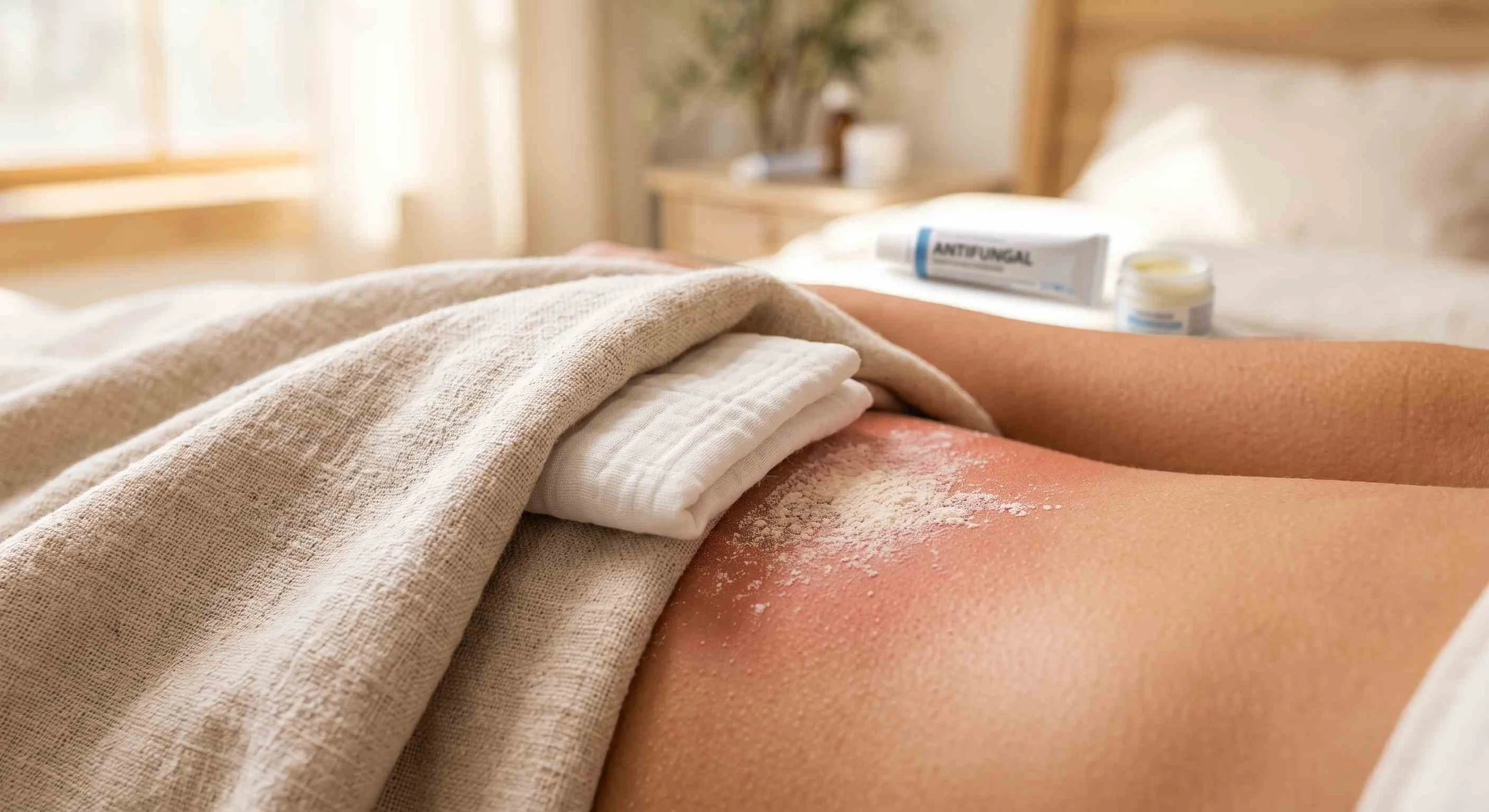
A quick word on powders. Absorbent powders can help pull moisture from the fold, but do not layer powder on top of a cream, since the two turn into a sticky paste. Pick one or the other for a given spot.
Daily fold care is harder for people with limited mobility or who need a hand at home. In-home caregiving support, such as A Better Solution In Home Care, can help keep the skin clean and dry as part of a daily routine.
Left alone, a fungal rash can spread to nearby skin or even to the toenails. Treating it early keeps a small problem small.
If the rash is sore, spreading, or not clearing after a couple of weeks, have someone look at it. You can also arrange for a doctor to check it during a home visit, which is handy when getting out is tough.
Can Intertrigo Keep Coming Back?
Yes, intertrigo often returns if the things that caused it are still there. A fold that stays warm and damp will flare again, even after a rash clears.
That is why the prevention habits matter more than any one-time fix. Drying the fold well, wearing breathable fabric, and keeping skin surfaces apart all lower the chance of a repeat.
Managing the bigger picture helps too. Steadier blood sugar, a healthy weight, and treating heavy sweating can each make flares less frequent. If yours keeps returning despite good care, a doctor can look for a cause you may have missed.
FAQ
-
It usually looks bright red, shiny, and sore, with small red spots or bumps scattered just outside the main patch. The skin may feel itchy or burning, and the edges can flake or ooze. If you see these satellite spots, yeast is a likely cause.
-
A one-sided rash often means an infection has settled on that side, or a tight seam, underwire, or damp pad is rubbing that fold more. Plain intertrigo usually looks even on both sides. A rash under one breast that will not clear is worth having checked.
-
Keep the fold clean, cool, and dry, and reduce the rubbing that started it. Dry gently after washing, let air reach the skin, and wear loose cotton. Mild cases often calm down within a few days once the moisture is gone.
-
A fungal rash is often bright red with small satellite spots, while a bacterial rash tends to weep, feel tender, and sometimes smell. A quick skin scraping or swab from a clinician gives a clear answer. That matters, because each type is treated in its own way.
-
Most rashes under the breast are harmless intertrigo, not cancer. Rare breast cancers can cause skin changes like dimpling, thickening, or a rash that will not clear, sometimes with nipple changes. Any rash that lingers, spreads, or looks unusual should be examined by a doctor.
-
For a plain rash, a simple barrier product like zinc oxide or petroleum jelly can cut friction and protect the skin. If yeast or bacteria are involved, a clinician can point you to the right treatment for that cause. Keeping the area dry does as much good as any cream.
You May Also Like