
Table of Content
Desire often falls in perimenopause because estrogen swings, sleep breaks up and vaginal tissue thins. All three are physical, and all three are treatable.
The timing is not a coincidence either. Cleveland Clinic (2024) describes perimenopause as starting about 8 to 10 years before menopause, usually in the mid-40s, with hormone levels that rise and fall unpredictably rather than sliding smoothly down. Low libido and vaginal dryness both appear on its symptom list.
That unpredictability is the part that catches people out. A good month followed by three flat ones feels like something is going wrong in the relationship. More often it is the hormonal curve underneath, which is jagged by design during this stage.
Why Does Sex Drive Drop in Perimenopause?
Because several separate things land at the same time, and each one alone would be enough. Lower estrogen changes the tissue, broken sleep flattens energy, and mood changes take the edge off interest in most things, not only sex.
Night sweats deserve particular blame. Waking three times a night for a fortnight does to desire exactly what it does to patience and appetite. The drop then gets read as a personal failing rather than as predictable fallout from months of poor sleep.
The Cycle Changes Come First
For many people the periods change before anything else does. Cycles shorten, then lengthen, then skip, and ovulation becomes less regular. Our guide to what perimenopause does to your cycle covers that pattern and what counts as worth reporting.
Tracking it is genuinely useful. A note of dates, flow, sleep and how you felt turns a vague complaint into a pattern a clinician can work with. It also shows whether the flat weeks line up with the hormonal dips or with something else entirely.
At What Age Does This Usually Start?
Most people notice the first signs in their 40s, though some see changes in their 30s and some not until their 50s. There is no single starting line, which is part of why early symptoms get dismissed as stress or overwork. Smoking, family history and some cancer treatments or surgeries can bring it forward.
Mayo Clinic (2026) lists what tends to show up: irregular periods, hot flashes, sleep problems, mood changes, vaginal dryness with pain during sex, and bladder changes. On sexual function it makes a point worth repeating, that some people enjoy sex less during this stage and others enjoy it more.
Duration varies as much as onset. Cleveland Clinic puts the average at about four years, with a maximum of roughly eight, and some people pass through in a few months. So the honest answer to how long this lasts is that nobody can tell you in advance.
Is This Normal, or Is Something Wrong?
Both can be true at once. A lower sex drive at this stage is extremely common, and it is still worth investigating, because a fair amount of what drives it turns out to be treatable. Common and inevitable are two different claims, and only the first one holds up.
Cleveland Clinic (2025) notes that low libido affects up to 1 in 5 men and even more women at some point in life, and sets a sensible threshold: the thing that makes it worth acting on is whether it bothers you. Not whether it is unusual, and not whether a partner minds.
The same page lists medical causes that have nothing to do with menopause: an underactive thyroid, high prolactin, diabetes, chronic pain, heart disease, kidney disease and chronic headaches, alongside stress and mental health. Several of those are easy to test for and treatable.
Where to Look Before Blaming Hormones
So the useful question is not whether your desire counts as normal. It is whether anything on that medical list is contributing underneath. Our piece on what kills libido and how to get it back goes through the non-hormonal culprits in more detail, including the ones that have nothing to do with age at all.
Which Tests Are Worth Asking For?
Hormone levels are the least useful thing on the list, and the deficiency panel is the most. Cleveland Clinic notes that hormone testing is not needed to diagnose perimenopause, because the levels move too much to mean anything on a single day.
What is worth measuring is everything that mimics the same symptoms. Iron, vitamin B12 and thyroid function all produce exhaustion and flat interest, and all three are inexpensive to check and straightforward to correct when they come back low. Ruling them out also makes the rest of the conversation shorter.
The table below sets out what tends to be worth asking for and why each item is on the list. Take it to the appointment rather than relying on remembering it, and ask for the results in writing so you have a baseline to compare against later.
|
What to Ask For |
Why It Is on the List |
|---|---|
|
Thyroid function |
An underactive thyroid is a listed cause of low libido, and it also explains fatigue and low mood. |
|
Ferritin and a blood count |
Low iron stores drain energy long before anaemia looks obvious on a basic panel. |
|
Vitamin B12 |
A shortfall causes tiredness, weakness and nerve symptoms that are easy to blame on hormones. |
|
A full medicine review |
Several common prescription classes affect desire, and swapping or adjusting one is sometimes all it takes. |
|
Symptom timeline |
Not a test, but the most useful thing you bring: when it started, how it tracks with sleep and cycles. |
Iron and Ferritin
Low iron is the quiet one, because it builds slowly and the early symptom is simply being tired more often than usual. MedlinePlus (2025) notes that symptoms are often mild at first, and lists serum iron, total iron binding capacity and serum ferritin as the tests used to assess iron status.
This matters in perimenopause specifically because periods often get heavier before they stop. Months of heavy bleeding drain iron stores, and the fatigue that follows is routinely filed under hormones when it has a different and very treatable cause.
Vitamin B12
MedlinePlus (2026) covers the other common shortfall, where too little B12 leads to tiredness, weakness and nerve symptoms such as numbness or tingling. It is more likely with age, with certain stomach conditions and on a diet low in animal products.
If exhaustion is the headline and desire is collateral damage, start there rather than with hormones. Our article on when constant fatigue becomes a wake-up call covers how to work through persistent tiredness when the obvious answers come back clear.
Getting the Blood Drawn Without the Trip
None of this requires a waiting room. A doctor who visits at home can take the history, order the panel and go through the results with you, which removes the main reason these checks get postponed for a year.
What About Dryness and Pain During Sex?
Treat it as a tissue problem, because that is what it is, and it responds to treatment aimed at the tissue. Dryness makes sex uncomfortable, discomfort makes anticipation worse, and desire drops in response rather than causing the problem.
There is a formal name and a current guideline for this. The American Urological Association (2025) released a guideline on genitourinary syndrome of menopause, the term for the range of vulvovaginal, urinary and sexual changes that follow declining estrogen and androgen levels during perimenopause and after menopause.
The Office on Women's Health (2025) adds the practical layer: lower hormones make vaginal tissue drier and thinner, arousal can take longer, and being less interested in sex with age is not in itself a condition needing treatment. If it bothers you, that is the reason to raise it.
Deal With the Pain First
The order of operations matters here. Sorting out pain usually has to come before any conversation about desire, because no amount of willingness survives an activity the body has learned to associate with hurting. Our piece on why sex starts to hurt when it never used to cover that in full.
What Are the Perimenopause Treatment Options?
They fall into three groups: local treatment for the tissue, body-wide hormone therapy for the broader symptoms, and the unglamorous changes that affect sleep and energy. Most people end up using more than one of the three, and the mix shifts over the years as symptoms change.
The Office on Women's Health (2025) sets out the current position on hormones. Menopausal hormone therapy may be an option for women up to age 59 and usually only within 10 years of menopause, with the advice being the lowest dose that works for the shortest time needed. Hot flashes generally need higher, body-wide doses.
Local Treatment for Dryness
For dryness and discomfort during sex specifically, the same source notes that low doses of topical vaginal estrogen may bring relief, and that the risks of topical hormone treatment differ from those of body-wide hormone therapy. That distinction is the one most worth understanding before the appointment.
Non-hormonal options exist alongside it. Lubricants and vaginal moisturisers address friction and dryness directly, and Cleveland Clinic lists them among the standard options for perimenopausal vaginal dryness. They can be used on their own or with other treatments.
What Is Not a Hormone
Sleep is the biggest lever and the most neglected one. Treating night sweats, protecting the bedroom from heat and light, and getting a consistent bedtime back tends to change energy levels within weeks, and energy is what desire runs on. Nobody wants anything much in four broken hours.
Physical activity, less alcohol and treating anxiety or low mood all show up on the standard lists for a reason. None of it is a replacement for medical treatment where that is needed, and all of it changes the baseline you are working from.
What If You Are Told It Is All in Your Head?
Ask for the specific thing you want, in writing, rather than arguing the general point. A request for a thyroid panel, ferritin and B12, or a conversation about topical treatment for dryness, is harder to wave away than a complaint about low desire.
Being dismissed is a common enough experience that it is worth planning around. Bring the symptom timeline, name the part that bothers you most, and say plainly what you want looked at. If the answer is still that nothing can be done, a second opinion is a reasonable next step.
Some of what is going on is not medical at all, and that is not the same as being imaginary. Practitioners who work with intimacy and pelvic health directly, such as Sex and Sensibility in the Bay Area and Los Angeles, handle the parts that a lab panel was never going to answer.
Two Different Problems, Two Different Rooms
Both halves usually need attention. The tissue and the blood results belong with a clinician, and the rest of it, the anticipation, the pain memory, the long gap in the conversation with a partner, belongs somewhere else entirely. Neither one fixes the other, and treating only one is why progress often stalls halfway.
FAQ
-
It can, and it is more common than people expect. Some report more interest during this stage, which has been linked to changing hormone ratios and, for some, the end of worrying about pregnancy.
-
Yes, until menopause is confirmed by twelve consecutive months without a period. Pregnancy remains possible while cycles are irregular, which is the point at which people often assume it is not.
-
Especially then. Dates, flow, sleep quality and mood recorded over three months show a pattern that no single appointment can reconstruct, and the pattern is what changes the conversation.
-
No, it rules out one specific cause. A clear thyroid panel is useful information rather than a dead end, and it moves the search to iron, B12, sleep and the tissue changes themselves.
-
Tissue changes take time rather than days, and it is normal to use something consistently for several weeks before judging it. Report back if there is no change, because the plan can be adjusted.
-
Only if you want them there. It helps when the problem involves both of you and the conversation at home has stalled, and it gets in the way when you need to describe symptoms without an audience.
Sources Used
American Urological Association Releases New Guideline on Genitourinary Syndrome of Menopause – American Urological Association (2025)
Iron deficiency anemia – MedlinePlus (2025)
Low Libido (Low Sex Drive) – Cleveland Clinic (2025)
Menopause and sexuality – Office on Women's Health (2025)
Menopause treatment – Office on Women's Health (2025)
Perimenopause – Cleveland Clinic (2024)
Perimenopause Symptoms and causes – Mayo Clinic (2026)
Vitamin B12 deficiency anemia – MedlinePlus (2026)
Sex After Menopause – Johns Hopkins Medicine (2025)
Vaginal Dryness: Causes, Symptoms & Treatment – Cleveland Clinic (2026)

Written by Sofiia Puhach
October 16, 2026
You May Also Like
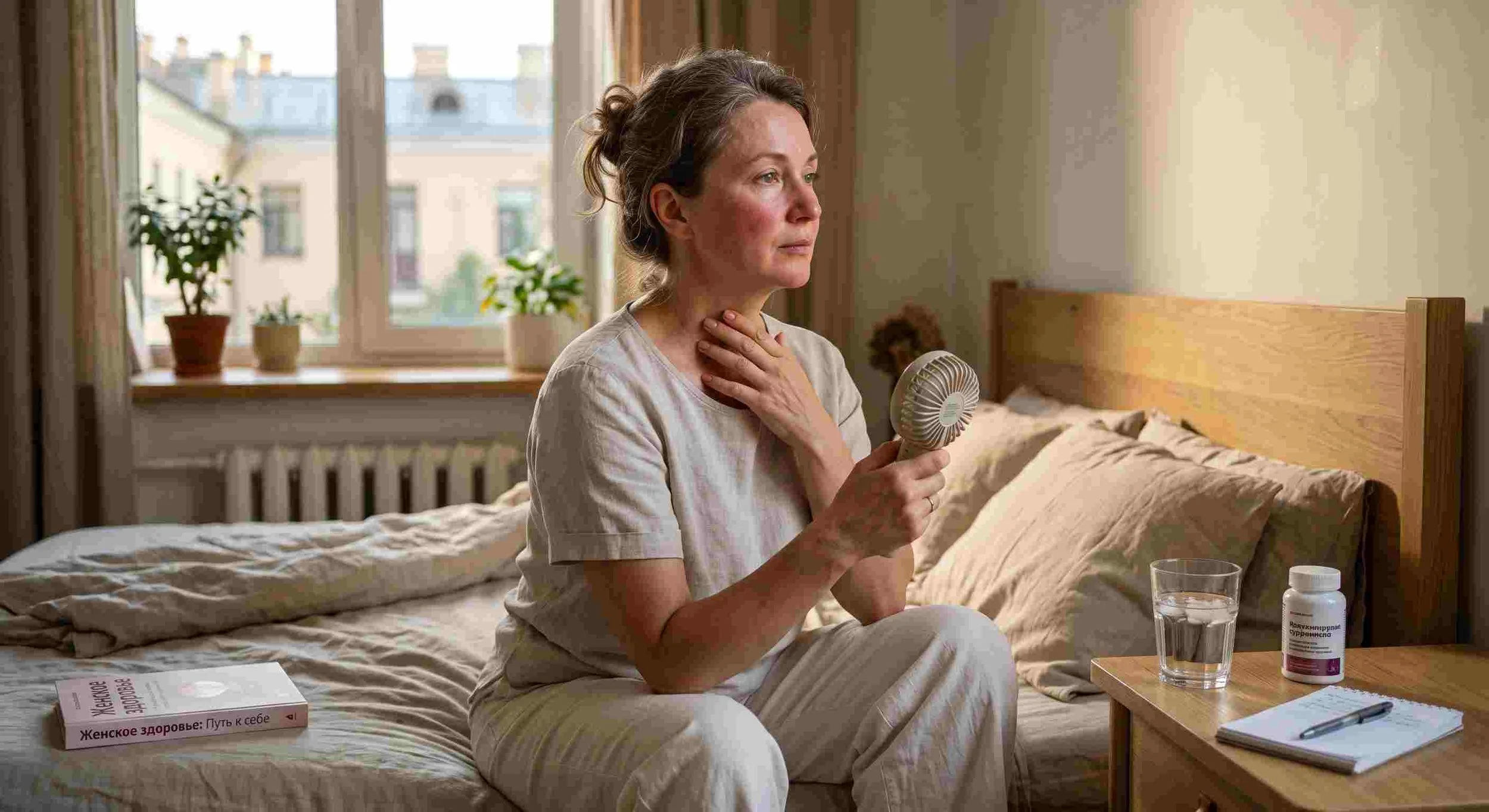

Desire usually drops because estrogen swings, sleep breaks and tissue things, not because you stopped loving your partner.