
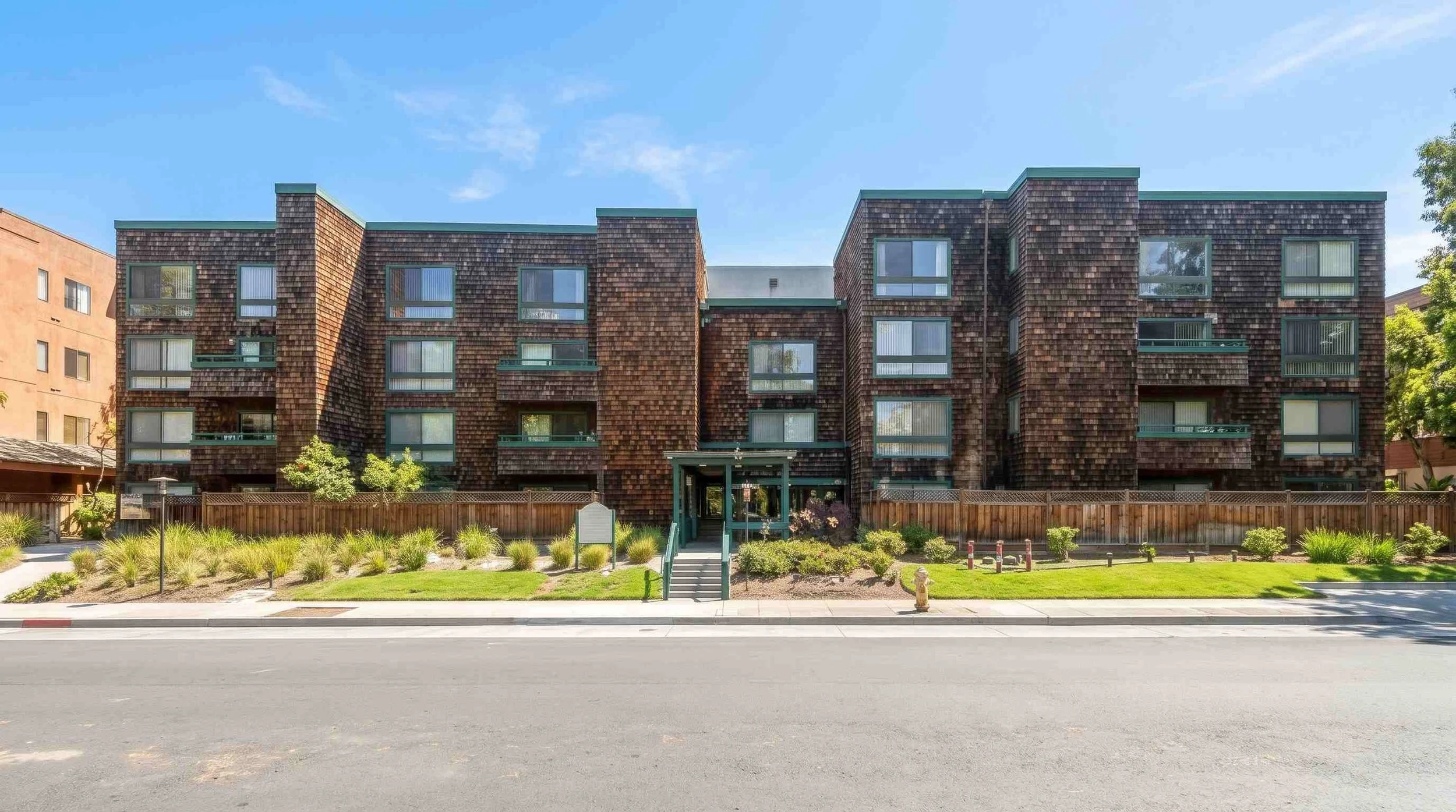
Lytton Gardens Community Care is one piece of the low income senior housing in Palo Alto clustered on and around University Avenue. The state licenses it as a Residential Care Facility for the Elderly, or RCFE, at 649 University Avenue, Palo Alto, CA 94301, License Number 430701864, with a capacity of 55 residents, first licensed on August 30, 1993, Community Housing, Inc. as the licensee and Anahi McKane as administrator of record.
Why This Address Is Unusual for Palo Alto
Because it is affordable senior housing with a licensed care facility attached, in one of the most expensive zip codes in the country. That combination barely exists on the Peninsula.
The housing side is run by CARING Housing Ministries, which lists three Lytton Gardens properties in Palo Alto: Lytton Gardens at 656 Lytton Avenue, Lytton Gardens II at 649 University Avenue, and Lytton Gardens IV at 330 Everett Avenue, all reachable at (650) 617-7373.
The 649 University Avenue address is where both things sit. The state licenses the care facility there, and the housing organization lists Lytton Gardens II at the same street number, which is why families searching for senior apartments and families searching for assisted living both end up looking at this building.
What "Low Income Senior Housing" Means Here
It means rent tied to income rather than to the market, under federal housing programs. That is a different arrangement from paying a monthly rate at a private assisted living community.
The scale is real. Front Porch Communities and Services, the parent organization, reported in its audited financial statements dated July 2025 that Lytton Gardens I has 220 units, Lytton Gardens II has 100 units and Lytton IV Housing Corporation has 51 units, all in Palo Alto, and that CARING Housing Ministries manages 23 and owns nine HUD-subsidized and tax credit facilities housing roughly 3,400 residents.
The same filing notes that the Lytton IV property received a HUD Section 202 capital advance in November 1993 that requires it to stay available to very low-income households. Buildings funded that way carry long-term obligations about who they serve, which is the reason rents here are not set by what the market would bear.
What That Means for a Waiting List
Subsidized senior housing in a city like Palo Alto almost always has one, and the length is the thing to ask about first. The National Institute on Aging advises asking each place how many people live there, what it costs, and whether there is immediate availability or a waiting list.
Ask for that answer in writing, with the date. A list that moved quickly two years ago tells you nothing about this year, and planning a move around a vague answer is how families end up with no housing and a signed notice on the old apartment.
Senior Apartments, Assisted Living and Nursing Homes Are Not the Same Thing
They differ by how much hands-on help comes with the roof. Mixing them up is the single most common mistake families make when they start searching.
The National Institute on Aging defines assisted living as care for people who need help with daily activities but not as much as a nursing home provides, with residents in their own apartments or rooms, shared common areas, up to three meals a day, help with personal care and medications, housekeeping, laundry, 24-hour supervision, and social activities.
A nursing home, by the same source, is a skilled nursing facility: a wider range of health and personal care, with nursing care, 24-hour supervision and rehabilitation services such as physical, occupational and speech therapy. Independent senior apartments sit at the other end, offering housing and housekeeping without that personal care.
Who Pays for What
This is where the affordable-housing side and the licensed-care side part ways. The National Institute on Aging states plainly that most people pay the full costs of assisted living themselves and that Medicare does not pay for assisted living, while Medicaid may cover some aspects depending on the state and eligibility.
So a rent that is income-based does not automatically mean the care is. Ask the community to separate the two in writing: what the housing costs under the program, and what any care services cost on top of it.
What to Ask Before You Put a Name on the List
Ask about staffing and turnover before you ask about the decor, because staffing predicts the daily experience and a lobby does not.
The National Institute on Aging's guidance on choosing a facility suggests bringing these questions to any community, including this one:
How many care providers are there per resident, and what training do they have?
How long have the director and the heads of nursing, food and social services worked here, and how often do key staff turn over?
Is there a doctor who checks on residents regularly, and how often?
What is planned during the week and on weekends, and can you sit in on an activity yourself?
Is there a safe place for residents to go outside?
How do residents get to medical appointments?
Then go back unannounced. The same guidance recommends a second visit without calling ahead, at a different day or time, ideally at a meal, so you meet different staff and see the dining room as it actually runs rather than as it is presented.
Services That Come With the Housing
Resident service coordinators are the quiet advantage of a nonprofit-run building. They are staff whose job is connecting residents to help that would otherwise require a family member to arrange it.
CARING Housing Ministries describes building partnerships to improve residents' access to supportive services through resident service coordinator grants, in areas such as transportation and socialization. For an older adult who no longer drives, a coordinator who knows the local ride options is worth more than most amenities.
The organization also notes that many of its communities have design features for residents with sight, hearing and mobility limitations. Ask which of those features exist in the specific unit being offered, since grab bars and roll-in showers vary from floor to floor in older buildings.
The Neighborhood Around University Avenue
University Avenue is downtown Palo Alto's main street, which puts this address within walking distance of everyday errands rather than out on an arterial road.
Transit is unusually close. Caltrain's Palo Alto station sits at 95 University Avenue in the same 94301 zip code, in Zone 3, with accessible platforms, parking, restrooms and ticket machines. For a resident who still travels to see family up or down the Peninsula, that matters more than a shuttle schedule.
Downtown Palo Alto is also flat and gridded, which is the sort of detail that decides whether someone with a walker actually leaves the building. Walk the block yourself before deciding, at the time of day the resident would be out.
Medical Care While Living There
Residents keep their own doctors. An RCFE license covers room, meals, help with daily activities and medication assistance, not the medical management of a resident's conditions.
That gap is why many families in licensed care arrange a physician who comes to the resident rather than the reverse. A visit in the apartment covers the routine checks, the medication review and the paperwork that otherwise means a car, a waiting room and half a day.
Ask the community two specific questions about this. Whether an outside physician can see residents on site, and what happens if a resident's needs grow beyond what the license allows, because an RCFE must move someone out at that point and knowing it in advance changes how you plan.
A Next Step That Costs You Nothing
Call (650) 617-7373, ask where the waiting list stands, and ask for the current rent and care terms in writing. Everything else follows from those two answers.
Confirm the license yourself while you are at it. License Number 430701864 and the address 649 University Avenue, Palo Alto, CA 94301 are what the state record shows, and a current record will also show the licensed capacity and any open complaints.
When the Search Covers More Than One Community
If you are weighing several places across Santa Clara County at once, a placement agency can shorten the list to the ones that match the care level and the budget before you spend weekends driving. Many families use one at exactly this stage.
And whichever community it turns out to be, the LIC 602A is waiting at the end of the paperwork. Getting the physician's report done early keeps it from being the thing that holds up a move everyone has already agreed on.
Sources Used
How To Choose a Nursing Home or Other Long-Term Care Facility – National Institute on Aging (2023)
Independent Auditor's Report, Consolidated Financial Statements, and Supplementary Information – Front Porch Communities and Services (2025)
Long-Term Care Facilities: Assisted Living, Nursing Homes, and Other Residential Care – National Institute on Aging (2023)
Our Communities – CARING Housing Ministries
Our Residents – CARING Housing Ministries
Palo Alto – Caltrain

Written by Sofiia Puhach
November 3, 2026
Explore More Assisted Living Communities


Address: 649 University Avenue, Palo Alto, CA 94301