
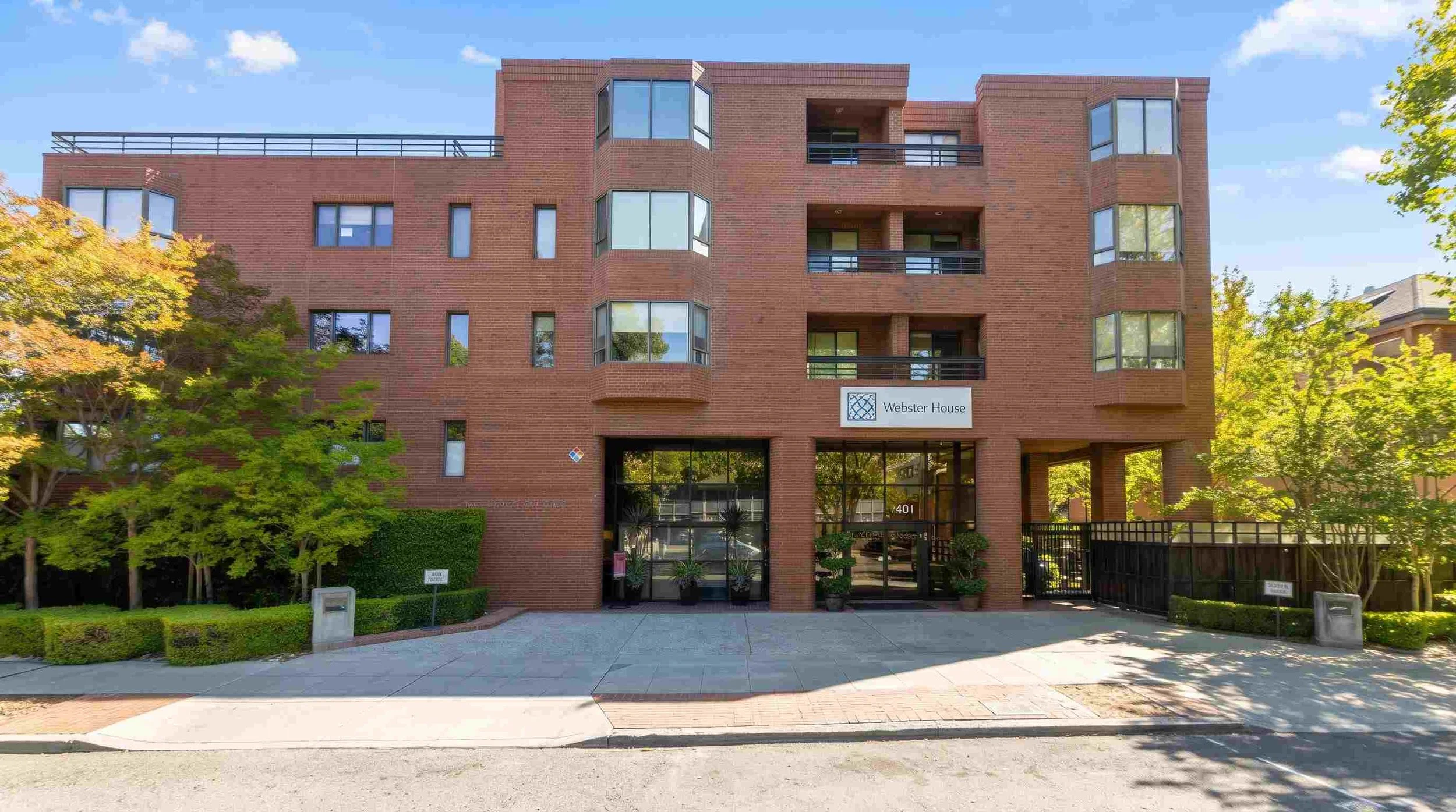
Webster House sits at 401 Webster Street in downtown Palo Alto, licensed by the state under license number 435202504 for a capacity of 54 residents. For families looking at skilled nursing in Palo Alto, the detail that matters most here is that the nursing care is a separate building at the end of the same block rather than a different town.
What Kind of Community Is Webster House?
It is a continuing care retirement community, which means several levels of care share one campus instead of being scattered across different addresses. Front Porch Communities and Services holds the license and operates it.
The residential building at 401 Webster Street covers independent living and assisted living. The Webster House Health Center is at 437 Webster Street, a short walk down the block, and handles short-term rehabilitation and long-term skilled nursing with round-the-clock support.
Size and License Record
At 54 licensed beds on the residential side, this is a small community by assisted living standards. The facility describes itself as boutique-style, and the practical meaning of that number is a short resident list, staff who learn names quickly, and fewer places for someone to be overlooked.
The license has been in place since 2015 and the facility's current status with the state is licensed. Any family seriously considering a move should still pull the current record themselves, since inspection history and complaint findings sit there and change over time.
How Do the Levels of Care Work on One Campus?
Three levels run side by side: independent living, assisted living, and skilled nursing at the health center. The point of the arrangement is that a change in health does not have to mean a change in town.
Assisted Living at 401 Webster Street
The assisted living program is built around an individual care plan rather than a fixed package. Listed services include licensed personal care and help with activities of daily living, a 24-hour care team, a notification response system, medical record maintenance, social services and counseling, and support for walking and mobility.
Health services on site cover vital sign checks and an annual assessment, nurse visits when general health changes, medication management, first aid, blood pressure readings, and incontinence care. Specialized care services listed include physical therapy, occupational therapy, diabetic monitoring, and wound care.
Two conveniences are worth noting because they remove trips out: podiatry and dental services are listed as available on site, and the community arranges transportation to medical appointments. For a resident who has stopped driving, that is the difference between keeping appointments and quietly skipping them.
Skilled Nursing and Rehabilitation at the Health Center
The health center at 437 Webster Street provides 24/7 support for both short-term rehabilitation, such as recovery after a hospital stay or a joint replacement, and long-term skilled nursing. The facility describes care plans as built with the resident and their own physician.
That proximity matters more than it sounds. Moving from assisted living to skilled nursing usually means leaving a building, a routine, and the people who know you. Here it is a move down the block, which keeps visiting hours workable for a spouse who does not drive.
What Should You Check Before Signing a CCRC Contract?
The contract and the money, in that order, because the financial structure of a continuing care retirement community is different from a month-to-month assisted living agreement.
The National Institute on Aging (2023) describes the usual CCRC model plainly: most charge a one-time entrance fee, which may be relatively expensive, plus a monthly fee after that, and people pay most of these costs themselves. Where you live on the campus depends on the level of service you need at the time.
Questions That Belong in Writing
So the questions to ask are concrete. What does the entrance fee cover, and is any part of it refundable. What triggers a move from one level of care to another, and who decides. How much does the monthly fee change when care needs increase. What happens if funds run out after years of residency.
Get the answers in writing, and read the contract twice before signing. The NIA's guidance on choosing a facility is blunt about this step: make sure all the agreements are clear, ask about anything you do not understand, and read the contract again before you sign it.
How Do You Judge a Community on a Tour?
By what you see on a second, unannounced visit, not the first one with an appointment. Tours are prepared. Ordinary afternoons are not.
The National Institute on Aging (2023) suggests visiting several places in person, meeting the director and nursing director, and then making a second visit without calling ahead, on a different day or time, so you meet other staff. Stopping by at mealtime is specifically recommended, because the dining room shows a lot.
What to Look At and What to Ask
What to look at while you are there: whether residents are appropriately dressed and well cared for, whether staff and residents speak to each other warmly, whether the building is clean and well maintained, state licensing, and accessibility for people with disabilities.
What to ask: how many care staff there are per resident and what training they have, how long the director and heads of nursing have been there, how often key staff turn over, whether a doctor checks on residents regularly, what activities run on weekends as well as weekdays, and how residents get to medical appointments. Staff turnover is the question most families forget and the one that predicts the most.
Our overview of small group homes and their limits is a useful comparison point if you are weighing a large campus against a six-bed house, since the trade-offs run in opposite directions.
What Is the Neighborhood Like?
Downtown Palo Alto, and walkable in the real sense. The community is four tenths of a mile from the University Avenue restaurants and shops, which puts coffee, a bank, and a bookstore within an ordinary walk rather than a scheduled outing.
The facility lists Whole Foods Market at 0.7 miles, Bank of America at 0.1 miles, and El Camino Park and Arboretum Grove each about a mile away. Baylands Nature Preserve is 3.4 miles out for anyone who still wants a longer walk among birds rather than traffic.
Access to Medical Care
Medically, the location is unusually strong. Stanford Hospital is 1.9 miles away, which shortens both emergency transport and the routine specialist appointments that fill a calendar after 80. Families comparing options across the Peninsula, including senior living in Mountain View, often find that this particular stretch of Palo Alto wins on proximity to specialist care.
The trade-off is the one that comes with any downtown address. There is street noise, parking for visitors is Palo Alto parking, and the surroundings are busier than a suburban campus. For a resident who wants to stay in the middle of things, that is the appeal rather than the drawback.
Medical Care for Residents
Assisted living is a residential license, not a medical one, so routine physician care comes from outside the building even where on-site nursing is strong. Knowing who provides it is part of comparing communities.
Who Provides Routine Care
Some families keep their own primary care doctor and arrange visits to the community. A physician who visits residents in senior living can handle checkups, medication reviews, and paperwork such as the LIC 602A without a car trip, which is usually the sticking point after a move.
Telehealth covers a share of the rest, particularly follow-ups and medication questions, and our guide to telemedicine from home in California explains how those visits work for older adults. On-site podiatry and dental services at Webster House remove two more reasons to leave the building.
Current contact details for the community are (650) 327-4333 for residential living and (650) 328-3300 for the health center, and the community page is at Webster House on the Front Porch site. Verify availability and pricing directly, since both change without notice.
The Next Step
Book a tour, then come back unannounced. Those two visits will tell you more than any brochure, and the second one costs nothing but an afternoon.
The community's own process runs in three stages: a personal tour arranged by phone or email, then an application with a deposit chosen alongside the sales team, then move-in support. Families who are not ready yet can join a reservation list instead, which is worth asking about early given the size of the community.
If You Are Comparing Several Communities
If you are comparing several places across the Peninsula at once, a senior placement agency can narrow a list to the communities that actually have openings at the right level of care, which saves weeks of calls. Nearby options are worth a look too, including Silver Oaks in Menlo Park and, further north, Providence Place in San Francisco.
Whichever community you land on, the LIC 602A will be waiting at the end of the process. Getting the medical form handled early keeps a move-in date from slipping while everyone waits on an appointment.
Sources Used
Care Options – Front Porch
How To Choose a Nursing Home or Other Long-Term Care Facility – National Institute on Aging (2023)
Long-Term Care Facilities: Assisted Living, Nursing Homes, and Other Residential Care – National Institute on Aging (2023)
Personalized Lifestyle – Front Porch
Webster House: Palo Alto Senior Living – Front Porch

Written by Sofiia Puhach
October 27, 2026
Explore More Assisted Living Communities

Address: 401 Webster Street, Palo Alto, CA 94301