
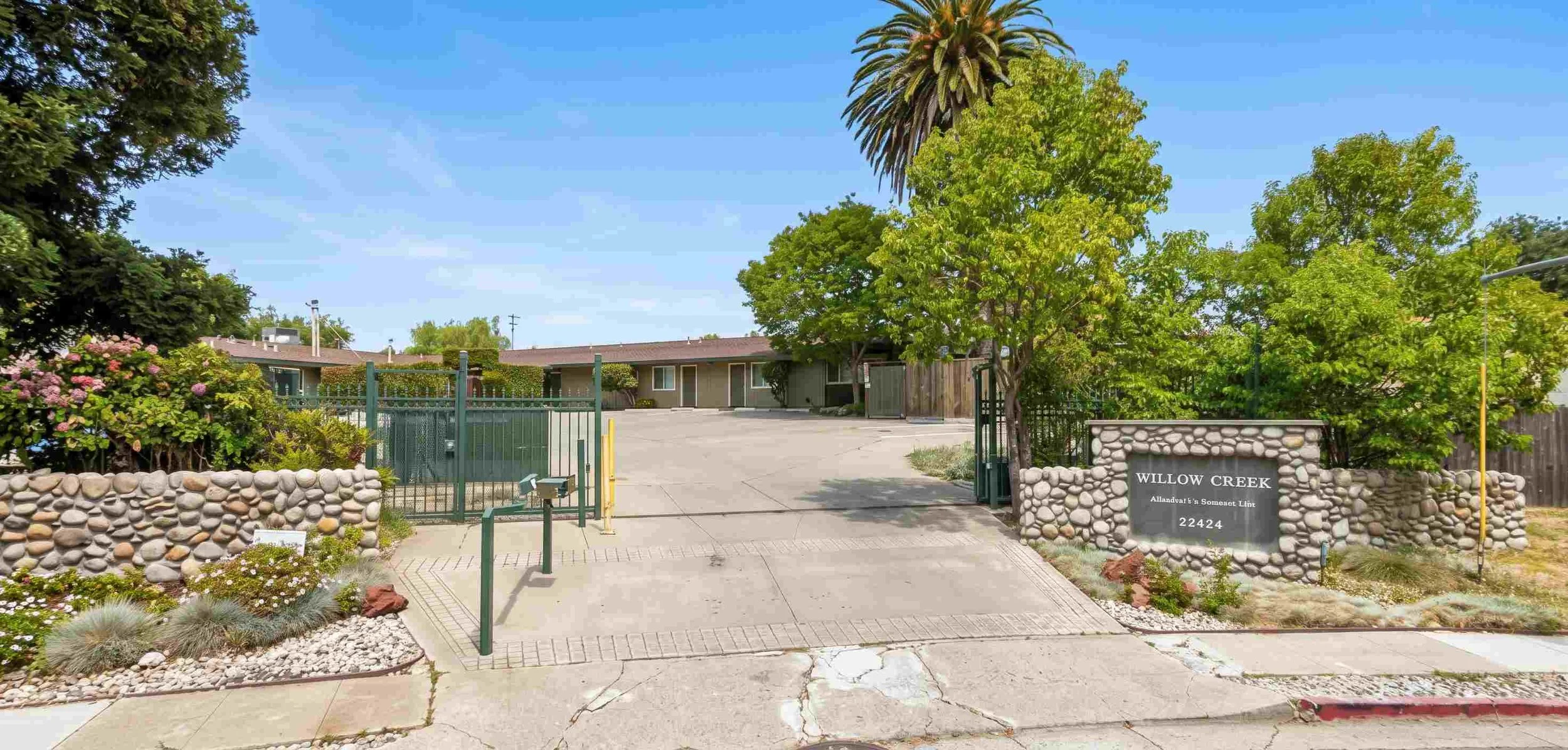
Willow Creek Alzheimer's & Dementia Care Center stands at 22424 Charlene Way in Castro Valley, holds California licence number 015601256, and is licensed for 49 residents. The licence was first issued on 5 September 2006, the licensee of record is Altcare Willow Creek, Inc., and the community trades publicly under the shorter name Willow Creek Memory Care.
Memory care in Castro Valley is a small field, and this address is unusual inside it. The whole community is built for dementia rather than having a dementia wing attached to a general assisted living building, which changes the daily routine, the staffing, and the questions worth asking before anyone signs anything.
What Makes a Dementia-Only Community Different?
Everything is built around one group of residents. There is no general assisted living population next door whose schedule and expectations have to be balanced against dementia care, which is the arrangement in most buildings that advertise memory care.
In practice that shows up in small ways. The whole campus can be secured rather than one corridor, activity programming does not have to work for two very different audiences at once, and staff spend their entire shift with residents who have memory loss instead of rotating between wings.
It also narrows the fit. A parent with mild forgetfulness who still wants independence and a wine club will not be happy in a dementia community, and a dementia community is not obliged to take anyone whose needs sit outside its licence. Ask directly where your parents fall on that line.
What Does Memory Care in Castro Valley Include Here?
Furnished rooms, meals, personal care and round-the-clock staffing, plus dementia-specific programming. The community's published description of its services and amenities is the place to start, and it is worth reading before the tour so you can check the claims against what you see.
What the Community Publishes
Willow Creek lists 24-hour awake staffing, help with activities of daily living, medication management with on-site pharmacy coordination, three daily meals and snacks, daily housekeeping and laundry, fully furnished rooms, an on-site salon and barber shop, and hospice care when it is needed. It also states that it has served the community since 2006, which lines up with the licence date on record.
The grounds get their own mention. The community describes roughly an acre of landscaped, secured campus with walking paths, therapeutic gardens and a bird aviary, and names bird watching and gardening among the activities residents take part in. For a resident who paces, an enclosed outdoor loop is worth more than most indoor amenities.
What to Verify Yourself
Pricing is described as all-inclusive with no hidden fees, which is a claim to test rather than accept. Ask what triggers a higher rate, what happens when a resident needs two-person assistance, and whether the quoted figure changes as dementia progresses. Get the answer in writing before the admission agreement is signed.
Is This Assisted Living, Board and Care, or Memory Care?
It is licensed as assisted living, and California has no separate memory care licence. The word on the sign describes the programme, not the legal category, which is why two communities using the same word can run very differently.
The National Institute on Aging (2023) sorts the main options by size. Board and care homes, also called residential care facilities or group homes, usually have 20 or fewer residents, with personal care and meals and staff around the clock but no nursing or medical care on site. Assisted living facilities, it says, range from as few as 25 residents to 100 or more.
At 49 licensed beds this sits in the middle of that second band. If you have been searching for board and care in Castro Valley and keep landing on places this size, the mismatch is in the search term rather than the listings. Dementia care in the East Bay spreads across both categories, and the licence category alone tells you very little about the care.
How Does Medical Care Work Day to Day?
It comes from outside the building. Assisted living in California provides care and supervision rather than medical treatment, so residents keep their own doctors and the community supports the plan instead of writing it. That surprises families who assume a licensed community has a doctor on staff, and it shapes who you call when something changes at nine at night.
Medication management is the part the community does handle, and its published description covers secure storage, help with administration and coordination with a pharmacy. Diagnosis, prescribing and review of a changing dementia still belong to a physician who sees the resident.
For a resident with dementia, getting to an appointment is its own problem. A car ride, a waiting room and an unfamiliar office can undo a calm week, and appointments that are hard to reach are the ones that get skipped. Arranging a physician who visits residents where they live removes that trip for routine review and for the medication changes that dementia care tends to need.
What Does a Licence From 2006 Tell You?
Nearly two decades of public record attached to one address. California licenses assisted living as a residential care facility for the elderly, and the file holds the licensee, the administrator, the licensed capacity, the status, the start date, and the inspection and complaint history.
A long record is more useful than a short one because it can show a pattern rather than a snapshot. Read it for repeat findings and for how quickly problems were corrected, not for the existence of findings at all, since any community open since 2006 will have some.
Look the licence up yourself rather than trusting any listing, this one included. Ownership and administration change, capacity gets adjusted, and only the state record is current on the day you read it. The administrator named in the file is also worth asking about, because a new administrator and a long licence are a different combination from a stable one.
The Facts on Record
Here is what California's residential care record and the community's own published pages show today. Treat the phone number and the operating name as the versions the community uses now, and the licence details as the version the state holds.
|
Detail |
On Record |
|---|---|
|
Name on the licence |
Willow Creek Alzheimer's & Dementia Care Center |
|
Name the community uses |
Willow Creek Memory Care |
|
Address |
22424 Charlene Way, Castro Valley, CA 94546 |
|
California licence number |
015601256 |
|
Licensed capacity |
49 residents |
|
Licence first issued |
5 September 2006 |
|
Licensee of record |
Altcare Willow Creek, Inc. |
|
County |
Alameda |
|
Phone published by the community |
(510) 216-4355 |
Licensed capacity is a ceiling rather than a headcount. How many residents live there this month, and whether a room is free at all, are separate questions for the first phone call. Ask about the waiting list in the same breath, including how long it currently is and whether a deposit holds a place on it.
What Should You Ask on a Tour?
Ask about staffing, training and the ceiling on care. The National Institute on Aging (2024) publishes a list of questions for families choosing long-term care for someone with Alzheimer's, and the ones that matter most in a dementia community are the specific ones.
How many staff are on the floor at two in the morning, and are they awake
Who trains the care team in dementia care, and how often
What a typical day looks like for a resident at your parent's stage
Whether there is a safe outdoor space a resident can use without an escort
At what point in a dementia the community would say it can no longer meet the need
What is included in the fee, and which services cost extra
That last question about the ceiling is the one families regret skipping. A move that has to happen twice is harder on a person with dementia than a single move made to the right place, so it is worth knowing the limit before the deposit.
Go More Than Once
The NIA (2023) advises visiting at different times of day and meeting the facility's leadership before deciding. Its guidance on how to choose a long-term care facility also suggests talking with other families whose relatives already live there, which tends to produce franker answers than a scheduled tour.
A weekday morning and a weekday evening show two different buildings. Mealtimes are the most revealing twenty minutes in any memory care community, because you can see how much help residents get, how unhurried the staff are, and whether anyone is eating alone in a corridor. Try to be there for one.
What Is the Charlene Way Area Like?
Residential, flat and close to a hospital. Charlene Way sits in central Castro Valley in Alameda County, off the main east-west route through town, in a quiet pocket of houses rather than on a commercial strip.
Acute care is minutes away. Sutter Eden Medical Center stands at 20103 Lake Chabot Road in the same 94546 postcode, which matters for a family weighing how long a night-time ambulance trip would take and how far they would have to drive to sit with someone afterwards.
The community also points to its closeness to major freeways, and that cuts both ways. Interstate 580 and Interstate 238 make the drive manageable for relatives coming from Oakland, Hayward, Dublin or Pleasanton, which is the practical argument for this location over somewhere prettier and further out.
Contacts and a Reasonable Next Step
Call, ask whether a room is free, and start the physician's report while you wait for the answer. The community publishes (510) 216-4355 for 22424 Charlene Way, and its own pages at Willow Creek Memory Care are the only version of its services that comes from the community rather than from a directory.
The LIC 602 is the step that holds families up. A physician has to see the person, complete the form and sign it, and arrange that it can take two weeks. Starting it alongside the tours keeps a room offer from slipping away over paperwork.
If Castro Valley Comes Up Empty
Dementia-specific beds in the East Bay are not plentiful, and a 49-bed community does not keep a wing empty. If the answer is no, or if you would rather not work through a dozen numbers yourself, a placement agency will know which Alameda County communities currently have space, which stage of dementia your parent is at, and which waiting lists actually move.
Sources Used
Alzheimer's Caregiving: Finding Long-Term Care – National Institute on Aging (2024)
How To Choose a Nursing Home or Other Long-Term Care Facility – National Institute on Aging (2023)
Long-Term Care Facilities: Assisted Living, Nursing Homes, and Other Residential Care – National Institute on Aging (2023)
Sutter Eden Medical Center – Sutter Health
Your Local Partner in Memory Care – Willow Creek Memory Care

Written by Sofiia Puhach
Ocotober 13, 2026
Explore More Assisted Living Communities

Address: 16 Coleman Place, Menlo Park, CA 94025