
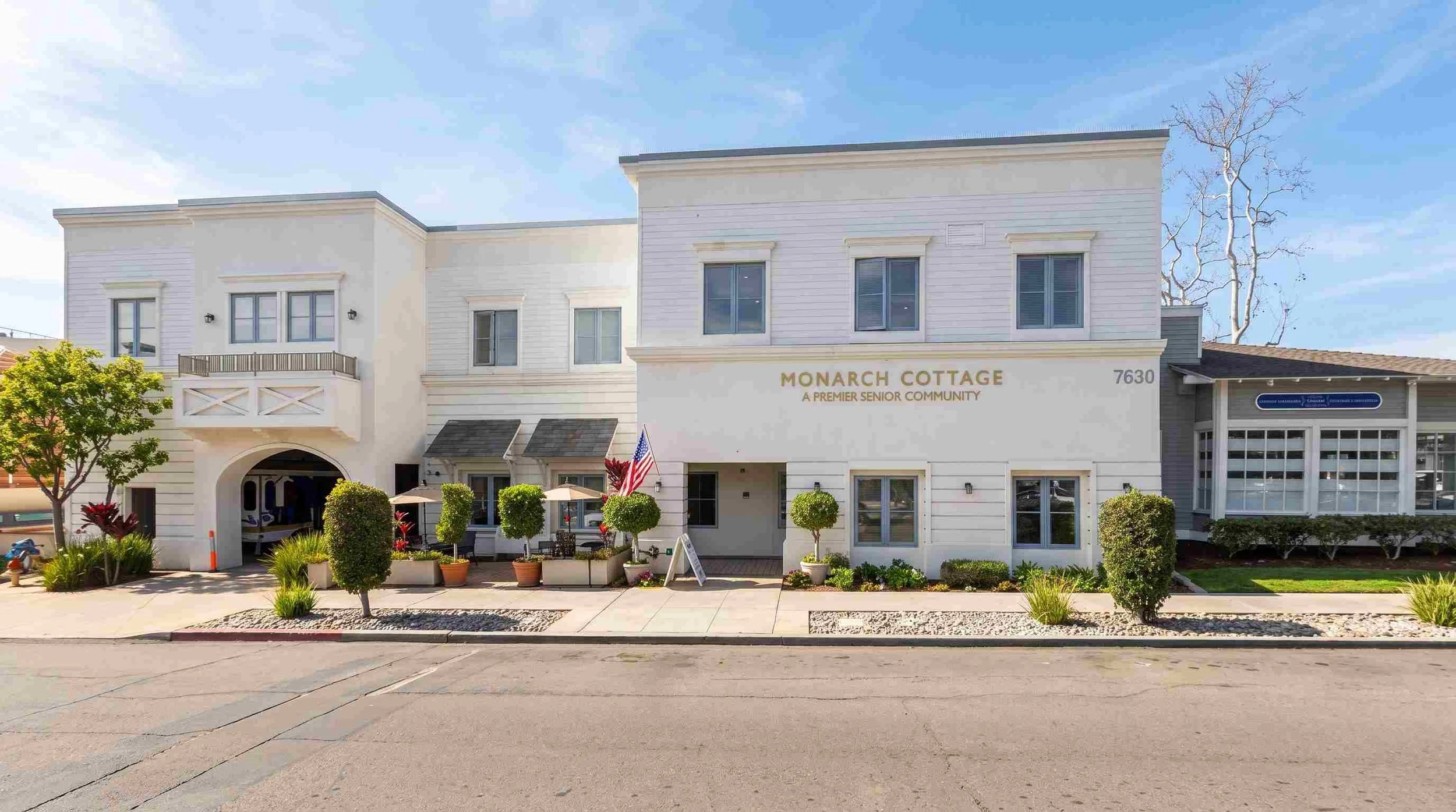
Monarch Cottages La Jolla sits at 7630 Fay Avenue, La Jolla, CA 92037, in San Diego County, and it is one of the addresses families find when they search for memory care in La Jolla. State licensing records list it under license number 374603724, with a licensed capacity of 52 residents, a current status of licensed, and a license first issued on January 22, 2018.
The address itself tells you something. Fay Avenue runs through the heart of the village rather than out along a highway, so this is a care home inside a walkable neighborhood instead of a campus set apart from one.
Is This Memory Care or Assisted Living?
The licensing record answers a narrower question than families expect. It shows the home in California's residential care facility for the elderly category, which is the same license that covers assisted living and board and care homes, and it does not record a separate memory care designation.
So the memory care question gets settled by what the home actually provides, not by the license on the wall. That makes it a question to ask directly and to get answered in writing before any deposit changes hands.
Four things are worth confirming in that conversation: whether exits are secured and how, whether staff have dementia-specific training and how many hours of it, what the staffing ratio is overnight rather than at midday, and what behaviors would cause the home to say a resident is no longer appropriate for it.
What Does a 52-Resident Licensed Home Mean Day to Day?
It sits in the middle of California's range, and the middle has real advantages. Six-bed board and care homes can be quiet to the point of isolation, while two-hundred-unit communities can feel like hotels where nobody knows a resident's name.
Fifty-two residents is usually enough to support a staffed dining room, a planned activity schedule, and caregivers who notice when someone is having an off day. It is also small enough that the administrator knows every resident, which is the practical difference families feel on the third visit rather than the first.
Scale shapes the questions worth asking. Ask how many caregivers are on the floor at 3 a.m., not how many are employed. Ask to see the common room in mid-afternoon, which is the hour that shows whether shared space is actually used.
What Memory Care Should Add Beyond Assisted Living
Structure, supervision, and staff who are trained for the hard moments. Those three are what separate a dementia-capable home from a pleasant one.
Alzheimer's disease is progressive, which is the fact that drives every planning decision. The CDC (2024) describes it as developing gradually, starting with mild memory loss and advancing to difficulty holding a conversation, carrying out daily activities, or responding to the environment, and notes that an early, accurate diagnosis gives families time to plan for treatment, finances, advance directives, and future care needs.
The National Institute on Aging (2023) sets out how the housing categories differ, from board and care homes to assisted living and continuing care communities, and what each generally includes. Reading that before a tour makes it much easier to tell a description from a service.
How Staff Respond Matters More Than the Decor
Watch how a caregiver handles a resident who is confused or insistent during your visit. Correcting someone with dementia usually escalates the moment rather than settling it, and our piece on why correcting someone with dementia backfires covers the approach that works instead.
If the diagnosis is still unsettled, a short office assessment often comes first. Our explainer on what the clock drawing test means for memory covers one of the quick screens a clinician may use.
How Does Medical Care Work at a Licensed Care Home?
Most of it arrives from outside the building, which is why the arrangements matter more than the brochure. Routine checkups, medication reviews, and lab work usually come from the resident's own physician rather than from facility staff.
That leaves transportation as the practical problem. Every appointment means getting a person with memory loss into a car, into an unfamiliar waiting room, and back again, and each of those steps costs the family a morning. Listings of primary care and medical specialists who see patients where they live are worth checking against this address before the move, so the arrangement is in place rather than improvised.
For La Jolla specifically, Jennifer Spurlock, MD is an internal medicine and primary care physician serving patients in San Diego, which is the kind of local relationship that keeps a resident's chronic conditions reviewed without a trip across the county.
Planning for the Later Stages
Ask this at the first visit rather than the fifth, however uncomfortable it feels. The question is simple: at what point would this home say it can no longer care for my parents?
The scale of what families take on is worth seeing plainly. The Alzheimer's Association (2026) reports an estimated 7.4 million Americans living with Alzheimer's dementia, and nearly 13 million family members and friends providing more than 19 billion hours of unpaid care in the past year .
Wound care, injections, catheter care, and two-person transfers sit outside what this license category assumes. Some homes arrange those through outside agencies and some do not, and the answer decides whether a later move is coming. Our guide to what the last stage of dementia actually takes covers the needs that arrive at the end and the hospice option that often replaces another move.
La Jolla and the Blocks Around Fay Avenue
The village is the reason many families look here, and it is a genuine advantage. Fay Avenue runs a few blocks from shops, restaurants, and the Fay Avenue bike path, so a short outing with a visiting family member does not require a car.
The coastal climate does real work too. Mild temperatures year-round mean outdoor time is available most days, which matters for sleep and for restlessness in the late afternoon.
Hospital access sits close by. Scripps Memorial Hospital La Jolla operates a Level I trauma center and emergency room just off Interstate 5 on Genesee Avenue, a short drive from the village, with UC San Diego Health facilities also in the surrounding area.
What to Look At on a Tour
Go twice, and make one of the visits unannounced if the home allows it. Mid-morning tours are arranged to look good; a late-afternoon or weekend visit shows the staffing as it actually is.
Who is on the floor at the hour you visit, and who is on at night
How secured exits work, and whether residents can reach an outdoor space on their own
Whether current residents resemble your parent in ability and stage
What the activity schedule looked like yesterday, not on the printed calendar
How the dining room sounds and smells at a real mealtime
What the written agreement says about rate increases and about discharge
Ask for the facility's plan of operation and the current rate sheet in writing. Anything described verbally and not written down is worth asking about a second time.
Contact and License Details
State licensing records list the following for this address. Confirm each item directly with the home, since details change between inspections.
Facility: Monarch Cottages La Jolla
Address: 7630 Fay Avenue, La Jolla, CA 92037, San Diego County
Phone on the licensing record: (858) 924-8530
License number: 374603724
Licensed capacity: 52 residents
Status: Licensed, first issued January 22, 2018
Licensee: Monarch La Jolla LLC, Monarch Senior Living LLC
Administrator: Risa Jester
The facility's own website could not be opened during the live check for this article, so no site link is included here. Calling the number above is the reliable route to current availability and pricing.
Your Next Step
Compare this address against two or three others before deciding, because a single tour gives you nothing to measure against. Availability in La Jolla moves quickly, so a shortlist is worth building before a bed opens rather than after.
Families who are short on time often work with a placement advisor who already knows which homes in San Diego County take which level of need. Listings of agencies that help match a parent to a care home are a reasonable place to start that search.
If you are coordinating this from another city, build the phone and visit routine before the move rather than after. Our notes on long distance caregiving cover how to stay genuinely informed without calling the front desk every day.
Sources Used
About Alzheimer's – Centers for Disease Control and Prevention (2024)
Long-Term Care Facilities: Assisted Living, Nursing Homes, and Other Residential Care – National Institute on Aging (2023)
New Alzheimer's Association Report: Americans Care Deeply About Brain Health but Most Don't Know How to Maintain It – Alzheimer's Association (2026)
Scripps Memorial Hospital La Jolla Emergency Room – Scripps Health

Written by Sofiia Puhach
October 21, 2026
Explore More Assisted Living Communities
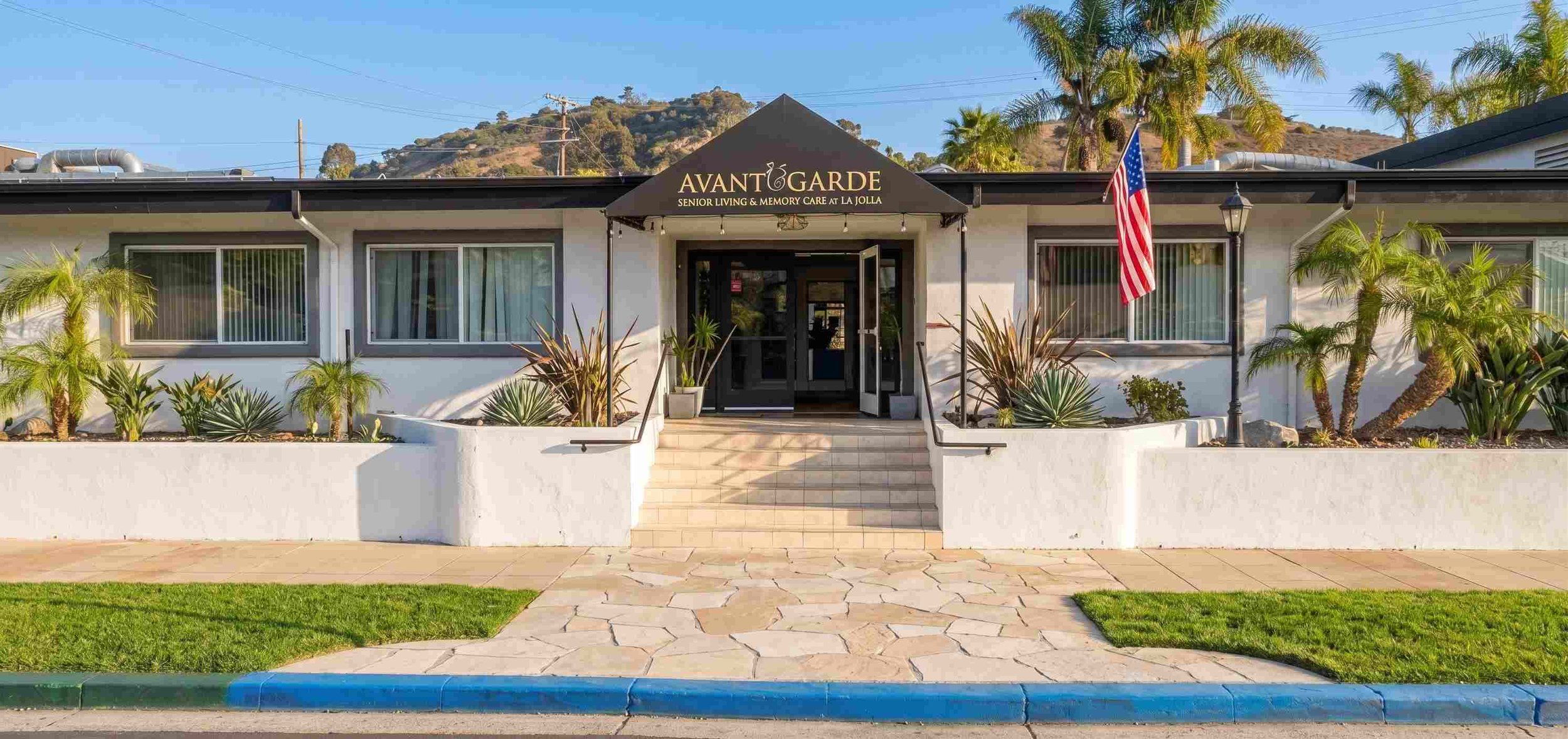

Address: 7630 Fay Avenue, La Jolla, CA 92037 (San Diego County)