
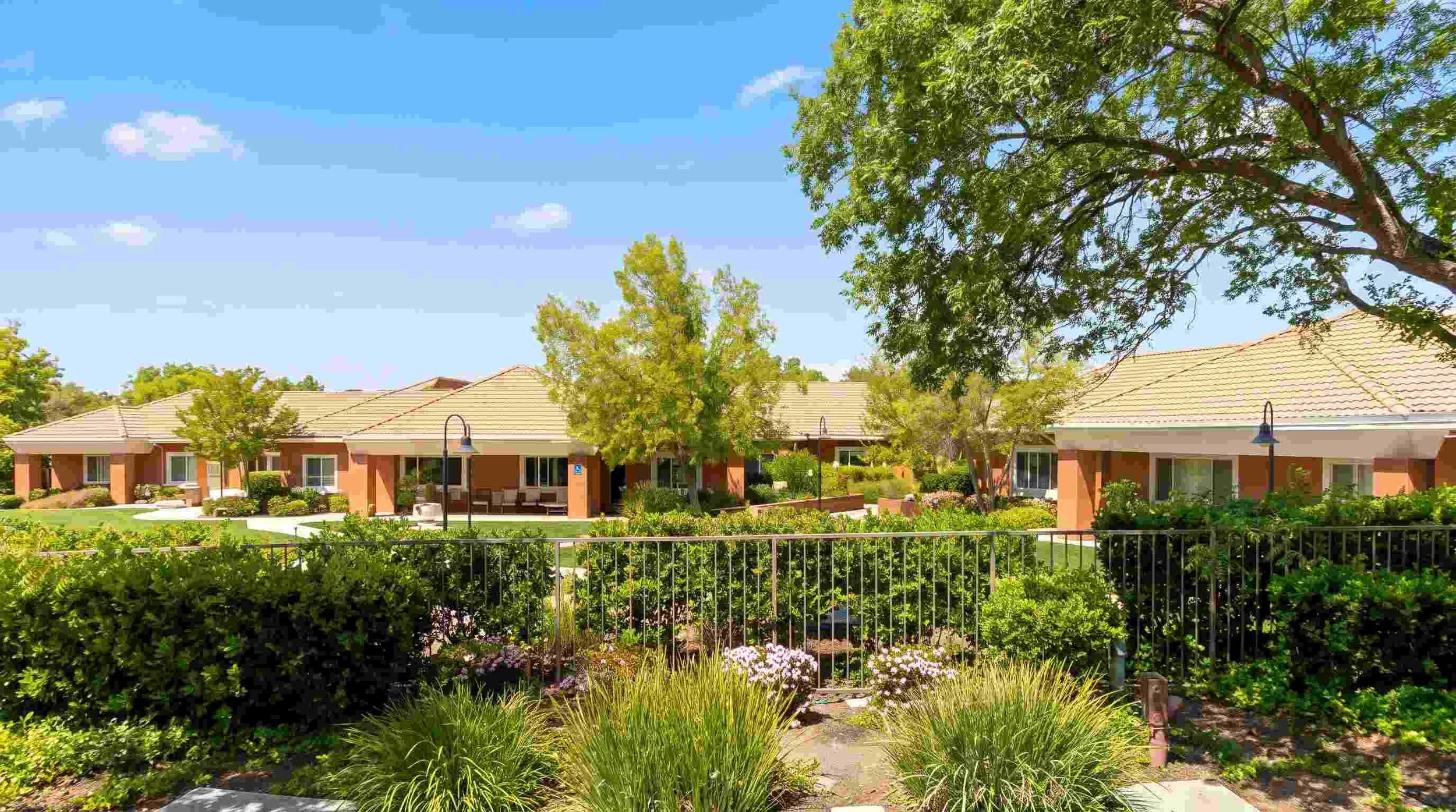
Roseleaf Gardens is an assisted living community in Chico, CA, at 2770 Sierra Ladera, 95928, in Butte County. It holds License 045002775 from the California Department of Social Services, with a licensed capacity of 56 residents and a license first issued on April 19, 2021. The licensee of record is Golden Roseleaf Gardens OPCO LLC, and the administrator listed with the state is Stacy Baxter.
Fifty-six beds puts this community in a particular middle ground, and that is the most useful thing to know before you visit. It is far smaller than the 150- and 200-bed campuses in bigger California cities, and much larger than the six-bed board and care houses scattered through Chico neighborhoods. The phone number on the state record is (530) 895-0800.
What a Licensed Capacity of 56 Means on a Tour
It changes what you should be looking at. In a community this size, you can reasonably expect to meet most of the people who would be caring for your parents, which is not true at 200 beds. Ask who works weekends and overnight, because that is where small communities differ most from each other.
Capacity is a ceiling, not a census. A 56-bed license means the state permits up to 56 residents; the number actually living there on the day you tour may be lower, and staffing is built around the real number. Ask both figures out loud and compare the answers.
Smaller also means fewer separate wings and shared spaces. That can feel calmer for someone who gets overwhelmed, and limiting for someone who wants a full activity calendar every day of the week. Neither is better in the abstract; it depends entirely on the person moving in.
How to Judge This Kind of Community in One Visit
Watch the staff, not the lobby. MedlinePlus (2026) recommends paying attention to whether staff use residents' names, whether residents are clean and comfortably dressed, and whether the building is well lit, at a comfortable temperature, and free of strong odors or constant noise. Those signals are hard to stage.
Questions Worth Asking Out Loud
A short list covers most of what matters:
Is the community accepting new residents right now, and what does the waiting list look like?
Who is on duty overnight and on weekends, and how many residents does each caregiver have?
How are special diets, assisted feeding, and fluid intake handled?
Can residents bring their own furniture and personal belongings?
What happens if care needs grow beyond what the license allows?
What are the discharge conditions, in writing?
Visit More Than Once
One tour is a sales appointment. MedlinePlus suggests visiting more than once, at different times of day and on different days of the week, which is the only way to see a shift change, a mealtime, and a quiet afternoon. Showing up unannounced the second time tells you more than the first visit did.
Assisted Living, Memory Care, or a Nursing Home?
These three are routinely mixed up, and picking the wrong one costs a family a second move. Cleveland Clinic (2024) describes assisted living as apartments with help for meals, laundry, and medication reminders, memory care as specialized dementia care with round-the-clock supervision in a secure, easy-to-navigate setting, and nursing homes as skilled facilities with 24/7 medical treatment and therapies.
The warning in that same guidance is worth repeating. Some assisted living communities do not accept residents with dementia at all, and some end a lease after a diagnosis. If memory loss is already part of the picture, ask directly what the community is licensed and staffed to handle, and ask what triggers a move-out.
A residential care facility for the elderly in California is a non-medical setting by design. Help with bathing, dressing, meals, medication reminders, and supervision is standard; ongoing skilled nursing is not what the license covers. That line is the single biggest source of surprise for families a year into a placement.
Who Handles the Medical Side Once Someone Moves In
The community handles daily care; doctors stay outside it. Residents keep their own physician, and visits either happen at an office or come to the building. For someone who no longer travels easily, a doctor who makes visits to residential communities can cover routine checks, medication review, and the paperwork a facility needs without anyone arranging a car.
Hospital care in Chico centers on one place. Enloe Health Enloe Medical Center sits at Fifth and Magnolia avenues, roughly four miles from Sierra Ladera, with a 24-hour emergency entrance, stroke care, imaging, intensive care, and surgical services. Knowing where the emergency room is before you need it is worth the five minutes.
Ask the community how it handles after-hours changes. Who calls the doctor, who calls the family, and what is the threshold for sending someone to Enloe rather than waiting for morning. The answer tells you how experienced the overnight staff actually are.
The Sierra Ladera Area and Chico Itself
Sierra Ladera sits in east Chico, in a quiet residential pocket off the main avenues rather than on a commercial strip. For visiting family, that means easy parking and a short drive to the rest of town. For residents, it means the noise level outside is low, which matters more than people expect.
Chico's green space is unusual for a city its size. Bidwell Park is one of the largest municipal parks in the nation, and it began with roughly 2,500 acres that Annie Bidwell gave to the city in 1905. Flat, shaded sections of Lower Park are the kind of place a family can take a slow walk with someone who tires quickly.
Butte County also runs hot in summer and smoky in some fire seasons, and both affect how much time anyone spends outside. Ask how the community handles air quality days, whether common areas are air conditioned, and what the plan is if an evacuation warning is issued for the area.
A Sensible Next Step
Call first, then visit twice. Confirm current availability and the current resident count at (530) 895-0800, ask what level of care the community is staffed for today, and arrange one scheduled tour plus one unannounced return visit before you decide anything.
If you are comparing several communities in Chico, Paradise, and Oroville at once, that gets heavy fast. A placement agency can narrow the list to places that actually take someone with your parent's care needs and budget, which usually saves more time than it costs.
Before any move-in date is set, get the LIC 602A handled. It is the one piece of the process that depends on a doctor's schedule rather than yours, and families routinely discover it on the week they were hoping to move.
Sources Used
Bidwell Park – City of Chico
Enloe Health Enloe Medical Center – Enloe Health
How to choose a nursing home – MedlinePlus (2026)
Long-Term Care Options for Someone With Alzheimer's Disease – Cleveland Clinic (2024)

Written by Sofiia Puhach
November 13, 2026
Explore More Assisted Living Communities

Address: 2770 Sierra Ladera, Chico, CA 95928 (Butte County)