
Table of Content
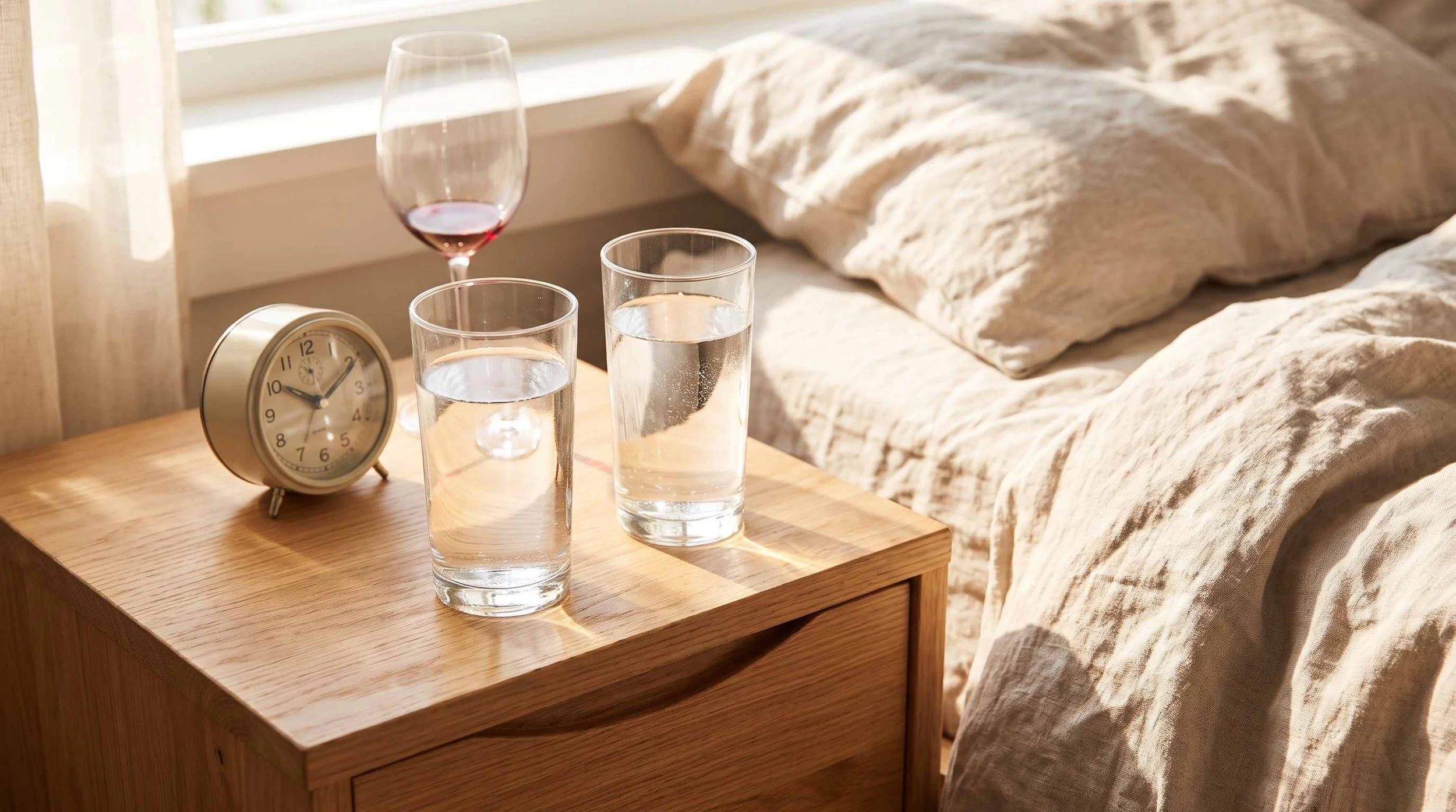
Alcohol and sex drive pull in two directions: one drink lowers your guard, while more than that dulls arousal, blood flow and orgasm.
Weed works differently but lands in a similar place. Cleveland Clinic (2025) reports that in men with alcohol use disorder, more than 67% had some form of sexual dysfunction, most often premature ejaculation, low libido and erectile dysfunction. The good news sits further down this page: much of it improves when intake drops.
Why Does a Drink Help the Mood but Hurt the Moment?
Because the two effects come from different places. Alcohol first takes the brakes off, then takes the engine with it. The NIAAA (2025) explains that alcohol interferes with the brain's communication pathways and makes it harder for the areas that control memory, speech, coordination and judgment to do their jobs.
Less judgment can feel like more confidence, which is why a drink or two may loosen sexual inhibitions. Cleveland Clinic notes that anything beyond that tends to have the opposite effect: alcohol is a depressant, so it reduces sensitivity to touch and makes physical arousal harder to reach, even when the desire is still there.
Weed has its own version of this split. The CDC (2024) states that cannabis use within the past 24 hours has an immediate effect on thinking, attention, memory, coordination and time perception. Those are the same faculties you need to stay present with another person, so a high can turn into distraction rather than intimacy.
How Does Alcohol Affect Erections and Orgasm?
Mostly through blood flow and nerve signals. Cleveland Clinic's urologists describe three mechanisms: alcohol slows central nervous system activity, decreases blood flow to the penis, and disrupts hormone levels including testosterone, cortisol and prolactin. Each one alone can be enough to change the outcome.
Erections
Getting hard depends on the parasympathetic nervous system relaxing smooth muscle so blood can fill the tissue. Alcohol inhibits that system and widens blood vessels elsewhere, which can cause a temporary drop in blood pressure. The result is less reliable blood flow where it is needed, which is the plain explanation behind a familiar nickname.
Reaching Orgasm
Timing goes in both directions. Drinking is linked to delayed ejaculation, defined as taking 30 minutes or longer, and to anorgasmia, where orgasm takes a long time, feels unsatisfying or does not arrive. Studies also tie alcohol to premature ejaculation. The same substance can push different people in opposite ways.
Is Alcohol the Reason for My Erection Problems?
It can be the whole reason, or one of several. The NIDDK (2024) lists drinking too much alcohol and using recreational drugs among the lifestyle behaviors that contribute to erectile dysfunction, alongside diabetes, blood vessel disease, hormone problems, certain medicines, anxiety, depression and stress.
The useful test is what happens when you are sober. Occasional trouble after a few drinks is common and usually disappears once the alcohol clears. Trouble on a quiet, sober evening is a different signal, and NIDDK is explicit that erectile dysfunction may be a symptom of another health problem.
That is worth taking literally rather than personally. Erection changes sometimes show up before a diagnosis of diabetes or a blood vessel problem, which is why a basic check-up is a reasonable first move rather than an overreaction.
Does Weed Lower Testosterone or Cause ED?
The honest answer is that the research disagrees, and dose matters. A 2025 analysis of a large United States claims database, published in The Journal of Sexual Medicine, compared about 29,000 men with a cannabis abuse or dependence diagnosis to matched men without one.
In that study (2025), erectile dysfunction was diagnosed in 0.9% of the cannabis group versus 0.2% of the comparison group within three months to a year, and testosterone deficiency in 0.2% versus 0.1%. The authors also note that earlier studies on cannabis and male sexual health have produced mixed results with small samples.
So heavy, diagnosed use shows a clear association, while occasional use is far less settled. If you are worried about hormones specifically, a blood test answers the question better than any article, and this guide to testosterone levels by age explains what the numbers mean after 50.
Do Alcohol and Weed Lower Desire Over the Long Run?
Heavy use does, and it works through several channels at once. Cleveland Clinic's urologists link long-term alcohol use to low testosterone, higher prolactin, hardened arteries, high blood pressure, thiamine deficiency that affects nerve sensation, and the depression and anxiety that so often travel with alcohol use disorder.
Desire also drops for reasons that have nothing to do with hormones. Cleveland Clinic (2025) reports that low libido affects up to 1 in 5 men, and more women, at some point in life, and lists alcohol, recreational drug use, stress, depression, anxiety and relationship strain among the causes.
Substances often sit on top of those other causes rather than replacing them. A fuller breakdown of what actually kills libido and how to get it back covers the sleep, mood and relationship side, which is usually where the bigger share of the problem lives.
Will My Sex Drive Come Back if I Cut Back or Quit?
Usually, yes, and faster than most people expect. Cleveland Clinic cites a study in which 88% of participants saw their erectile dysfunction improve after three months without alcohol. That is a meaningful number for anyone who assumed the damage was permanent.
The first stretch can be misleading, though. Alcohol withdrawal temporarily shifts neurotransmitter activity, raises cortisol and disrupts sleep, and all three can make erections worse before they get better. Knowing that in advance makes it easier not to read week one as the final verdict.
Sleep is the quiet variable in all of this. Insomnia reduces night-time erections and testosterone production, so the nights you finally sleep through after cutting back are doing part of the repair work on their own, without any further effort from you. That is also why people often notice mornings changing before evenings do.
Where Is the Line Between Relaxing and Doing Harm?
There is no universal number, so the practical line is a pattern. Needing a drink or a joint to be able to have sex at all, trouble that keeps showing up when you are sober, or an evening that regularly ends with less sex rather than more, are all signs the balance has tipped.
Cleveland Clinic's rule of thumb for low desire is simple: see a provider if it is hurting your well-being or your relationship. Distress is the threshold, not frequency, because sex drive varies widely between people and across one person's life.
Mood deserves its own line. Anxiety and low mood both suppress desire and worsen erectile dysfunction, and a family doctor can screen for them in an ordinary visit, as this overview of depression screening and anxiety support in primary care describes. Treating the mood sometimes resolves what looked like a purely physical problem.
Short-Term Versus Long-Term Effects
The table below separates what happens on one evening from what builds up over years of heavy use. Occasional effects come and go with the substance; the second column describes associations reported in people with heavy or diagnosed use, not an inevitable outcome for everyone.
|
What Happens Right After Use |
What Heavy, Long-Term Use Is Linked To |
|---|---|
|
Lower inhibition, then reduced sensitivity to touch |
Low desire reported by most men with alcohol use disorder |
|
Less blood flow and weaker, shorter erections |
Low testosterone, higher prolactin and hardened arteries |
|
Delayed orgasm, or sometimes ejaculating too soon |
Persistent erectile dysfunction that continues when sober |
|
Distraction, altered time sense and poorer coordination |
Associations with erectile dysfunction in diagnosed cannabis dependence |
Read the left column as tonight and the right column as a trend. Most people recognize the left side from their own experience and shrug it off, which is fair enough for a one-off evening. The right column is the part worth raising with a clinician, because those changes are easier to turn around early.
What Helps if This Is Already a Problem?
Start by separating the three possible layers: the substance, the body and the relationship. Two weeks with much less alcohol or weed tells you how much of the problem belongs to the first layer, and it costs nothing to find out.
If problems persist while sober, a medical check makes sense, since blood pressure, blood sugar, hormones and medicine side effects are all treatable contributors. For someone who finds it hard to get to an office, a doctor who visits at home can do the basic assessment and order blood work without a trip across town.
The relationship layer often needs a different kind of help. Clinicians such as sex therapists, somatic sex educators and sexological bodyworkers each work in a different lane, and this comparison of those roles explains which one fits which problem. Intimacy coaching and somatic sex education of the kind offered by Sex and Sensibility in California sit on the education and body-awareness side rather than the medical one.
One more thing to skip: the shelf of pills promising a bigger drive. This review of supplements for sex drive walks through what the evidence supports and what is a waste of money, and the short version is that cutting intake and sleeping properly outperform most of what is sold for the purpose.
FAQ
-
Low desire is even more common in women than in men, and Cleveland Clinic lists drinking too much alcohol among its causes for both. The physical details differ, but the pattern of lower arousal and harder-to-reach orgasm is shared.
-
Yes. Cleveland Clinic notes that studies link drinking with a greater likelihood of risky sexual behavior, including unprotected sex, which raises the risk of sexually transmitted infections. The judgment effect is as real as the physical one.
-
It matters more than most people think. Night-time erections and testosterone production both depend on sleep, so broken nights after drinking can lower desire the following day even when nothing else has changed.
-
No. Cleveland Clinic lists chronic illness, certain medicines, stress, depression, anxiety, past trauma and relationship problems alongside hormones. Hormones are one line on a long list, which is why a single blood test rarely explains everything.
-
Either is a reasonable door. A medical provider can check hormones, blood pressure and medicine side effects, and may refer you to a urologist, endocrinologist, psychologist or sex therapist depending on what turns up.
-
If it has bothered you for a few weeks, that is long enough. Earlier conversations are easier, and erection or desire changes occasionally point to a health problem that is simpler to treat when it is caught early.
Sources Used
Alcohol and the Brain: An Overview – National Institute on Alcohol Abuse and Alcoholism (2025)
Association of cannabis abuse/dependence on risks of erectile dysfunction and testosterone deficiency using a large claims database analysis – The Journal of Sexual Medicine, PubMed (2025)
Cannabis and Brain Health – Centers for Disease Control and Prevention (2024)
How Alcohol Can Affect Men's Sexual Function – Cleveland Clinic (2025)
Low Libido (Low Sex Drive) – Cleveland Clinic (2025)
Symptoms & Causes of Erectile Dysfunction – National Institute of Diabetes and Digestive and Kidney Diseases (2024)
Physiology, Erection - StatPearls – NCBI Bookshelf (2023)
Delayed ejaculation - Symptoms and causes – Mayo Clinic (2024)

Written by Sofiia Puhach
November 17, 2026
You May Also Like


Symptoms usually start 2 to 5 days after exposure; CDC still uses 14 days as the outer limit.