
Testosterone Levels by Age: What the Numbers Mean After 50
Table of Content
Testosterone levels by age drop about 1% a year, so a result that looked fine at 40 can read low at 55.
Cleveland Clinic (2026) counts anything below 300 ng/dL as low in adult men, and notes levels can drop 1% per year starting in your late 30s. That one line is what most lab reports get judged against, whatever your age.
The number alone rarely decides anything, though. Symptoms, the hour your blood was drawn, and whether you were sick that week all change what a result means. Two men with the same figure can walk out of the same office with very different advice.
What Are Normal Testosterone Levels by Age?
Normal testosterone slides downward as men get older, and the published ranges show it. Cleveland Clinic's overview of testosterone puts the peak around age 18, where levels can reach over 1,000 ng/dL, and says levels then decline as you reach your 40s.
The list below is the range by age group from that same overview. Read it as a reference band for healthy men rather than a target to hit, and keep in mind that it describes total testosterone, which is the figure on almost every standard lab report in the United States.
|
Age |
Normal Total Testosterone (ng/dL) |
|---|---|
|
20 to 24 |
409 to 558 |
|
25 to 29 |
413 to 575 |
|
30 to 34 |
359 to 498 |
|
35 to 39 |
352 to 478 |
|
40 to 44 |
350 to 473 |
Notice where the list ends. There is no published band for 50, 60 or 70 in that chart, which is the first reason a man in his fifties gets a confusing answer when he asks what normal looks like for him.
What Counts as Low Testosterone After 50?
The cutoff is the same at 55 as it is at 25: under 300 ng/dL is treated as low in adults. Age does not move that line, which is why plenty of men in their fifties land just above it and are told their result is fine.
Why One Blood Draw Is Not Enough
A total testosterone blood test usually needs two separate samples taken in the morning, because that is when levels should be at their highest. Cleveland Clinic also advises telling the provider if you are sick, since illness can temporarily lower testosterone. A single afternoon draw during a bad week can read low without meaning much.
Diagnosis starts from the symptoms, not the printout. A provider examines you, asks about your history, medicines and substance use, and orders blood work if you have symptoms that fit. Low numbers with no symptoms, and symptoms with ordinary numbers, both get handled differently from a clear match.
Who Reads the Result
Hormone results usually get sorted out by a primary care doctor or by endocrinology. Irina Urusova, MD works in endocrinology and handles hormonal and metabolic testing, which is the kind of reading a borderline result needs before anyone talks about treatment.
Logistics matter more than they sound, especially when getting to an office early twice in one week is the hard part. Repeat morning labs and follow-up appointments can also be arranged with a doctor who visits at home, which keeps the two-sample schedule realistic instead of something that quietly gets skipped.
Free Testosterone vs Total Testosterone: What Is the Difference?
Total testosterone measures everything in your blood; free testosterone measures only the part that is not stuck to a protein. MedlinePlus (2025) describes the total test as the common one, with free and bioavailable tests ordered less often.
The distinction is practical. Most testosterone in your blood is bound to proteins such as SHBG and albumin. The free portion is the share more available for your body to use when building bones and muscles, so two men with the same total can have different amounts actually in play.
A free testosterone test is not routine. It gets ordered when it may help explain a result that does not match how someone feels, which happens more often in older men than in younger ones. Ask which test you had before comparing your figure with anyone else's.
Why Doesn't a Lab's Normal Range Account for Your Age?
Because each lab sets its own band, and the band on your printout is usually one wide adult range. Cleveland Clinic's guide to the testosterone test states plainly that laboratories may have different reference ranges, and that normal ranges vary significantly based on your age and sex.
What the Printed Range Actually Covers
So the range you see is a lab-level decision, not a verdict about men your age. A result of 350 ng/dL can sit inside the printed band and still be well under what the same man carried at 35. That gap between in-range and unchanged is where most of the confusion after 50 lives.
One figure outside a range rarely settles anything on its own, which is also true of the numbers people track at home. The same logic applies to blood pressure readings and what they do and do not prove: a pattern across several measurements tells you more than any single one.
What Age-Specific Research Shows
Age-specific ranges do exist in research. A 2025 study in The Journal of Clinical Endocrinology & Metabolism built age-stratified reference ranges for directly measured free testosterone and reported a fall of 4.5 pmol/L per year, with a range of 184 to 749 pmol/L at ages 18 to 39 against 49 to 250 pmol/L at 80 and over.
Those bands are not yet what a routine lab prints, and the units differ from the ng/dL figures on most US reports. They are useful for one thing: they show how far the healthy range moves across a lifetime, which a single adult band cannot capture.
Which Low T Symptoms Matter More Than the Number?
The ones that point most specifically at low testosterone, because those are what push a doctor to test and to act. A borderline figure with clear symptoms usually gets taken more seriously than a lower figure with none.
The Symptoms That Point Most Directly to Low T
Cleveland Clinic separates the strong signals from the vague ones. Low libido, loss of morning or spontaneous erections, trouble getting or keeping an erection, loss of armpit and pubic hair, shrinking testicles, hot flashes and a very low sperm count sit in the first group.
Depressed mood, concentration and memory trouble, more body fat, breast tissue changes and falling muscle strength or endurance sit in the second. Those appear with plenty of other conditions as men age, so on their own they rarely explain a number.
When Desire and Mood Are the Main Complaint
Low desire has a long list of causes that have nothing to do with hormones, and sorting them out is worth doing before a hormone result becomes the whole story. A closer look at what actually kills libido and how to get it back covers the stress, sleep and relationship side of it.
Some of that work is not medical at all. Somatic sex education and intimacy coaching deals with arousal patterns, body confidence, performance anxiety and desire differences between partners directly. That kind of support can run alongside hormone care rather than instead of it, and it does not depend on what the lab says.
Mood deserves the same care. Flat energy and low interest in later life are often read as a hormone problem when something else is going on, and the things men tend not to say about emotional health as they age is a better starting point for that conversation than a lab slip.
What Does Low Testosterone Therapy Involve After 50?
It replaces the hormone your body is not producing enough of, and the evidence for using it in otherwise healthy older men is thin. Mayo Clinic (2024) states there is little evidence to support testosterone use in otherwise healthy men, and cites American College of Physicians guidance that it might improve sexual function somewhat while doing little for vitality and energy.
The risk list is real and worth reading before you decide. It includes worsening sleep apnea, acne and skin reactions, growth of noncancerous prostate tissue and of existing prostate cancer, breast enlargement, limited sperm production or smaller testicles, and excess red blood cell production that raises clot risk.
Therapy is approved for low testosterone caused by a medical condition, not for the ordinary decline that comes with age. That difference is usually the crux of the conversation after 50, and it is a decision to make with a doctor who has your repeat labs and your history in front of them.
What Else Could Explain How You Feel?
Quite a lot, and most of it is easier to check than hormones. An abnormal testosterone result does not guarantee a condition, since medications and existing health problems affect the figure, and the test itself can be processed wrong.
Persistent tiredness is the symptom most often pinned on testosterone and least often caused by it alone. The guide to what constant fatigue is usually telling you walks through the causes worth ruling out first, several of which show up on the same blood panel.
Muscle and strength changes have a more direct lever. Losing lean mass after 50 responds to training, and which kind of exercise actually works for weight and body composition is a fair question to settle before you treat the mirror as a hormone reading.
FAQ
-
Pharmacies and various companies sell them, but the accuracy of these tests can vary. They are not a basis for self-diagnosis, and a provider can order a laboratory test and do an exam instead.
-
Often yes. A luteinizing hormone blood test helps show whether the problem sits with the pituitary gland, and a prolactin test looks for high levels that can signal pituitary issues or a tumor.
-
They can. Certain medicines and existing health conditions affect the figure, which is one reason your provider asks for a full medication list before interpreting anything.
-
It does. Free testosterone is the portion more available for your body to use when building bones and muscles, which is why weak bones appear on the symptom list for low levels.
-
Sometimes. Women generally carry between 15 and 46 ng/dL, and low levels in women do not produce the clear signs they do in men, so results are read in a different context.
-
It happens, and it is a recognized reason for an odd result. A provider who sees a figure that does not fit your exam and history will usually repeat the test before building a plan on it.
Sources Used
Age-Stratified Reference Ranges for Directly Measured Serum Free Testosterone in Community-Dwelling and Healthy Men – The Journal of Clinical Endocrinology & Metabolism (2025)
Low Testosterone – Cleveland Clinic (2026)
Testosterone – Cleveland Clinic (2026)
Testosterone Levels Test – MedlinePlus (2025)
Testosterone Test – Cleveland Clinic (2024)
Testosterone therapy: Potential benefits and risks as you age – Mayo Clinic (2024)
Male menopause: Myth or reality? – Mayo Clinic

Written by Sofiia Puhach
October 6, 2026
You May Also Like

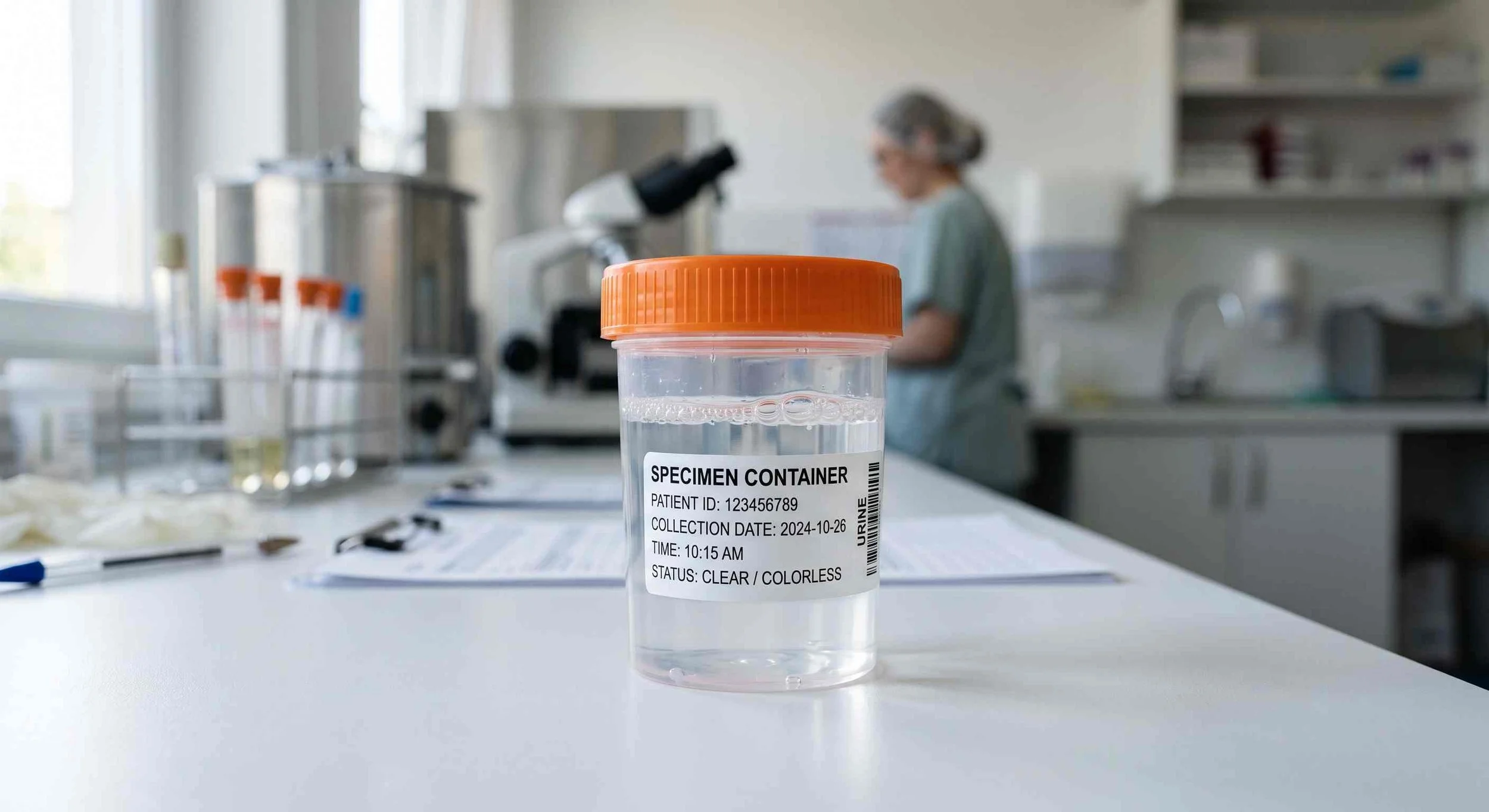


Below 300 ng/dL counts as low, but published age charts stop at 44, so your number needs context.