
High Blood Pressure Rarely Whispers Before It Shouts
Table of Content
High blood pressure is one of the most common health problems in the country, and one of the quietest. Most people who have it feel completely normal, which is exactly what makes it risky. According to the CDC, nearly half of adults have high blood pressure – about 48.1 percent, or 119.9 million people – and only about 1 in 4 have it under control. In 2024, high blood pressure was a primary or contributing cause of 680,179 deaths in the United States. The good news is that once you know your numbers, high blood pressure is very manageable. This guide walks through what the condition is, how to read a blood pressure chart, the risks of leaving it alone, and the simple habits that make the biggest difference.
What High Blood Pressure Actually Is
Blood pressure is the force of blood pushing against the walls of your arteries as your heart pumps. When that force stays too high over time, it is called high blood pressure, or hypertension. The CDC explains that normal blood pressure is less than 120/80 mm Hg, and blood pressure is considered high when it stays at or above 130/80 mm Hg. High blood pressure usually has no warning signs, yet over the years it can quietly strain the heart, brain, kidneys, and eyes. That is why measuring it is the only real way to know where you stand. Think of it like water pressure in a garden hose: a little pressure moves things along, but too much, held for too long, wears out the hose from the inside. Your arteries work the same way, and the damage builds so slowly that most people never notice it happening.
The Numbers On A Blood Pressure Chart
A blood pressure reading looks like a small fraction, such as 118/76. Those two numbers tell you more than they seem to, and learning to read them takes the mystery out of a check-up.
Systolic And Diastolic, Explained
The American Heart Association describes the top number as the systolic pressure, which is the force in your arteries when the heart beats. The bottom number is the diastolic pressure, the force while the heart rests between beats. Neither number is more “real” than the other; together they describe how hard the heart is working and how much resistance the blood meets on its way through the body. For people over 50, the top number tends to matter most, because arteries naturally stiffen with age. Both numbers still matter, though, and a doctor may act on either one being high.
Normal, Elevated, And The Two Stages
Blood pressure falls into simple categories that make a reading easy to place:
Normal: less than 120/80 mm Hg.
Elevated: a top number of 120 to 129 and a bottom number under 80.
Stage 1 high blood pressure: a top number of 130 to 139, or a bottom number of 80 to 89.
Stage 2 high blood pressure: a top number of 140 or higher, or a bottom number of 90 or higher.
A reading over 180/120 is a warning level that needs urgent medical attention.
One high reading does not mean you have high blood pressure. Numbers rise and fall through the day with activity, stress, and even a rushed morning. A diagnosis comes from readings that stay high over time.
What Raises Blood Pressure
For most people, high blood pressure builds slowly over many years, and there is no single thing to blame.
Primary And Secondary High Blood Pressure
The Mayo Clinic notes that most adults have primary high blood pressure, which has no clear cause and develops gradually. A smaller group has secondary high blood pressure, which comes from another condition such as kidney disease, thyroid problems, or sleep apnea, and tends to appear more suddenly. Sorting out which type a person has helps guide treatment, since secondary high blood pressure often improves when the underlying problem is treated.
Everyday Risk Factors
Many things nudge blood pressure upward, and several are within your control:
Getting older, and a family history of high blood pressure.
Carrying extra weight and not being very active.
Eating a lot of salt, or not enough potassium.
Smoking or vaping, and drinking too much alcohol.
Long-term stress, and conditions such as diabetes.
The Quiet Symptoms To Know
The hard truth is that high blood pressure usually causes no symptoms at all, even when readings climb to dangerous levels. A few people notice headaches, shortness of breath, or nosebleeds, but these tend to show up only when blood pressure is already very high. Because you cannot feel it in its early stages, waiting for a symptom is not a safe plan. A simple cuff reading tells you far more than how you feel. It also helps to know that stress, a poor night of sleep, or a very salty meal can push a single reading up for a short while, which is another reason one number on its own is never the whole story.
What Untreated High Blood Pressure Can Do
When high blood pressure is left unchecked for years, the steady extra force wears on the body. It can harden and narrow arteries, which raises the risk of a heart attack, a stroke, and heart failure. It can weaken the small blood vessels in the kidneys and lead to kidney disease, and it can damage the tiny vessels in the eyes and blur or steal vision. None of this happens overnight, which is both the danger and the opportunity: the slow pace means there is usually plenty of time to step in and lower the risk before serious harm is done.
The Link To Memory And Dementia
High blood pressure in midlife is also tied to trouble with thinking and memory later on, because narrowed vessels can limit blood flow to the brain. Protecting your numbers is one way to protect your mind, alongside staying mentally active with simple habits like brain games and puzzles that keep the mind engaged.
Everyday Habits That Help Keep Numbers Down
Most people can lower their blood pressure, or keep it in a healthy range, with steady daily habits. The CDC points to a handful of changes that add up over time.
Eat plenty of fruits and vegetables, and follow a heart-healthy plan like the DASH eating pattern.
Watch the salt: cutting back is one of the simplest ways to help, though it should be balanced so sodium does not swing too far in the other direction.
Move most days, aiming for about 30 minutes of activity such as brisk walking, five days a week.
Aim for a healthy weight, get enough sleep, and keep alcohol modest.
If you smoke, getting help to quit is one of the best things you can do for your heart.
None of these changes require a gym membership or a strict diet. Swapping a salty snack for fruit, taking the stairs, or adding a 10-minute walk after dinner are the kinds of small moves that stack up over weeks and months. That last point about salt is worth a closer look, since sodium and blood pressure are closely linked, and getting the balance right matters more than simply eating as little salt as possible.
Keeping An Eye On Your Numbers
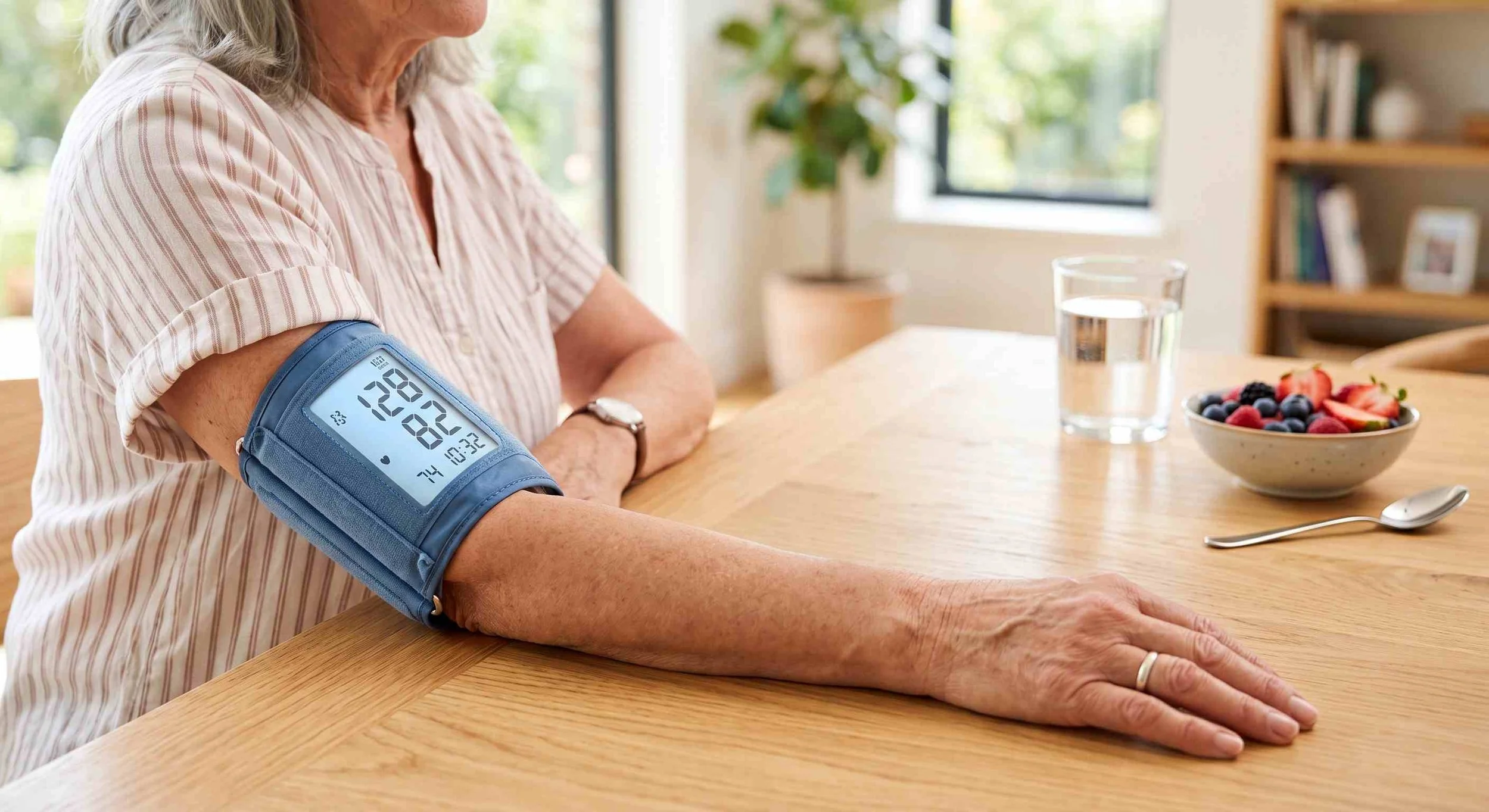
Because high blood pressure is silent, regular checks are the heart of good care. A home blood pressure cuff makes it easy to watch your numbers between visits, and bringing those readings to a check-up gives a clearer picture than a single office reading. For anyone who finds it hard to get to a clinic, a doctor who visits at home can take a reading, review medicines, and answer questions without the stress of a waiting room. A few simple habits make home readings more reliable: sit quietly for five minutes first, keep both feet flat on the floor, rest the arm at heart level, and avoid coffee or a cigarette in the half hour before. Taking two readings a minute apart and writing them down gives the most useful picture over time.
Why Small Changes Add Up
It is easy to feel that a few points on a blood pressure reading do not matter, but they do. Even a modest drop lowers the strain on the heart and blood vessels and reduces the long-term risk of a stroke or heart attack. Habits also build on each other: a short daily walk supports better sleep, better sleep steadies stress, and lower stress makes it easier to eat well. Progress does not have to be dramatic to be real, and the numbers tend to reward steady effort rather than a rushed, all-at-once overhaul. Picking one change to start with, and adding another once it becomes routine, is often easier to keep up than trying to fix everything at once.
Ongoing Care For Older Adults
Blood pressure often needs more attention as we age, especially when other conditions are in the mix. An experienced provider such as Sabita Malla, MD, who focuses on internal medicine and geriatric care, can look at the whole picture, adjust a plan over time, and keep an eye on how blood pressure fits with everything else going on with an older adult’s health. Regular follow-up also means medicines can be fine-tuned as needs change, so a plan that works today keeps working down the road.
FAQ
-
Normal blood pressure is less than 120/80 mm Hg. Readings that stay at or above 130/80 mm Hg are considered high. Numbers between 120 and 129 on top, with a bottom number under 80, are called elevated.
-
Usually not. Most people have no symptoms even when their blood pressure is very high. The only reliable way to know is to measure it with a blood pressure cuff.
-
A reading higher than 180/120 mm Hg is a warning level. If your numbers are that high, especially with chest pain, trouble breathing, or trouble speaking, seek emergency care right away.
-
For most people there is no single cause, and it builds slowly with age, weight, too much salt, inactivity, and family history. Less often it comes from another condition, such as kidney or thyroid problems.
-
Eating less salt, staying active, reaching a healthy weight, limiting alcohol, and getting enough sleep can all help. Some people also need medicine, so it is worth talking with a provider about the right plan.
-
High blood pressure is usually a long-term condition, but it can be well controlled. With steady habits, and medicine when needed, many people keep their numbers in a healthy range for years.
You May Also Like



Bedridden after an injury or surgery? See who can come to the home, how to set up care, and how to prevent pressure sores.