Table of Content
Chronic kidney disease is easy to overlook because, for a long time, it does not feel like anything. The CDC estimates that about 35.5 million U.S. adults have chronic kidney disease, more than 1 in 7, and as many as 9 in 10 of them do not know they have it. That gap between having the condition and feeling it is the whole story of CKD. This guide explains what kidney disease is, why the early signs are so quiet, what your eGFR number and the stages of kidney disease mean, and the everyday habits that help protect the kidneys you have.
Chronic Kidney Disease, Explained
Your kidneys are two bean-shaped organs, each about the size of a fist, that clean your blood. They pull out waste and extra fluid, keep your minerals in balance, and help control blood pressure. Chronic kidney disease means the kidneys are damaged or cannot filter blood as well as they should, and it has been that way for at least three months. As NIDDK describes it, waste and fluid then start to build up in the body instead of leaving it.
The Filters Inside Your Kidneys
Each kidney holds around a million tiny filters. Blood flows through them all day, water and waste get sorted, and the useful parts go back into circulation while the rest becomes urine. When those filters are harmed, they let things slip through that should stay in the blood, and they hold onto things that should leave. That is also why kidney trouble can throw off your fluid and salt balance; the same organs that clear waste help keep sodium and water steady, which is part of why problems like low sodium show up more often as the kidneys age.
More Than a Filter
Cleaning the blood is only part of the job. The kidneys also help hold your blood pressure steady, tell your body when to make red blood cells, and turn vitamin D into the active form that keeps bones strong. That wider role is why kidney disease can ripple outward over time, contributing to problems like low energy from a shortage of red blood cells or weaker bones. Seeing the kidneys as balance-keepers, not just filters, makes it easier to understand why doctors watch them so closely in people with diabetes or high blood pressure.
The Reason It Stays Silent
Kidneys have a lot of spare capacity. A person can lose a large share of kidney function and still feel fine, because the healthy filters that remain pick up the slack. Damage also tends to build slowly, over years, so there is no single day when something feels wrong. By the time symptoms arrive, the disease is often well along. This is why testing matters more than waiting for a warning sign, and why people with diabetes, high blood pressure, heart disease, or a family history of kidney failure are usually checked on a schedule rather than only when they feel unwell.
It helps to compare the kidneys to a busy kitchen with far more staff than a normal night requires. Lose a few workers and the meals still go out on time, so nobody in the dining room notices. Only when a large part of the team is gone do the plates start backing up. Kidney disease works the same way, which is both reassuring and risky: reassuring because the body copes for a long time, risky because that same cushion hides the problem until it is advanced.
Signs People Eventually Notice
Because early kidney disease is so quiet, the signs that do appear are worth understanding, even though they usually show up late.
Early, Easy-to-Miss Changes
When anything shows at all in earlier disease, it is often swelling, called edema. NIDDK notes this can happen when the kidneys cannot clear enough fluid and salt, and it tends to appear in the legs, feet, and ankles, and less often in the hands or face. Some people also notice foamy urine or a change in how often they go. These changes are subtle and easy to blame on a long day or getting older.
Symptoms in the Later Stages
As kidney disease advances, more noticeable symptoms can set in. Common ones include:
Feeling tired, weak, or having trouble sleeping
Loss of appetite, nausea, or vomiting
Trouble concentrating
Itchy or dry skin, muscle cramps, and weight loss
Shortness of breath or worsening swelling
None of these are unique to the kidneys, which is part of the problem. They overlap with dozens of other conditions, so blood and urine tests are what actually tell the difference.
eGFR and the Stages of Kidney Disease
Two numbers describe kidney health, and eGFR is the one people hear about most.
Reading Your eGFR Number
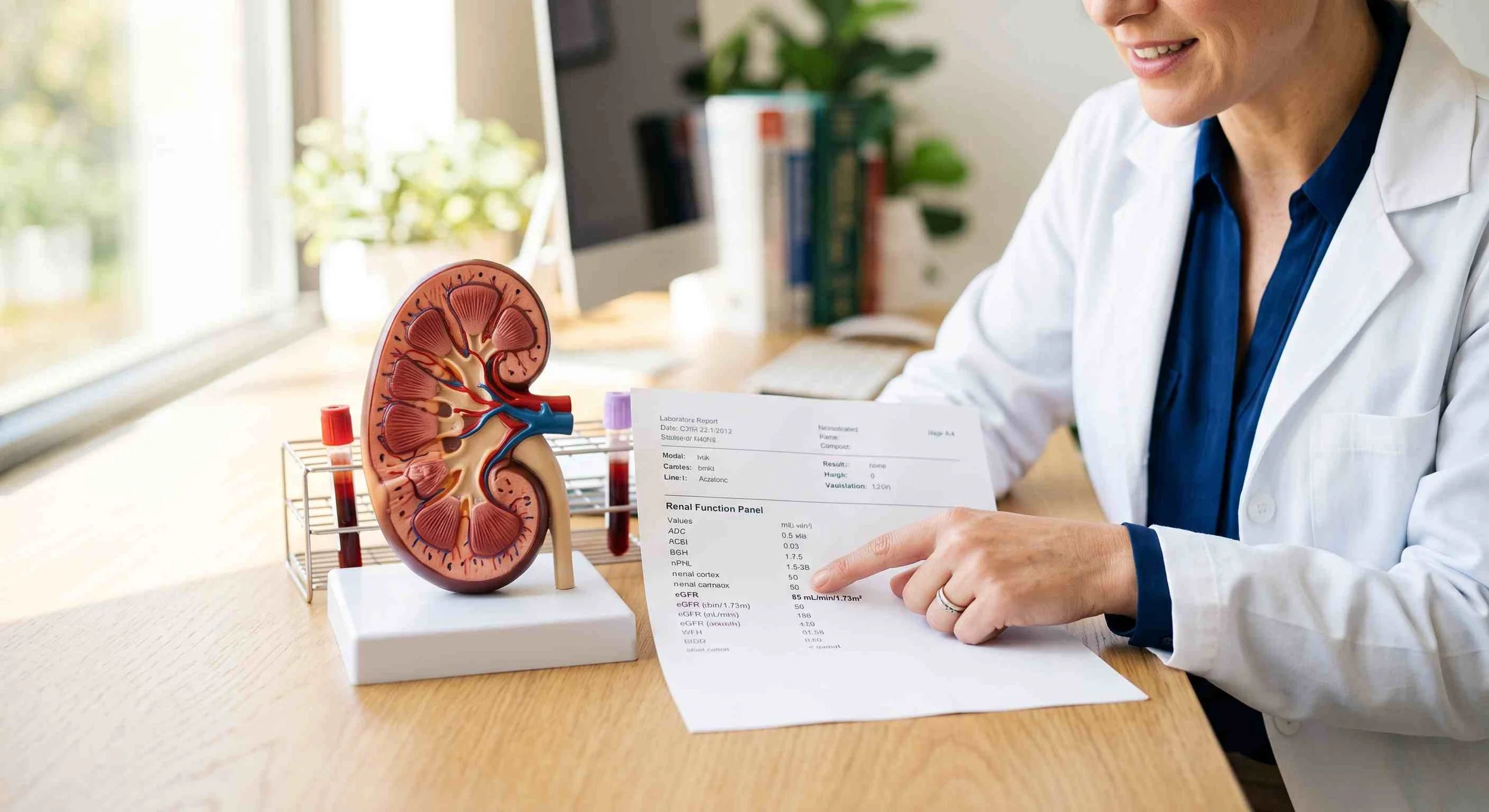
eGFR stands for estimated glomerular filtration rate, and it is a measure of how well your kidneys are filtering. According to the National Kidney Foundation, it is calculated from a blood creatinine test along with your age, body size, and sex. A higher number is better. As kidney function drops, the eGFR number drops with it, and an eGFR below 15 is considered kidney failure. It helps to picture the number as a rough percentage of normal filtering power, so you can see where you stand and track whether it holds steady over time.
Creatinine is a waste product your muscles make every day, and healthy kidneys clear it steadily. When filtering slows, creatinine rises in the blood, and the eGFR calculation turns that level into an easier-to-read score. One reading is a snapshot; the trend over several tests tells the real story. A number that holds steady is good news, while a slow slide over months is the kind of signal a doctor wants to catch early.
Watch: What Are Your Kidney Numbers? uACR and eGFR Explained (National Kidney Foundation) – https://www.youtube.com/watch?v=jTp9hyg23Mw
The Five Stages, From Mild to Advanced
Doctors use eGFR to sort kidney disease into stages, which helps guide care. Mayo Clinic lays them out this way:
Stage 1: eGFR of 90 or higher, with some sign of kidney damage
Stage 2: eGFR 60 to 89, a mild drop
Stage 3a: eGFR 45 to 59, and Stage 3b: eGFR 30 to 44
Stage 4: eGFR 15 to 29, a severe drop
Stage 5: eGFR below 15, which is kidney failure
Catching the disease at Stage 1, 2, or 3 leaves the most room to slow it down. That is the practical reason testing beats waiting: the earlier the stage, the more can be done.
The Damage Behind Kidney Disease
Diabetes and High Blood Pressure
Two conditions cause most kidney disease. NIDDK explains that high blood glucose from diabetes slowly damages the kidneys' filters and can let protein leak into the urine, while high blood pressure harms the blood vessels inside the kidneys. It becomes a loop, because struggling kidneys can push blood pressure even higher. The CDC reports that together, diabetes and high blood pressure account for about two out of three new cases of kidney failure.
Other Causes Worth Knowing
Kidney disease has other roots too, including a sudden loss of function called acute kidney injury, autoimmune conditions such as lupus, inherited polycystic kidney disease, repeated kidney infections or stones, severe obesity, and some medicines that are hard on the kidneys taken over long stretches. Knowing your own risk factors helps you and your doctor decide how closely to watch your numbers.
Finding Kidney Disease Early
Since you cannot feel early CKD, a simple pair of tests does the detecting. A blood test measures eGFR, and a urine test checks for albumin, a protein that healthy kidneys keep out of the urine. If either one is off, your doctor may repeat it to confirm and then track it over time. The blood creatinine result is the starting point for eGFR, and understanding a creatinine test makes those lab reports far less confusing.
For people who find lab trips difficult, Sonic Diagnostic Laboratory offers home blood draws in Los Angeles County, so the sample that drives an eGFR result can be collected without leaving the house. And for anyone who would rather review results and next steps in person, it is possible to arrange a doctor who visits you at home to go over the numbers and a monitoring plan.
Everyday Habits That Protect Your Kidneys
You cannot raise an eGFR that has already fallen, but you can often keep it from dropping further, especially when kidney disease is caught early. MedlinePlus points to steps that support kidney health:
Keep blood pressure and blood sugar in your target range
Use less salt and follow a heart-healthy eating pattern
Stay physically active and work toward a healthy weight
Limit alcohol and do not smoke
Ask before taking regular pain relievers, since some can strain the kidneys
These habits also protect the heart and blood vessels, which is fitting, because kidney health and heart health travel together. Small, steady changes tend to matter more than dramatic ones, and they add up over the years that kidney disease would otherwise use to progress.
It also helps to keep a simple record of your own numbers, so you and your doctor can see the direction of travel rather than reacting to a single result. Bringing a current medication list to appointments matters too, since some over-the-counter drugs and supplements are harder on the kidneys than people expect. None of this requires a dramatic overhaul of daily life, and the payoff is real: protecting the filtering power you have now is far easier than trying to recover it later.
FAQ
-
Yes, and that is the common situation. The CDC reports that more than 1 in 7 U.S. adults have chronic kidney disease and as many as 9 in 10 do not know it. Damage builds slowly over years, so most people feel normal in the early stages.
-
eGFR estimates how well your kidneys filter, based on a blood creatinine test plus your age, sex, and body size. An eGFR of 90 or above with no signs of damage is considered normal, an eGFR under 60 that lasts three months or more points to CKD, and below 15 means kidney failure.
-
Usually there are none. When early signs do appear, the most common is swelling in the feet, ankles, or legs. Clear symptoms like fatigue, nausea, poor appetite, and trouble sleeping tend to arrive only in the later stages.
-
Diabetes and high blood pressure are by far the most common. High blood sugar damages the kidneys' tiny filters, and high blood pressure harms the kidneys' blood vessels. Together they account for about two out of three new cases of kidney failure.
-
They use a blood test for eGFR and a urine test that checks for albumin, a protein that should not leak into urine. These simple tests can flag kidney damage long before you feel anything, which is why at-risk people are tested on a schedule.
-
Existing damage usually cannot be reversed, but CKD can often be slowed, especially when caught early. Controlling blood pressure and blood sugar, eating with less salt, staying active, and not smoking all help protect the kidney function you still have.
You May Also Like