Table of Content
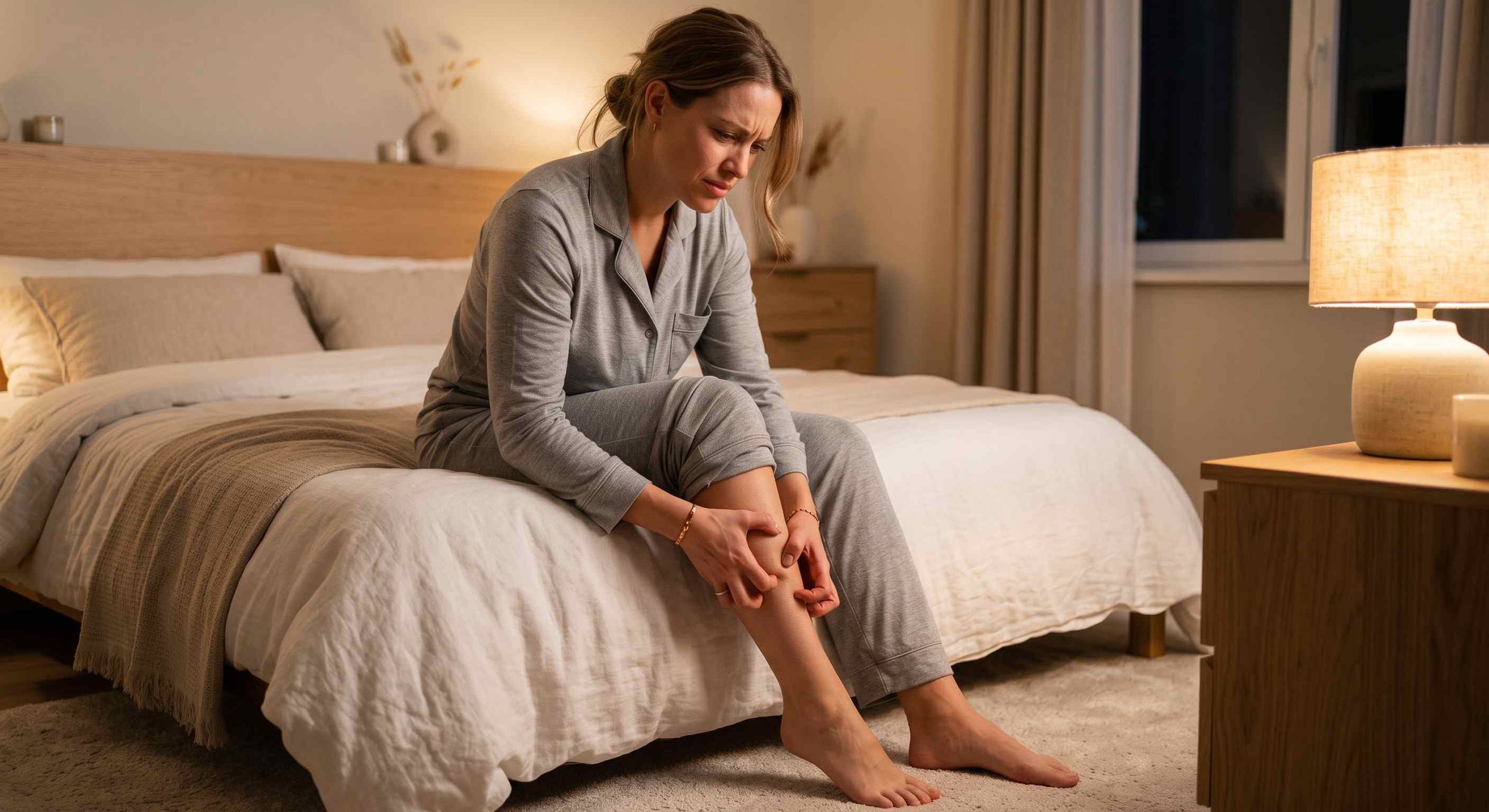
Restless legs can turn a calm evening into a long night. You lie down to sleep, and your legs start to itch, crawl, or ache. The urge to move them feels almost impossible to ignore.
This guide explains what restless legs are, why they happen, and what can help. The language is simple, so you can share it with family too.
What Is Restless Legs Syndrome?
Restless legs syndrome (RLS) is a neurological condition that causes an irresistible urge to move the legs. It is also called Willis-Ekbom disease.
The urge often comes with an odd feeling deep in the legs. It usually starts when you rest and gets worse in the evening. Moving your legs eases it, but only for a short time.
RLS is both a sleep problem and a movement problem. Resting sets it off, yet rest is exactly what you need to sleep. That is why the condition can feel so frustrating at bedtime.
How Common Are Restless Legs?
Restless legs are more common than many people think. The American Academy of Sleep Medicine reports that up to 13% of adults and about 2% of children have RLS.
Women are nearly twice as likely as men to have it. It also runs in families. If a close relative has RLS, your own risk is about three to six times higher.
Who Is More Likely to Get Restless Legs?
RLS can start at any age, even in childhood. It tends to show up more often as people get older. Middle-aged and older adults report it the most.
A family history is a strong clue. When RLS starts before age 40, it is more likely to be the kind that runs in families. Symptoms can also come and go for weeks or months, then return.
What Causes Involuntary Leg Movements During Sleep?
Many people with RLS also have periodic limb movements. This means the legs twitch or jerk on their own during sleep. The movements can happen over and over through the night.
This is sometimes called periodic limb movement syndrome or periodic leg movement disorder. It can affect the arms too, though that is less common.
What Are the Symptoms of Restless Legs?
The main symptom is a strong urge to move the legs. It comes with a feeling that is hard to put into words. People use words like:
Crawling or creeping
Itching
Aching or throbbing
Pulling or tugging
A burning or electric feeling
The feeling is usually in both legs. It is not the same as ordinary leg or body aches. Most people do not call it a cramp or numbness. They just feel a need to move.
Symptoms come and go. They are worse in the evening and at night. Some days feel fine, and then the feeling returns.
Are Restless Legs the Same as Leg Cramps?
No, they feel different. A leg cramp is a sharp, tight muscle pain that grabs and holds. RLS is more of a deep, restless urge to move.
Cramps often ease when you stretch the muscle. With RLS, the relief from moving does not last. The feeling creeps back once you settle down again.
How Restless Legs Affect Sleep and Mood
RLS can make it hard to fall asleep and stay asleep. Poor sleep then follows you into the day. Many people feel tired and drained, much like other kinds of long-lasting fatigue.
Losing sleep night after night can also weigh on your mind. Some people notice more worry or low mood, which is part of emotional health in later life. Trouble focusing during the day is common too.
What Causes Restless Legs?
Often there is no clear cause. Researchers think RLS involves how the brain uses iron and a brain chemical called dopamine. Dopamine helps the brain send smooth, steady signals for movement.
When those iron and dopamine systems are off balance, the legs can feel restless. This may explain why symptoms are worse at night, when dopamine levels naturally dip.
The Cleveland Clinic notes that people with RLS can have low iron in the brain even when blood iron is normal. Genes play a role as well. About half of people with early RLS have a parent or sibling who has it too.
Which Health Conditions Are Linked to Restless Legs?
Sometimes RLS is tied to another health issue. Mayo Clinic lists several conditions that can cause or worsen it:
Iron deficiency, which can come from heavy periods, frequent blood donation, or slow bleeding
Kidney failure, which can lower iron in the blood
Peripheral neuropathy (nerve damage), sometimes from diabetes
Pregnancy, most often in the last trimester
When RLS starts during pregnancy, it usually fades within a month after birth. Treating a linked condition, like low iron, often helps the legs feel better too.
RLS on its own is usually not a sign of a serious disease. Even so, it is worth telling your doctor. Finding a linked cause can point to a treatment that actually works.
What Triggers Restless Legs Syndrome?
Some everyday habits can set off or worsen symptoms. MedlinePlus points to caffeine, tobacco, and alcohol as common triggers. A few medicines can bring on temporary RLS as well.
Medicines that may play a role include some antidepressants, many antihistamines, and certain anti-nausea drugs. Common triggers to watch for include:
Coffee, tea, and other sources of caffeine
Alcohol, especially in the evening
Nicotine from smoking or vaping
Sitting still for long stretches, like a plane ride or a movie
You do not have to guess on your own. If a new medicine seems to make things worse, ask your doctor before you stop it.
How Is Restless Legs Diagnosed?
There is no single test for RLS. A doctor listens to your symptoms and asks about your health, your family, and your medicines. They may check when the feeling happens and how strong it is.
Blood tests are often part of the workup. A doctor may check your ferritin and iron levels, since low iron is a common cause. Tests can also rule out other reasons for poor sleep.
It helps to come prepared for the visit. Note when your symptoms start, how long they last, and what makes them better or worse. A short sleep diary over two weeks can paint a clear picture.
A neurologist can help sort restless legs from other nerves or sleep problems. Yuriy Verpukhovskiy, MD is a board-certified neurologist in the San Fernando Valley who cares for movement and sleep concerns.
If getting to a clinic is hard, you can also arrange for a doctor who visits you at home. A home visit can make the first step easier.
How Do You Calm Restless Legs?
There is no cure for RLS, but many things can ease it. Most people start with simple daily habits before any medicine.
Steps that often help include:
Keep a regular sleep and wake time
Get gentle daily movement, like walking
Take a warm bath or use a heating pad before bed
Massage or stretch your legs in the evening
Cut back on caffeine, alcohol, and nicotine
For quick relief at night, get up and move, stretch, or rub your legs. A warm bath can also settle the feeling. When leg discomfort keeps you awake, some people ask about non-prescription options, but it is best to check with your doctor first.
A few people find that keeping the mind busy helps in the evening. Reading, a puzzle, or light conversation can pull your focus away from your legs. Cool or warm packs on the calves may help too, so try what feels best.
Can You Lower Your Chances of Restless Legs?
There is no sure way to prevent RLS. Still, a few steady habits may lower how often symptoms flare. Small changes can add up over time.
Habits that may help your legs stay calmer include:
Eat foods rich in iron, like beans, leafy greens, and lean meat
Ask your doctor before starting any iron supplement
Keep a steady bedtime and wake time
Move your body during the day, even a short walk
Go easy on caffeine, alcohol, and late-night screens
These steps also support better sleep in general.
FAQ
-
In most cases there is no single cause. Researchers link RLS to how the brain uses iron and dopamine. Low iron is one of the most common causes doctors can treat.
-
Common triggers include caffeine, alcohol, and nicotine. Sitting still for a long time can also set it off. Some medicines, like certain antidepressants and antihistamines, may make it worse.
-
Moving usually gives quick relief. Get up and walk, stretch, or gently massage your legs. A warm bath or a heating pad can also help at the moment.
-
Many people with RLS also have periodic limb movements. The legs twitch or jerk on their own during sleep. It is closely tied to restless legs but is a separate pattern.
-
Doctors first treat any cause, like low iron, and adjust triggers. Simple habits and leg care come next.
-
Keep a steady sleep schedule and move a little each day. Avoid caffeine and alcohol close to bedtime. If the feeling still keeps you up, talk with your doctor about next steps.
You May Also Like