
Exercises for Balance for the Elderly
Table of Contents
Maintaining physical independence is a primary goal for many seniors, and performing consistent exercises for balance for the elderly is one of the most effective ways to achieve this. According to the CDC (Centers for Disease Control and Prevention), falls are not an inevitable part of the aging process; rather, they are preventable through targeted physical activity and environmental awareness. By focusing on coordination and leg strength, aging individuals can navigate their homes and communities with a renewed sense of security.
Why Stability is Essential
The National Institute of Health (NIH) identifies balance as one of the four essential pillars of physical health, alongside strength, flexibility, and endurance. Engaging in a regular balance workout for seniors helps the nervous system adapt more efficiently to changes in body position. This is particularly critical when walking on uneven surfaces or in low-light conditions. Organizations like Comprehensive Natural Healthcare emphasize that a holistic approach to wellness further prepares the body for these physical demands.
Safety Guidelines for Physical Activity
Before beginning a routine to discover how to get better balance, seniors should follow safety protocols recommended by experts at the Mayo Clinic:
Maintain Support: A sturdy chair, the back of a sofa, or a wall should always be within reach for stability.
Home Adaptation: For professional assistance in making a living space safer, Call Before You Fall provides specialized services such as installing grab bars and modifying the home environment to prevent accidents.
Proper Footwear: Individuals should wear shoes that offer firm arch support and non-slip soles.
Body Awareness: If any dizziness or sharp pain occurs, the activity should be stopped immediately.
Gradual Progression: It is recommended to start with simple movements and slowly increase the duration and difficulty of the old age balance exercises.
5 Essential Exercises for Daily Practice
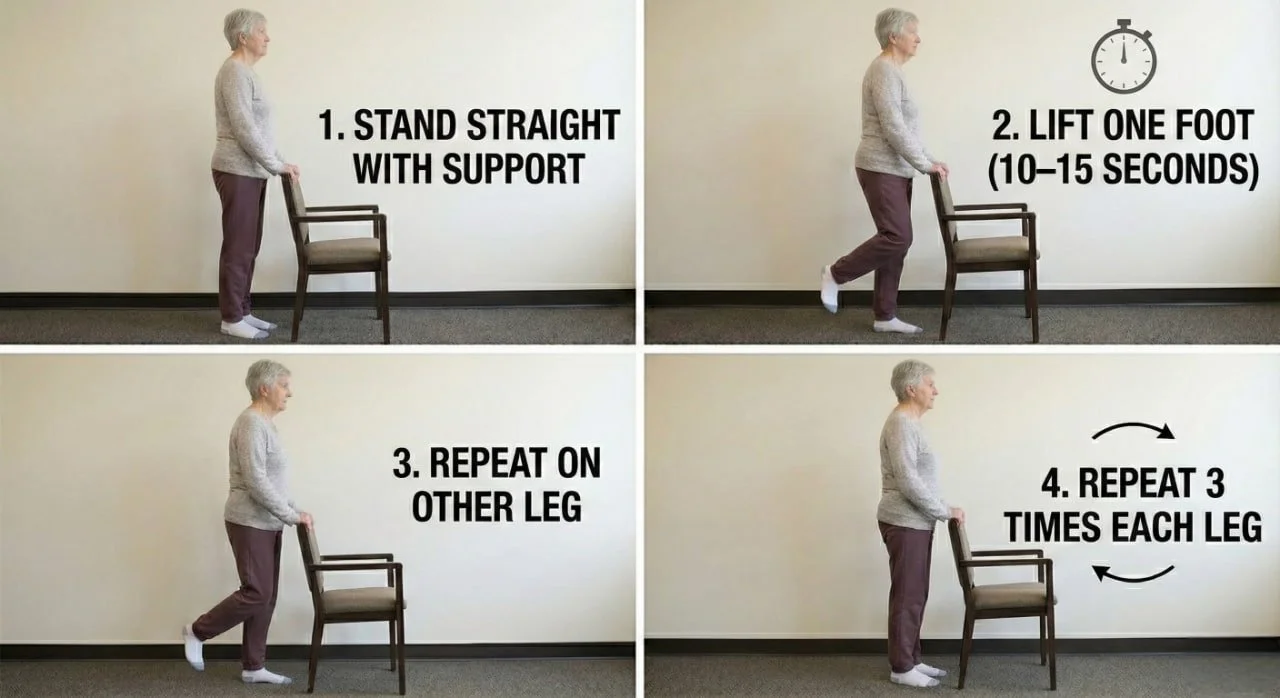
1. Single-Leg Stand
This image was generated by AI and is provided for illustrative purposes only.
This is a core movement for those determining how to get my balance back.
The individual stands straight while holding onto a steady support.
One foot is lifted, and balance is maintained on the standing leg for 10–15 seconds.
The process is repeated three times for each leg.
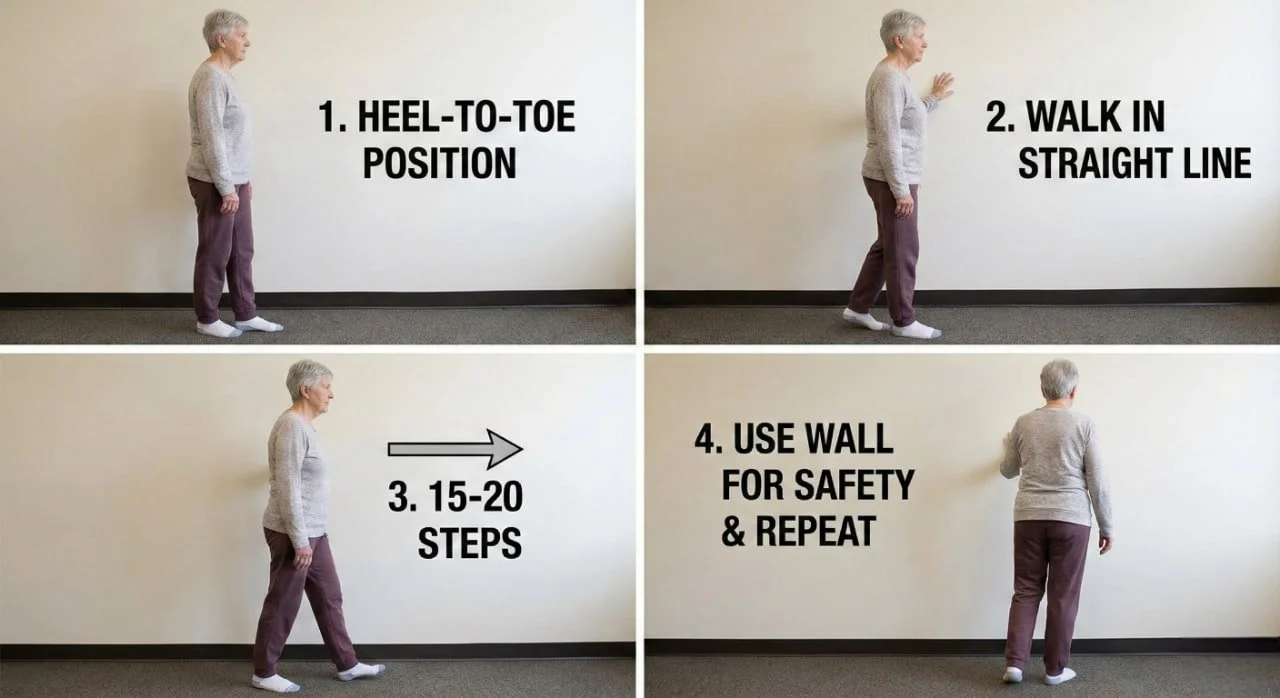
2. Heel-to-Toe Walk
This image was generated by AI and is provided for illustrative purposes only.
This practice is vital for fall prevention during daily movement.
The heel of one foot is placed directly in front of the toes of the other.
The person takes 15–20 steps in a straight line, preferably along a wall for added safety.
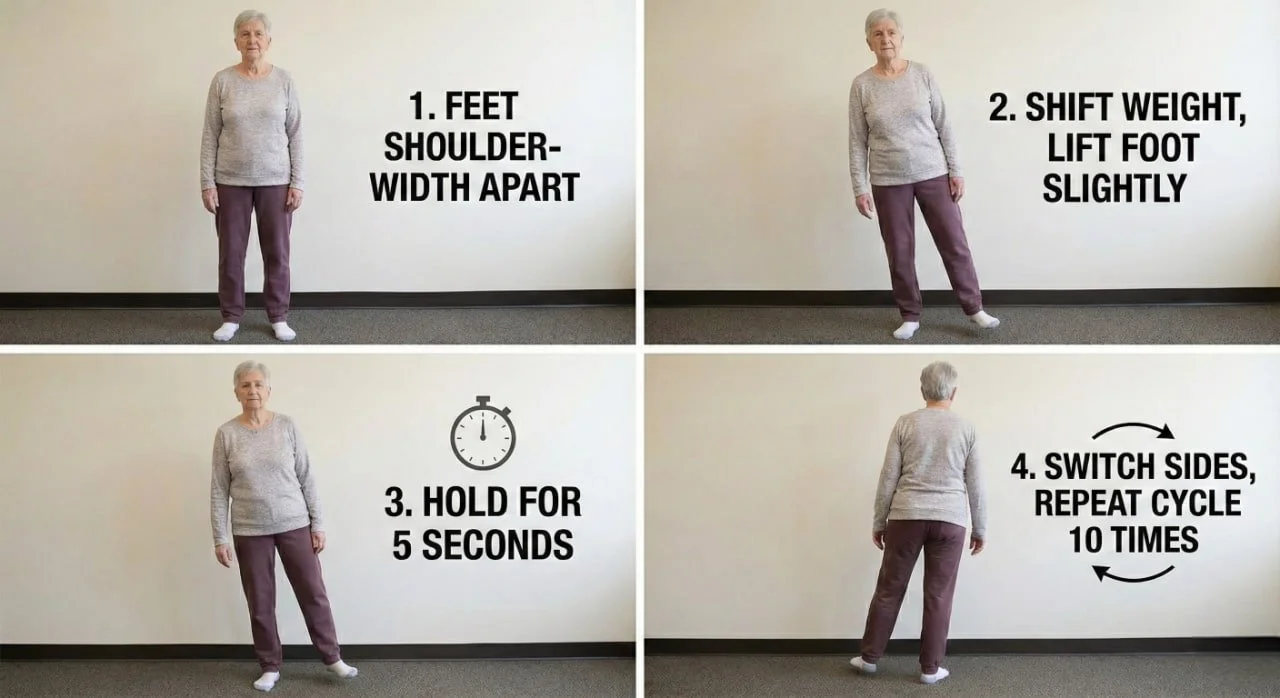
3. "Rock the Boat" Weight Shifts
This image was generated by AI and is provided for illustrative purposes only.
These movements help practitioners master their center of gravity.
The person stands with feet shoulder-width apart.
Weight is slowly shifted to one side while the opposite foot is lifted slightly.
The position is held for five seconds before switching sides, repeating the cycle 10 times.
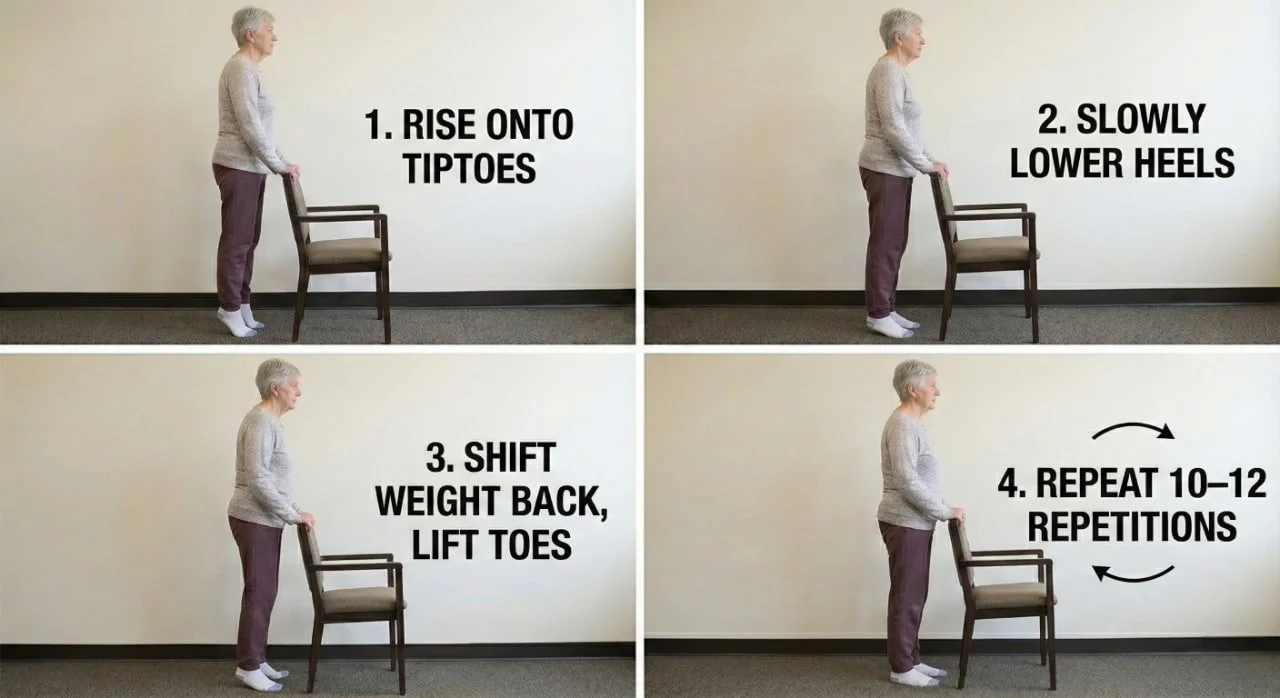
4. Toe and Heel Raises
This image was generated by AI and is provided for illustrative purposes only.
Strong ankles serve as the foundation of balance for the elderly.
While holding a chair, the individual rises onto the tiptoes and then slowly lowers down.
The weight is then shifted back to lift the toes off the floor.
The set consists of 10–12 repetitions.
5. Chair Stands (Sit-to-Stand)
These are recognized as excellent exercises to help get off the floor or a chair with ease.
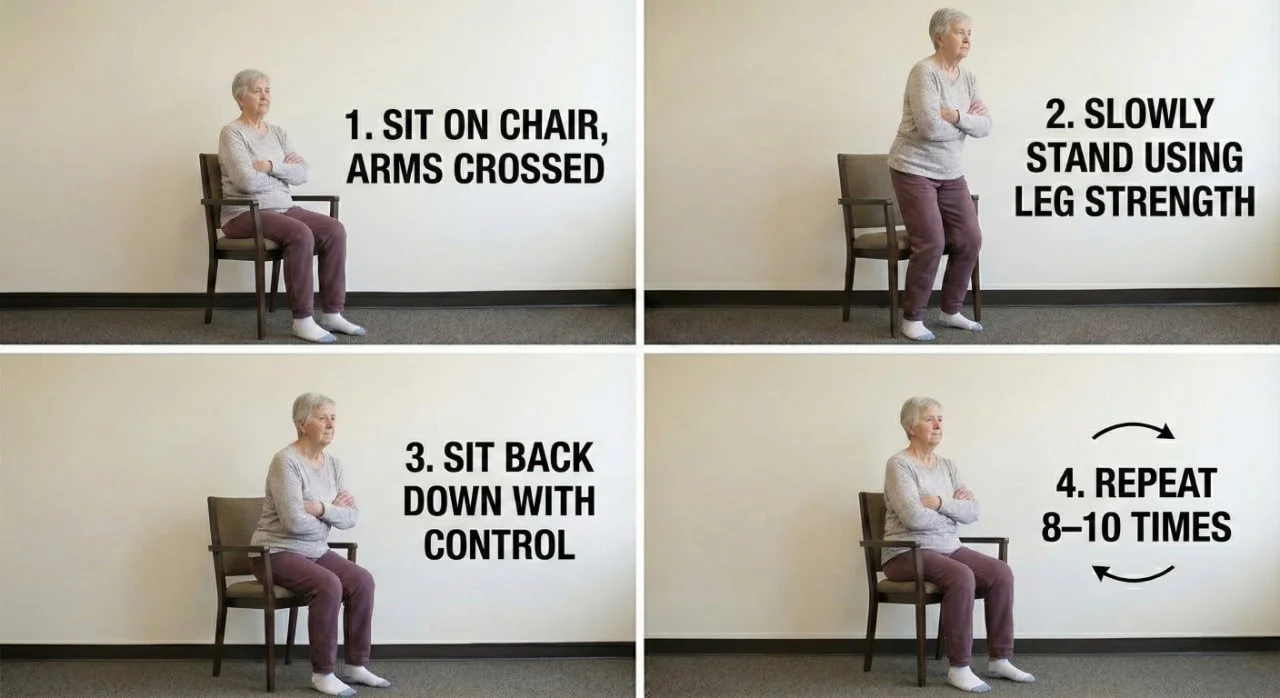
This image was generated by AI and is provided for illustrative purposes only.
The person sits on a sturdy chair with arms crossed over the chest.
Using only leg strength, the individual slowly stands up and then sits back down with control.
The exercise is repeated 8–10 times.
Addressing Balance Disorders in the Elderly
It is common for seniors and caregivers to investigate the causes for loss of balance in the elderly. Often, balance disorders in the elderly result from a combination of muscle weakness, vision changes, or inner ear issues.
For instance, the inner ear plays a critical role in equilibrium; services such as Alpha Hearing Aids can help identify if hearing or vestibular issues are contributing to instability. Furthermore, clear vision is a requirement for safety. MobilEyesNow offers mobile eye care services to ensure that vision remains sharp, which is essential for navigating obstacles. Research from Kaiser Permanente suggests that determining how to get elderly walking again effectively begins with diagnosing these underlying sensory factors. Health authorities also remind individuals that certain medications can affect coordination and should be reviewed regularly with a physician.
Weekly Stability Training Plan
Consistency is the most important factor for achieving long-term results.
| Exercise | Frequency | Recommended Volume |
| Single-Leg Balance | Daily | 3 reps per leg |
| Heel-to-Toe Walk | 3–4x per week | 2–3 minutes |
| Toe / Heel Raises | 3–4x per week | 2 sets of 10 |
| Chair Stands | Daily | 10 repetitions |
Daily physical activity is a vital investment in longevity and physical freedom. Even ten minutes of focused movement can significantly reduce the risk of injury and provide a more secure foundation for a healthy life. Additionally, practices like Tai Chi are highly recommended by the Mayo Clinic and the CDC to further reduce the risk of falling. While fancy balance equipment for the elderly is not required, maintaining a safe environment and a regular routine are the keys to success.
FAQ
1. Why do I need to train balance at all if I haven't fallen yet?
Balance training is primarily about prevention. As we age, our muscles weaken and our reaction times slow down, which subtly increases the risk of a fall. Regular exercises strengthen stabilizer muscles, improve the connection between your brain and body, and help "teach" your organism to react quickly if you lose your balance—for example, if you trip.
2. I am afraid of falling specifically while doing these exercises. How safe are they?
Your fear is understandable and valid. Safety is the number one rule.
Never do these exercises if you are alone and feeling unsteady.
As shown in your photos, always perform them next to a sturdy support: a stable chair (not one with wheels!), a table, or a wall.
At the beginning of your practice, always hold onto the support. Only when you feel confident should you try slightly letting go, but keep your hands ready just in case.
3. How often do I need to perform this set of exercises?
The key to success is consistency, not intensity. Ideally, these exercises should be done daily; it will only take 10–15 minutes. If every day isn't possible, aim for at least 3–4 times a week.
4. The "Heel-to-Toe Walk" exercise is too difficult for me; I wobble a lot. What should I do?
This is indeed a difficult exercise. Do not try to place your feet perfectly in a single line right away (like a tightrope walker).
Modification: Leave a small space between your feet width-wise, as if you are walking on a narrow plank rather than a thin rope.
Definitely walk along a wall, lightly touching it with your hand for backup support. Over time, as your confidence grows, try placing your feet closer together.
5. My knees hurt. Can I do the "Sit-to-Stand" exercise?
If you have chronic joint pain, be sure to consult your doctor before starting any exercises.
However, this specific exercise is often recommended for strengthening the legs to actually take pressure off the knees in the future.
Important: Do not plop down onto the chair. Sit down slowly and with control. If it hurts to stand up from a low chair, place a firm cushion on it to make the seat higher.
6. While standing on one leg, my supporting ankle shakes a lot. Is this bad?
This is completely normal, especially at the beginning of your journey. Shaking means that the small stabilizer muscles and your nervous system are active and working hard to maintain your balance. It's a sign that the training is working. Over time, the shaking will decrease.
7. How soon will I feel results?
Balance doesn't improve in a single day. Usually, first results—a feeling of greater stability when walking outside or on stairs—appear after 4–6 weeks of regular practice. Be patient with yourself and congratulate yourself for every session completed.
You May Also Like

Most dehydration clears with sips of an oral rehydration solution; IV fluids help when nothing stays down.