Table of Content
Urgent care handles problems that need attention today. The emergency room handles danger. Many older adults land in the ER because small problems at home went unnoticed too long.
Cleveland Clinic (2026) puts the dividing line at a single question: could delaying care be serious or life-threatening? If the answer is yes, that is the ER. If it is not, urgent care may be the right choice, and sometimes a clinician who comes to the house is enough. The third option is the one families think about last, usually after the second ambulance ride.
What Is the Difference Between Urgent Care and the Emergency Room?
Urgent care treats things that need to be seen the same day but are not dangerous. The ER treats things where waiting could cause real harm. Both exist because a primary care office cannot always fit you in, and both are built for different levels of risk.
Urgent care centers usually cover colds and flu, sore throats, ear and sinus infections, urinary tract infections, rashes, minor cuts and burns, and possible sprains or simple fractures. Many offer evening and weekend hours. Some have X-ray and basic lab testing on site, though that varies by location, which is worth checking before you need it.
Emergency departments run around the clock and are set up for severe problems: chest pain, stroke signs, serious breathing trouble, major injuries, heavy bleeding, seizures, severe allergic reactions. Patients are seen by severity, not arrival order, so a minor complaint can mean a long wait next to much sicker people.
Where Care at Home Fits
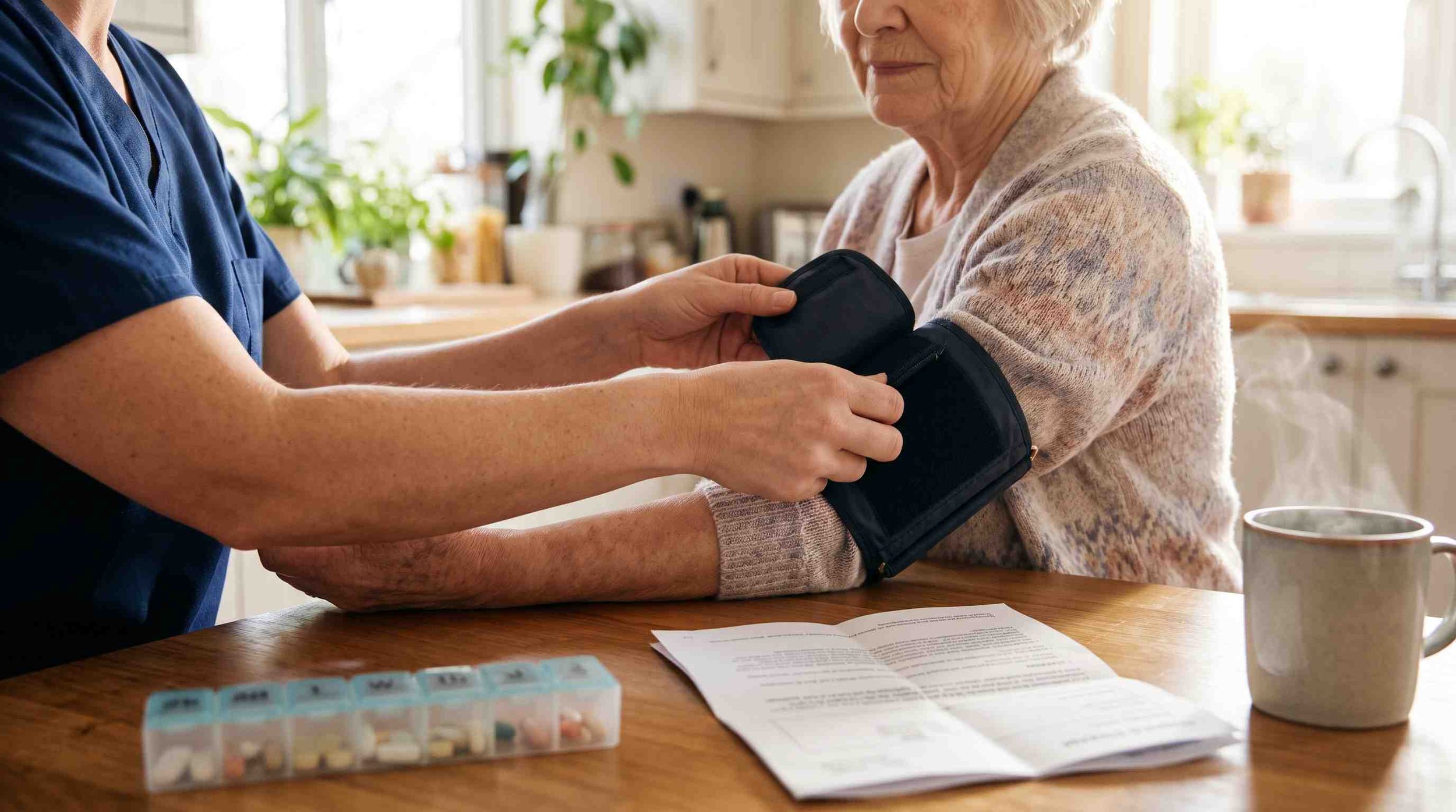
Care at home is not a third kind of emergency room. It is the layer underneath both of them. A nurse, aide, therapist or visiting clinician sees the person on a schedule, in the place where problems actually start, and catches the slow changes that turn into a 911 call three weeks later.
The table below lines up the three on the points that usually decide where a family ends up: what each one is built for, when it is open, what equipment is on hand and what it costs. If you want the symptom-by-symptom version instead, we compare urgent care, the ER and a house-call doctor in a separate article.
|
What to compare |
Urgent care |
Emergency room |
Care at home |
|---|---|---|---|
|
Best for |
Same-day problems that are not dangerous |
Problems where delay could be serious |
Watching, routine care and early catches |
|
Hours |
Extended evenings and weekends in many places |
Open all day, every day |
Scheduled visits set by the care plan |
|
Usual tools |
Basic labs, X-ray, stitches, splinting |
Advanced imaging, EKG, emergency procedures |
Vital signs, wound care, therapy, IV infusions |
|
Cost picture |
Lower than the ER for the same problem |
Highest of the three |
Charged hourly or per visit |
|
What it cannot do |
Manage severe or life-threatening problems |
Stop the next episode from happening |
Replace emergency care |
Why Do Older Adults End Up Back in the Hospital After Discharge?
Most often because of medicines. A hospital stay rewrites the medicine list, and nobody reconciles it once the person is home. The new list, the old bottles and the handwritten instructions all disagree, and three weeks later something gives way.
The Numbers on Medicines After Discharge
A systematic review in Drugs and Aging (2023) found that about 9% of adults aged 65 and older had a drug-related hospital readmission after discharge, and that 15% to 22% of those cases were judged preventable. Almost one in ten, and a fifth of those avoidable with better follow-up.
The same review found that taking five or more medicines raised the risk of a drug-related readmission, and taking ten or more raised it further. Having been in the hospital before, or in an emergency department before, also raised it. That describes a very ordinary older patient.
What Actually Goes Wrong at Home
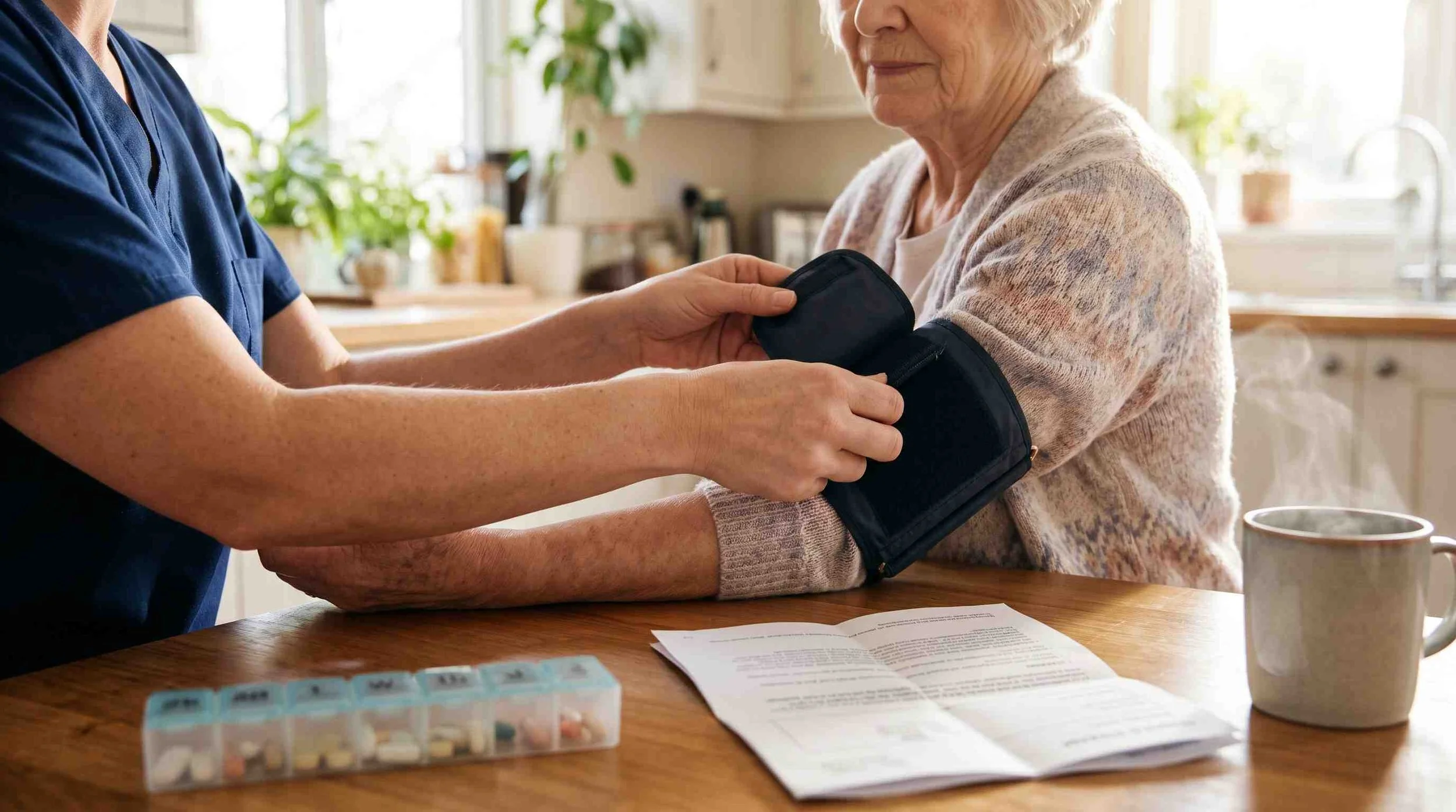
The failures are dull, not dramatic. A dose that was stopped in the hospital gets taken again from an old bottle. A new medicine gets skipped because nobody explained what it was for. Blood pressure or blood sugar drifts and nobody is measuring. The follow-up visit gets missed because no one could drive.
None of that needs a specialist to catch. It needs somebody in the room who knows what the plan was supposed to be. These are the warning signs worth knowing by name, and we go through them in detail in hospital readmission warning signs after leaving the hospital. Reading that list before discharge day is worth a great deal more than reading it afterward.
Can In-Home Care Really Reduce ER Visits?
It can lower some of them, and the reason is simple: someone is there to notice. A study in BMC Geriatrics (2024) interviewed home care workers and reported that they see gradual changes in a client's health early, because they visit regularly and know what normal looks like for that person.
The same study found two other things worth knowing. Workers said primary care was often hard to reach and slow to respond, which pushes families toward the ER by default. And some emergency visits were driven by anxiety or loneliness rather than a new medical problem, which company and reassurance can ease.
So in-home care is not a shield. It is a pair of eyes and a faster route to a decision. When a nurse can take a temperature on Tuesday and call the doctor on Tuesday, the Saturday night ambulance often does not happen. When nobody visits until Saturday, it does.
What Can Help at Home Prevent, and What It Cannot?
Help at home can prevent the slow problems and the practical ones. It cannot prevent a stroke, a heart attack or a sudden collapse, and nobody should buy it expecting that. Being clear about the line between the two is what makes the money well spent, because a family that expects a shield feels let down, and a family that expects extra eyes usually gets them.
The Things It Does Prevent
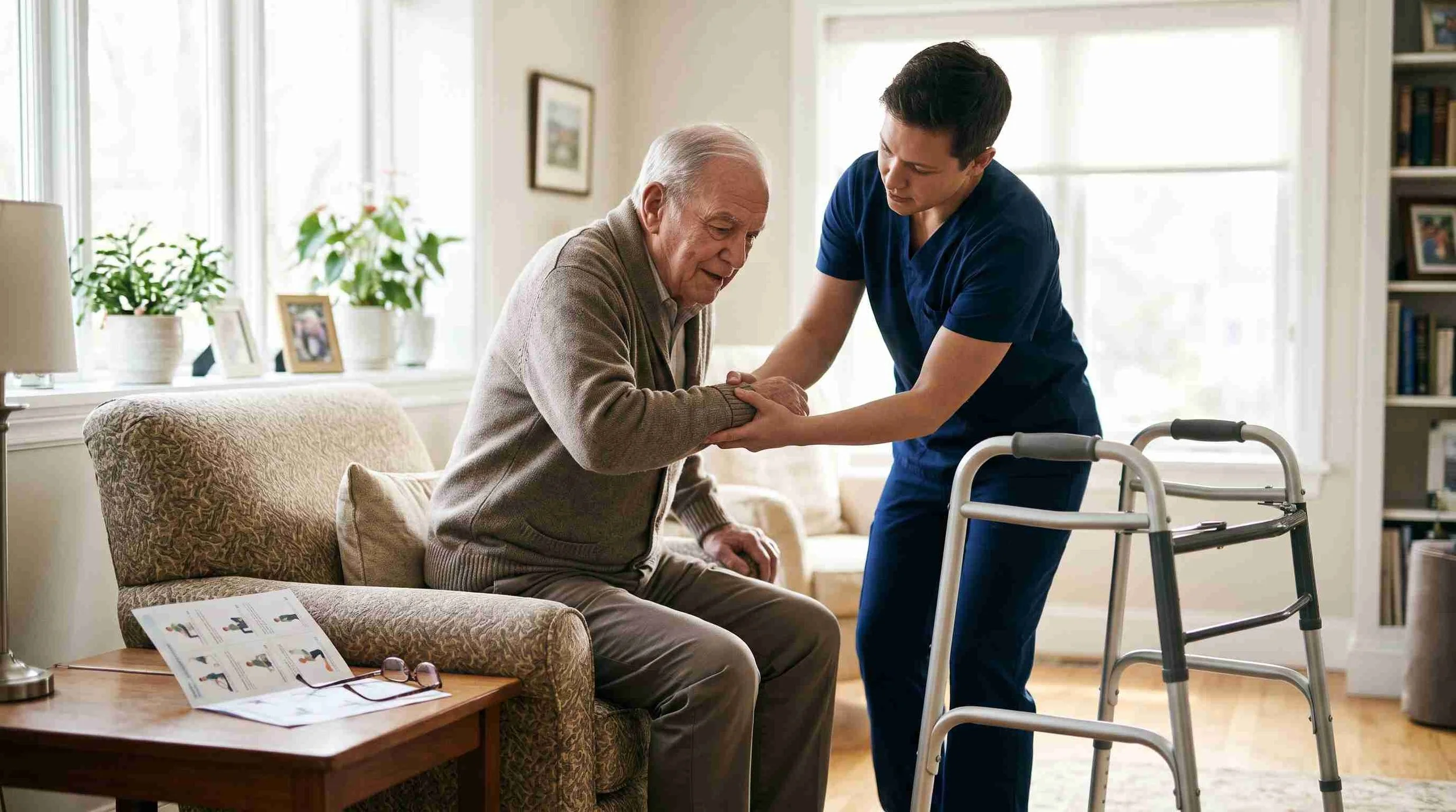
Falls are the clearest example. CDC (2026) reports that falls are the leading cause of injury for adults aged 65 and older, and that more than 14 million older adults, about 1 in 4, say they fall each year. Clutter cleared, lighting fixed, a shower chair in place and someone steadying an arm all change those odds.
The rest of the list is unglamorous and effective: medicines taken on schedule, enough fluids, meals that actually get eaten, wounds looked at before they get infected, weight and breathing tracked in someone with heart or lung disease, and a ride to the follow-up appointment.
The Clinical Side
Some of that needs a license, not an aide. Skilled nursing at home covers wound care, injections, vital signs and IV infusions, and therapists work on walking, dressing, swallowing and speech. 911 AM PM Home Health care provides those services across Los Angeles, Ventura, Orange, Riverside and San Bernardino counties.
Recovery after a hospital stay usually needs both columns at once, which is why families end up on the phone to two different agencies in the same week. The clinical visits come from the discharge orders, and the daily hours are arranged separately. We set out how that works in in-home therapy after surgery or hospitalization, including who brings which equipment.
What It Cannot Do
An aide is not an emergency service. If something looks severe or is getting worse fast, the answer is still 911 or the ER, and no care plan changes that. The point of help at home is to make those nights rarer, not to handle them.
How Do You Know It Is Time to Hire Help at Home?
When the pattern repeats. One bad week is a bad week, and most families are right to wait it out. Two trips to the ER in a season, two falls, two missed appointments or two medicine mix-ups is something else, and that kind of pattern does not resolve on its own. Waiting for the next 911 call to decide is the expensive way to make the decision.
Signs Worth Writing Down
Families usually sense it months before they say it out loud, and the hesitation is normal. Writing things down helps, because a list is harder to argue with than a feeling, and it gives the doctor something concrete to work from. The items worth noting:
Weight loss, or a fridge with food going off in it
Confusion that comes and goes, especially if it is new
Falls, near-falls, or furniture being used to get across a room
Bottles that are still full at the end of the month, or empty too early
Mail and bills piling up unopened
Not wanting to bathe, or wearing the same clothes for days
None of these is a diagnosis. Each is a reason to have someone look, and some have medical causes that are easy to miss. Infections are the classic one, and we cover why in UTI symptoms in older adults without a fever.
When the Answer Is No
Many older people refuse help, and that refusal deserves respect rather than a battle. One practical approach is to ask for one narrow task rather than a care plan, keep the final decision with the parent, and have the subject raised by someone they already trust. 911 AM PM Home Health sets out that approach in their article on what families can do when an elderly parent refuses help.
It also helps to separate a steady no from a changing one. A consistent refusal usually comes from privacy, money or the fear of being moved somewhere. An answer that flips week to week can be a memory problem, and that is a conversation for the doctor rather than for the family alone.
Is Home Care Cheaper Than Repeat Hospital Stays?
Usually, though the honest answer is that it depends on hours. MedlinePlus (2026) notes that treatment in an emergency department can cost two to three times or more than the same care in a provider's office, and that insurance may add a higher copayment on top.
What Drives the Number
Home services are priced by the hour or by the visit, so the arithmetic turns on how much help is needed and for how long. A few hours a week to cover medicines, meals and transport sits at one end of the range. Overnight or around-the-clock cover sits a long way from it, and that is where the cost of staying home starts to rival the alternatives.
Two Things Families Leave Out
A prevented hospital stay saves more than its bill, because every admission carries its own risks for an older person, from a fall on an unfamiliar floor to a new medicine that does not agree with them. And a short burst of help right after discharge, during the weeks when things actually go wrong, costs far less than open-ended care does.
Ask any agency for an hourly rate, a minimum shift length and what is included before you compare anything. Do not plan around a coverage rule you have not confirmed with your own plan, because those details vary and change.
What Is a Hospital at Home, and Is It the Same Thing?
No. Hospital at home means inpatient-level care delivered in the house, with daily clinician contact and monitoring, for someone who would otherwise be admitted to a ward. Ordinary home health visits and aide hours are a much lighter layer, meant for recovery and daily support rather than for treating an acute illness.
Medicare ran this as the Acute Hospital Care at Home initiative, and the Centers for Medicare and Medicaid Services published a study of how it performed in 2024. The fact sheet reports that patients treated at home generally had a lower mortality rate than comparable hospital inpatients, and that hospital-acquired condition rates were lower across all six types examined, though those differences were not statistically significant.
What the Study Found on Cost
On money, the same CMS fact sheet reports that 30-day spending after discharge was lower for at-home episodes across more than half of the top 25 diagnosis groups, while the stays themselves ran slightly longer on average. Readmission results were mixed, higher at home for some conditions and higher in the hospital for others, so the picture is encouraging rather than settled.
Availability is the catch. Hospital at home runs through specific hospitals under specific rules, not on request, so it is not something a family arranges the way they arrange an aide. It is worth asking about if a hospital admission is being discussed.
What Should Be in Place Before the Next Problem Starts?
One current medicine list, one phone number to call before 911, and one person who knows both. That is most of it, and none of it costs anything. The families who get through a rough winter without an admission are rarely the ones with the most services; they are the ones who decided these three things in advance.
Keep the medicine list on paper on the fridge, updated the day anything changes, with doses and the reason for each one. Keep the discharge instructions in the same place rather than in a drawer. Write down the follow-up appointment and who is driving to it.
Then decide in advance who gets the first call when something seems wrong at eight in the evening. For many families that is a clinician who can come to the house, and the network lists clinicians who make home visits by area and specialty. Having that decided beforehand is what keeps the default from being the ER.
FAQ
-
Urgent care is not equipped for severe or life-threatening problems, and services differ by location. Some sites have no X-ray or lab on hand, and hours are usually extended rather than around the clock. If symptoms worsen while you are waiting, the ER becomes the right place.
-
Often because it is open and reachable when nothing else is, and because triage worry wins at night. Not being able to get through to a primary care office is a common reason too, which is why having a plan ahead of time matters.
-
A mild fever is on the usual urgent care list. A high fever with a headache and a stiff neck, or one that will not come down, belongs in an emergency department. Age and other conditions change the picture, so call your provider or a nurse line if you are unsure.
-
Mobile lab and imaging services exist in many areas and work from a clinician's order, so blood draws and basic X-rays can happen in the house. Ask whoever is ordering the test whether a mobile option covers your address.
-
Home health care is clinical and ordered by a doctor: nursing, physical, occupational or speech therapy. Aide or homemaker services cover bathing, dressing, meals, laundry and company. They are separate services, often from separate agencies, and most families need some of each.
-
One named person, and everyone should know who it is. Split responsibility is how doses get doubled. Bring that list to every appointment, including the ER, and ask the doctor to mark anything that was started or stopped.
Sources Used
Fact Sheet: Report on the Study of the Acute Hospital Care at Home Initiative – Centers for Medicare and Medicaid Services (2024)
Homecare workers - an untapped resource in preventing emergency department visits among older individuals? A qualitative interview study from Sweden – BMC Geriatrics (2024)
Older Adult Falls Data – Centers for Disease Control and Prevention (2026)
Prevalence of and Risk Factors for Drug-Related Readmissions in Older Adults: A Systematic Review and Meta-Analysis – Drugs and Aging (2023)
Urgent Care vs. the ER: How To Choose Where To Go – Cleveland Clinic (2026)
When to use the emergency room - adult – MedlinePlus, National Library of Medicine (2026)
Urgent Care | Conditions & Treatments – URochester Medicine
An overview of Hospital‐at‐home versus other models of care – PMC (2024)

Written by Sofiia Puhach
November 19, 2026
You May Also Like