
Table of Content
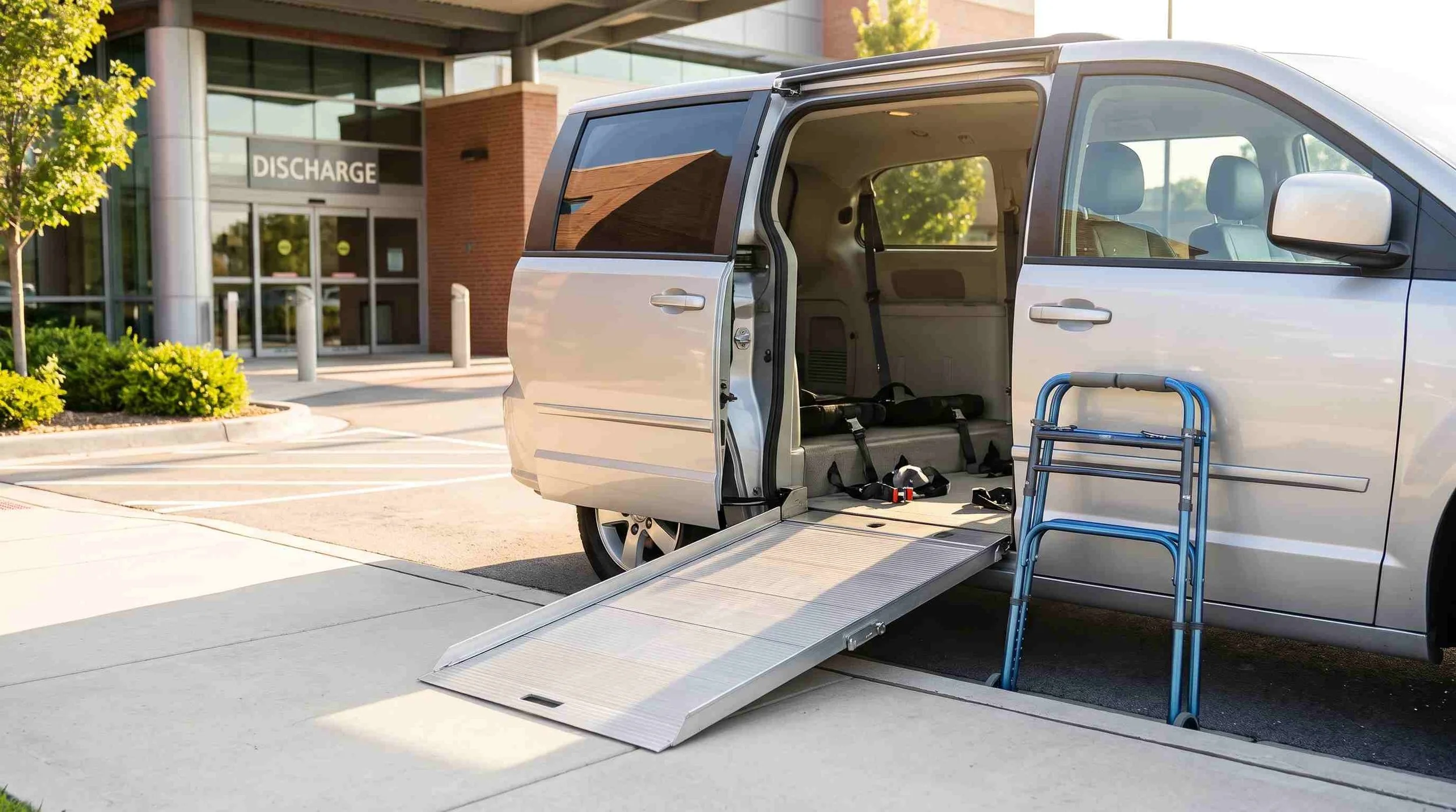
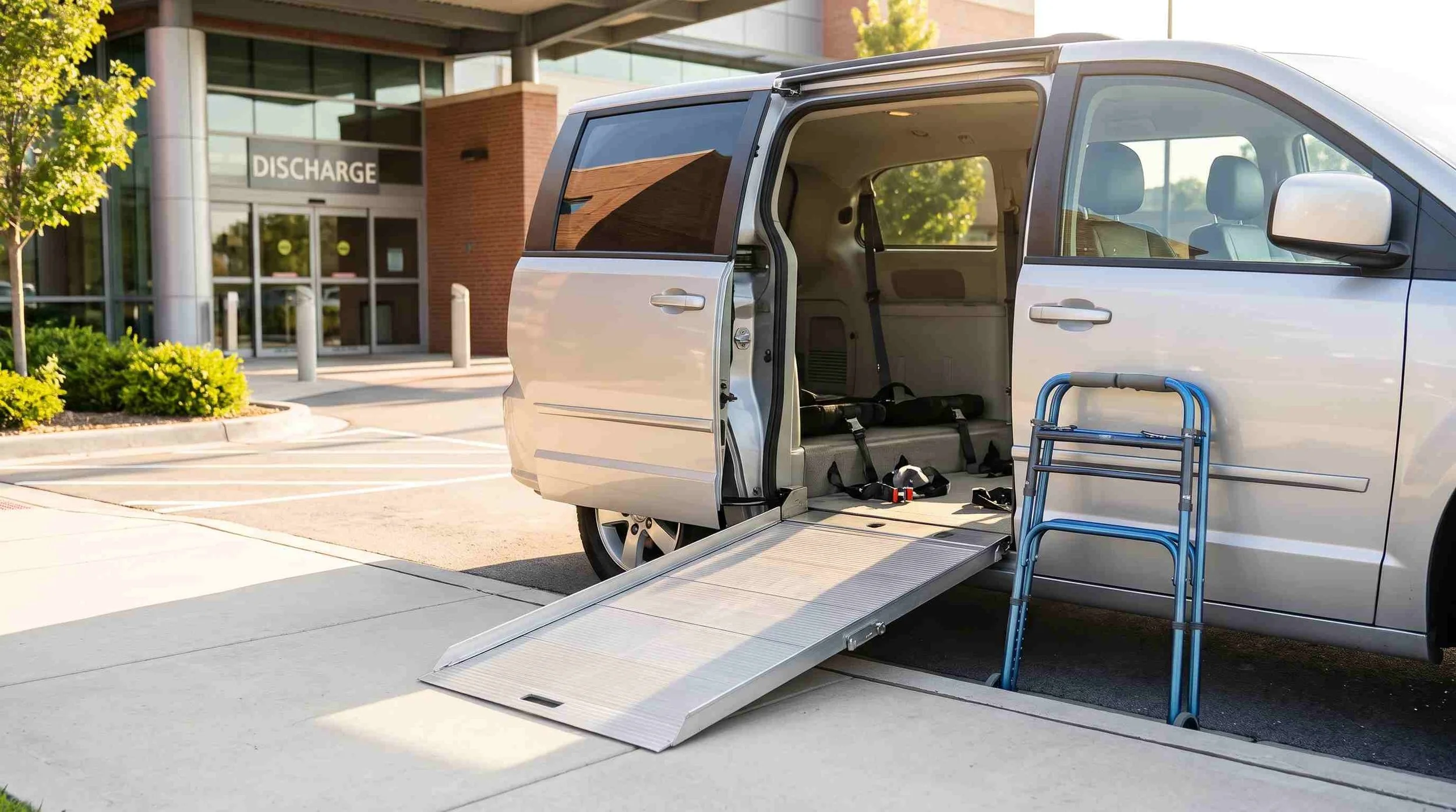
Most people leave the hospital in a regular car. When that will not work, hospital transport services can carry someone home by wheelchair van or gurney.
What decides it is practical. Walking a few steps, sitting upright for the drive, and having someone at the door all change the answer. A person who can manage all three usually goes home in a car. A person who cannot sit up needs a stretcher and trained attendants.
Who Arranges Hospital Transport When Someone Is Discharged?
The discharge planner raises it, and the family usually books it. MedlinePlus (2024) explains that a social worker, nurse, or doctor builds the discharge plan with you and decides whether the next stop is home or another facility. The ride belongs inside that plan rather than beside it.
Ask who is calling the vehicle before the paperwork is signed. Hospitals often keep a list of local transport companies, but the booking, the quote, and the arrival window are usually yours to confirm. Equipment is the other half of the same conversation, and a hospital bed or a commode has its own lead time.
Write down the discharge time, the pickup address, the floor and the door the vehicle should use, and a phone number that will actually be answered. Transport companies build their day around those details, and a wrong door costs everyone an hour.
What Hospital Transport Options Are There Besides an Ambulance?
Non-emergency medical transportation covers almost everyone going home, and it comes in a handful of vehicle types. The vehicle is chosen by how the person can travel on the day, not by how sick they have been.
Ambulatory Rides
These suit people who can walk with light help. The driver meets them at the discharge door, steadies them into the seat, and walks them inside at the other end. A cane or a walker rides along, and no special equipment is involved.
Wheelchair Transportation
A wheelchair van has a ramp or a lift, and the chair is strapped down for the drive. Wheelchair transportation services are the usual answer when someone can sit upright but cannot manage a car seat, a curb, or a long step up. The person stays in their own chair the whole way.
Gurney and Stretcher Transport
Someone who cannot sit up travels lying down, on a gurney, with attendants handling the move at both ends. This is also how people are transferred from a hospital to a rehabilitation facility when the stay continues. Families in Ventura County use providers such as MediZoom Transportation, LLC for discharges and transfers of this kind.
Follow-up care after a stretcher discharge usually has to come to the house, because the trip back out is the hard part. That is the situation behind most requests for a doctor to visit someone who is bedridden after an injury or surgery.
The table below lines up the same options by who they suit and what the vehicle actually does on the day.
|
Ride type |
Who it suits and what to expect |
|---|---|
|
Family car |
The person can walk, sit upright, and has a driver who can see them inside |
|
Ambulatory van ride |
Walks with light help; the driver assists from the discharge door to the front door |
|
Wheelchair van |
Sits upright but stays in a wheelchair; ramp or lift, with the chair secured for the drive |
|
Gurney or stretcher |
Cannot sit up; travels lying down with trained attendants at both ends of the trip |
|
Ambulance |
Medical care is needed during the trip, not just a ride |
Can You Take an Uber or a Taxi Home After a Procedure?
Usually not after sedation, and some clinics will cancel the appointment over it. Mayo Clinic Press (2024) says a clinic will likely cancel if you arrive without the name and number of a responsible adult who can pick you up.
The reason sits with the drop-off rather than the driver. Taxis and ride shares leave people at the curb, and the advice is to have someone who can bring you to the door and see that you get inside safely. Cleveland Clinic gives the same instruction for general anesthesia: have someone drive you home afterward.
That rule lands hardest on people who live alone. A paid escort, a volunteer driver, or a non-emergency transport crew all satisfy the same requirement, because in each case a named person is accountable for the last few feet.
Does Medicare Cover Non-Emergency Medical Transportation?
Usually not for a routine ride home. The Medicare transport benefit is built around ambulance trips that are medically necessary, which leaves most wheelchair vans and car rides outside it. The MediZoom Transportation breakdown of Medicare and non-emergency rides walks through where that line sits and what a written doctor's order changes.
Where Medicaid Is Different
Medicaid treats the ride as a benefit in its own right. CMS (2025) describes non-emergency medical transportation as help for people getting to and from medical appointments, and publishes a fact sheet for beneficiaries explaining how the trips are arranged and which vehicles are accepted.
What You Pay When No Plan Covers the Ride
Medicare Advantage plans sit in between. Some add a transportation benefit and some do not, and the details change by plan and by year. The only reliable check is the plan's own benefit list, asked about before the discharge date rather than on it.
If no plan covers the trip, the ride is paid privately, which is the common outcome for a discharge. What you pay turns on the vehicle type, the distance, the time of day, and whether steps or a second attendant are involved. Ask for the quote in writing while the date is still movable.
What Happens If No Ride Is Lined Up?
Discharge slips, and sometimes care slips with it. According to AHRQ (2024), about 6 percent of U.S. adults said a lack of reliable transportation had kept them from medical appointments, meetings, work, or from getting things they needed for daily living in the past year.
The share climbs sharply with poor health. The same brief reports 15.1 percent among adults in fair or poor physical health, against 3.7 percent among those in excellent physical health. Discharge day lands squarely in that first group, which is why the ride deserves a name and a time rather than a hope.
A rough first week after a hospital stay tends to show up later as a second admission. Knowing the warning signs that send people back to the hospital belong in the same plan as the ride home, because both are really about the first thirty days.
What If Home Is Not the Next Stop?
Then the transport question changes with the destination. MedlinePlus (2025) lists what a person should be able to do before going straight home: use a cane, walker, or wheelchair safely, get in and out of a bed or chair without much help, and move between the sleeping area, bathroom, and kitchen.
Not having enough help at home is on that same list. If the hospital raises a skilled nursing or rehabilitation facility, the trip is normally a wheelchair van or a gurney transfer between buildings rather than a ride to a house, and it is often shorter than the trip home would have been.
Those transfers are booked the same way, and the receiving facility usually has companies it works with regularly. Ask both sides who is calling the vehicle, since this is the handoff where a ride most often gets assumed by everyone and booked by nobody.
What Care Can Come to the House Instead of a Trip Out?
More than most families expect, which is the point of sorting the first ride and then staying put. A doctor who visits at home can do the follow-up exam, read through the discharge paperwork, and adjust the plan without anyone getting back into a vehicle.
For someone who will be homebound for weeks rather than days, that becomes an ongoing arrangement instead of a single visit. Home-based primary care is the term for it, and it covers the routine checks, the prescriptions, and the coordination that would otherwise mean a van ride every few weeks.
The order that works is simple. Settle the vehicle for discharge day first, then decide which follow-up appointments really need the person to travel. Fewer of them usually do than the discharge paperwork suggests.
FAQ
-
Most non-emergency transport companies allow one companion, though the seat depends on the vehicle and on whether a wheelchair or gurney is secured inside. Ask when you book, because a second passenger sometimes changes which vehicle is sent.
-
Earlier than a wheelchair van, since a stretcher trip needs a specific vehicle and attendants at both ends. Call as soon as the discharge date is penciled in, then confirm again once the hospital gives you a time.
-
Some do and some do not, and it depends on the number of steps and the equipment the crew carries. Describe the entrance when you book, including steps, landings, and the width of the door.
-
Tell the transport company as soon as you know. Dispatchers hold time slots and can often shift yours, and hospital delays are common enough that most companies plan around them.
-
Usually yes, and a standing weekly trip is often simpler to arrange than a one-off ride. Booking the follow-up visits and the rides in the same phone call saves a second round of calls.
-
Not always, because many vans carry a chair. A person's own chair fits better and is already adjusted to them, so say which one you plan to use when you book.
Sources Used
General Anesthesia – Cleveland Clinic (2026)
Lack of Reliable Transportation for Daily Living Among Adults: United States, 2021 – Agency for Healthcare Research and Quality, MEPS (2024)
Leaving the hospital - your discharge plan – MedlinePlus, U.S. National Library of Medicine (2024)
No ride home? What to do instead of canceling your procedure – Mayo Clinic Press (2024)
Non-Emergency Medical Transportation – Centers for Medicare & Medicaid Services (2025)
Skilled nursing or rehabilitation facilities – MedlinePlus, U.S. National Library of Medicine (2025)

Written by Sofiia Puhach
November 12, 2026
You May Also Like



Most return trips start with fever, a wound turning red, sudden weight gain, or new confusion within 30 days.