
Table of Content
Living alone and getting sick is mostly a logistics problem. Set up fluids, a phone, and one person who checks on you daily.
The fear underneath it is usually more specific than illness. It is the thought of being on the bathroom floor with the phone left on the kitchen counter, and nobody noticing for two days. That fear is worth taking seriously, because it points straight at the two things that fix it: reach and routine.
Most of the work happens while you are well. A short list of supplies, one agreed check-in, and a written note of who to call turns a frightening week into an inconvenient one. The rest of this piece sets out what to put in place now and what to do once you already feel awful.
What Should You Have Ready Before You Get Sick?
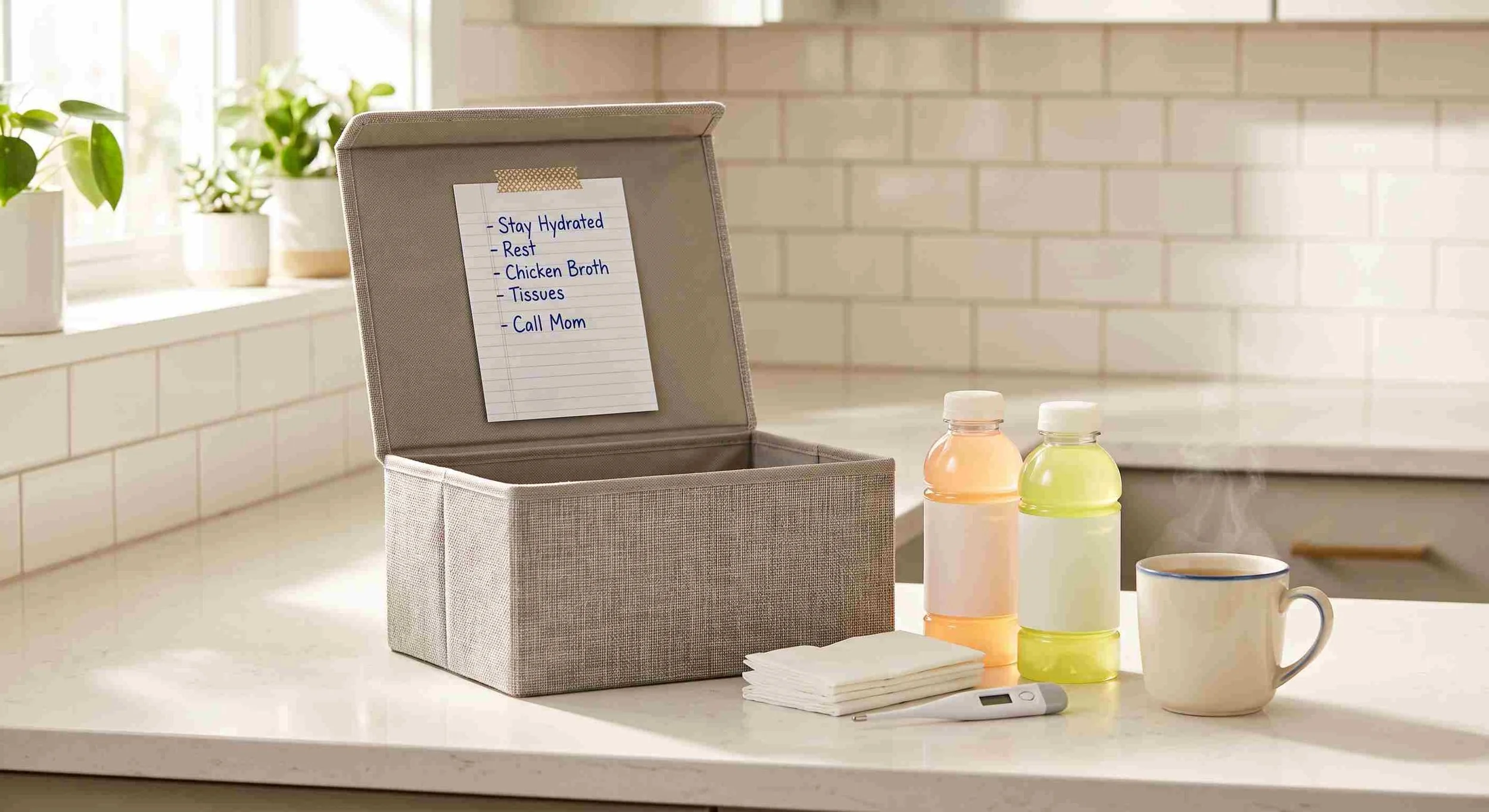
Keep a small set of basics where you can reach them without standing on anything or crossing the house. The point is not a stocked pantry; it is that a bad flu week should not require a trip out or a favor from a neighbor you barely know. Buy it once and forget about it.
A workable kit costs very little and lives in one place. Put it on a low shelf or in a bedside drawer, not at the back of a high cupboard, because the whole point is reaching it on a day when standing up is unpleasant. Here is what belongs in it:
Bottled water and a few drinks that contain electrolytes
A thermometer you have actually used once, so you know it works
Soft food that needs no cooking: broth, crackers, canned fruit, yogurt
A phone charger long enough to reach the bed, and a second one by a chair
A written list of phone numbers, on paper, not only in the phone
A spare house key with one trusted person, or in a lockbox
A current medication list written out for a paramedic to read
Why the Paper List and the Spare Key Come First
The paper list matters more than it sounds. When you feel terrible, scrolling for a number is hard, and if somebody else has to help, they can read a list on the fridge without unlocking your phone. Tape it somewhere obvious and update it twice a year.
The spare key is the quiet hero of this list. The most common delay when somebody is unwell at home is not the decision to get help; it is a locked door and a relative an hour away. One key with one neighbor removes that whole problem for the price of a conversation.
How Much Does Dehydration Matter When You Are Sick Alone?
It matters more than almost anything else on a sick day, because it is the part that quietly turns a mild illness into an emergency. Fever, vomiting, and diarrhea all drain fluid faster than you notice while you are dozing on the sofa.
What the Early Signs Look Like
MedlinePlus (2025) describes mild to moderate dehydration as thirst, a dry or sticky mouth, not urinating much, darker yellow urine, dry and cool skin, headache, and muscle cramps. Severe dehydration is listed as a life-threatening emergency, with signs that include confusion, dizziness, a rapid heartbeat, sunken eyes, and very dark urine or no urination at all.
Living alone removes the person who would normally notice the confusion before you do. That is why the useful habit here is a measurable one: keep a marked bottle where you can see it and track what you actually drink, rather than relying on how thirsty you feel at the time.
What to Drink, and What to Skip
MedlinePlus advises sipping water or sucking on ice cubes, and drinking water or sports drinks that contain electrolytes. It also warns plainly against salt tablets, which it says can cause serious complications, and suggests asking your provider what to eat if diarrhea is part of the picture.
Do not wait for the signs to appear before you start drinking. The same page advises drinking plenty of fluids when there is a fever, vomiting, or diarrhea rather than waiting for symptoms of dehydration to show up, which is simple advice and very easy to forget in a fog.
Our longer piece on the quieter signs of dehydration in older adults covers what to watch for when the usual thirst signal is not reliable, which happens more often with age than most people expect. Reading it while you are well is the point, because the warning signs are hardest to judge in the middle of a bad day.
Which Signs Mean Calling Someone Today?
Call the same day if you cannot keep fluids down, if you are getting more confused rather than less, or if something feels clearly worse than your usual version of being ill. Waiting to see how tomorrow goes is reasonable only when you are stable and drinking, and it stops being reasonable the moment either of those changes.
Signs That Mean Emergency Help, Not a Phone Call
MedlinePlus lists the situations that call for emergency help with dehydration: loss of consciousness at any point, a change in alertness such as confusion or seizures, a fever over 102°F, signs of heatstroke such as a rapid pulse or rapid breathing, or a condition that does not improve or gets worse despite treatment.
Living alone changes the threshold, and it should. Someone with a partner in the next room can safely wait another few hours; you cannot, because there is nobody to spot the moment things turn. Call earlier than you would if the house were full, and treat that as sensible rather than dramatic.
If a fever is the main worry, our breakdown of fever in adults and safe home care covers what the number means and what to do while you wait. The piece on norovirus symptoms and recovery at home covers the stomach-bug version of the same bad week.
Who Do You Call First When You Live Alone?
There are four doors, and they are not interchangeable. Knowing which one to use saves the hour most people lose to deciding, and it keeps the emergency room for the things that actually need it. The table below pairs each option with the kind of problem it suits.
|
Who to call |
When it fits |
|---|---|
|
Nurse advice line |
You are unsure whether this needs a doctor at all. Many insurers and clinics run a 24-hour line, and the number is usually on the back of the insurance card. |
|
Telehealth visit |
You can talk, sit up, and describe what is happening, and the problem does not need hands on you. Good for rashes, coughs, medication questions, and follow-ups. |
|
Home visit doctor |
You are too unwell to travel, or nobody can drive you, and someone needs to look at you properly, listen to your chest, or check your fluids. |
|
911 |
Loss of consciousness, new confusion, chest pain, trouble breathing, a fall you cannot get up from, or any sense that this is beyond a phone call. |
When Telehealth Is Enough
MedlinePlus (2026) describes telehealth as using electronic communications to get health care, including phone or video appointments, secure portal messages for questions or refills, and remote monitoring of long-term conditions. It notes that remote monitoring can lower the chances of getting sick or needing to go to the hospital.
It also flags the practical catch worth checking before you need it: not all health insurance companies pay for all telehealth services, and the services available can be limited for some Medicare and Medicaid enrollees. Five minutes with your plan today beats finding out mid-illness.
When Someone Needs to Come to You
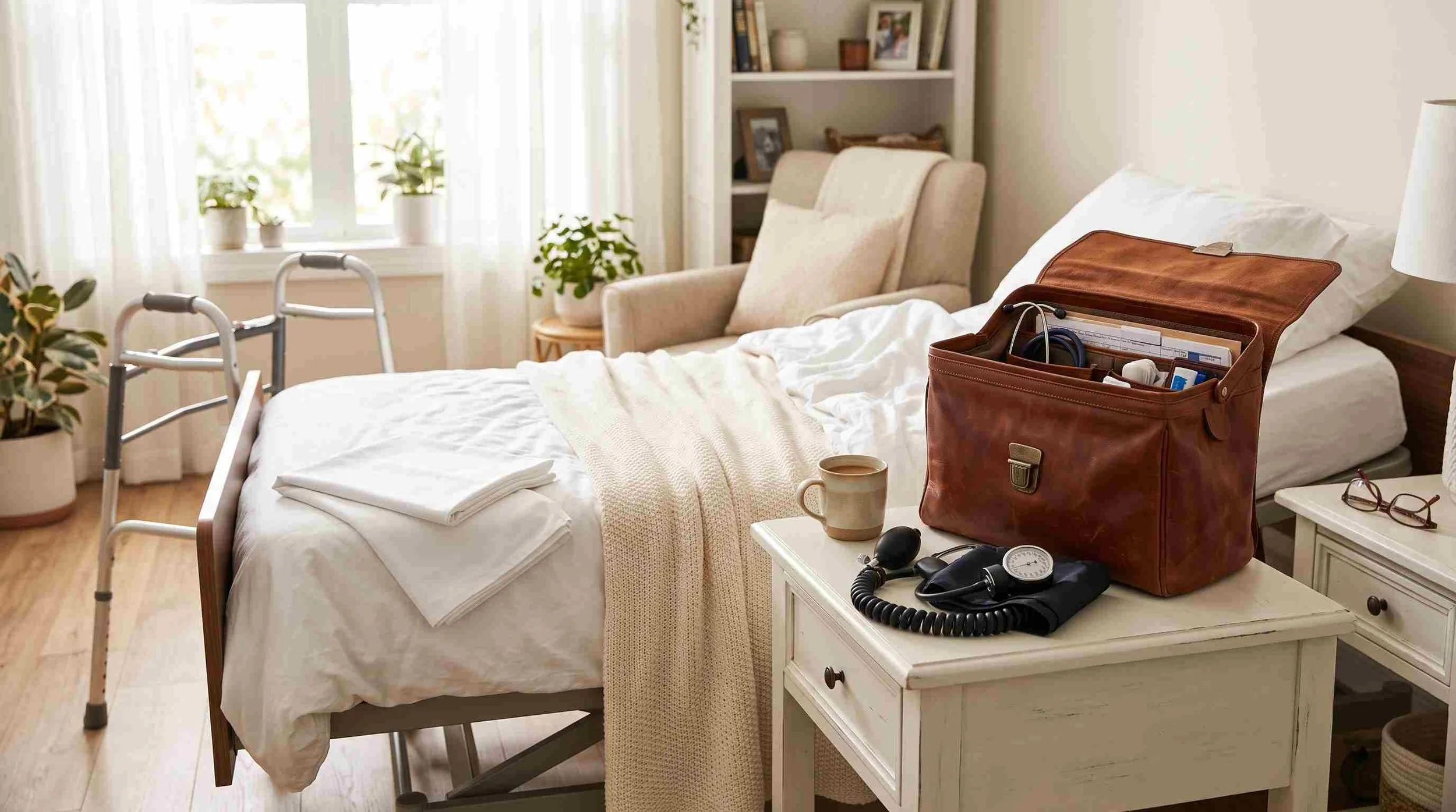
Some things cannot be done down a phone line. Listening to a chest, checking for dehydration, looking at a wound, or deciding whether a frail person is safe at home all need a person in the room, and traveling while sick is exactly what you are trying to avoid in the first place.
A doctor who visits at home can do that assessment in your own kitchen, which carries a second advantage. They also see the stairs, the empty fridge, and the pile of pill bottles, and none of that information shows up on a video call.
How Do You Set Up a Check-In That Actually Happens?
Make it specific, boring, and two-way. A vague agreement to keep in touch fails in the first busy week; a text at nine every morning with an agreed answer does not, because the absence of a reply becomes a signal rather than a guess.
A Routine That Survives Real Life
Pick one person as the daily contact and one as the backup.
Agree a time and a channel: a morning text, a short call, or a photo of the kettle.
Agree what happens if you do not answer: call twice, then come over.
Give that person a key, or tell them where the lockbox is and what the code is.
Write both names and numbers on the paper list by the phone.
Review it twice a year, or whenever somebody moves or changes their number.
The step people skip is the third one. Without an agreed response, silence gets read as a busy morning rather than a problem, and a whole day goes by. Saying out loud what counts as no answer is what turns a friendly arrangement into something that works.
When Family Is Not Nearby
Neighbors, a place of worship, a senior center, or a paid caregiver can all hold the check-in role, and none of them has to be a close friend for it to work. The arrangement is a small, defined task rather than a commitment to be responsible for your whole week.
Paid help can also cover the practical gaps around an illness. A Better Solution In Home Care provides personal care, homemaker support, and post-discharge help across North Los Angeles County, which is the kind of support that matters most in the week after a hospital stay.
What If You Fall and Cannot Reach the Phone?
This is the fear that keeps people awake, and it is not irrational. Falls are common at every age, and the specific extra risk of living alone is not the fall itself but the time spent on the floor before anybody knows about it.
The CDC (2026) reports that more than one out of four older people falls each year, with about 4.5 million emergency department visits and 1.4 million hospitalizations a year from falls. It also notes that less than half of older people who fall tell their doctor about it.
Why the Reporting Gap Matters
A fall nobody hears about is a fall nobody can prevent the next time. The CDC (2026) counts 37 million falls a year among older adults and nearly one million hospitalizations for fall injuries, most often for a head injury or a hip fracture.
So mentioning a stumble at the next appointment is not fussing over nothing. It is the one piece of information that gets your vision, footwear, home layout, and balance looked at before the next fall happens, and it costs you a sentence.
Reducing the Time on the Floor
Two changes do most of the work: carry the phone, and make sure somebody will notice. A phone in a pocket or on a cord beats a phone left on a table, and a wearable alert button beats both if reaching into a pocket from the floor is the part that worries you.
Our step-by-step piece on getting up after a fall and the role of a medical alert system covers how to get off the floor safely and how these devices work in practice, including what happens when the button is pressed.
How Do You Eat Well When You Are Too Tired to Cook?
Lower the bar and let somebody else do the shopping. Food is where living alone shows up fastest during an illness, because cooking for one is already the chore most people skip on the days they feel perfectly fine.
Home-Delivered Meals
NCOA (2024) explains that people aged 60 and older can generally receive services funded by the Home-Delivered Nutrition Program, that there are no federal income requirements attached to it, and that most program partners provide meals at very low or no cost.
The scale is larger than most people expect. NCOA reports that around 5,000 partner organizations serve as many as 900,000 meals a day, and that the way to find a local program is the Eldercare Locator, either through its website or by calling 800-677-1116 and giving a ZIP code.
One financial detail is worth knowing in advance. NCOA notes that Original Medicare does not cover the cost of home-delivered meals or delivered groceries, although some Medicare Advantage plans include a limited meal benefit in specific situations when a doctor recommends it.
Grocery Delivery and the Freezer Shelf
Grocery delivery solves the sharp end of the problem, as long as the account already exists. Create it on a good day, save the payment details and the address, and build a standing order of soft, easy food so a sick-day shop is three taps rather than a whole project.
Keep one shelf of the freezer as the sick shelf and do not raid it for ordinary dinners. Soup, frozen vegetables, and portioned leftovers are the difference between eating something and eating nothing, and eating nothing is what slows recovery most.
What About Getting to Appointments Without a Driver?
Arrange the ride before the appointment rather than on the morning of it. This is a solved problem in most areas, and the people who struggle are usually the ones who first hear about the options on the day they need one.
Rides come from several places at once: county paratransit, insurance-arranged medical transport, volunteer driver programs, and private non-emergency medical transportation. Each has its own notice period, and that notice period is the detail that catches families out again and again.
The walk-through on transportation for medical appointments when a parent stops driving covers how those options compare, what insurance may cover, and how far ahead each one has to be booked. Pick the one that fits your area now and save the number with the rest of your paper list.
Does Living Alone Make Recovery Slower?
It can, and not for medical reasons. Recovery asks for small, repeated effort: drinking, eating, moving a little, following instructions, and noticing changes. Alone, every one of those depends on one tired person remembering to do it, and that person is also the one who feels terrible.
That is the argument for structure rather than willpower. A written plan on the kitchen table, a daily check-in, and a marked bottle you can see from the sofa do the remembering for you on the days when you cannot manage it yourself.
It is also the argument for asking earlier. The threshold for calling a nurse line, booking a visit, or asking a neighbor to pick up groceries should be lower when you live alone, not higher, and the piece on choosing an assisted living home is there for the point where living alone stops being the right arrangement.
FAQ
-
Put a card with your name, contacts, conditions, and medication list on the fridge, and add emergency contact details to your phone's lock screen. Paramedics are trained to look in both places.
-
Yes, because it changes advice that would otherwise assume somebody is home. It can affect how soon they want to see you, whether they suggest a home visit, and what goes into a discharge plan.
-
Either works, and a lockbox avoids asking anyone to be responsible for a key. Tell at least two people where it is and what the code is, otherwise it helps nobody.
-
Call emergency services anyway and leave the line open; dispatchers can trace the call and are used to callers who cannot talk. Texting your daily contact at the same time adds a second route to help.
-
Many pharmacies deliver locally, and some will coordinate with your doctor's office. Ask about it before you are ill, because a first delivery usually means setting up an account and confirming the address.
-
Keep it one-way in your favor: you send the message, and they only act if it is missing. That leaves the routine in your hands and still gives you the safety net.
Sources Used
Common Injuries as We Age – Centers for Disease Control and Prevention (2026)
Dehydration – MedlinePlus (2025)
Facts About Older Adult Falls – Centers for Disease Control and Prevention (2026)
Home-Delivered Meals for Older Adults: A Caregiver's Guide – National Council on Aging (2024)
Telehealth – MedlinePlus (2026)
Non-Emergency Medical Transportation – CMS (2025)
Heat emergencies – MedlinePlus (2025)
Cold & flu supplies: What you need when you are home sick – APHA (2024)

Written by Sofiia Puhach
October 14, 2026
You May Also Like

Set up one daily check-in and keep fluids, a thermometer, and a phone within reach before you get sick.