
Table of Content
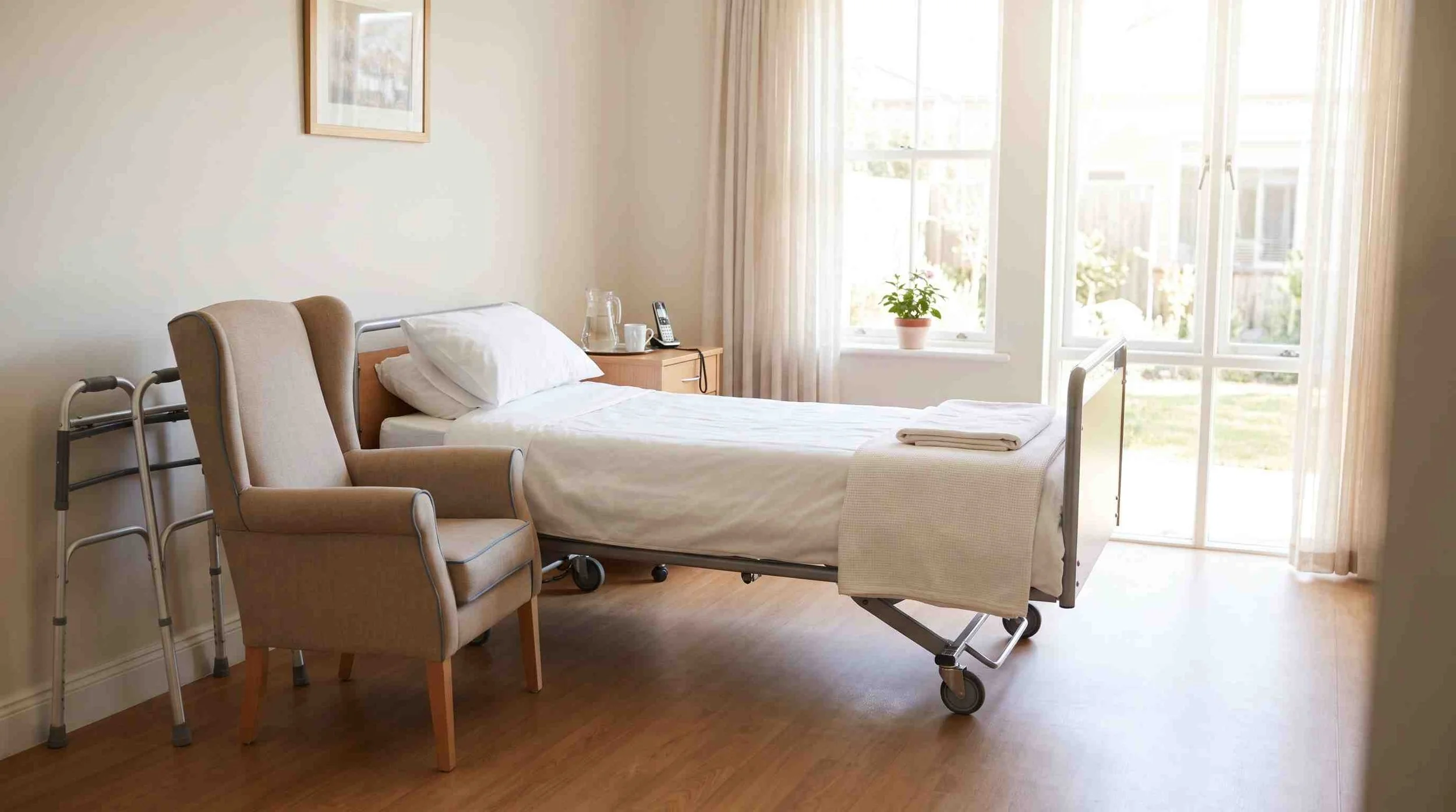
Start with where they will sleep, where they will use the bathroom, and who will be there. Equipment can arrive after; those three cannot wait.
A hospital bed for home is the piece families scramble for, and it is also the one that needs a prescription and an enrolled supplier, so it rarely appears overnight. MedlinePlus (2025) advises setting the bed up on the entry floor if possible, and keeping a bathroom or a portable commode on the floor where the person will spend the day. That one decision removes most of the stairs problem.
What to Set Up at Home Before Tomorrow's Discharge
Work room by room, not list by list. The MedlinePlus home-preparation instructions give a practical sequence: the sleeping space, the bathroom, food, reach, and the floor surfaces people trip on.
Two details in that guidance are easy to get wrong. Grab bars have to be mounted vertically or horizontally, never diagonally, and a towel rack is not a grab bar. The other is seating: a chair with a firm back in each room they will use lets them rest mid-task instead of pushing through and falling.
The table sorts the same guidance by where you will be standing when you do it.
|
Where |
What to have ready before they arrive |
|---|---|
|
Bedroom |
Bed on the entry floor if possible, plus a firm-backed chair in the room |
|
Bathroom |
Raised toilet seat or commode chair, grab bars mounted vertically or horizontally, non-slip mat in the tub and a non-skid mat outside it |
|
Kitchen |
Everyday items stored between waist and shoulder height, single meals that can be frozen and reheated |
|
Floors and doorways |
Loose cords and throw rugs removed, uneven thresholds fixed, lighting and night lights working |
|
Within arm's reach |
Phone, water, the medicine list and the discharge paperwork |
What Equipment Will You Need, and Where Do You Get It?
Ask the discharge planner tonight, because they order most of it. MedlinePlus (2024) says the discharge plan should cover equipment and supplies alongside the medicine list, wound care, appointment dates, diet and activity limits, and names a wheelchair, a walker and a shower chair as the kind of items to raise with the nurse or discharge planner before leaving.
A Hospital Bed for Home
This is the item with the longest lead time, because it is rented rather than bought in most cases and has to come from an enrolled supplier. Measure the doorway and the room before anyone delivers it, and decide where the head of the bed will sit so there is space on both sides for someone to help. Local suppliers such as Medlife Medical Supply handle durable medical equipment across Los Angeles County, Santa Clarita and Ventura County, which matters when the order is for tomorrow rather than next week.
A Bedside Commode and a Shower Chair
These two solve the bathroom problem for a fraction of the effort of moving anyone upstairs. The MedlinePlus home-preparation guidance lists raised toilet seats or a commode chair, a shower chair, a long-handled shower sponge, a reacher and a sock aid as the items that make daily tasks manageable. A shower chair for an elderly parent is also the difference between a shower they can take alone and one that needs two people.
Grab Bars for the Shower
Grab bars are the one item that has to be fixed into the wall properly, which is why suction-cup versions are a poor substitute. A free home assessment is often the faster route than guessing, and Call Before You Fall does assessments and installs grab bars, handrails, ramps and bath safety equipment across the San Fernando Valley, Santa Clarita, Ventura County and Agoura Hills. There is more detail in this guide to bathroom safety and accessibility.
Walkers, Wheelchairs and Oxygen
A walker has to be set to the right height, with the handles at hip level and the elbows slightly bent, and the weaker leg moves first. Oxygen brings its own rules: MedlinePlus (2026) says to keep it about 6 feet from heaters, fireplaces, candles and electric blankets, never store it in a trunk, box or small closet, and tape the tubing to the back of a shirt so nobody trips on it. A working smoke detector and a fire extinguisher belong in the same conversation. This piece on equipment for senior safety covers the rest.
Does Medicare Cover Durable Medical Equipment?
Part B generally covers it, and the patient usually pays 20 percent. According to NCOA (2023), Medicare normally pays 80% of the approved amount after the Part B deductible for equipment that serves a medical purpose, holds up to repeated use, suits home use and is expected to last three years or more. Wheelchairs, walkers, hospital beds, power scooters and portable oxygen are on that list.
The paperwork decides how fast it moves. The same source says a primary care provider has to sign an order stating the equipment treats a medical condition and is for use at home, that a required face-to-face visit must have happened no more than six months before the prescription is written, and that wheelchairs and scooters may need prior authorization. Medicare Advantage plans set their own rules, so a plan card does not predict the answer.
Two gaps catch families out. Most equipment is rented first rather than purchased, and home modifications are not covered at all, which puts grab bars, a bath seat and a wheelchair ramp in the out-of-pocket column. Choosing a supplier that accepts assignment keeps the bill to the 20 percent coinsurance instead of the difference on top.
How Can One Person Manage If Their Parents Are Still Weak?
By checking the four abilities the hospital is measuring, then filling the gaps that are left. MedlinePlus (2026) frames readiness as getting into and out of a chair or bed with little help, walking with a cane, crutches or a walker, moving between bedroom, bathroom and kitchen, and managing stairs.
If any of those is shaky, the gap is physical rather than organizational, and no amount of planning closes it. The same guidance is blunt about the alternative: if family or friends cannot provide all the help needed, ask the hospital social worker or discharge nurse to arrange care at home before discharge rather than after.
The first 48 hours are also when a single person is most stretched, because the bed, the pharmacy, the follow-up appointment and the meals all land at once. Splitting those across two people for two days is usually enough, and borrowing a neighbor for the overnight is a reasonable ask. For anything that needs a clinician rather than a family member, a doctor who comes to the house can review the medicine list and the wound at home instead of in a waiting room.
What Sends People Back to the Hospital After Discharge
Mostly the same handful of conditions, and mostly in the first month. AHRQ (2024) reports a 30-day readmission rate of 17.0 per 100 index admissions for Medicare patients in 2020, against 14.0 per 100 for all adults, and names septicemia, heart failure, renal failure, pneumonia and diabetes with complications as the conditions behind the largest numbers of Medicare readmissions.
The same brief found that five potentially preventable conditions, heart failure, diabetes with complications, pneumonia, chronic obstructive pulmonary disease and urinary tract infection, accounted for 18.7% of all readmissions. The practical reading of that figure is that follow-up care and medicine accuracy do more work than any piece of equipment.
So three things deserve a line in the calendar before the day ends: the follow-up appointment with a date and a phone number, a medicine list that marks what is new, stopped or changed, and a caregiver who has actually read the discharge instructions rather than filed them. A telehealth check-in can cover the first week when travel is the obstacle, and this guide to telemedicine visits explains what fits that format and what does not.
Who Helps at Home, and Does Insurance Cover It?
There are two different kinds of help, and only one of them usually goes through insurance. Home health nurses and therapists need a referral from a health care provider, and the MedlinePlus home care guidance notes that insurance often covers those visits, while advising you to confirm coverage rather than assume it.
A home health aide is the other kind. Aides handle meals, bathing, dressing, household tasks and company, which is most of what a weak patient actually needs in week one, and that help is frequently paid privately. Home health care agencies vary in how quickly they can staff a case, so calling two or three the same day is sensible.
The question of what to do when something changes at home comes up within days, and the answer is not always an emergency room. This comparison of urgent care and home health sets out which situations each one handles, and the piece on home doctor visits in California covers how an in-home appointment works for someone who cannot travel yet.
FAQ
-
It is possible, and it skips the paperwork, but nobody services it and the mattress and side rails may not match. A rented unit from an enrolled supplier comes with delivery, setup and repairs included.
-
Plan for clear access on at least one long side and at the foot, so a helper can assist with transfers and bedding. Measure the doorway and any turn in the hallway before delivery day.
-
Rented items are collected by the supplier when the order ends. Purchased items belong to the patient, and medical supply companies and local reuse programs will sometimes take them back.
-
For short periods some people sleep better in one, especially with breathing trouble, but it does not adjust for wound care or transfers. Raise it with the discharge planner rather than deciding on the drive home.
-
Yes, because a missing item is the most common reason day one goes sideways. Call ahead to confirm everything on the new list is in stock and which items need prior authorization.
-
MedlinePlus suggests considering having a pet stay elsewhere for the first few weeks home, mainly because of the trip risk around a walker. A gate or a closed door is often enough.
Sources Used
Clinical Conditions With Frequent, Costly Hospital Readmissions by Payer, 2020 – Agency for Healthcare Research and Quality, HCUP Statistical Brief #307 (2024)
Durable Medical Equipment: What's Covered by Medicare? – National Council on Aging (2023)
Getting your home ready - after the hospital – MedlinePlus, U.S. National Library of Medicine (2025)
Home health care – MedlinePlus, U.S. National Library of Medicine (2026)
Leaving the hospital - your discharge plan – MedlinePlus, U.S. National Library of Medicine (2024)
Oxygen safety – MedlinePlus, U.S. National Library of Medicine (2026)

Written by Sofiia Puhach
November 11, 2026
You May Also Like



Most return trips start with fever, a wound turning red, sudden weight gain, or new confusion within 30 days.