Beyond Rest: How Smart Sleep Architecture Repairs Your Body
Table of Contents
Sleep is not a passive state of "switching off" - it is a highly active metabolic process where your body performs its most critical maintenance. From cellular repair to the flushing of neurotoxins, the quality of your sleep environment determines the efficiency of these biological functions. Understanding the relationship between your choice of a medical mattress, your sleeping posture, and your body’s regenerative capabilities is the first step toward true health optimization.
Your Brain’s Nightly Power Wash: The Glymphatic System and Posture
Recent neuroscience has uncovered the glymphatic system - a "waste clearance" pathway that becomes ten times more active during deep sleep. This system acts like a hydraulic pump, pushing cerebrospinal fluid through the brain to wash away metabolic byproducts, including amyloid-beta, which is linked to neurodegenerative conditions.
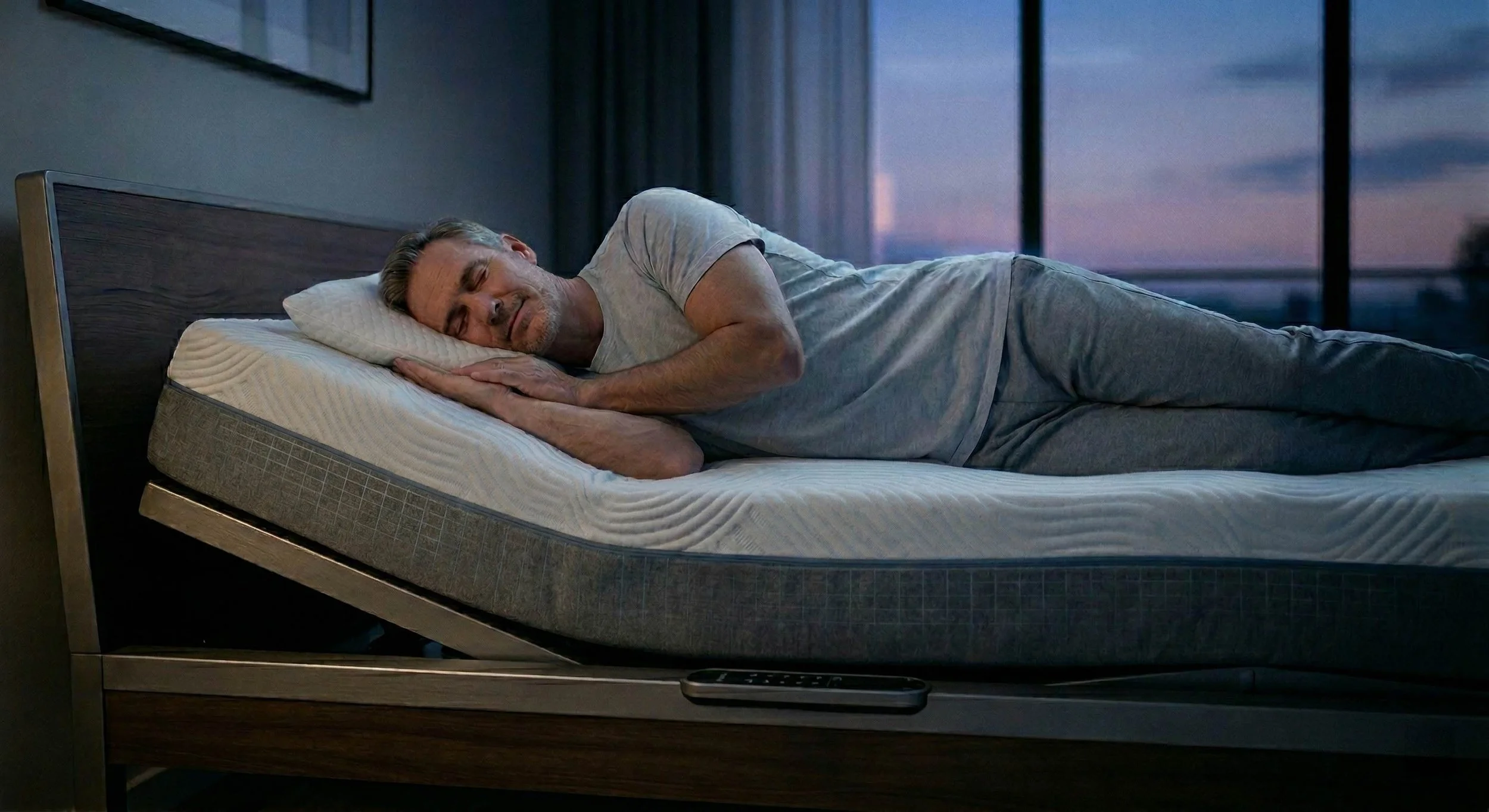
Interestingly, your sleep position plays a vital role in this process. Research published in the Journal of Neuroscience suggests that the lateral (side) position is the most effective for glymphatic clearance compared to sleeping on your back or stomach. To maintain this position without straining the spine, a supportive mattress is essential. It must provide enough "give" for the shoulders and hips while keeping the neck in a neutral alignment.
Achieving this level of spinal neutrality is a core component of structural recovery, much like the corrective movement strategies practiced at FUNCtherapy. When patients treat their sleep posture as a direct extension of their physical rehabilitation, the body can finally drop the "guarding" response that leads to chronic morning stiffness. By focusing on alignment, you allow the glymphatic system to work at peak efficiency, ensuring you wake up with mental clarity rather than "brain fog" - a physiological necessity for long-term cognitive health.
Decoding the Science of Pressure Relief and Tissue Health
When you lie down, your body weight is distributed across the surface of the bed. If the surface is too hard, high-pressure zones develop at the sacrum, heels, and shoulder blades. These pressure points do more than just cause discomfort - they actually compress capillaries, restricting blood flow and oxygen delivery to the skin and underlying tissues.
This is where a pressure relief mattress becomes a vital tool for recovery. By redistributing weight across a larger surface area, these mattresses prevent the "crushing" of microvessels. This is particularly important for individuals recovering from surgery or those with limited mobility, as prolonged pressure can lead to painful complications. According to the Mayo Clinic recommendations for preventing pressure sores, maintaining skin integrity requires a surface that effectively manages both pressure and shear forces.
| Feature | Standard Mattress | Pressure Relief Mattress |
| Weight Distribution | Concentrated on "heavy" zones | Evenly spread across the body |
| Blood Flow | Can be restricted at contact points | Optimized for tissue oxygenation |
| Primary Goal | General comfort | Prevention of tissue ischemia |
| Recommended For | Healthy, active sleepers | Recovery, seniors, and long-term rest |
The Role of Advanced Materials: Foam vs. Gel vs. Hybrid
Choosing from the various types of mattresses available today can be overwhelming. However, focusing on material science helps simplify the decision based on your specific recovery needs.
Foam Mattress: High-density memory foam is excellent for contouring. It "wraps" around the body, providing exceptional pressure redistribution. This makes it a popular bed mattress for back pain, as it fills the gaps in the lumbar curve.
Gel-Infused Layers: One common complaint with traditional foam is heat retention. Gel-infused options help regulate core body temperature. A cooler sleeping surface is critical because the body must drop its core temperature by about two degrees to initiate deep sleep.
Medical-Grade Innersprings: Unlike "bouncy" retail beds, a high-quality medical mattress uses pocketed coils that move independently, providing targeted support without the "hammock" effect that can misalign the spine.
When selecting equipment for a home recovery suite, consulting experts like those at Medlife Medical Supply, Inc can be invaluable. They provide access to specialized surfaces that bridge the gap between clinical effectiveness and home comfort, ensuring that your choice of bedding supports your long-term orthopedic health.
Solving the Back Pain Puzzle: More Than Just Firmness
Back pain is the leading cause of global disability, and the "wrong" bed is often a silent contributor. A common misconception is that a rock-hard mattress is best for a bad back. In reality, Harvard Health Publishing experts suggest that a medium-firm mattress usually provides the best balance of support and comfort for chronic lower back issues.
A supportive mattress should maintain the "S-curve" of your spine. If a mattress is too soft, your hips sink, creating a "C-shape" that strains the lower back ligaments. If it is too firm, your shoulders are pushed upward, causing tension in the thoracic spine and neck.
To further optimize this, many patients are turning to an adjusting bed. These systems allow you to elevate the head and feet (the "Zero-G" position), which takes the pressure off the lower spine and improves venous return - the process of blood flowing back to the heart. This position can drastically reduce the morning stiffness often associated with traditional flat-bed sleeping by neutralizing gravity's pull on the vertebrae.
Critical Care at Home: The Hospital Bed Mattress
For those managing chronic conditions or recovering from major orthopedic surgeries, a standard retail mattress may not be enough. A hospital bed mattress is designed with specific clinical goals in mind: fluid resistance, antimicrobial properties, and, most importantly, shear reduction.
"Shear" occurs when the skin stays in place while the body slides, which can tear delicate tissues. A high-quality mattress to prevent bed sores uses specialized covers and multi-layered foam to allow the body to move without damaging the skin. This level of protection is essential for patients with compromised circulation or diabetes, where skin healing is significantly slowed.
Organizations like Westlake Village Hospice, Inc understand that at the end-of-life or during serious illness, comfort is synonymous with clinical safety. Using medical-grade surfaces ensures that patients remain pain-free and protected from secondary complications like pressure ulcers, allowing the focus to remain on quality of life and dignity. The right support surfaces are classified by the NIH as a cornerstone of preventive care for patients with limited mobility.
The Future of "Smart" Sleep: AI and Active Decompression
The next frontier in sleep health involves surfaces that don't just sit there - they react. Modern systems, such as the Comforturn or AI-integrated beds, can actually detect when a patient has been in one position too long and subtly shift the air pressure within the mattress to "rotate" the pressure points.
These best position beds use sensors to monitor heart rate, respiratory rate, and movement. For a patient with chronic back pain, the bed might slightly adjust its firmness throughout the night to compensate for muscle relaxation. This level of "active" recovery was once only available in ICU settings but is now becoming a reality for home use. Studies on automated repositioning systems show a significant reduction in caregiver burden and an increase in patient sleep continuity.
At-a-Glance: Mattress Benefits for Recovery
Reduces Inflammation: Proper support limits muscular strain and metabolic waste buildup.
Enhances Circulation: Prevents capillary compression, ensuring nutrients reach healing tissues.
Prevents Skin Breakdown: Crucial for anyone spending more than 12 hours a day in bed.
Optimizes Breathing: An adjusting bed can help open airways and reduce acid reflux.
Temperature Regulation: Materials like cooling gels prevent sleep fragmentation caused by overheating.
Integrating Professional Care with Home Recovery
Optimizing your sleep environment is a major step, but it shouldn't be done in a vacuum. If you find yourself waking up with persistent pain, or if you are helping a loved one transition from a clinical setting to home care, professional guidance is essential.
Sometimes, the stress of navigating medical concerns can interfere with the very rest you are trying to achieve. Using a service like Doctor2me can provide peace of mind. Instead of traveling to a busy clinic and sitting in a waiting room - which can be physically taxing for someone with back pain - you can have a qualified physician visit you at home. They can assess your physical alignment, review your recovery progress, and offer personalized recommendations on the best types of mattresses or positions for your specific condition. This approach reduces the physical toll of a traditional doctor’s visit and ensures your home environment is truly optimized for healing.
Practical Tips for Your Sleep Sanctuary
The Pillow Gap: If you sleep on your side, place a pillow between your knees. This prevents the top leg from pulling your spine out of alignment and reduces pressure on the hips.
The Lifespan Rule: Most mattresses lose their structural integrity after 7-10 years. If you see a visible dip in the center, it is no longer providing a supportive mattress experience and is likely contributing to your pain.
Light and Temp: According to CDC sleep hygiene guidelines, keeping your bedroom dark, quiet, and cool (between 60-67 degrees Fahrenheit) is the foundation of any restorative sleep plan.
Gradual Adjustments: If you switch to an adjusting bed, start with small elevations. Your body needs time to adapt to the new distribution of gravity and fluid dynamics.
The bed you choose is the most used piece of equipment in your life. By selecting a medical mattress designed for your specific physiological needs - whether that is a foam mattress for lumbar support or a specialized pressure relief mattress for clinical recovery - you are doing more than just buying furniture. You are investing in your body’s ability to repair itself at the cellular level.
True "Smart Sleep" is the intersection of material science, proper posture, and professional medical insight. When these elements align, sleep becomes more than just a break from the day - it becomes a powerful tool for longevity, recovery, and long-term health.
FAQ
What type of mattress is best for chronic back pain?
Most orthopedic experts recommend a medium-firm supportive mattress that maintains the natural S-curve of the spine during sleep. A high-density foam mattress is often the preferred bed mattress for back pain because it contours to the lumbar region while preventing the "hammock effect" that causes morning stiffness.
How can a medical mattress help prevent bed sores?
A specialized pressure relief mattress works by evenly distributing body weight to prevent capillary compression in high-risk areas like the sacrum and heels. Using a clinical-grade mattress to prevent bed sores is a critical preventive measure for patients with limited mobility to ensure consistent blood flow and skin integrity.
Why is the side sleeping position recommended for brain health?
Research indicates that best position beds for cognitive recovery often involve lateral (side) sleeping, which optimizes the glymphatic system's ability to flush metabolic waste from the brain. Ensuring your medical mattress provides enough shoulder "sink" helps maintain this side-lying alignment comfortably without causing spinal strain.
What are the main benefits of using an adjusting bed during recovery?
An adjusting bed allows for the elevation of the head and feet, reaching a "Zero-G" position that decompresses the vertebrae and improves venous circulation. This mechanical flexibility makes it easier to manage respiratory issues, acid reflux, and lower back tension compared to traditional flat bed frames.
When should I consider a hospital bed mattress for home care?
A hospital bed mattress is necessary when a patient requires fluid-resistant materials, antimicrobial protection, or advanced shear reduction during extended periods of bed rest. These specific types of mattresses are engineered to support tissue healing and prevent complications in ways that standard retail beds simply cannot.
You May Also Like