
End Stage Dementia Signs: What the Last Stage Actually Takes
Table of Content
End stage dementia takes the body before it finishes with the mind. Speech, walking and swallowing go, and an infection is usually what ends life.
The numbers bear that out. A 2026 study in European Geriatric Medicine on feeding-related hospitalizations in advanced dementia followed 178 hospitalized patients with a mean age of 86. Infections were the primary diagnosis in 83.1% of admissions, mostly respiratory, and in-hospital mortality was 23%. Over 85% of people at this stage have feeding-related problems.
What Happens in the Last Stage of Dementia?
The losses move from memory into movement, speech and swallowing. This is the stage where someone needs help with everything, and where the body stops managing basic tasks it has handled for eighty years without being asked.
What the Body Loses
Cleveland Clinic describes the final stage of Alzheimer's disease as complete or almost complete memory loss, with the person losing the ability to speak or use language to communicate, and needing help with many or all daily activities, including eating, walking or sitting up. Complications such as infections, bedsores and trouble swallowing become more frequent.
Mayo Clinic's description of the severe stage of Alzheimer's adds the physical picture. A person may only occasionally say words or phrases, may be unable to walk, sit upright or hold the head up, and muscles may become rigid with reflexes that no longer respond in the usual way. Swallowing eventually fails too.
How Long the Last Stage Lasts
There is no single answer, and the two main estimates differ. Cleveland Clinic says the severe stage typically lasts fewer than two years. The Alzheimer's Association puts the late stage at anywhere from several weeks to several years. Both are ranges, not predictions for one person.
What tends to shorten the range is the arrival of complications. A chest infection, a pressure sore or a bout of aspiration changes the picture faster than the dementia itself does, which is why families often describe a slow decline interrupted by sudden drops.
What Changes From the Middle Stage of Dementia?
The hard behaviours usually quiet down, and the physical needs take over. Families who spent two years managing accusations, pacing and refusals often find the last stage is a different kind of difficult rather than more of the same.
The suspicion and the accusations belong mostly to the middle stage, when speech still works and the person is trying to explain a world that no longer adds up. Paranoia in Elderly Parents covers how those accusations are usually handled while they are still happening.
By the last stage, communication has thinned out to expressions, sounds and touch. Correcting and arguing stop being relevant, and reading comfort or distress in the body becomes the main skill. Validation Therapy explains why correcting someone with dementia tends to backfire well before this point.
Why Does Someone With Dementia Stop Eating and Drinking?
Because the reflexes that make eating possible stop working, and the sensation of hunger fades. This is part of the disease moving through the brain, not a decision and not something a family failed to prevent.
The 2026 European Geriatric Medicine study is blunt on the point: hunger is typically absent in terminal stages, and inability to eat or drink is part of the disease trajectory. Feeding-related hospitalizations in that cohort accounted for 17.4% of admissions, most often because of aspiration rather than hunger.
Families often ask how long someone lives after eating stops. No reliable number exists, because it depends on what else is happening in the body. What is documented is the window once active dying begins, and that is measured in days to a couple of weeks.
Reduced intake is also worth separating from dehydration earlier in the illness, which is treatable and often mistaken for the dementia getting worse. Dehydration in Elderly Adults goes through the signs that get confused with decline.
Why Isn't a Feeding Tube Used at This Stage?
Because the evidence does not show it helps, and it shows real harm. Medical societies recommend against tube feeding in advanced dementia and support careful hand feeding instead, which is sometimes called comfort feeding.
The 2026 cohort put figures to it. Patients discharged with a feeding tube had significantly higher complication rates than those without one, including aspiration, pressure ulcers, pain and physical restraint, and their 30-day mortality was 25% against 12.8% in the group without a tube. The tube did not prolong survival.
Comfort feeding means offering food and drink at whatever pace the person tolerates, for comfort rather than for nutritional targets. In that same cohort it was the approach used for 57.3% of patients. Hydration is handled by moistening the lips and mouth with water or ice chips.
When fluids are being considered for a treatable problem rather than for the end of life, that is a different conversation. IV Fluids at Home sets out when fluids are appropriate and who can administer them.
Is the Final Stage Painful or Distressing?
It can be uncomfortable, and most of that discomfort is treatable once somebody notices it. The difficulty is that the person can no longer say what hurts, so pain gets missed rather than being absent.
The Alzheimer's Association's guidance on late-stage care points out that sudden behaviour changes are often the result of pain, and advises looking for physical signs and paying attention to nonverbal ones, including anxiety, agitation and trembling. A grimace during repositioning counts as information.
Restlessness near the very end has a physical explanation too. Cleveland Clinic describes terminal agitation as generally occurring within the last two weeks of life, caused by organs shutting down so that waste builds up and chemical imbalances affect the brain. It is not the person turning against anyone.
The same page lists what settles it: holding hands, a lotion massage of the hands and feet, calming music, and speaking calmly and gently. Low light and fewer people in the room usually help as well.
What Are the Signs of Dying in Elderly With Dementia?
The dying process has its own set of signs, and they are different from the general decline of the last stage. MedlinePlus, describing what the final days are like, says the process may last anywhere from a few days to a couple of weeks.
The signs it lists include trouble swallowing, blurry vision and difficulty hearing, cool hands, arms, feet or legs, and a blue or gray nose, mouth, fingers or toes. Breathing may sound wet or bubbling, with pauses followed by quick deep breaths. Some people talk to those who are not in the room.
Here is how the two phases differ, because families often mistake one for the other.
|
What to look at |
Last stage of dementia |
Active dying |
|---|---|---|
|
Rough length |
Weeks to years, often under two |
Days to a couple of weeks |
|
Speech |
Occasional words or phrases |
Little or none; may talk to people who are not there |
|
Eating |
Needs full help; intake drops |
Swallowing fails; hunger absent |
|
Movement |
May be unable to walk, sit up or hold the head up |
Mostly still, sleeping much of the time |
|
Breathing |
Usually unremarkable between infections |
Wet or bubbling, with pauses then quick deep breaths |
|
Skin and colour |
Fragile, prone to pressure sores |
Cool limbs, blue or gray nose, mouth, fingers or toes |
When Should Hospice Come In?
Earlier than most families do it. Hospice is comfort-focused care, and the reason to start the conversation at this stage is that the decisions it covers arrive whether or not anybody planned for them.
The Alzheimer's Association advises talking with doctors about goals of care, including resuscitation, tube feeding and hospice, as part of late-stage care rather than during a crisis. Having those answers written down is what stops an ambulance trip from deciding them at two in the morning.
Hospice teams differ in what they actually bring. Guardian Angel Hospice lists nursing and physician oversight, home health aides, social work, chaplaincy and bereavement counseling, respite care and continuous nursing for crisis periods, serving Los Angeles and Ventura counties.
The practical test of a hospice is what happens at 3am on a Sunday. Ask who answers the phone, how fast somebody can reach the house, and what equipment arrives in the first 48 hours.
How Can a Family Care for Someone at Home?
Most of the work at this stage is comfort, skin and mouth care, and it is learnable. The routine is repetitive rather than complicated, which is both the relief and the exhaustion of it.
Mouth Care, Position and Comfort
The Alzheimer's Association's late-stage care and comfort guidance recommends changing the person's position at least every two hours to relieve pressure and improve circulation. For the mouth it advises brushing after each meal and using a soft toothbrush or a moistened gauze pad to clean the gums, tongue and other mouth tissues at least daily.
Mouth care matters more than it sounds. The same guidance notes that food or drink can be inhaled into the lungs and lead to pneumonia, and a clean mouth lowers what is there to inhale. It also keeps the person comfortable when they can no longer drink normally.
Who Comes to the House
Hands-on daily help is a different service from hospice and usually runs alongside it. A Better Solution In Home Care, based in Encino, lists personal care, homemaker support, post-discharge care and specialized dementia programs across North Los Angeles County.
Medical visits can also come to the home rather than the other way around, which matters once a car journey has become its own ordeal. The provider directory lists clinicians who see patients at home alongside the rest of the network.
Infections are the thing to watch for in between visits, and they rarely announce themselves clearly in someone with advanced dementia. Infection in Older Adults Doesn't Always Come With a Fever covers the signs that show up instead.
FAQ
-
Recognition becomes unreliable rather than simply gone. Many families notice responses to a familiar voice, a hand or a particular piece of music even when names and faces no longer connect. Those responses are worth taking at face value.
-
Some families describe a short period of unexpected clarity or speech near the end of life. It does not signal recovery, and it is not caused by anything the family did or stopped doing. Most people describe it afterwards as a gift rather than a sign.
-
It is generally assumed to, which is why staff talk to people who appear unresponsive and why what gets said in the room matters. Speaking normally and saying who you are when you walk in costs nothing.
-
That depends on the goals of care that were set earlier. Hospital treatment is possible at any stage, but it carries its own burdens at this point, and many families decide in advance to treat comfort as the priority. The decision belongs with the doctor and the family together.
-
Hospice nurses are usually the best judges, because they have seen the pattern many times and can read breathing and skin changes. Asking the nurse directly, rather than waiting to be told, tends to give people more notice.
-
Interest in food usually narrows before it stops, often to sweet things, soft textures or very small amounts. Following what the person still accepts, instead of aiming at a target amount, is the approach most teams take at this stage.
Sources Used
Alzheimer's Disease Stages – Cleveland Clinic (2025)
Alzheimer's stages: How the disease progresses – Mayo Clinic (2025)
Feeding-related hospitalizations and outcomes in advanced dementia – European Geriatric Medicine (2026)
Palliative care - what the final days are like – MedlinePlus (2026)
Paranoia in Elderly Parents: Handling Dementia Accusations Without a Fight – Dementia Partner
Providing Care and Comfort During the Late Stage of Alzheimer's Disease – Alzheimer's Association (2023)
Terminal Agitation – Cleveland Clinic (2024)

Written by Sofiia Puhach
October 5, 2026
You May Also Like
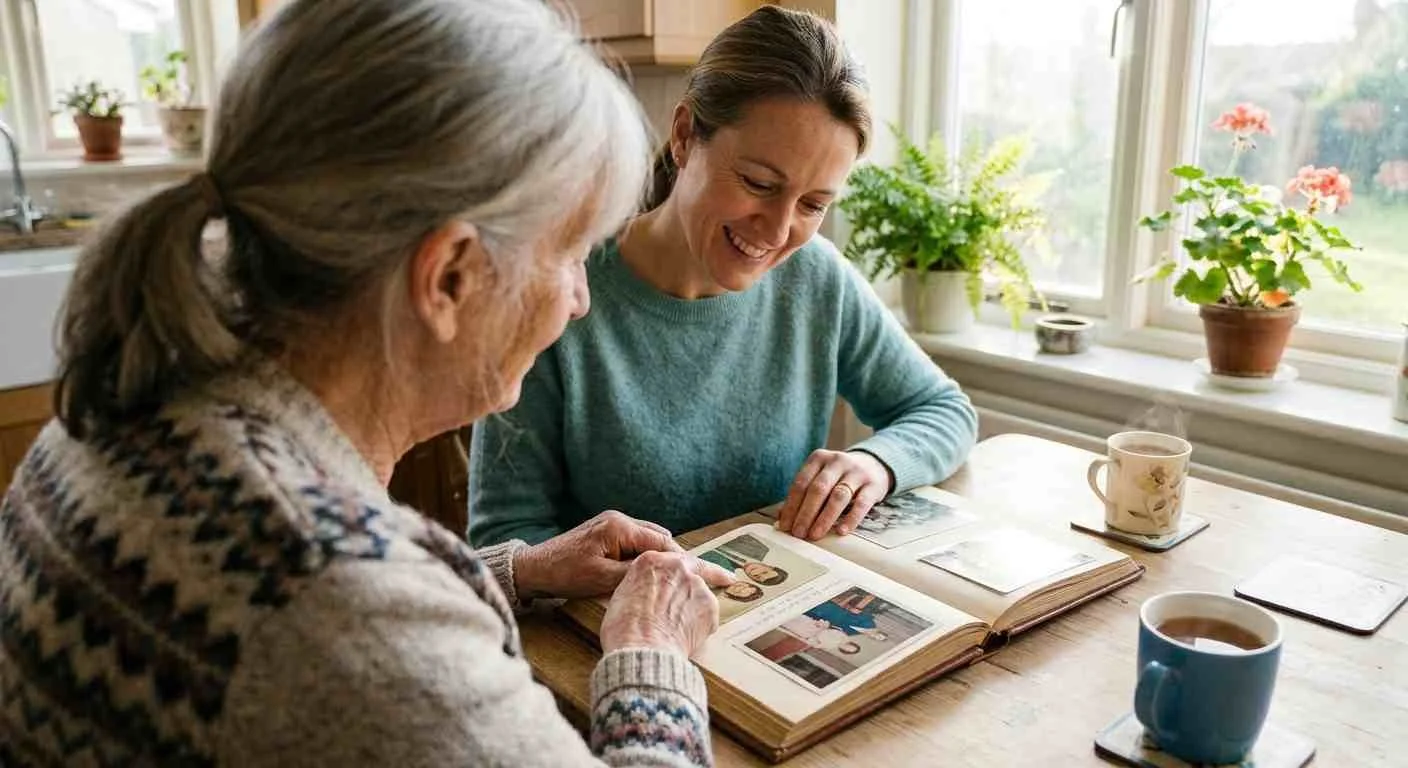



Swallowing, walking and speech go first, and infection is usually what ends life in the final stage of dementia.