The Future of House Calls: How Our Doctors Bring Modern Medicine Home
House calls are making a comeback, but this isn't the nostalgia of the past century. Today, it is a high-tech response to modern challenges. Forget the old image of a doctor with just a stethoscope; today’s house call is a sophisticated medical service answering the crisis of overcrowded clinics.
Experts at the National Institutes of Health (NIH) confirm that the modern "Hospital at Home" model allows patients to improve clinical outcomes and quality of life while recovering in the comfort of their own beds. This is exactly the approach practiced by our internal medicine specialists, such as Dr. Cameron Sikavi and Dr. Allen Jahroumi. For them, coming to your home isn't just a service—it’s a way to provide a level of attention that is simply impossible in a busy clinic.
Why Traditional Care No Longer Fits
The classic "get sick, travel to the doctor" model is increasingly failing patients.
The Logistic Nightmare: Traffic, parking, and waiting in a room full of other sick people exhaust patients before they even see a provider. According to the CDC, the need for home-based care increases significantly with age, when every trip outside becomes a physical challenge.
Hidden Risks: Clinics can be hotspots for infections. For someone with a weakened immune system, home is the safest fortress.
The "White Coat" Effect
There is also a medical reason to stay home. Patients often experience elevated blood pressure and heart rate in a clinical setting due to stress (known as "white coat hypertension"). This can lead to misdiagnosis. Experienced physicians like Dr. Zhanna Feldsher note that examining a patient in their favorite armchair yields far more accurate physiological data, allowing for precise medication management.
The Evolution: A Doctor Who Knows You Personally
The modern house call is not just a one-time "fix"—it is comprehensive Primary Care. Data published by CMS confirms that this structured approach significantly improves health outcomes for patients with chronic conditions.
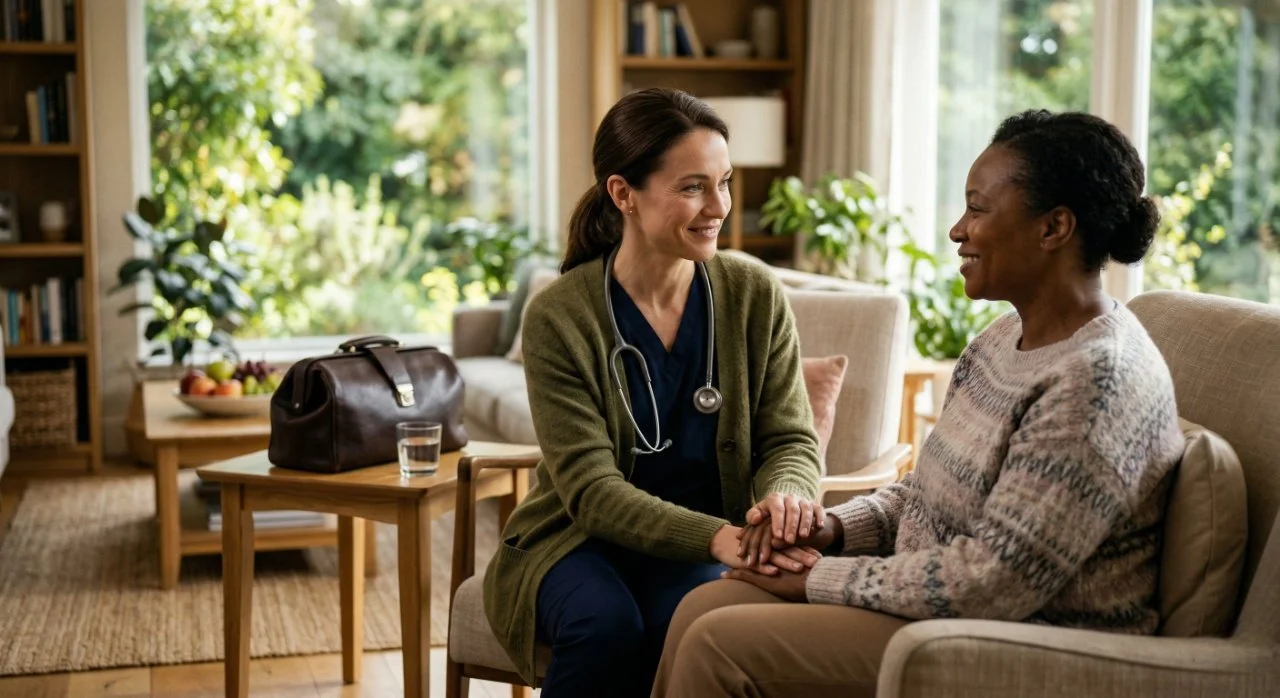
Family practice specialists, such as Dr. Claudine Aguilera and Dr. Cleo Tsolakoglou-Williams, are restoring the lost connection between doctor and patient. Unconstrained by 15-minute appointment slots, they can deeply understand your medical history rather than just writing a quick prescription.
Technology That Comes to You
"Can you really do the same things at home as in a hospital?" The answer is yes. The doctor at your door is backed by a mobile ecosystem. Experienced clinicians like Dr. Roseller Ditangco utilize this arsenal to the fullest.
Mobile Diagnostics
You no longer need to travel across town for a scan. Upon the doctor's order, specialists arrive with portable equipment:
Mobile X-ray: Imaging for lungs or injuries done right in the bedroom.
UZ (Ultrasound) & EKG: Cardiac and internal organ assessments performed bedside.
Lab Services: Blood draws happen at home, with digital results sent directly to the doctor.
Advanced Treatments
For patients requiring more complex care, physicians like Dr. Diana Katsman oversee advanced procedures:
IV Therapy: Administering fluids for dehydration, antibiotics, or vitamins.
Wound Care: Professional management of bedsores, diabetic ulcers, or post-surgical stitches.
As noted by Mayo Clinic, these technologies allow for high-acuity care to be delivered safely in the home environment.
Who Benefits Most: Seniors and Rehabilitation
While convenient for everyone, this model is a lifeline for certain groups.
Geriatric specialists, such as Dr. Vera Kleynberg and Dr. Rebecca Cook, tailor their care to the specific needs of older adults:
Dementia Care: For patients with Alzheimer’s, a change of environment can trigger confusion and distress. A home exam is calm and familiar.
Recovery: Doctors coordinate Physical Therapy to help patients regain mobility after strokes or falls, minimizing the stress of transport.
Seeing the Full Picture: Social Determinants of Health
In a clinic, a doctor only hears what you tell them. At home, they see how you live. An observant physician, like Dr. Jennifer Spurlock, notices critical details immediately:
What’s in the fridge? (Is the diet healthy?)
Where are the meds stored? (Is there confusion with pills?)
Is the home safe? (Are there loose rugs or dangerous steps?)
Analysts at Kaiser Permanente confirm that addressing these factors reduces the risk of hospital readmissions. This is true preventive medicine.
Safety: When to Call Us vs. 911
We operate under strict safety protocols aligned with CMS standards, requiring rapid response capabilities. However, it is vital to know the difference:
Call 911 (Emergency): Chest pain, stroke symptoms, severe difficulty breathing, loss of consciousness, or major trauma. These require the ER.
Call a House Call Doctor: High fever, flu, infections (UTI, respiratory), chronic disease flare-ups, back pain, dehydration. Here, our doctors are indispensable.
Checklist: How to Prepare for the Visit
To make the most of your appointment, follow these 4 simple steps:
Lighting: Ensure the room where the exam will take place is well-lit.
Medications: Place all current pills and supplements on a table. The doctor needs to see the actual bottles and dosages.
History: Have recent hospital discharge papers or test results ready if available.
Pets: Please secure family pets in another room during the medical exam.
The future of healthcare is moving to where the patient is. House calls are not a step back into the past, but a logical expansion of modern medicine. Thanks to the expertise of doctors like Dr. Sikavi, Dr. Feldsher, Dr. Aguilera, and their colleagues, combined with mobile technology, quality care is now available where you are most comfortable—in your own home.
FAQ
I thought doctors didn't do house calls anymore. Why are they coming back?
It is a common myth that house calls belong to the past. In reality, they are the fastest-growing sector in modern healthcare. Technology (like portable X-rays and labs) now allows doctors to bring hospital-level care to your doorstep. Physicians like Dr. Cameron Sikavi and Dr. Allen Jahroumi are leading this shift because it allows for more personalized, safer, and effective treatment than a rushed clinic visit.
What exactly does a modern "house call" include?
It is far more than just a check-up. A modern house call is a comprehensive medical visit. Depending on your needs, it can include a physical exam, medication management, mobile imaging (X-ray, Ultrasound), lab work, and even treatments like IV therapy or wound care. It is essentially an Urgent Care visit in the comfort of your living room.
Is a house call safe?
Yes. Our providers follow strict clinical protocols similar to those in hospitals. We handle urgent but non-life-threatening conditions (like infections, flu, or chronic flare-ups). However, safety is our priority: if a patient shows signs of a life-threatening emergency (like a heart attack or stroke), we always direct them to call 911 immediately.
You May Also Like