Pool Lift Options for Seniors
Table of Contents
Swimming and aquatic therapy are among the most effective and safe ways to maintain physical fitness in older age. Water relieves stress on joints, improves circulation, and helps manage arthritis symptoms. However, for many seniors, slippery ladders and high pool edges can turn a trip to the pool into a dangerous challenge.
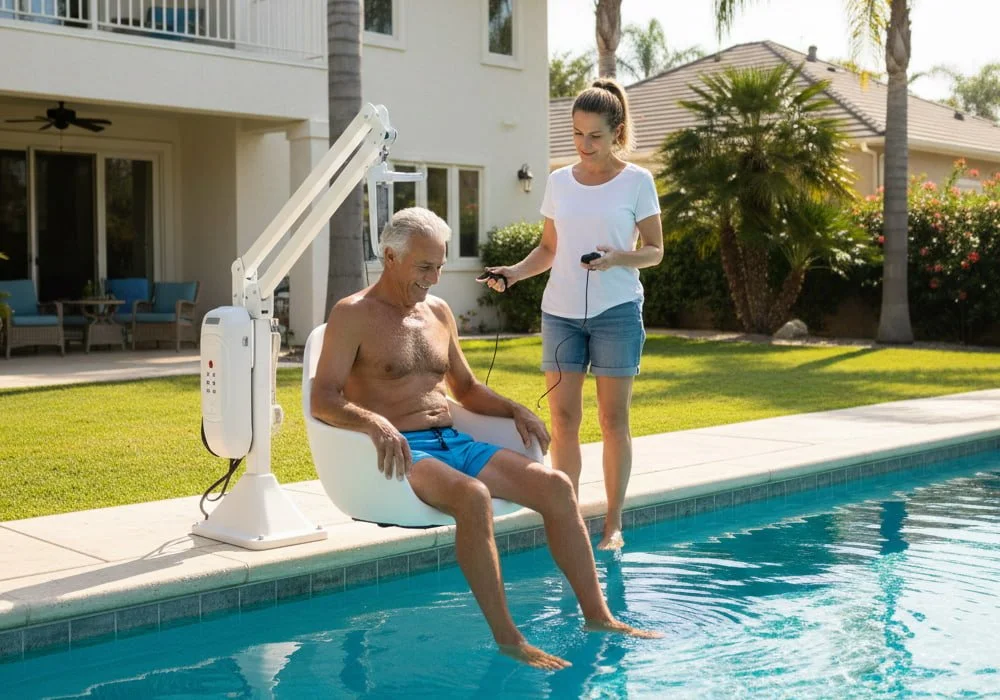
Specialized Pool Lifts solve this problem, restoring a sense of independence. In this article, we will explore the medical benefits of water, the different types of lifts available, and how to ensure a safe swimming experience.
Why Water Matters: The Medical Perspective
Before starting any aquatic routine, it is essential to consult with your Primary Care physician to rule out any individual contraindications. Experts agree that with the right approach, water can work wonders.
A Holistic Approach: Holistic medicine specialists, such Comprehensive Natural Healthcare, often include swimming in overall wellness plans because it affects the body systemically, improving both physical and mental states.
Heart & Brain Health: According to Kaiser Permanente, regular aerobic exercise in water strengthens the heart and improves cognitive function, helping to keep the mind sharp and reduce the risk of age-related brain changes.
Fighting Arthritis & Pain: Water has unique properties. As noted by Mayo Clinic specialists, swimming is ideal for joints because water supports body weight, reducing the load. This allows for movement without the pain often experienced on land, opening up opportunities for effective Physical Therapy right in the pool.
Fall Prevention: Research from the NIH confirms that regular aquatic therapy effectively trains balance. This is a key factor in maintaining independence and preventing household injuries.
Active Longevity: The CDC emphasizes that physical activity is vital for healthy aging, helping to prevent the development of many chronic conditions.
Types of Lifts: What to Choose?
A pool lift falls under the category of Medical Supplies, so choosing one requires careful consideration.
Before installation, it is important to evaluate the space around the pool. Safety experts, such as Call Before You Fall, recommend assessing the installation zone beforehand for slippery surfaces and secure anchoring points to eliminate injury risks before even reaching the water.
Battery-Powered Lifts
This is the modern and most popular standard.
How it works: Operates on a rechargeable 24-volt battery.
Pros: Complete autonomy, smooth operation, and no hoses or wires on the deck. They often come with a waterproof remote, allowing the user to submerge independently.
Cons: Requires regular battery charging.
Water-Powered (Hydraulic) Lifts
How it works: Connects to a water source; water pressure drives the piston.
Pros: Eco-friendly, no electricity required, high weight capacity.
Cons: Requires a hose (which can be a tripping hazard), and operation depends on stable water pressure.
Stationary vs. Portable
Stationary: Rigidly attached to the deck with anchors. This is the safest and most stable option.
Portable: Features a wheeled base and counterweights. They can be stored away, but they take up more deck space.
Safety and Care Organization
Safety is not just about a reliable mechanism, but also about the proper organization of the bathing process.
Technical Safety & Standards
ADA Compliance: Look for models that meet ADA (Americans with Disabilities Act) standards. This guarantees proper ergonomics and structural safety.
CMS Regulations: If the pool is used for therapeutic or public purposes, federal agencies like CMS require strict adherence to rules: sanitary norms and maintenance must be top-notch to eliminate health risks.
Weight Capacity: Standard models support 136–180 kg (300-400 lbs). Reinforced models are available for bariatric needs.
Patient Care
Skin Condition (Wound Care): Water can be dangerous for unhealed wounds (such as diabetic ulcers or post-surgical stitches). Before visiting the pool, ensure skin integrity. If in doubt, it is best to consult Wound Care specialists, such as those at GotWound.com, to get clearance for procedures and avoid infection.
Assistance at Hand (Home Care): Even with an automatic lift, swimming alone is not recommended for seniors. If family members cannot be present, a sensible solution is the accompaniment of a professional caregiver from agencies like A Better Solution In Home Care. A specialist can help with the transfer, monitor well-being, and provide support in the water.
Comfort and Ergonomics: What to Look For
To ensure the use of the lift is stress-free, it must be comfortable.
Submersion Depth: The seat should lower deep enough into the water (usually 18-20 inches / 45-50 cm below the water line). This aligns with the principles of gentle impact on joints described by the Mayo Clinic, allowing the person to float away easily rather than jumping off.
Footrest: A critically important element. Without it, legs will dangle, causing discomfort and the risk of hitting the pool edge.
Armrests: Flip-up armrests simplify the lateral transfer from a wheelchair to the lift seat.
Pre-Purchase Checklist
Before ordering equipment, answer these questions to avoid installation errors:
Pool Profile: Do you have a high curb or a gutter system? This affects the necessary "clearance" or reach of the lift arm.
Deck Material: Concrete, tile, or wood? Anchoring stationary models requires a solid concrete foundation of a specific thickness.
Storage: Will you need to remove the lift for winter? If so, choose a model with an easy removal mechanism.
A pool lift is an investment not just in "hardware," but in quality of life. It removes the fear of falling and opens access to the healing power of water. The combination of the right equipment, physician consultation, and, when necessary, professional assistance makes aquatic therapy a safe and enjoyable ritual.
FAQ
Can I install a pool lift myself?
While portable models require minimal setup, stationary lifts must be anchored into concrete. For safety and compliance with local electrical codes (bonding/grounding), professional installation is highly recommended. Improper installation can lead to the lift tipping over or structural damage to your pool deck.
Is it safe for a senior to use the lift alone?
Modern battery-powered lifts come with waterproof remotes designed for independent use. However, for maximum safety, we strongly advise against swimming alone. Having a family member or a professional caregiver nearby is the best practice to prevent accidents in the water.
How often do I need to charge the battery?
Most 24V batteries allow for approximately 30–40 lift cycles on a single charge. It is best practice to charge the battery every night or keep a spare battery on the charger to ensure the lift is always ready to use.
Do pool lifts work with saltwater pools?
Yes, but salt water is more corrosive than fresh water. If you have a saltwater pool, look for lifts made of high-grade stainless steel with a protective powder-coated finish to prevent rust and corrosion.
How do I know if a lift will fit my pool?
You need to measure your pool's profile, specifically the deck-to-water distance and the width of any gutters or curbs. These measurements determine the required "clearance" and reach of the lift arm. Standard models fit most residential pools, but deep drafts or high walls may require extended arm attachments.
What is the weight limit for a standard pool lift?
Most standard residential lifts are rated for 300 to 400 lbs (136–181 kg). If a higher capacity is needed, "Bariatric" or heavy-duty models are available that can support up to 500 lbs (227 kg) or more.
You May Also Like