
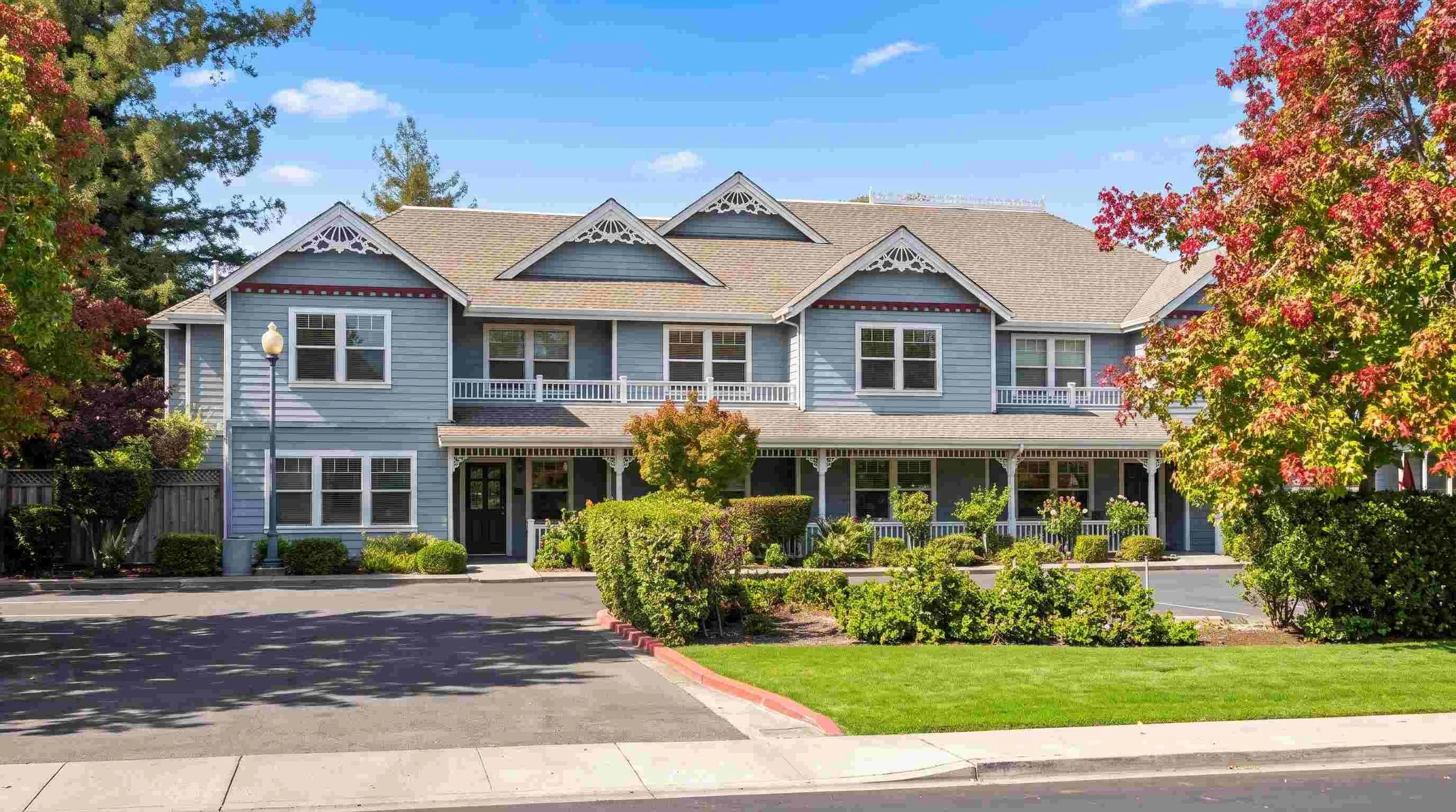
Aegis Assisted Living of Napa sits at 2100 Redwood Road in a tree-lined residential pocket of the city. Among assisted living Napa options it stands apart for the building itself, a restored Victorian rather than a purpose-built block, and that single fact shapes how the place feels the moment you walk in.
The Basics: Address, License, and Size
The community is licensed by the state as a Residential Care Facility for the Elderly under license number 286803028, held by Aegis Senior Communities, LLC. State records list a licensed capacity of 56 residents and a first license date of September 4, 2008, with the facility administrator listed as Paul Oseso.
The published address is 2100 Redwood Road, Napa, CA 94558, in Napa County. The community itself describes 48 apartments, so the licensed capacity of 56 reflects beds rather than units, which matters if you are comparing it against a larger senior living Napa CA campus.
Size is worth sitting with. Fifty-odd residents is small enough that staff tend to know names and large enough to support a real activity calendar, which is a different trade-off than either a six-bed board and care home or a 150-unit community offers.
What Care Levels Are Offered?
Four, and they are not interchangeable. The community lists assisted living, transitional care for early memory loss, secured memory care, and short respite or day stays. Hospice care is described as something delivered in the resident's own apartment through a provider the family chooses.
The table below sets out how the community itself describes each level and where in the building it happens. Use it as a map for your tour questions rather than as a promise, and ask directly which level your parents would be admitted into.
|
Care level |
Who it is described for |
Where it happens |
|---|---|---|
|
Assisted living |
Help with daily activities, with care managers on site around the clock |
A private studio, one-bedroom, or companion suite |
|
Transitional care |
Early-stage or mild memory loss, not yet needing full memory care |
Within the main community, with added structure |
|
Memory care |
Residents living with Alzheimer's disease or another dementia |
A secured area the company calls Life's Neighborhood |
|
Respite and day stay |
Families needing a short break or a trial before a permanent move |
Stays listed from a day to a month or more |
Memory care Napa searches often land families here for that secured area. Ask how a move between levels is decided, who makes the call, and what the cost difference is before anyone signs, because that internal transfer is where budgets usually break.
What Transitional Care Means in Practice
Transitional care is a middle step, and it exists because the jump from standard assisted living to locked memory care is a hard one for families to accept. It usually means more cueing, a smaller group, and a tighter routine, without the secured doors.
The real question is how long it holds. Wandering, nighttime agitation, or an inability to recognize a hazard tends to push a resident past what an unsecured setting can manage safely. Ask what specific behaviors would trigger a recommended move, and ask for examples rather than policy language.
It helps to know what the category covers generally. Per the National Institute on Aging (2023), assisted living suits people who need help with daily care but not the level a nursing home provides, with meals, personal care, housekeeping, laundry, and 24-hour supervision included, and residents paying more for extra or special care.
Apartments, Dining, and Daily Life
Apartments come as studios, one-bedrooms, and shared companion suites. The community lists private apartments from $6,840 a month and describes its pricing as apartment rent plus care points plus a community fee, which is the structure to ask about in writing rather than in conversation.
Shared space is where a restored Victorian earns its keep. There is a library with a fireplace, private dining rooms for family meals, a garden courtyard, paved walking paths, and an on-site physical therapy center. For a resident who likes to be outside, those paths matter more than the chandeliers.
Meals are described as regionally inspired and heart-healthy, built by chefs with registered dietitians, with all-day dining and a bistro. The activity calendar is listed at more than 200 monthly programs, including walking clubs, art and music therapy, yoga, book clubs, and outings to local tasting rooms and parks. Pets are welcome per the community's own FAQ.
What the RCFE License Covers, and What It Does Not
An RCFE license allows personal care, supervision, medication assistance, meals, and housekeeping. It is not a nursing license, and that distinction is not a technicality. Skilled nursing tasks, wound care, injections, catheter care, and therapy ordered under a physician's plan of care all sit outside what the license itself authorizes.
That gap is filled by outside clinicians who come to the resident. Routine visits, medication reviews, and follow-ups after a hospital stay can all happen in the apartment, and families can look through primary care and specialists who see patients where they live.
On a tour, ask two concrete questions. How often does a physician actually see residents on site, and what happens at two in the morning when something changes. The answers to those two will tell you more about the care here than any amenity list or lobby ever could.
Reading the Admission Agreement Before You Sign
Take the contract home. California Advocates for Nursing Home Reform (2026) explains that an RCFE admission agreement is a legal contract, that a facility must make blank copies available to the public, and that preadmission fees are partly refundable if a resident leaves within the first three months.
Three clauses deserve a careful read. How and when the rate can change, whether an arbitration clause limits your options later, and whether the person signing becomes a legally responsible party who is personally liable for the fees. Get every answer in writing before the signature.
A prepared list of questions is worth more than a long tour. This walkthrough of questions to ask before signing an assisted living agreement covers the fee and notice language, and the broader method in this guide to choosing an assisted living home helps you compare two communities fairly.
The Neighborhood Around Redwood Road
Redwood Road runs west out of the city toward the hills, and the community sits on the residential stretch of it, steps from downtown Napa's shops, restaurants, and galleries by the company's own description. For a resident who still wants to be taken out for coffee, that walkable proximity is the practical selling point.
Hospital access is close, which matters more than families expect until the first time it does. Providence Queen of the Valley Medical Center is at 1000 Trancas Street in Napa, a short drive across town, and that shortens the trip for scheduled procedures and for the unplanned ones alike.
Families searching assisted living Napa Valley or assisted living Vallejo often end up weighing a city address against a quieter one further out. Vallejo sits roughly half an hour south and is a different market in price and feel, so it is worth touring one of each before deciding what you actually prefer.
Your Next Step
Tour it, and tour something unlike it. The company offers daily tours that include a meal and a care assessment, and seeing a small six-bed home alongside a 48-apartment community makes the trade-offs obvious in a way that brochures never do. This piece on what small group homes do well and where they stop is a useful counterweight.
If the shortlist is getting long, hand the narrowing to someone who does it professionally. A placement agency in the Doctor2me network can match needs, budget, and geography before you spend weekends driving, which usually cuts a list of twelve down to the three worth visiting.
Before a move-in date gets set, start the physician's report. It is the single document most likely to delay an admission, and it is also the easiest one to arrange ahead of time, because a doctor can complete it at home rather than in a clinic.
Contact and Verification
Aegis Assisted Living of Napa, 2100 Redwood Road, Napa, CA 94558. License number 286803028. The community publishes its details, floor plans, and sample menu on the Aegis Living Napa website, and a published phone line of (707) 780-3206, while state licensing records list (707) 251-1409.
Everything above was checked on November 7, 2026, against state licensing data and the community's own published pages. Availability, pricing, care levels, and staffing all change, sometimes within weeks, so confirm the current picture directly with the administrator before you commit to a deposit or a date.
Sources Used
Áegis Living Napa – Aegis Living
Long-Term Care Facilities: Assisted Living, Nursing Homes, and Other Residential Care – National Institute on Aging (2023)
Providence Queen of the Valley Medical Center – Providence
RCFEs: Admission Agreements – California Advocates for Nursing Home Reform (2026)

Written by Sofiia Puhach
November 7, 2026
Explore More Assisted Living Communities

Address: 2100 Redwood Road, Napa, CA 94558