
Pleasant Hill Oasis
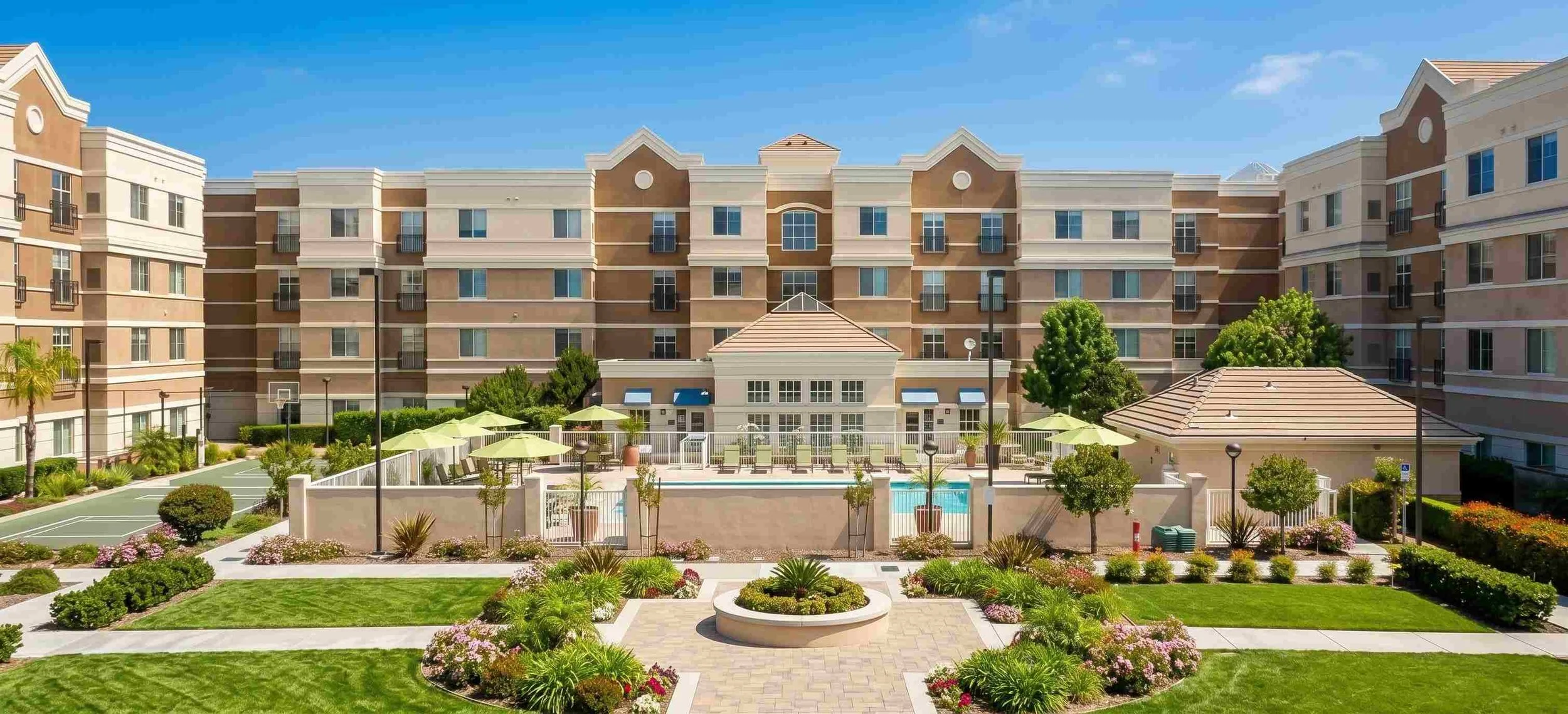
The community sits at 40 Boyd Rd, Pleasant Hill, CA 94523, in Contra Costa County, and holds California RCFE license number 079200765 with a licensed capacity of 49 residents. That size places it between a six-bed board-and-care house and a large campus, which shapes almost everything else about how it runs.
The thing worth knowing before you tour is that two sides operate under one license here: assisted living and a secured memory care area. The community also holds a hospice waiver. For a family, that combination means the question you are really answering is whether your parents can stop moving.
What Care Levels Does Pleasant Hill Oasis Offer?
Assisted living and memory care, both staffed around the clock. The community lists private and semi-private rooms, medication management, incontinence service, and support available 24 hours a day, which covers the range most families are looking at once help at home has stopped being enough.
The memory care side is physically separate. It has its own private access, doors secured with alarms, two activity rooms, two dining rooms, a country kitchen, an enclosed courtyard, a gazebo and a walking path. The outdoor space matters more than it sounds, because a resident who paces has somewhere safe to do it.
Two further options sit alongside those. Respite is available for short-term stays, which families use for a surgery recovery or a caregiver's week away, and a hospice waiver lets residents stay in place as care needs rise rather than transferring out at the hardest moment.
What Daily Life Looks Like
Meals are cooked fresh and change with the season, and special dietary needs are discussed with the team before anyone moves in. That last detail is worth using properly: bring the real list, textures and allergies included, to the first conversation rather than after the deposit has been paid.
The activity calendar is published monthly and run by an Activity and Program Director. Regular items include coffee and news updates, exercise and relaxation programs, bingo socials and videoke day, with guest speakers and musicians, birthday parties, ice-cream socials and movie nights filling out the rest of the month.
The shared spaces are ordinary in the best sense: an activity area, a patio, an enclosed courtyard, a conference room for family meetings, water stations through the building, and fire sprinklers and alarms throughout. There is public parking, which sounds trivial until you are visiting three times a week.
How Medical Care Works in a Licensed Care Home
A licensed care home is not a medical facility, and that catches families out. NIA (2023) describes assisted living as care for people who need help with daily care but not as much as a nursing home provides, covering up to three meals a day, help with personal care and medications, housekeeping, 24-hour supervision and social activities.
Medication management is included here, but doctors are not on staff. Care happens when a clinician comes to the building, which is why many families arrange a visiting physician before the move rather than after the first problem. There are primary care doctors and specialists who see residents on site, which removes most of the trips out.
Size changes the oversight picture too. Small group homes have their own trade-offs on comfort and supervision, and a 49-bed community sits somewhere else on that scale: more staff on shift, more structure, and less of the one-to-one feel a six-bed house gives you.
Assisted Living or Memory Care: Which One Fits?
Start with what the day actually requires rather than with the diagnosis. NIA (2024) notes that dementia units are often in a separate section of the building where staff have special training, with their own activities, meals and medical care, and it advises asking what a typical day involves for a person with Alzheimer's.
The same guidance suggests watching how staff speak to residents, whether residents look clean and well cared for, how many staff members are trained to provide medical care, and whether there is a safe place for a person to go outside. Those four checks will tell you more than any brochure does.
How staff respond to confusion is the part families underestimate. Correcting someone with dementia usually backfires, and a team that answers the feeling behind the words instead of the facts makes a visible difference to how calm the memory care side feels on a bad afternoon.
What the Hospice Waiver Means for Your Family
It means your parents can receive end-of-life care without another move. Cleveland Clinic (2023) notes that hospice can be provided anywhere a person calls home, including an assisted living facility, with a team that can take in doctors, nurses, social workers, aides, spiritual counselors and bereavement support.
A waiver is what allows a licensed care home to keep a resident through that stage instead of transferring them out. Ask directly whether the waiver is current and what it covers, because this is exactly the kind of detail that can change between the tour and the day you need it.
The Neighborhood Around Boyd Road
Boyd Road sits in central Pleasant Hill, in Contra Costa County, which puts a fair amount of medical care within a short drive. John Muir Health's Pleasant Hill Medical Office Building at 2675 Pleasant Hill Road houses adult primary care, pediatrics, women's services and specialty services, with LabCorp on site.
For a family that matters in a practical way. Lab work, a specialist follow-up and a primary care appointment can be grouped into one trip, and a resident who still goes out for appointments is not spending the whole day in a car crossing the county and back again.
Knowing when a higher level of care is needed is the harder judgment, and it tends to creep up rather than arrive. Recognizing the signs early gives you time to tour properly instead of choosing under pressure from a hospital discharge planner on a Friday afternoon.
Quick Facts and Contacts
The details below are the ones worth checking against the state's own record before you sign anything, since license status and capacity can both change. The table collects what is on file and what the community publishes. Take the license number with you if you call the licensing office.
|
Detail |
Pleasant Hill Oasis |
|---|---|
|
Address |
40 Boyd Rd, Pleasant Hill, CA 94523 |
|
License number |
079200765 |
|
Licensee |
PH Senior Care LLC; NorthStar Senior Living Inc |
|
Licensed capacity |
49 residents |
|
County |
Contra Costa |
|
Care offered |
Assisted living and memory care, plus respite stays and a hospice waiver |
|
Phone |
(925) 937-5348 |
The community can be reached on (925) 937-5348, and Pleasant Hill Oasis publishes its services, dining and calendar on its own site. Ask for the current monthly calendar and the full move-in paperwork list on that first call, so the LIC 602 does not become the thing that holds everything up.
Your Next Step
Tour at a time that shows you the real day: mid-morning on a weekday, or during a meal. Ask to see both sides of the building, and ask what happens when a resident's needs change, because that one answer tells you whether you are choosing once or twice.
If you are comparing several homes at once, a placement agency can narrow a county's worth of options down to the handful that fit your parent's care level and budget. Asking what that shortlist would look like is a reasonable first call to make.
Sources Used
Alzheimer's Caregiving: Finding Long-Term Care – National Institute on Aging (2024)
Hospice – Cleveland Clinic (2023)
Long-Term Care Facilities: Assisted Living, Nursing Homes, and Other Residential Care – National Institute on Aging (2023)
Pleasant Hill Medical Office Building – John Muir Health
Pleasant Hill Oasis – Pleasant Hill Oasis

Written by Sofiia Puhach
October 3, 2026
Explore More Assisted Living Communities in Thousand Oaks

Address: 1931 Woodside Road, Redwood City, CA 94061