
Palm Villas
A slow signature on that form is the most common reason a confirmed room sits empty for another week. It has to come from a doctor who has examined your parents recently, and it has to be current on move-in day. Arranging the exam at home, rather than hauling someone to a clinic, is usually the quickest way through it.
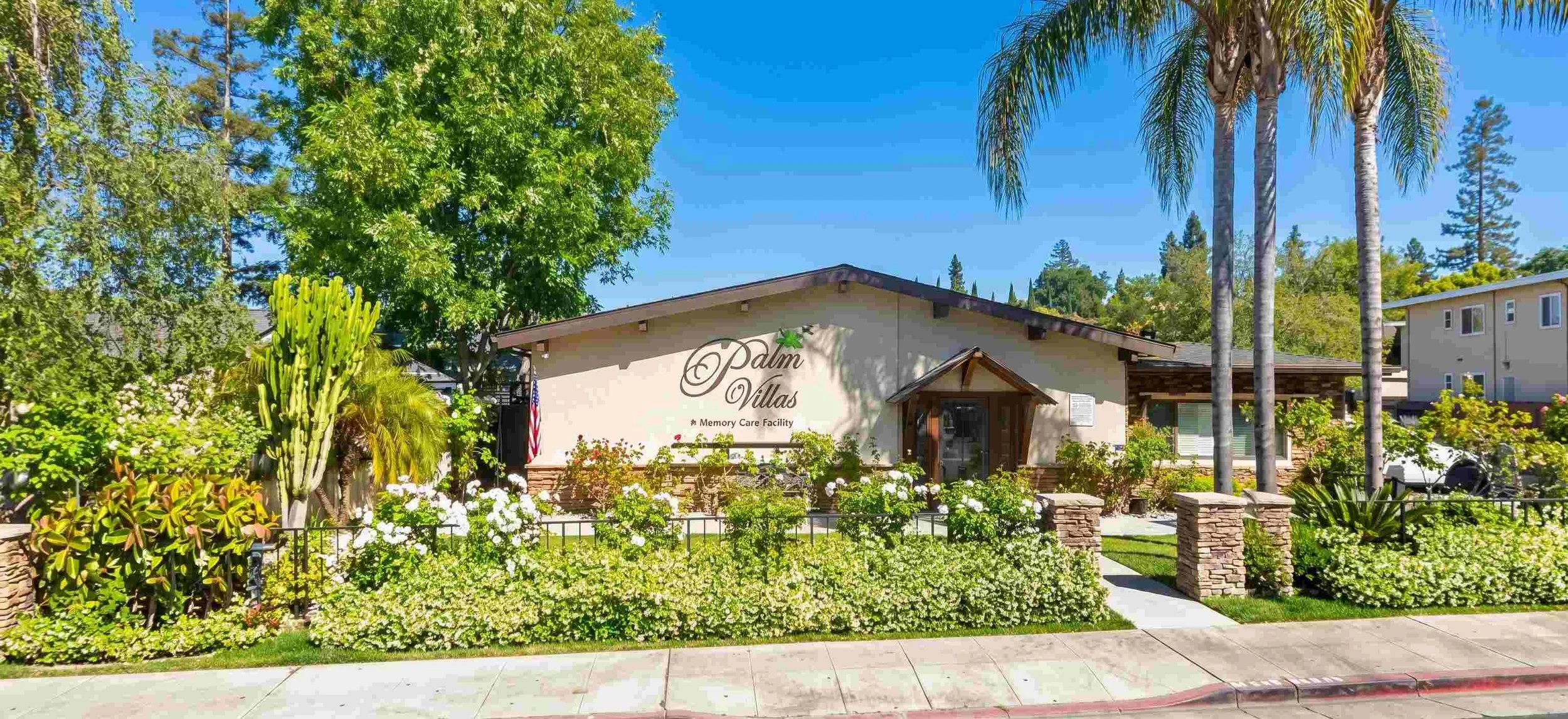
Palm Villas sits at 1931 Woodside Road in Redwood City, and it is licensed by the state as a Residential Care Facility for the Elderly, license number 415600787, with a licensed capacity of 49 residents. The licensee is Forever Young Assisted Living, Inc., and the facility has held its license since 2009.
What sets it apart in this county is narrower than the usual sales pitch. Palm Villas is not a general assisted living community that keeps a locked wing for residents with dementia. The whole house is built for memory care, and that single design choice changes almost everything about how a day there runs.
What Makes Palm Villas Different From General Senior Living in San Mateo
The difference is that nobody here is the exception. In a mixed community, a resident with dementia lives alongside neighbors who are sharper, and the gap tends to show up in small daily humiliations: the repeated question at the dinner table, the activity that moves too fast, the neighbor who corrects them.
In a community where every resident has some form of dementia, that comparison disappears. Staff describe the community as a memory care family, and the practical version of that phrase is that the pace, the conversation, and the activity schedule are all set for the slowest person in the room rather than the quickest.
The published care focus covers Alzheimer's disease, Parkinson's, Lewy body dementia, and other dementias, with licensed staff on site around the clock. Daily life is organized around what the community calls its seven pillars of wellness, a structure meant to give the day shape through the senses rather than through a timetable residents cannot follow.
Palm Villas also runs sister communities in Campbell and Los Gatos, with another in Saratoga listed as coming soon. For a family weighing locations across the Peninsula and the South Bay, that is worth knowing early, because availability moves between buildings and a tour of one tells you a lot about the others.
What the RCFE License Actually Guarantees
In California, assisted living and memory care are not separate license types. Both operate as Residential Care Facilities for the Elderly, which is why a 6-bed house and a 49-bed community like this one can carry the same category on paper while feeling nothing alike in person.
The license sets the floor: the facility is inspected by the state, it must keep a current physician's report for every resident, it must staff to the needs it has accepted, and it reports serious incidents. What the license does not do is grade quality, so two licensed homes on the same street can be very different places to live.
This is why the license number is worth writing down. It lets you look up the facility's inspection and complaint history through the state's own records rather than relying on a brochure, and it is the one number that identifies a specific building rather than a brand.
What to Ask on a Memory Care Tour
The National Institute on Aging (2024) suggests visiting at different times of day and asking a short list of plain questions: what activities are planned, how many staff are on duty and how many are trained for medical care, how often a doctor checks on residents, what a typical day looks like, and whether there is a safe place to go outside.
Two of those questions matter more than the rest in a dementia-focused home. The first is what a typical day looks like, because the answer tells you whether anyone has thought past meals and medications. The second is the outdoor question, since a secured garden is the difference between a resident who can walk when they are restless and one who cannot.
Ask about costs the same way. Find out what the base rate includes, what counts as an extra, and what happens to the rate when care needs increase. Rates in San Mateo County sit at the higher end of the state, and the gap between a quoted base rate and a real monthly bill is usually care level, not rent.
If you are comparing several communities at once, a written checklist stops the visits blurring together. The same questions asked in every assisted living home you tour make the differences visible in a way that a good feeling on the day does not.
How Medical Care Works Once Someone Lives There
A residential care facility is a home, not a clinic. Staff give medicines as prescribed and watch for changes day to day, but residents keep their own doctors, and routine medical care still has to come from outside the building. That surprises some families, who assume a licensed community includes a physician on staff.
For someone with dementia, that outside trip is the expensive part. A car ride, an unfamiliar waiting room, and a stranger asking questions can undo a week of settled routine, and families often find themselves putting off appointments that should not wait.
Arranging for a doctor to visit the facility removes that whole problem for routine care. The examination happens in the resident's own room, the staff who see them daily can report what has changed, and nobody has to be moved for a blood pressure check or a medication review.
The Woodside Road Neighborhood
Woodside Road is one of Redwood City's main cross-town routes, which makes this an easy address to reach from Highway 101 and from Interstate 280. For adult children commuting from San Francisco or the South Bay, that matters more than it sounds, because the visits that actually happen are the convenient ones.
Redwood City sits in the middle of San Mateo County, with hospitals, specialists, and pharmacies close by on the Peninsula rather than a county away. The surrounding streets are residential and flat, which suits short walks for residents who are still steady on their feet.
The practical question to ask yourself on the drive home from a tour is a simple one: would you come on a Tuesday evening after work, not just on a Sunday? A community that is fifteen minutes out of your way gets visited far more often than one that is forty-five.
Taking the Next Step
Start by calling to ask what is available and what level of care they can accept, since a memory care community can decline a resident whose needs sit outside what their staffing allows. Then book a tour at a time of day when your parents are usually at their worst, not their best.
If you are looking at several homes across San Mateo County and the Peninsula, a senior placement agency can narrow the list to the ones with a real opening and a care level that fits. That service is normally free to the family, and it saves weeks of phone calls when you are already stretched.
Whatever you decide, get the medical paperwork moving in parallel rather than afterwards. Families who wait for a confirmed room before booking the physician's exam are the ones who watch that room go to somebody else. The form is valid whichever community you end up choosing, so there is nothing lost in starting early.
Contact and Visiting Details
Palm Villas, 1931 Woodside Road, Redwood City, CA 94061. Phone (650) 369-3197. License number 415600787. Current availability, pricing, and care levels are published and updated on the Palm Villas website, and the team there can confirm what is open this month.
Confirm the license status and any inspection history with the California Department of Social Services before you sign anything. Details in any overview, including this one, can change without notice, and the state record is the version that counts. Ask the community directly about anything the record raises, and listen to how they answer.
Sources Used
Alzheimer's Caregiving: Finding Long-Term Care – National Institute on Aging (2024)
How to Choose the Right Assisted Living Home: A Step-by-Step Guide – Doctor2me
Primary Care & Medical Specialists – Doctor2me Network
Welcome to Palm Villas A Memory Care Family – Palm Villas

Written by Sofiia Puhach
October 2, 2026
Explore More Assisted Living Communities

Address: 1931 Woodside Road, Redwood City, CA 94061