
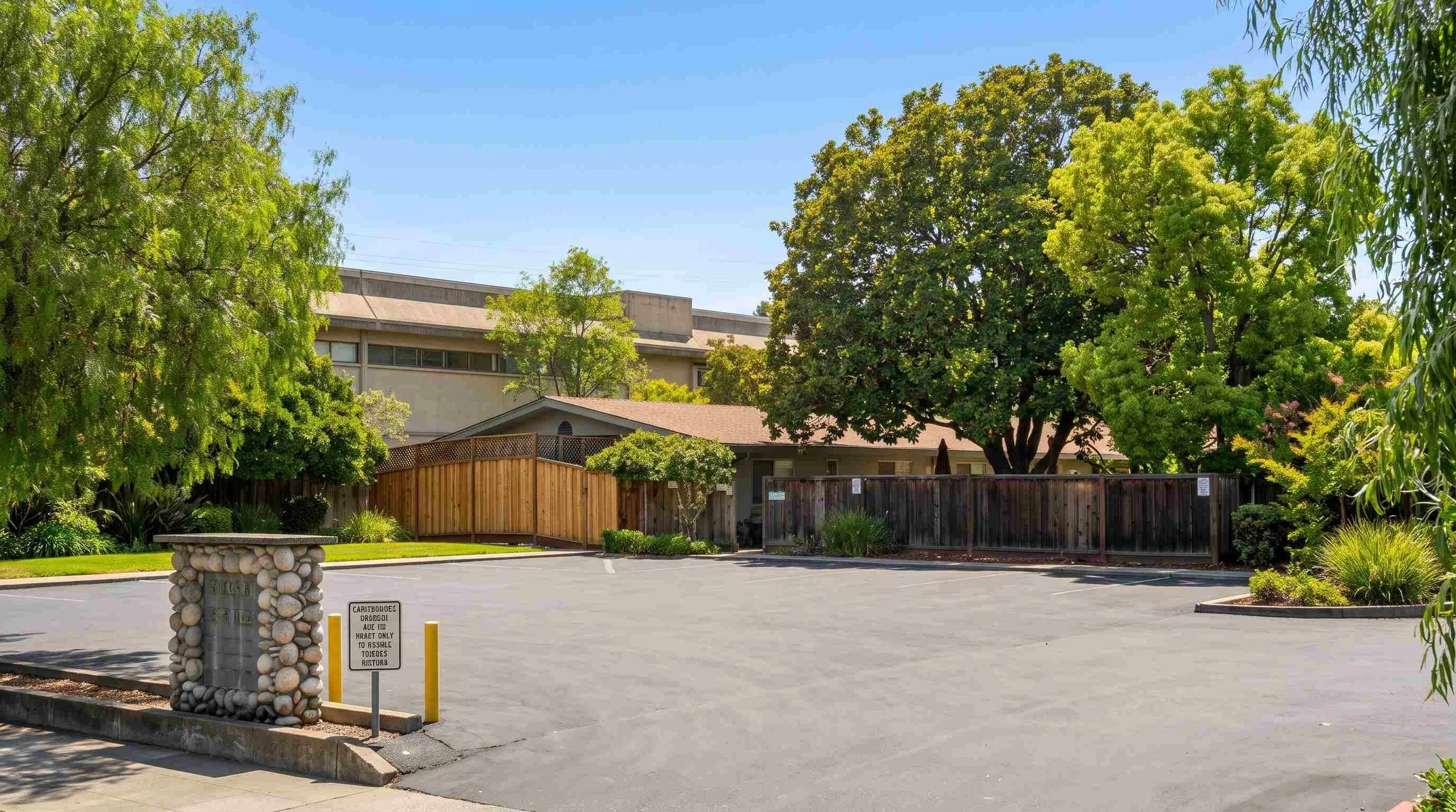
Cedar Creek Alzheimer's & Dementia Care Center sits at 15245 National Avenue, Los Gatos, CA 95032, and holds RCFE license 435201413. It is a secured memory care home rather than a general assisted living community, which makes it a different kind of option from most memory care Los Gatos families first come across.
What Cedar Creek Is, and Who It Is Built For
It is a licensed Residential Care Facility for the Elderly with room for 58 residents, all of them living with Alzheimer's disease or another form of dementia. State licensing records list the licensee as ALTCARE CEDAR CREEK LLC, the administrator as Debbie Cota, and the first license date as September 2003.
That 58-resident capacity makes this the largest of the operator's communities, according to its own site. The operator describes itself as a family-owned memory care provider that opened in 1991, saying it was the first memory care community in the San Francisco Bay Area built exclusively for people with Alzheimer's and dementia.
The practical read for a family: this is a dementia-only setting at a mid-size scale. Larger than a six-bed board and care home, considerably smaller than a multi-level senior campus. Everyone living there has memory loss, so the staffing, the doors and the daily rhythm are all built around that.
|
Detail |
Cedar Creek Alzheimer's & Dementia Care Center |
|---|---|
|
Address |
15245 National Avenue, Los Gatos, CA 95032 |
|
County |
Santa Clara |
|
License |
RCFE 435201413, status Licensed |
|
Licensee |
ALTCARE CEDAR CREEK LLC |
|
Administrator |
Debbie Cota |
|
Licensed since |
September 2003 |
|
Capacity |
58 residents |
|
Phone |
(408) 356-5636 |
|
Care type |
Secured memory care for Alzheimer's disease and other dementias |
What the Grounds and Daily Life Look Like
The grounds are the thing the operator leads with, and they are unusual for memory care. Its site describes a secured community spread across about an acre, with an herbal garden you can smell on the way through the gate and chickens roaming the backyard.
That matters more than it sounds. For someone who paces, who needs to be outdoors, or who gets restless in the late afternoon, an enclosed acre is a place to walk rather than a locked corridor. It is also the kind of detail worth checking with your own eyes on a tour, in winter as well as summer.
Daily Life Inside
Indoors, the operator points to a daily activity program and a philosophy it calls living in the moment, with activities meant to keep mind, body and spirit engaged. How staff respond when a resident is confused says as much as any calendar does, which is the point behind validation rather than correction.
The operator's site lists amenities including furnished suites, semi-private and private rooms, all-inclusive pricing, three meals a day with snacks, laundry and housekeeping, 24-hour staffing, a beauty salon, and visiting physicians, podiatrists and dental exams. Ask which of those apply at the Los Gatos community, since the site covers more than one address.
What Memory Care Here Covers
Day-to-day care is built around a written plan for each resident. The operator says its team is trained in memory and dementia care and develops a specialized plan covering medication, nutrition and physical therapy, with staff alert around the clock.
Memory care in a licensed RCFE is personal care and supervision rather than skilled nursing. That means help with dressing, bathing, meals, medication administration and safety, in a setting licensed by the state. It does not mean the level of medical care a nursing home provides, which is why a resident's own doctor still matters after a move, and why what the last stage of dementia actually takes is worth reading before you choose.
Many families keep continuity by arranging for a physician to see the resident at the community instead of booking transport to a clinic for every visit. A doctor who visits residents where they live can handle routine follow-ups, and that is also who completes the LIC 602A before admission.
What Secured Memory Care Adds That a House Cannot
Mostly it removes the need for constant vigilance. MedlinePlus (2026) states plainly that a person with advanced dementia should not be left alone at home, and lists wandering as a serious problem at that stage. In a secured community that supervision is the staffing model rather than something a family member has to stay awake for.
The home-safety measures it recommends show what families are up against on their own: alarms on doors and windows, car keys out of sight, an ID bracelet with contact details, telling neighbors the person may wander, fencing off stairwells and pools, taking the knobs off the stove, and locking away sharp objects, medicines and alcohol.
A secured community with staffing through the night covers that territory by design. The National Institute on Aging (2024) frames the timing without blame: caring for a person with Alzheimer's often exceeds what one person can provide alone, and asking for help is a sign of knowing your limits rather than of giving up.
What to Ask When You Tour a Memory Care Home
Start with what the person needs now and is likely to need next. The NIA (2023) suggests listing which services are required today and which may be needed later. It also asks families to name the features that matter to the person: the meals, the activities, a religious connection, or simply being close enough for relatives to visit often.
Then make the calls. The NIA advises asking each place how many people live there, what it costs, and whether there is immediate availability or a waiting list, and mentioning any special needs up front. Visiting several places in person, and meeting the director or nursing director rather than only a sales contact, is part of the same advice.
On the visit itself, the NIA tells families to look for state licensing, accessibility, residents who appear well cared for and appropriately dressed, warm and respectful interaction between staff and residents, and a clean, fresh-smelling building. At Cedar Creek the licensing piece is straightforward to check, since the RCFE number is posted on the operator's own page.
Two more worth adding for a dementia-only setting: how staff handle late-day agitation, and what happens if your relative's needs grow beyond what the license allows. Ask both out loud, and listen for a specific answer rather than a reassuring one. The warning signs that are easy to miss on a first walk-through are collected in assisted living red flags.
The Neighborhood: Los Gatos and the South Bay
National Avenue sits on the Los Gatos side of the Los Gatos and Campbell boundary, in Santa Clara County. For families searching memory care Campbell CA or memory care near San Jose, this address falls inside that same cluster of towns rather than off on its own.
The practical consequence is visiting distance. Downtown San Jose, Campbell, Saratoga and Willow Glen are all short drives, which makes weekday visits realistic for adult children who work in the South Bay. The operator says its team assists families throughout the San Jose area and the wider Bay Area.
The setting is residential rather than commercial, which is part of why an acre of enclosed grounds is possible at all. It also means parking and street access are worth a look on your first visit, especially if someone in the family uses a walker or a wheelchair.
Contacts and the Next Step
Cedar Creek can be reached at (408) 356-5636, and the community's own page is Cedar Creek in Los Gatos, which lists its address, phone and RCFE number. Tours are arranged directly with the community, and availability at a 58-bed dementia-only home can change quickly.
If you are weighing several homes at once, or you are not sure this level of care is the right match, a placement agency can narrow the list to places that actually accept your relative's care needs and budget. That step tends to save more time than touring in alphabetical order.
When a move is decided, the medical paperwork is the piece that holds families up most often. Getting the physician's report done early, at home if that is easier, keeps the admission date from slipping while everything else is already arranged.
Sources Used
Dementia - keeping safe in the home – MedlinePlus (2026)
Getting Help With Alzheimer's Caregiving – National Institute on Aging (2024)
How To Choose a Nursing Home or Other Long-Term Care Facility – National Institute on Aging (2023)
The Region's Secure Senior Care Community Proudly Serving the South Bay Area – Cedar Creek Alzheimer's & Dementia Care Center

Written by Sofiia Puhach
November 24, 2026
Explore More Assisted Living Communities


Address: 15245 National Avenue, Los Gatos, CA 95032 (Santa Clara County)