
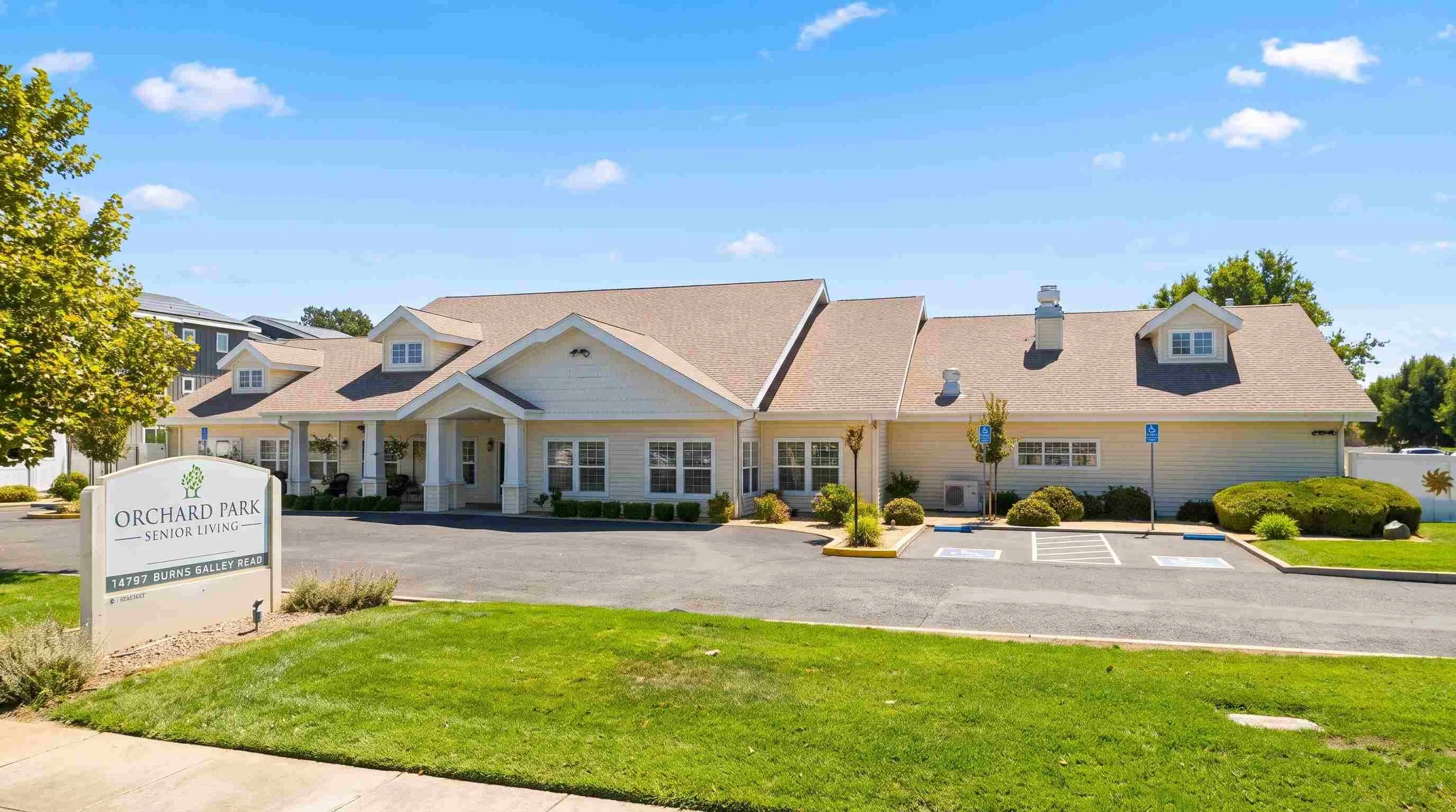
Orchard Park Senior Living Community offers assisted living in Clearlake, CA, and memory care on the same campus. The address is 14789 Burns Valley Road, Clearlake, CA 95422, in Lake County, and the phone number listed on its own site is (707) 995-1900.
State licensing records show California license number 176803831, a licensed capacity of 56 residents, and a first license date of November 2019. The licensee is listed as EP Operation Clearlake and Lenity Management LLC, and the status is licensed.
The detail that sets this building apart is local rather than architectural. The community describes itself as the only memory care community in Lake County, which changes what a family here is really choosing between.
What Orchard Park Senior Living Community Offers
Both levels of care sit in one building, so a resident whose needs change does not have to move towns. The community lists med techs and caregivers on site 24 hours a day, medication management, health monitoring and coordination, and a memory care neighborhood on the same campus.
Daily Living and Apartments
Apartments come as studios, one-bedroom and two-bedroom layouts, with private and shared options and all utilities included in the monthly rate. Listed features include an emergency response system, individual air comfort control, a fully equipped kitchen, and washer and dryer in select apartments. Small pets are allowed.
Services beyond care include weekly housekeeping and laundry, apartment maintenance, laundry rooms on each floor, expanded cable, and secure parking. Meals are made from scratch and served three times a day in the dining room, with special diets accommodated and family welcome at the table.
Activities and Outings
The activity calendar leans on local trips rather than in-house entertainment alone. Published outings include the Redbud Library, shopping runs, ceramics at Small Town Studios, the Konocti Vista Casino, and country drives with lunch out, alongside chair fitness, seated yoga, baking classes, an audiobook club and Friday happy hour.
There is also a Resident Council, monthly birthday celebrations, Sunday afternoon church services, and holiday parties through the year. On a tour, the calendar is worth reading next to the resident you have in mind, because a full board means little if none of it suits them.
Why Staying in Lake County Changes the Math
In a county with few licensed options, the comparison usually widens to neighboring counties, and every added mile turns into fewer visits. That is the quiet cost families underestimate when they choose a building an hour away because it showed better on a tour.
Lake County families looking at memory care often end up comparing against communities in Sonoma or Napa. Two that come up are a dedicated Alzheimer's community in Santa Rosa and an assisted living community in Napa, and both are worth reading for contrast rather than as a replacement.
Distance also decides who notices a change first. A daughter who drops in twice a week sees weight loss, a new bruise or a flat mood before any staff report reaches her, and that early warning is worth more than most amenity lists.
What Assisted Living Covers in a Licensed California Community
It is housing plus help with daily tasks, not nursing home care. MedlinePlus (2023) describes assisted living as housing and services for people who need some help with things like dressing, bathing, taking medicines and cleaning, while still living fairly independently.
Price follows the amount of help rather than the square footage. Facilities usually offer several levels of care and residents pay more at the higher levels, so two families touring the same building can be quoted very different monthly figures.
What a residential community does not provide is skilled nursing. Wound care, intravenous treatment and round-the-clock nursing supervision sit outside this license, which is the line families should ask about directly when a condition is advancing.
How Memory Care Fits Into Long-Term Care
Memory care is a program inside residential care rather than a separate license. The National Institute on Aging (2023) notes that long-term care can be given in a residential facility such as assisted living or a nursing home, and that some facilities run special programs for people with Alzheimer's disease and other types of dementia.
In practice the differences show up at the doors, in the staffing pattern and in the daily routine. A memory care setting is built so that someone who wanders stays safe, and the day is structured to reduce the number of decisions a resident has to make.
Because it is a program and not a license, the quality varies widely between buildings that use the same words. That is why a tour is worth doing with a list in hand, and why the red flags worth watching for on a tour are more useful than a brochure.
Medical Care Once Someone Lives Here
Residential care covers supervision and personal help, while medical treatment comes from outside the building. Routine reviews, prescription changes and the paperwork a community needs stay with their own physician, and a doctor who sees patients where they live removes most of the travel from that.
Orchard Park does list transportation to medical appointments among its services, which helps for scheduled visits. It does not replace an exam at home when someone is unwell, frail, or simply too confused for a waiting room to go well.
Ask the community who makes the call when a condition changes: which staff member contacts the physician, when the family is told, and at what point someone goes to hospital. The answer tells you how the building actually runs at two in the morning.
The Clearlake Area Around Burns Valley Road
Burns Valley Road sits in Clearlake, the largest city in Lake County, on the southeast side of Clear Lake itself. The setting is small-town and rural, which is part of the appeal for people who have lived in the county for decades and do not want to be moved to a city for care.
Everyday errands stay local. The outings the community runs point to what is nearby, including the Redbud Library and the shopping that families use anyway, so visiting can be folded into a normal day rather than planned as a trip.
The trade-off is specialist medical care, which in a rural county usually means travel. Worth asking on the tour: which specialists residents currently see, where those appointments happen, and how the community arranges the trips.
Contact and the Next Step
Orchard Park Senior Living Community is at 14789 Burns Valley Road, Clearlake, CA 95422, and the number published on its own site is (707) 995-1900. Pricing, availability and floor plans change often, so ask about those directly rather than relying on any listing site.
Before signing anything, read the agreement with care, because the fee structure and the rules on care-level increases are where later disputes start. The questions worth asking before signing an assisted living agreement are a short list and they save money.
If the search is wider than one community, a placement advisor shortens it considerably, and an agency that places families in senior housing can filter by license, care level and county before anyone drives anywhere. A broader step-by-step approach to choosing an assisted living home covers the rest of the process.
Whatever the shortlist looks like, start the physician report early. It has to be completed and signed before a move-in, and a doctor appointment is usually the slowest item on the list rather than the fastest.
Sources Used
Assisted Living – MedlinePlus, U.S. National Library of Medicine (2023)
Orchard Park – Orchard Park Senior Living Community
Services – Orchard Park Senior Living Community
What Is Long-Term Care? – National Institute on Aging (2023)

Written by Sofiia Puhach
November 12, 2026
Explore More Assisted Living Communities
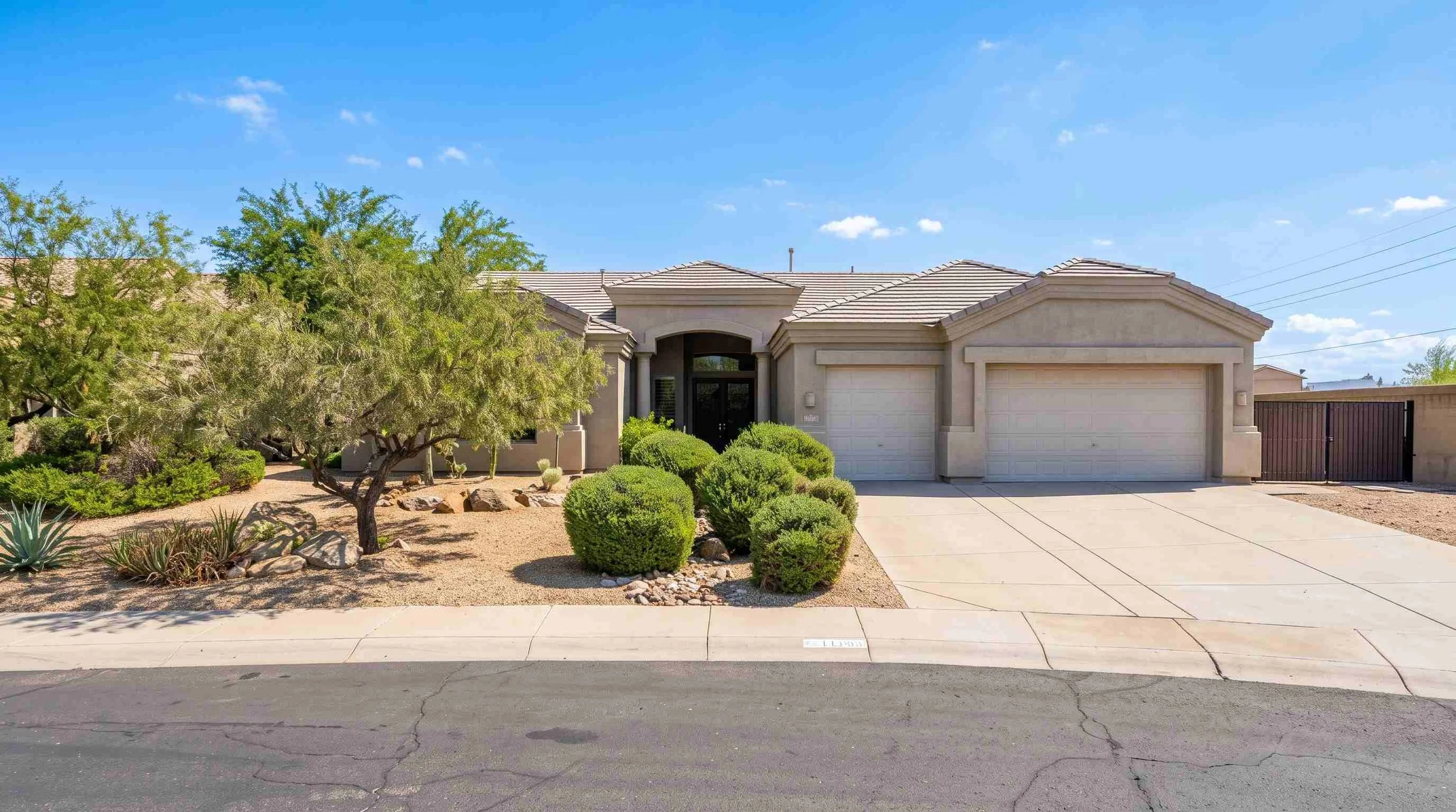
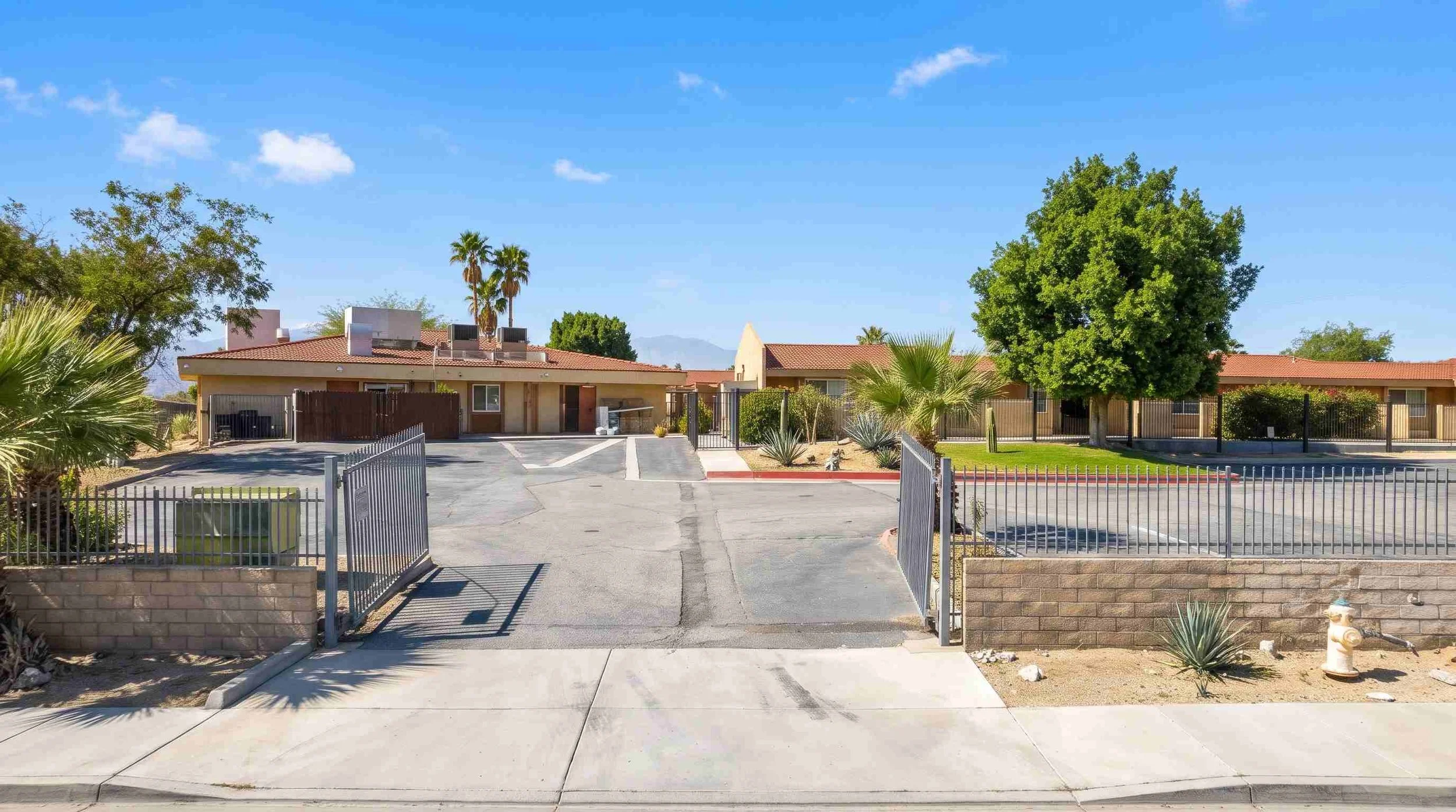

Address: 6401 North 82nd Street, Scottsdale, AZ 85250