Swollen, Painful Leg? When It Could Be a Blood Clot
Table of Content
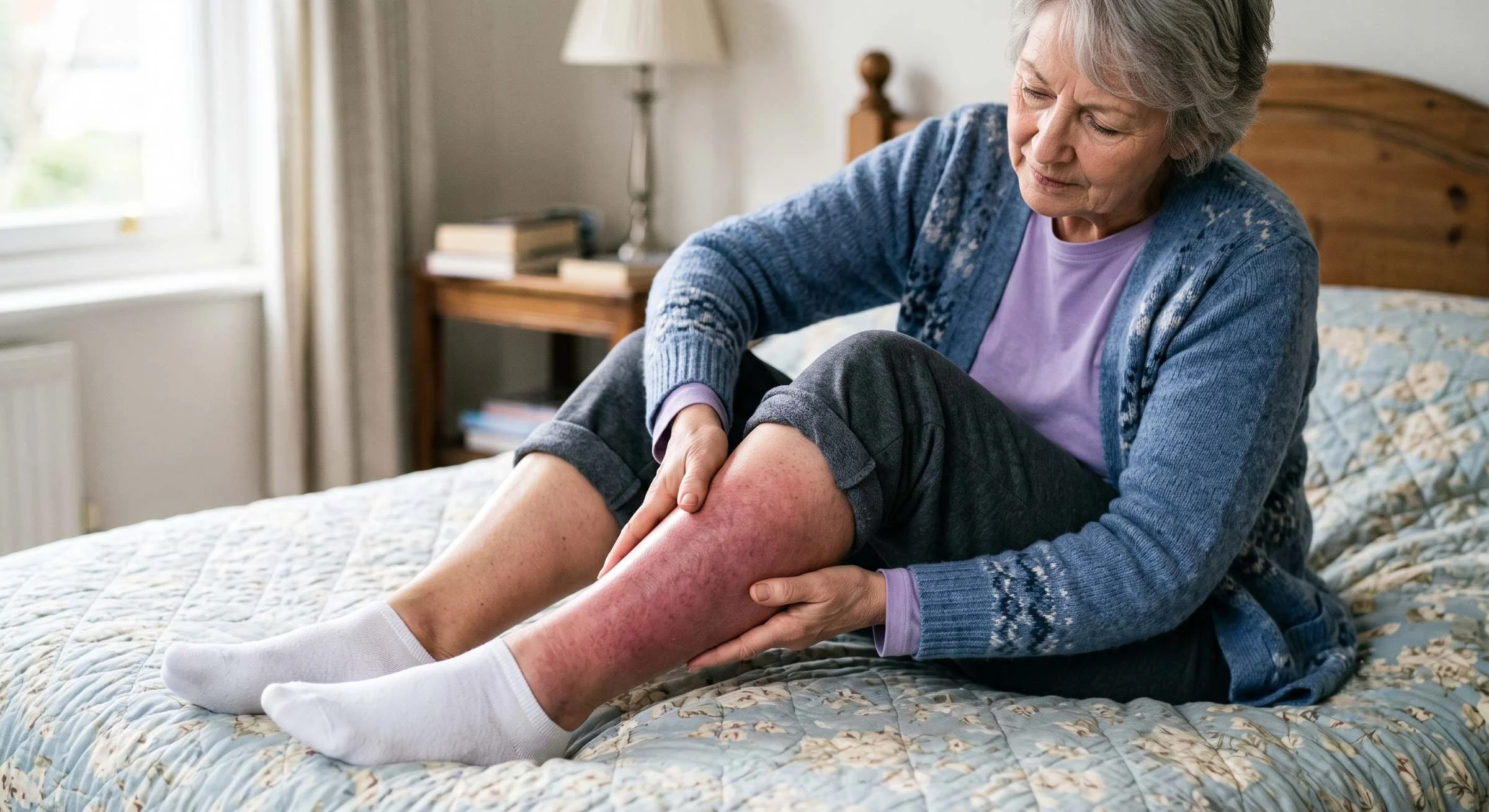
A swollen, painful leg can have many causes, but one you should never ignore is a blood clot deep in your vein, known as deep vein thrombosis (DVT). The most common blood clot in leg symptoms are swelling in one leg, pain or tenderness that often starts in the calf, warmth, and red or discolored skin. If you notice these signs, call a doctor right away, because a clot can become dangerous if it moves to your lungs.
The tricky part is that leg swelling and pain do not always mean a clot, and a clot does not always cause obvious symptoms. That is why it helps to get checked quickly instead of guessing. With Doctor2me, you can choose a doctor and have them come to your home, so you avoid a crowded waiting room and the risk of catching an infection while you sort out what is wrong.
What a Blood Clot in the Leg Really Is
Understanding Deep Vein Thrombosis
Blood clots are clumps of blood that have turned from liquid into a jelly-like solid. Your body forms clots on purpose to stop bleeding when you get hurt. But sometimes a clot forms inside a deep vein when it should not, usually in the calf, thigh, or pelvis. This is deep vein thrombosis. The clot can slow or block the blood flowing back to your heart, which leads to the swelling and pain that many people feel.
Why Blood Clots in Legs Are So Common
Blood clots in legs happen more often than most people think. According to the CDC, deep vein thrombosis and pulmonary embolism are serious but often preventable conditions, and they can affect almost anyone. Clots become more likely when blood moves too slowly, such as during a long hospital stay, after surgery, or on a long trip when you sit still for hours. The good news is that knowing the signs and your own risk gives you a real chance to catch a problem early.
Blood Clot in Leg Symptoms to Watch For
The Most Common DVT Symptoms
A DVT usually forms in one leg, and the symptoms often appear on just that side. Watch for these DVT symptoms:
Swelling in one leg, which can come on suddenly
Pain or tenderness that often starts in the calf and may feel like a cramp
Warmth in the swollen or painful area
Red, purple, or darkened skin over the area
Veins near the surface that look larger than normal
Keep in mind that about half of people with a DVT have very mild symptoms or none at all, which is why you should not wait for every sign to appear before getting checked.
When Leg Pain Is Something Else
Not every sore leg is a clot. A pulled muscle, a bruise, or a common cramp can feel similar. In fact, many people mix up a clot with ordinary night leg cramps or restless legs, which are usually harmless. The key difference is that a clot often brings steady swelling, warmth, and skin color changes on one side, while a cramp is a short, sharp spasm that eases when you stretch. When you are not sure, it is always safer to have a professional look.
When a Clot Travels: PE and Blood Clots in the Lungs
The biggest danger of a DVT in leg veins is that a piece of the clot can break off and travel through your bloodstream to your lungs. This is called a pulmonary embolism (PE). PE blood clots in lungs are a medical emergency, because these pulmonary clots can block blood flow and quickly become life-threatening.
Warning Signs of Blood Clots in the Lungs
Sometimes the first sign of a clot is a PE, even without leg symptoms. Get emergency help right away if you have any of these warning signs of blood clots in lungs:
Sudden shortness of breath
Chest pain or discomfort that gets worse when you breathe deeply or cough
A fast or irregular heartbeat
Feeling lightheaded, dizzy, or fainting
Coughing, sometimes with blood
Do not wait to see if these symptoms pass. Call 911 or go to the nearest emergency room, since fast treatment can be lifesaving.
What Causes Blood Clots and Who Is at Risk
A clot often forms when blood flows too slowly in a damaged vein, such as after surgery, an injury, or a long time in bed. Sitting still for more than four hours during travel can raise the risk too. The more risk factors you have, the greater your chance of a clot.
Common Risk Factors
Cleveland Clinic lists several risk factors for deep vein thrombosis, including:
A personal or family history of clots or a clotting disorder
Recent surgery, injury, or a long hospital stay
Being older than 40, though clots can happen at any age
Pregnancy or the weeks just after giving birth
Cancer and some cancer treatments
Using tobacco products
Having overweight or obesity, high blood pressure, or diabetes
Taking birth control pills or hormone therapy
Long periods of sitting, such as during travel
Sometimes a clot forms with no clear cause at all. That is one more reason to pay attention to your body and act on new leg swelling or pain.
How Doctors Diagnose a DVT in the Leg
You cannot confirm a clot by symptoms alone. A doctor will look at your leg, review your history, and order tests that can actually see the clot or point to it. The two most common tests are a picture of your veins and a simple blood test.
The main test is a vascular ultrasound, a painless scan that shows blood flow and clots in your veins. Mobile imaging teams like Professional Imaging Network can perform this Doppler ultrasound where it is convenient for you, which is helpful when a swollen leg makes travel painful. Your doctor may also order a D-dimer blood test, which can flag a possible clot. When getting to a lab is hard, Sonic Diagnostic Laboratory offers home blood draws, so the sample can be taken at home and sent for testing without a trip out.
Deep Vein Thrombosis Treatment
The goals of deep vein thrombosis treatment are to stop the clot from growing, keep it from breaking off, and lower the chance of a new clot. Most people are treated without surgery.
Blood Thinners and Other Medicines
The main treatment is a blood thinner, also called an anticoagulant. These medicines make it harder for your blood to clot and stop the clot from getting bigger or moving. You may take them for a few months or longer. For a severe clot, a doctor may use clot-busting drugs called thrombolytics. Because blood thinners raise the risk of bleeding, you will need follow-up visits and sometimes blood tests to keep the dose right.
Compression Stockings and Home Care
Your doctor may also suggest compression stockings, which gently squeeze the leg to improve blood flow and ease swelling. Some people wear them for two years or more. Propping your affected leg up on pillows so your heel sits a few inches above your heart can also reduce swelling and help you feel better. Keep all of your follow-up appointments so your care team can check that the clot is improving.
What Recovery Looks Like After a DVT
A clot does not disappear overnight. It can take several months, and sometimes over a year, for the body to break a clot down. During this time you will keep taking your medicine until your doctor says to stop, and you may need repeat ultrasounds to see whether the clot is shrinking. Most people slowly return to their normal activities as the leg pain and swelling ease.
Some people develop a longer-term problem called post-thrombotic syndrome, where damage to the vein valves leads to ongoing swelling, aching, discoloration, and in severe cases skin sores. It is also worth knowing that once you have had one clot, your risk of another goes up, so prevention and follow-up care stay important for life. Wearing compression stockings as directed and staying active both help protect your legs going forward.
How to Lower Your Risk of Blood Clots
You can take simple steps to prevent blood clots, especially if you know you are at higher risk:
Move as soon as you can after surgery, illness, or injury
On long trips, stand and walk every one to two hours, or flex your calves in your seat
Drink plenty of water, especially while traveling
Stay at a healthy weight and stay active
Do not smoke
Wear compression stockings or take medicines if your doctor recommends them
Managing conditions like high blood pressure and diabetes also helps keep your veins healthier over time. Small daily habits add up, and they matter most for people who travel often, have had a clot before, or spend long stretches sitting or in bed. If you know a long flight or a surgery is coming, ask your doctor ahead of time what you can do to lower your risk.
When to Get Help
Call your doctor right away if you have new swelling, pain, warmth, or skin color changes in one leg. Seek emergency care immediately for chest pain, sudden shortness of breath, or coughing up blood, since these can signal blood clots in the lungs. Because a clot can grow quietly, it is far safer to get checked early than to wait and hope it goes away. A Doctor2me physician can visit your home the same day, examine your leg in private, and arrange the tests you need without the stress of a waiting room.
FAQ
What are the first signs of a leg blood clot?
The first signs are usually swelling in one leg, pain or tenderness that often starts in the calf, warmth in the area, and red or discolored skin. The symptoms tend to appear on just one side. If you notice these changes, contact a doctor promptly, because early treatment prevents serious problems.
How do you know if you have DVT or just leg pain?
A clot often causes steady swelling, warmth, and skin color changes in one leg, while a simple cramp or pulled muscle is a short, sharp pain that eases with rest or stretching. The truth is you cannot tell for sure at home. A quick ultrasound is the only reliable way to know, so it is best to get checked when symptoms last or come with swelling.
Can you still walk with a blood clot in your leg?
Many people can still walk with a DVT, and gentle movement is often encouraged once treatment starts. But walking does not mean the clot is harmless, since a piece can still break off and travel to the lungs. If you suspect a clot, see a doctor before assuming it is safe to carry on as normal.
What are the five warning signs of a blood clot?
For a leg clot, watch for swelling, pain or tenderness, warmth, and red or discolored skin, usually in one leg. A fifth serious warning is sudden shortness of breath or chest pain, which can mean the clot has traveled to the lungs. That last group of symptoms is an emergency and needs immediate care.
What is the biggest cause of DVT?
The most common trigger is slow blood flow from not moving for a long time, such as after surgery, during a hospital stay, or on a long flight or car ride. Vein injury and conditions that make blood clot more easily also play a big role. Often several risk factors add up at once.
How long does it take for a deep vein thrombosis to develop?
A clot can form over hours or days, and symptoms may appear suddenly or build up slowly. Some people feel a swollen, aching leg within a day of a long trip or surgery, while others notice little at first. Because the timing varies so much, any new one-sided leg swelling or pain is worth checking without delay.
You May Also Like