Protect Your Kidneys: Warning Signs You Shouldn't Ignore
Table of Content
Kidney disease means your kidneys are damaged and can no longer filter your blood well. The tricky part is that it is often silent. Most early signs of kidney disease are easy to miss. Many people do not find out until the damage is advanced. The good news is that simple blood and urine tests can catch it early. And catching it early gives you the best chance to protect your kidneys.
If you are at risk or you have noticed something feels off, you do not have to wait or sit in a crowded clinic. With Doctor2me, you can choose your own doctor and have them come to your home for a same-day visit, simple testing, and a clear plan. Below is a plain-language guide to the warning signs, the causes, and how to get tested.
What Is Kidney Disease?
Your two kidneys are each about the size of your fist. They clean your blood by removing waste, toxins, and extra fluid. This leaves your body as urine. Your kidneys also help control blood pressure, keep your bones strong, and balance minerals like salt and potassium. They even signal your body to make red blood cells. When the kidneys are damaged, waste builds up in your blood and can make you sick.
Acute and Chronic Kidney Disease
There are two main types. Acute kidney injury comes on fast. It often starts from an illness, an injury, or certain medicines, and it can sometimes be reversed. Chronic kidney disease, sometimes called chronic renal disease, builds up slowly over months or years. Advanced kidney disease usually cannot be undone, but treatment can slow it down. That is why knowing the warning signs of renal kidney disease matters so much.
How Common Is Kidney Disease?
Kidney disease is far more common than most people think. More than 1 in 7 American adults has chronic kidney disease, and as many as 9 in 10 do not know they have it. That is why it is often called a silent disease. Because the early stages rarely cause clear symptoms, the only way to know for sure is to get a simple test.
Your risk also goes up as you get older, so older adults should pay close attention. The two leading causes, diabetes and high blood pressure, account for about 2 out of 3 new cases of kidney failure, and both become more common with age.
What Causes Kidney Disease?
People often ask what causes kidney disease. They also want to know what can cause kidney disease to get worse over time. In most cases the damage builds up over years, and there is more than one cause at work. High blood pressure and diabetes are the two most common causes, because both slowly harm the tiny blood vessels that do the filtering inside your kidneys.
Other Causes and Risk Factors
Many other things can cause or raise your risk of kidney trouble. Knowing them helps you understand your own risk:
Diabetes and high blood pressure, especially when they are not well managed
Heart and blood vessel disease, or a family history of kidney disease
Being over 60 years old, since risk climbs with age
Long-term, heavy use of pain pills such as ibuprofen and other NSAIDs
Smoking and being very overweight
Polycystic kidney disease and some immune diseases like lupus
Repeated kidney infections or a blockage in the urinary tract
One cause many people overlook is reaching for over-the-counter painkillers too often. Taking more than the label says, for a long time, can quietly damage your kidneys. If you take these pills most days, it is worth talking with a doctor about safer options.
Signs of Kidney Disease You Shouldn't Ignore
In the early stages, most people feel fine and have no symptoms at all. As the disease moves forward, the signs of kidney trouble slowly appear. Common symptoms of kidney disease usually show up only once the disease is more advanced, which is why testing matters even when you feel well.
Early Warning Signs
Swelling, called edema, in your legs, feet, ankles, or sometimes your face
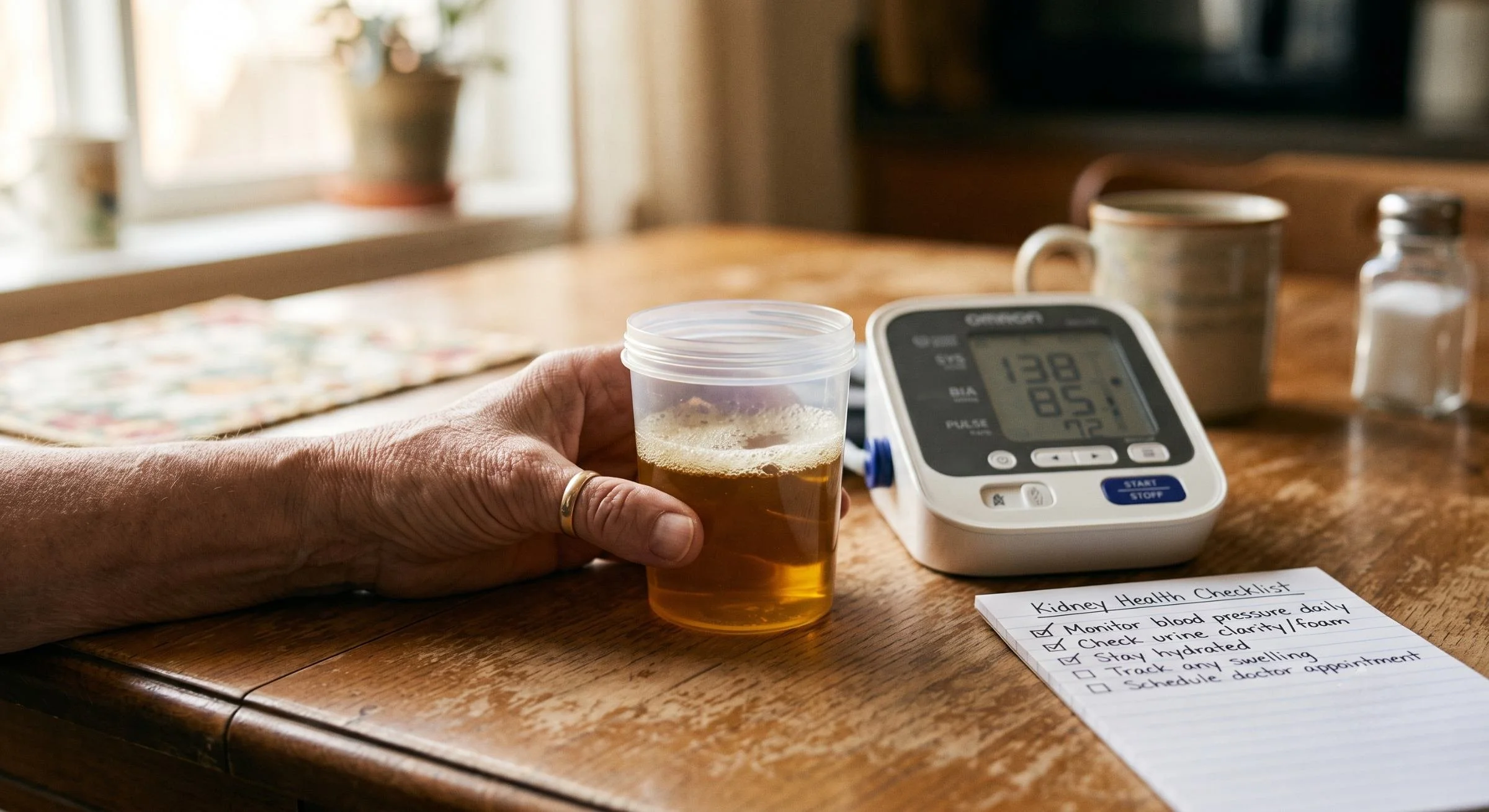
Foamy or bubbly urine, which can mean protein is leaking through
A change in how often you urinate, especially more trips at night
Feeling more tired than usual, or having trouble sleeping
Dry, itchy skin, often from a mineral imbalance in the blood
Symptoms of Advanced Kidney Disease
Nausea, vomiting, or loss of appetite
Trouble concentrating or thinking clearly
Muscle cramps and numbness
Shortness of breath or chest pain if fluid builds up
Weight loss and darkened skin
These symptoms can also come from other health problems, so having one does not mean you have kidney disease. But if they do not go away, do not brush them off. They are your body asking you to get checked.
How Do I Know If I Have Kidney Disease?
The early stages are silent. So the honest answer to how do I know if I have kidney disease is simple: you get tested. Learning how to know if you have kidney disease really comes down to a few quick tests. You cannot tell from how you feel alone.
Blood and Urine Tests
Most testing starts with a blood test and a urine test. The blood test checks your eGFR and creatinine level. These numbers show how well your kidneys filter waste. The urine test looks for protein, which should not be there when the kidneys are healthy. Together these tests can find a problem long before you feel anything. They also tell your doctor which of the five stages of kidney disease you are in.
Imaging and Other Tests
Sometimes a doctor wants to look at the size and shape of your kidneys. A kidney ultrasound or CT scan can check for stones, blockages, or other changes. For people who cannot travel easily, mobile imaging makes this much simpler. A service like Professional Imaging Network, which brings ultrasound and X-ray right to your home across Los Angeles County, lets you get these pictures taken without a trip to a hospital. From there, you and your doctor can keep monitoring your kidney health at home over time.
When to See a Doctor
If you have diabetes, high blood pressure, heart disease, or a family history of kidney disease, ask your doctor to check your kidneys on a regular schedule, often every 6 to 12 months. Reach out sooner if you notice swelling, foamy urine, a change in urination, ongoing tiredness, or itchy skin that does not improve.
If your tests point to a problem, your doctor may send you to a kidney specialist called a nephrologist. Acting early can keep mild kidney disease from turning into kidney failure. For older adults who also juggle diabetes or blood pressure, ongoing care matters. A geriatric doctor such as Rebecca Cook, M.D., who cares for adults and seniors in Scottsdale and the greater Phoenix area, can manage these chronic conditions and the screenings that protect the kidneys over time.
How to Protect Your Kidneys
You cannot undo all kidney damage, but you can slow it down and lower your risk. The same habits that protect your heart also protect your kidneys.
Everyday Habits That Help
Keep your blood pressure in your target range and take any medicines as prescribed
If you have diabetes, keep your blood sugar steady
Eat a balanced diet and cut back on salt and processed foods
Stay active most days of the week and keep a healthy weight
Do not smoke, and limit alcohol
Use over-the-counter pain pills only as directed
Drink enough water and get tested if you are at risk
Managing Blood Pressure and Diet
Because high blood pressure both causes and worsens kidney disease, keeping it under control is one of the most powerful things you can do. Simple steps like checking your blood pressure at home and cutting back on hidden sodium in everyday foods can make a real difference. A low-salt diet helps your kidneys and your heart at the same time.
Most of all, do not wait for symptoms. Because kidney disease is quiet, regular testing is your best protection. If getting to a clinic is hard, a Doctor2me physician can come to your home, review your history, arrange the right tests, and walk you through your results in plain language, all without the stress of travel or a crowded waiting room.
FAQ
What are the first signs of kidney problems?
The earliest signs are often easy to miss and can include swelling in the feet or ankles, foamy urine, needing to urinate more at night, tiredness, and itchy skin. Many people have no symptoms at all in the early stages. The only sure way to catch a problem early is with a simple blood and urine test.
What is the main cause of kidney problems?
Diabetes and high blood pressure are the two leading causes of kidney disease. Together they account for most new cases, because both slowly damage the tiny filters inside your kidneys. Family history, older age, and heavy long-term use of certain pain pills can also raise your risk.
What are the symptoms of your kidneys not working properly?
As kidney function drops, you may notice nausea, loss of appetite, fatigue, muscle cramps, trouble sleeping or concentrating, and swelling from fluid buildup. Foamy urine and a change in how often you go are also common. These symptoms usually appear only in the later stages, so testing is important even when you feel well.
Can kidney damage be reversed?
Sudden kidney injury can sometimes be reversed if the cause is treated quickly. Chronic kidney disease usually cannot be undone, but the right treatment can slow it down and help you avoid kidney failure. The earlier it is found, the more you can do to protect your remaining kidney function.
How can I improve my kidney function?
The best steps are to control your blood pressure and blood sugar, eat a low-salt and balanced diet, stay active, keep a healthy weight, avoid smoking, and use pain relievers only as directed. Drinking enough water and getting regular checkups also help. Always work with your doctor on a plan that fits your health.
You May Also Like