Moldy Food: What Actually Happens if You Swallow It
Table of Content
If you swallowed a bite of moldy food, take a breath. Most of the time you will be fine. Notice how you feel for the rest of the day, and watch for any stomach upset.
Mold on food is common. A fuzzy patch on bread, a green spot on cheese, a soft blur on fruit.
Now and then that mold can make you sick. Here is what happens inside, and how to tell a harmless slip from real trouble.
Is It Bad to Eat Moldy Food?
Usually it is not a big deal, and a small accidental bite passes without harm. Your stomach acid handles most of it, and healthy adults rarely get sick from one mouthful.
The problem is you cannot tell a safe mold from a risky one by looking. So the safe habit is simple: if you see mold, toss the food instead of eating around it.
Some molds are harmless. Others can cause an allergic reaction, breathing trouble, or an upset gut. And where there is mold, there can also be hidden bacteria.
What Are Mycotoxins, and Why Do They Matter?
Mycotoxins are poisons that certain molds make, and they are the main reason some moldy food is risky. According to the U.S. Food and Drug Administration, only some molds produce them, but a large amount can make you sick.
The best-known mycotoxins are aflatoxins. They show up mostly on peanuts, corn, tree nuts like pistachios, and some grains like rice.
Another one, called patulin, can form in juice or cider pressed from moldy apples. This is why a good rule is to cut away rotten spots on fruit before juicing.
You cannot control mycotoxins on your own, since they form during growing and storage. The FDA runs a monitoring program so the food on store shelves stays within safe limits.
Can You Just Cut the Mold Off?
Sometimes, but only for firm, low-moisture foods. What you see on the surface is just part of it, since mold sends threads deeper than the eye can catch.
The Mayo Clinic gives a clear split. For hard foods, you can trim; for soft or moist foods, throw them out.
You can usually save these by cutting at least 1 inch around the moldy spot:
Hard cheeses like cheddar or Swiss
Firm vegetables like carrots, cabbage, and bell peppers
Toss these completely, because moisture lets mold and bacteria spread out of sight:
Soft fruits and vegetables like berries, peaches, and tomatoes
Bread and other baked goods with any mold on bread or crust
Soft cheeses, yogurt, and lunch meats
Jams, sauces, nuts, and nut butters
Leftovers you are unsure about
Moldy cheese is a common question. Blue cheese is safe because it is made with a known mold, but a hard cheese with a stray green spot can be trimmed, while soft moldy cheese should go in the trash.
Does Mold on Bread Mean the Whole Loaf Is Bad?
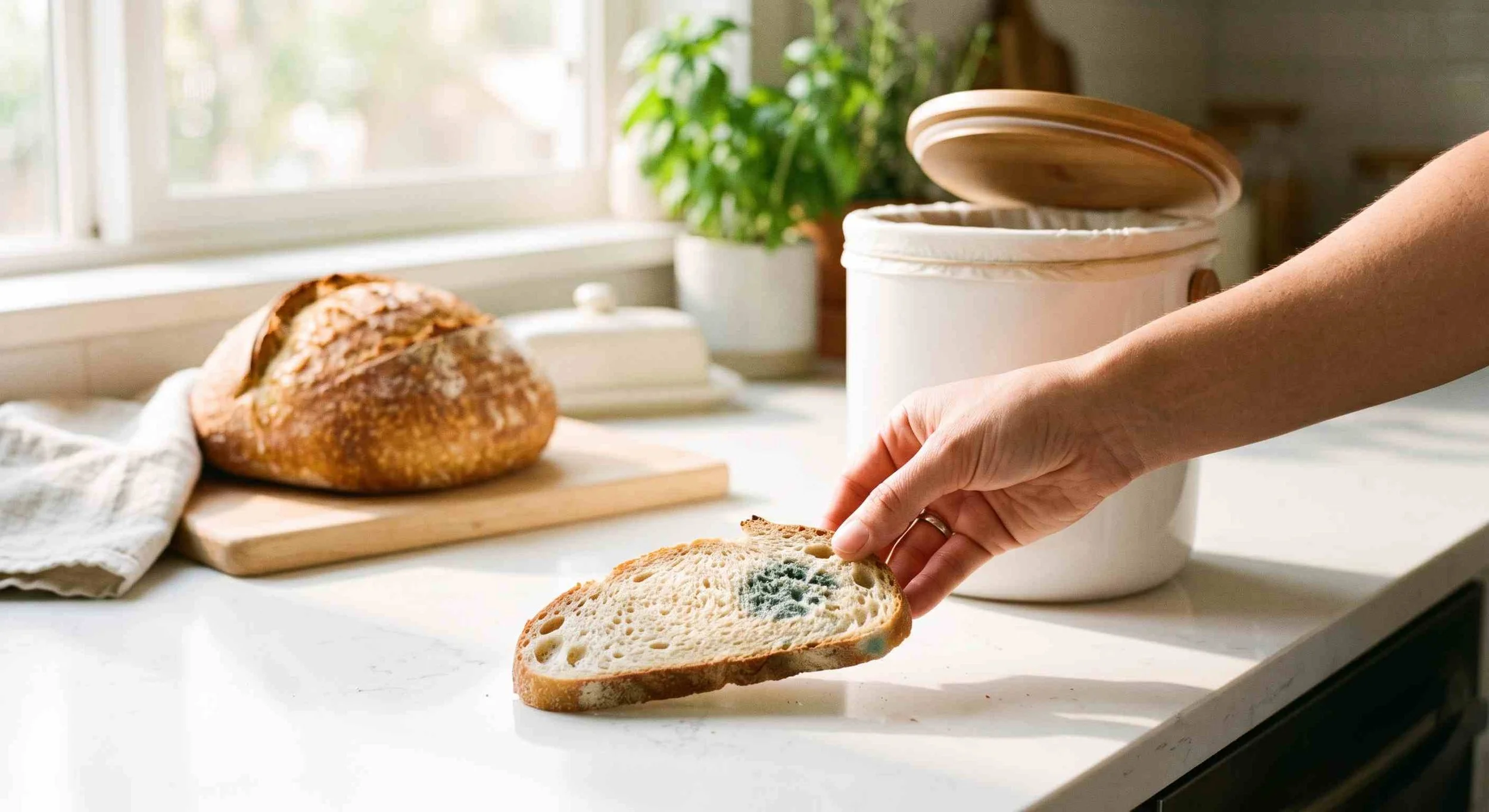
Yes, treat the whole loaf as spoiled. Bread is soft and airy, so mold threads travel through it long before you see fuzz on the next slice.
Do not pull off the moldy piece and eat the rest. The visible spot is only the tip, and the spores have already spread through the bag.
The same goes for a whole package of soft fruit. If a few berries are moldy, the airborne spores have most likely reached the others, so the pack should go.
What Are the Signs of Food Poisoning From Mold?
The most common signs of food poisoning are an upset stomach, cramps, nausea, vomiting, loose stools, and sometimes a fever. Symptoms can start within hours or take a day or two.
Per the Centers for Disease Control and Prevention, food poisoning symptoms depend on what you swallowed and can range from mild to serious.
Some mold sickness feels more like an allergy. Watch for:
Sneezing, a runny nose, or itchy eyes
Wheezing or shortness of breath
Nausea or stomach cramps soon after eating
A few symptoms are more serious and deserve prompt medical care. These include bloody diarrhea, a fever over 102 degrees, vomiting so often you cannot keep liquids down, or signs of dehydration like dizziness and little urination.
How Long Does It Take to Get Sick, and How Long Does It Last?
If you do get sick, it usually starts within a few hours to a couple of days, and most cases clear up in a day or two. Timing depends on the exact germ or toxin.
Food poisoning is very common. The CDC estimates that 48 million people in the United States get a foodborne illness every year, and most recover on their own.
Rest and fluids do most of the healing. Small sips of water, broth, and bland, easy foods help your gut settle.
If your stomach trouble drags on for weeks, or keeps coming back, it is worth a closer look. A gastroenterologist such as Jay Krishnan, M.D. can check whether something else is going on beyond a passing bug.
Lingering loose stools have many causes, and our guide to diarrhea and when it needs attention walks through the common ones in plain language.
Who Gets Sicker From Moldy Food?
Some people are more likely to get seriously ill from tainted food. Age and a weaker immune system are the biggest factors.
The CDC notes that higher-risk groups include:
Older adults
Infants and young children
People who are pregnant
Anyone with a weakened immune system, such as during cancer treatment
For older adults, an upset gut can drain fluids fast, and dehydration is the most common complication. Our overview of diarrhea in seniors explains why this group needs extra care.
When someone frail is recovering at home, a little hands-on help goes a long way. In-home nursing support like 911 AM PM Home Health care can keep an eye on fluids and symptoms during those shaky first days.
If the symptoms are not easing and you would rather not sit in a waiting room, you can also arrange a doctor visit in your own home to get checked and rehydrated.
Stomach pain has other causes too, and sharp or burning pain that keeps returning may point to something like a peptic ulcer rather than a food slip.
How Can You Keep Mold Off Your Food?
The best fix is prevention, and a few habits keep mold from getting a foothold. Mold spreads through tiny spores in the air, so covering and cooling food helps a lot.
Simple steps that work:
Keep your fridge at 40 degrees or below, and the freezer at zero
Cover food with a lid, foil, or wrap, even in the fridge
Refrigerate leftovers right after the meal and use them within 3 to 4 days
Clean the inside of the fridge every few months so old spills do not grow mold
Buy smaller amounts of foods that spoil fast, and eat them soon
When in doubt, throw it out, even if it looks and smells fine
Good hand-washing matters here too. Washing with soap and water before and after handling food keeps germs from spreading to what you eat.
FAQ
-
Usually not. A single accidental bite rarely harms a healthy adult, since stomach acid handles most of it. Just watch how you feel that day, and toss the rest of the food instead of eating around the mold.
-
Signs can look like an upset stomach with nausea, cramps, or loose stools, or like an allergy with sneezing, a runny nose, or wheezing. Serious symptoms such as bloody diarrhea, a high fever, or dehydration need prompt medical care.
-
For hard cheese, yes, if you cut at least 1 inch around the spot. For bread and other soft or moist foods, no, because mold threads and bacteria spread deeper than you can see. Throw those out.
-
If you get sick, symptoms usually start within a few hours to a couple of days, depending on the germ or toxin. Most cases pass in a day or two with rest and fluids.
-
Only some molds make mycotoxins, and small accidental exposure is rarely a problem. Eating a lot of high-mycotoxin food over time is the real concern, which is why the FDA monitors foods like peanuts, corn, and grains.
-
Blue cheese and similar cheeses are made with safe, edible molds. But unexpected mold on soft cheese means throw it away, while a small spot on hard cheese can be trimmed with a wide margin.
You May Also Like