
Table of Content
For COVID return to work, current CDC guidance sets no fixed day count. You can go back once symptoms are improving and you have had no fever for 24 hours.
That rule surprises people who remember counting five or ten days. Since 2024, COVID has been folded into one set of recommendations covering all common respiratory viruses, and the trigger is how you feel rather than the date on a test. There is no separate 2026 rulebook.
The part people miss is what comes next. The guidance asks for five days of added precautions after you return, which is where most workplace spread is prevented.
What Are the CDC COVID Return-to-Work Guidelines in 2026?
The guidance says to stay home and away from others while you have respiratory symptoms that are not better explained by something else. CDC advises going back to normal activities once both things are true for at least 24 hours: symptoms are getting better overall, and there has been no fever without the help of fever-reducing medicine.
Nothing in that sentence is about a test result or a fixed number of days off. Two people who catch the same virus on the same day can be cleared to work a week apart, and both are following the same rule.
The guidance applies to COVID, flu and RSV together. That consolidation, introduced in 2024 and last reviewed in August 2025, is why searching for a separate COVID protocol for 2026 turns up so little. Healthcare settings are the exception and follow their own, stricter infection control rules.
How Long Should You Be Off Work After a Positive COVID Test?
A positive test on its own does not set the length of your absence. Symptoms do. In practice most people with mild illness are back within three to six days, but someone whose fever lingers to day eight stays home to day nine.
Counting from the test date is a common mistake. People test on day three because that is when the line finally showed, then count five days forward and return while still coughing and feverish. The clock the guidance uses starts when the fever stops and the symptoms start easing.
If a fever returns after you go back, the guidance is to stay home again until you have met the same two conditions, then take the added precautions for another five days. Our guide to fever in adults explains how to read a temperature that keeps climbing back up in the evenings.
What Does "Fever-Free for 24 Hours" Actually Mean?
It means a full day with a normal temperature and no fever-reducing medicine in your system. Taking something at bedtime and checking a normal reading at breakfast does not count, because the medicine was still working.
How to Count the 24 Hours
Start the clock from your last dose of fever-reducing medicine, not from the last high reading. Then watch the temperature over the next day without treating it. If it stays normal and the rest of your symptoms are easing, the condition is met.
What "Symptoms Improving" Looks Like
Improving means the overall direction is better, not that everything has gone. A cough that is drier and less frequent counts as improving. A cough that is getting deeper, or new shortness of breath, does not, and that is a reason to be seen rather than to go back to work.
What Should You Do During the Five Days After You Return?
The five days after you go back matter as much as the days at home. CDC asks for added precautions during that window because you may still spread the virus after you feel better.
Those precautions are ordinary and workable in most jobs:
Wear a well-fitted mask around other people indoors
Keep some physical distance where you can, especially in small meeting rooms
Improve air flow by opening windows or using a filter
Wash hands often and cover coughs
Test before events where you will be close to others for a long time
These matter most around colleagues who are older, pregnant or living with a weakened immune system. CDC's prevention guidance sets out the same tools for everyday use, and they are more effective stacked together than used one at a time.
How Long Is COVID Contagious?
There is no single number, which is the honest answer. How long you can spread the virus depends on how sick you were, how long the illness lasted, and whether your immune system is working normally.
The virus travels in droplets and small particles breathed out by an infected person, which is why how COVID-19 spreads depends so much on shared indoor air. CDC describes people as typically less contagious once symptoms are improving and the fever has been gone for 24 hours, and much less likely to be contagious after the following five days. People with weakened immune systems can shed the virus for considerably longer.
A rapid test can add useful information here. A positive result during that window suggests you are still more likely to pass the virus on, which is worth knowing before a crowded shift or a long car share.
How Long Is the Incubation Period for COVID?
Symptoms usually appear between two and fourteen days after exposure. CDC puts the window at 2 to 14 days, although with recent variants most people who develop symptoms do so within the first few days.
That range explains why a negative test the morning after an exposure means very little. The virus may not yet be at detectable levels, and testing again a couple of days later gives a much more reliable answer.
Knowing the window also helps with planning around work. If you were exposed on a Friday and have an unavoidable commitment the following week, the useful step is testing closer to the event rather than immediately. We cover the timing in more detail in our guide to the COVID incubation period in 2026.
What If You Test Positive but Never Feel Sick?
Guidance for people with no symptoms is shorter. There is no stay-home period to complete, but CDC asks for five days of added precautions from the positive test, because you may still be contagious.
In practice that means masking indoors at work, keeping distance in shared spaces, and skipping visits to anyone in hospital or a care home during that stretch. Many people feel a little foolish taking precautions while feeling fine, and it is still the step that protects colleagues.
Mild symptoms are easy to write off as allergies or tiredness. A scratchy throat with a headache in the middle of a wave is worth a test rather than a shrug, particularly if you work closely with people.
Does Your Workplace Have Its Own COVID Protocol?
Employer rules can be stricter than the national guidance, and many still are. Health systems, residential care, schools and some food businesses keep their own requirements, so check the staff handbook rather than assuming the general rule applies.
|
Situation |
What Usually Applies |
|---|---|
|
Most workplaces |
General respiratory virus guidance: symptoms improving plus 24 hours fever-free, then 5 days of added precautions |
|
Healthcare settings |
Separate, stricter CDC infection control guidance for staff |
|
Care homes and similar settings |
Facility policy, often with testing and masking requirements beyond the general rule |
|
Employer with its own policy |
Whichever rule is stricter, including any paid-leave conditions in the contract |
Ask about paid sick leave at the same time. Being able to stay home one more day is often the difference between a clean recovery and a second round of absence a week later, and most policies are easier to use when you ask before you need them.
Which Workers Have Reason to Wait an Extra Day
Some people carry more risk from a return that is a day too early, either for themselves or for the people around them. Older adults and people with chronic conditions are at higher risk of severe illness from COVID-19, according to MedlinePlus (2025), and the virus has caused more than a million deaths in the United States.
That matters in two directions. If you are in a higher-risk group yourself, going back while still symptomatic tends to stretch the illness out. If your job puts you in daily contact with older or medically fragile people, the extra day protects them.
Geriatric physicians see this pattern often, since a mild case in a working adult can become a serious one when it reaches an eighty-year-old parent at home. In Arizona, Rebecca Cook, M.D. works with older patients on exactly this kind of chronic condition management and recovery planning.
What to Do If You Need a Clinical Opinion Before Returning
Sometimes the rule is clear but your situation is not: a cough that will not settle, a fever that keeps returning, or an employer asking for written clearance. In those cases a proper assessment answers the question faster than another day of guessing.
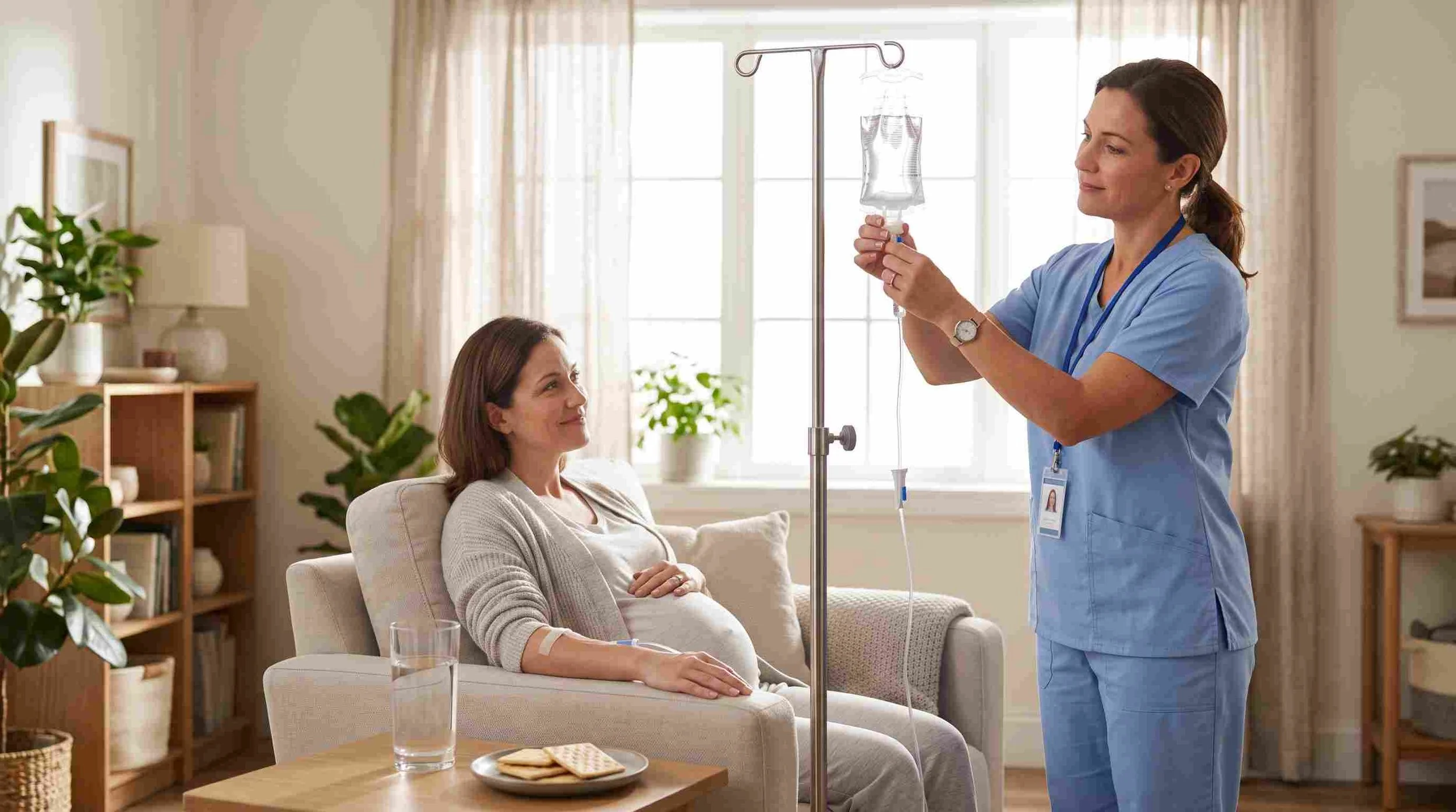
Getting seen without dragging yourself to a waiting room is reasonable when you are still unwell and possibly contagious. An in-home visit from a doctor who comes to you keeps a sick person out of a shared waiting area, which matters more during a respiratory virus wave than at other times of year.
Preparation makes any assessment more useful. Note the date symptoms started, the highest temperature and when it was measured, what you have taken and when, and any test results with their dates. Having a sick day kit at home makes that record easier to keep, and our guide on getting sick when you live alone covers what to arrange in advance if nobody is around to check on you.
FAQ
-
Not on its own. A single negative antigen test can miss the remaining virus, especially early in the morning or with a poorly collected swab. Guidance bases the five days on time and symptoms rather than one test.
-
Many can, and policies vary by state and by contract. Public health guidance does not require a note for routine respiratory illness, so if your workplace asks for one, that is an employer rule rather than a medical one.
-
Working from home avoids the transmission question entirely, and the guidance has nothing to say about it. The practical limit is how well you can think and function, since fatigue and poor concentration are common for several days.
-
There is no obligation in most workplaces, but telling people who sat near you gives them a chance to test and to protect anyone vulnerable at home. Many employers prefer a general notice without naming anyone.
-
Complete separation is rarely practical. Masking indoors, sleeping apart where possible and keeping air moving through the home reduces spread, and these matter most if someone in the household is older or immunocompromised.
-
Yes, fatigue often outlasts the other symptoms by a week or more. Easing back, keeping hours reasonable at first and watching for symptoms that worsen rather than fade is the usual advice. Persistent exhaustion deserves a medical review.
Sources Used
About COVID-19 – Centers for Disease Control and Prevention (2024)
Coronavirus disease 2019 (COVID-19) – MedlinePlus Medical Encyclopedia (2025)
How to Protect Yourself and Others – Centers for Disease Control and Prevention (2024)
Preventing Spread of Respiratory Viruses When You're Sick – Centers for Disease Control and Prevention (2025)
Symptoms of COVID-19 – Centers for Disease Control and Prevention (2024)
Viral Respiratory Infections | Infection Control – CDC (2026)
Are You Contagious? What You Need to Know Before Seeing a Provider – University of Rochester Medicine (2025)

Written by Sofiia Puhach
October 19, 2026
You May Also Like


You can return to work once symptoms improve and you have been fever-free 24 hours without medicine.