
Table of Content
Shortness of breath needs 911 when it starts suddenly or comes with chest pain, blue lips, fainting, or one swollen leg.
Mayo Clinic (2025) treats severe breathlessness that comes on suddenly as an emergency, along with breathlessness paired with chest pain, fainting, an upset stomach, blue lips or nails, or a change in mental alertness. Those combinations point toward a heart attack or a clot in the lung. Slower changes usually belong in a doctor's office instead.
How Do You Know If Shortness of Breath Is Serious?
How fast it started matters more than how bad it feels at the moment. Breathlessness that arrives over minutes or hours is treated as urgent until something else explains it. Breathlessness that crept in over months usually points to a longer-running problem with the heart, the lungs, or lost fitness, and it still earns an appointment. The sharpest signal in either case is someone who cannot finish a sentence without stopping for air.
What came before it counts too. New breathlessness after days in bed, or after a long flight or car ride, raises the question of a clot. Mayo Clinic lists both of those situations as reasons to get care right away rather than wait for the morning.
Which Signs Mean Calling 911 Instead of the Clinic?
Sudden severe breathlessness, or breathlessness with chest pain, blue lips, fainting, or confusion, means calling 911 rather than the clinic. The list below is deliberately short. Every item on it points to air or blood flow being blocked at that moment, and none of them improve by waiting an hour at home to see what happens next.
The Red Flags Themselves
Breathlessness that starts suddenly and is severe
Chest pain or pressure along with the breathlessness
Lips, face, or fingernails turning blue or grey
Fainting, or a sudden change in alertness or clear thinking
Not being able to speak a full sentence without gasping
Coughing up pink or white foamy mucus
One leg that is swollen, warm, and painful
Why One Swollen Leg Is on That List
A clot that travels from the leg to the lung is the reason. The CDC (2025) describes pulmonary embolism as difficulty breathing with a faster than normal or irregular heartbeat, chest pain that usually worsens with a deep breath or a cough, a cough that brings up blood, and very low blood pressure with lightheadedness or fainting.
What Pink Foamy Mucus Points To
It suggests fluid has backed up into the lungs. Mayo Clinic's heart failure page names sudden, severe shortness of breath together with coughing up white or pink foamy mucus among the reasons to call for emergency help, and that pairing is not something to watch overnight to see whether it settles.
What Causes Shortness of Breath?
Most shortness of breath causes sitting in the heart or the lungs, though a fair number sit elsewhere. Sorting them apart at home is not the goal. Knowing which group a pattern belongs to is still useful, because it shapes the questions a clinician asks and the tests that get ordered on the first visit.
Heart Causes
Heart failure, a heart attack, an irregular rhythm, and fluid collecting around the heart all surface as breathlessness. Heart failure is the common one. The CDC (2024) reports that nearly 6.7 million adults 20 years old or older have heart failure, and that heart failure was mentioned on 452,573 death certificates in 2023.
Lung Causes
Asthma, COPD, pneumonia, a collapsed lung, and a clot in the lung make up the lung side. A smoking history, wheezing, or a cough bringing up mucus leans that way. An infection can also arrive with only a mild temperature in an older adult, and how high a fever has to be before it changes the plan is a separate question worth knowing the answer to.
Causes That Are Neither
Anxiety and panic attacks produce real air hunger, and so can anemia, thyroid trouble, carrying extra weight, and weeks of lying still after an injury or an operation. Mayo Clinic includes weak muscles from inactivity among the long-term causes. Altitude, carbon monoxide, and sudden blood loss belong here as well, and the last two are emergencies.
What Are the Signs of Heart Failure Behind Breathlessness?
Swelling, weight gain, and breathlessness that changes with position are the signs of heart failure that families notice first. Mayo Clinic (2026) lists shortness of breath during activity, when lying down, when bending over, or at rest, along with fatigue, swelling in the legs, ankles and feet, wheezing, and a fast or irregular heartbeat.
Dyspnea on Exertion
Dyspnea on exertion means breathlessness that shows up with effort and eases with rest. The early version is quiet: one flight of stairs instead of two, a rest stop halfway up, a slower walk to the mailbox. Most families notice the route getting shorter well before anyone says the word breathless out loud.
Orthopnea and Paroxysmal Nocturnal Dyspnea
Breathlessness that worsens when flat is called orthopnea. MedlinePlus (2025) describes paroxysmal nocturnal dyspnea as waking suddenly at night short of breath, and notes the problem can be subtle enough that the only clue is needing extra pillows or a propped-up head to sleep. Extra pillows are worth mentioning at the next appointment.
Does a Normal Oxygen Level Mean Everything Is Fine?
No. A normal oxygen saturation reading does not rule out a heart or lung problem. The FDA (2025) advises that readings be considered in context with other information, including signs and symptoms of low oxygen, and warns that some people with low oxygen levels show few or no symptoms. The agency also notes that over-the-counter oximeters sold as general wellness products are not evaluated for clinical decision-making.
Accuracy has limits as well. The same guidance lists circulation, skin pigmentation, skin thickness, skin temperature, current tobacco use, and fingernail polish among the things that can shift a reading, and notes that accuracy differs between people with lighter and darker skin pigmentation.
So the number works better as one input than as the verdict. Someone who cannot finish a sentence with a reading of 97 percent still needs to be seen the same day. Colour is worth watching next to the number, and the nail bed is one of the places the body shows circulation and oxygen.
How Can You Tell Anxiety Apart From a Heart or Lung Problem?
Usually not from the armchair, which is why new breathlessness gets checked rather than explained away. Panic attacks do cause genuine air hunger, often with tingling hands, a pounding chest, and a peak within minutes that then fades. Breathlessness from the heart or the lungs tends to track with effort and body position instead, and it does not settle once the fear passes.
Age and history shift the odds. A first episode after 50, a known heart or lung condition, new swelling, or a recent stretch of bed rest all push the search toward a physical cause first. Anxiety holds up far better as an explanation after the other causes have been looked at properly.
Will Urgent Care or a Home Visit See You for Shortness of Breath?
Yes for mild and recent breathlessness. No for the red flags above, which belong in an emergency department. The middle ground is where most calls actually land, and it is also where people lose the most time, because they are weighing a waiting room against a long drive against doing nothing until Monday.
Where Each Situation Belongs
The table sorts the common versions by how they started, because that is what decides the setting. It is a starting point for the phone call rather than a substitute for it, and anything in the top row skips the phone call entirely.
|
What You Are Seeing |
Where It Belongs |
|---|---|
|
Sudden or severe breathlessness, chest pain, blue lips, fainting, or one swollen painful leg |
Call 911 |
|
New breathlessness at rest today, or a fever with hard, fast breathing |
Same-day visit, in an office or at home |
|
A new need for extra pillows at night, or swelling that is building over days |
A call this week to whoever manages that condition |
|
Getting winded sooner than last month, with nothing else new |
A routine appointment, with a note of what changed |
What an In-Person Exam Adds
Mild breathlessness alongside a cold, a cough, or a known condition acting up is ordinary work for urgent care, a primary care office, or a clinician who comes to the house. An in-person exam supplies what a video call cannot: lung sounds, an oxygen reading taken properly, blood pressure sitting and standing, and a look at the ankles.
Where the kidneys are part of the picture, breathlessness can come from fluid the body is not clearing, so the two get sorted out together. Internal medicine physicians who also work in kidney disease, such as Mark Barats, MD in West Hollywood, run into that overlap regularly.
After a Hospital Stay
Breathlessness sits near the top of what is worth watching in the first week's home. The warning signs that tend to send people back within 30 days are mostly things a family can check in half a minute, and new breathlessness at rest is one of them.
How Long Is Too Long to Live With Shortness of Breath?
Breathlessness that is new, or worse than it was last month, has already lasted long enough to mention. People adapt without noticing. The walk gets shorter, the stairs get one rest stop, and a year later the smaller version of the day looks normal. A more reliable test is to compare against a fixed task rather than a feeling: the same hill, the same flight of stairs, the same walk from the car to the front door.
Living alone makes that drift harder to catch, because nobody else sees the shortcuts being taken. One daily check-in with somebody, agreed in advance, notices the slide earlier than memory does, and arranging help before you get sick is easier than arranging it in the middle of a bad week.
FAQ
-
Some blood pressure medicines, heart medicines, and common pain relievers can trigger wheezing or make the body hold fluid. A pharmacist can review the whole list in a few minutes. Nobody should stop a prescription on their own while waiting for that answer.
-
It can contribute, and Mayo Clinic lists it among long-term causes. It does not rule out a second cause sitting underneath. A clinician usually looks for both rather than settling on the obvious one.
-
Cold dry air, wildfire smoke, and strong fumes irritate the airways, and irritated airways narrow. People with asthma or COPD feel it first and hardest. A scarf over the mouth outdoors and closed windows indoors both help on bad days.
-
A very full stomach can press up against the diaphragm and make breathing feel tighter for a while. Mild and brief is common. Breathlessness that is new, strong, or comes with chest discomfort is not something to put down to dinner.
-
It often does. A wet cough bringing up coloured mucus leans toward an infection or a lung problem, while a dry cough at night with a need for extra pillows leans toward fluid. Either way the cough is worth describing on the phone.
-
Yes. Anemia and thyroid problems both reduce how well the body handles effort, and both can show up as getting winded easily. Routine blood work answers that question quickly, which is one reason it is often ordered early.
Sources Used
About Heart Failure – CDC (2024)
About Venous Thromboembolism (Blood Clots) – CDC (2025)
Breathing difficulty - lying down – MedlinePlus (2025)
Heart failure – Mayo Clinic (2026)
Pulse Oximeter Basics – FDA (2025)
Shortness of breath – Mayo Clinic (2025)

Written by Sofiia Puhach
October 17, 2026
You May Also Like


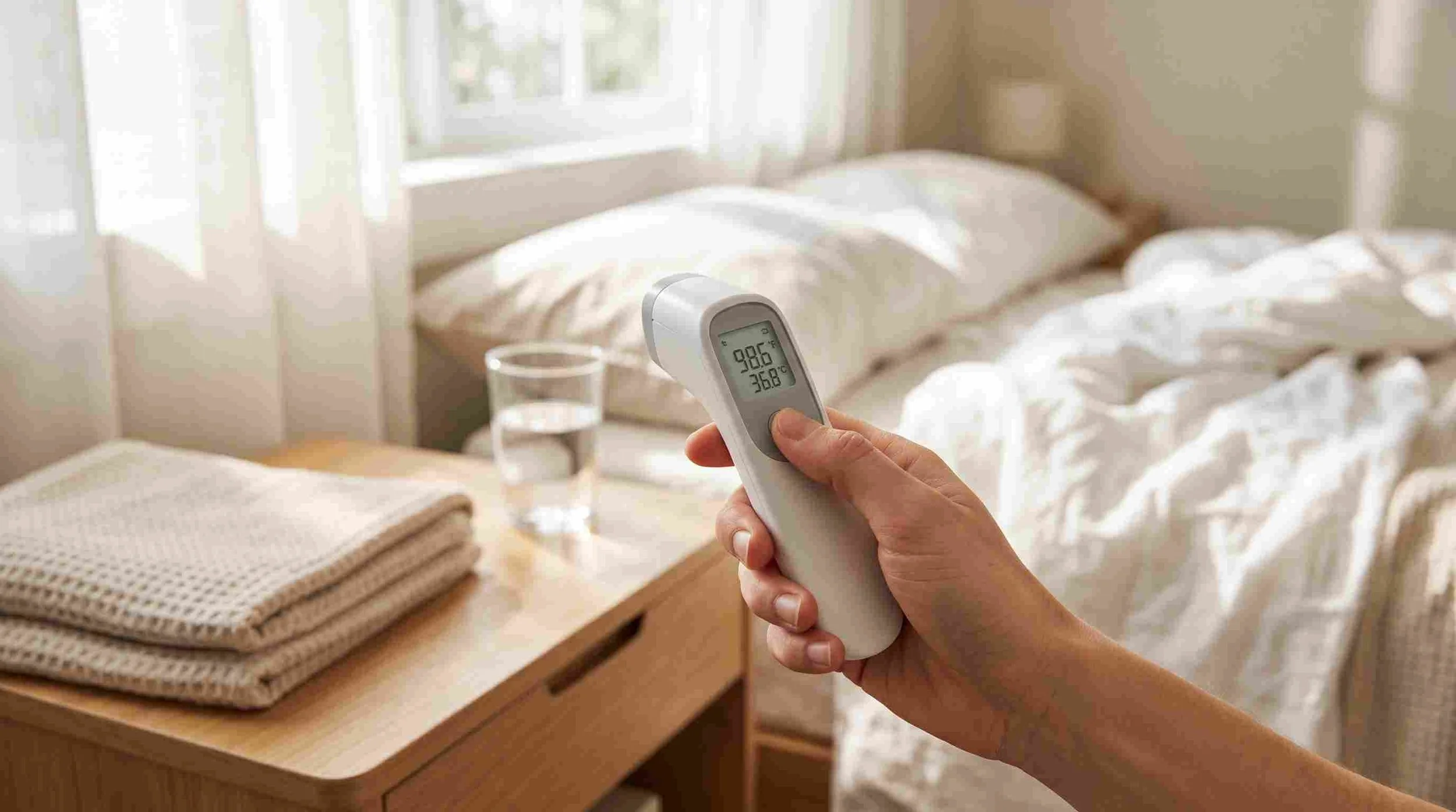

Sudden breathlessness with chest pain, blue lips, or one swollen leg is a 911 call, not a wait-and-see.