
Table of Content
A 24 hour doctor is usually reachable by phone or video rather than in a waiting room. For most problems that start at night, that is enough to get a real answer.
Several routes stay open after hours. A nurse advice line, a video visit, an urgent care clinic still open at that hour, and a doctor who travels to the house all sit between waiting until morning and driving to an emergency room. MedlinePlus (2026) lists the first three as the sensible steps to try when a problem is not life-threatening.
What Can a 24 Hour Doctor Actually Do at Night?
More than most people expect, as long as the problem does not need a hospital. A night doctor can assess symptoms, order tests, write a prescription, treat an infection, and say clearly whether something can wait until morning. What changes after dark is the format of the visit, not the quality of the thinking.
Over Video
The video covers a surprising amount. Federal telehealth guidance from HHS (2025) describes video visits for problems such as fever, sore throat, and pain, follow-up after a hospital stay, and triage, where a clinician helps decide whether an emergency department visit is really needed.
A camera handles skin, eyes, throats, and swelling reasonably well. It cannot listen to a chest, press on an abdomen, or start fluids. A doctor on call will usually say within a few minutes whether the next step is a prescription, a visit, or a trip to the hospital.
At Your Door
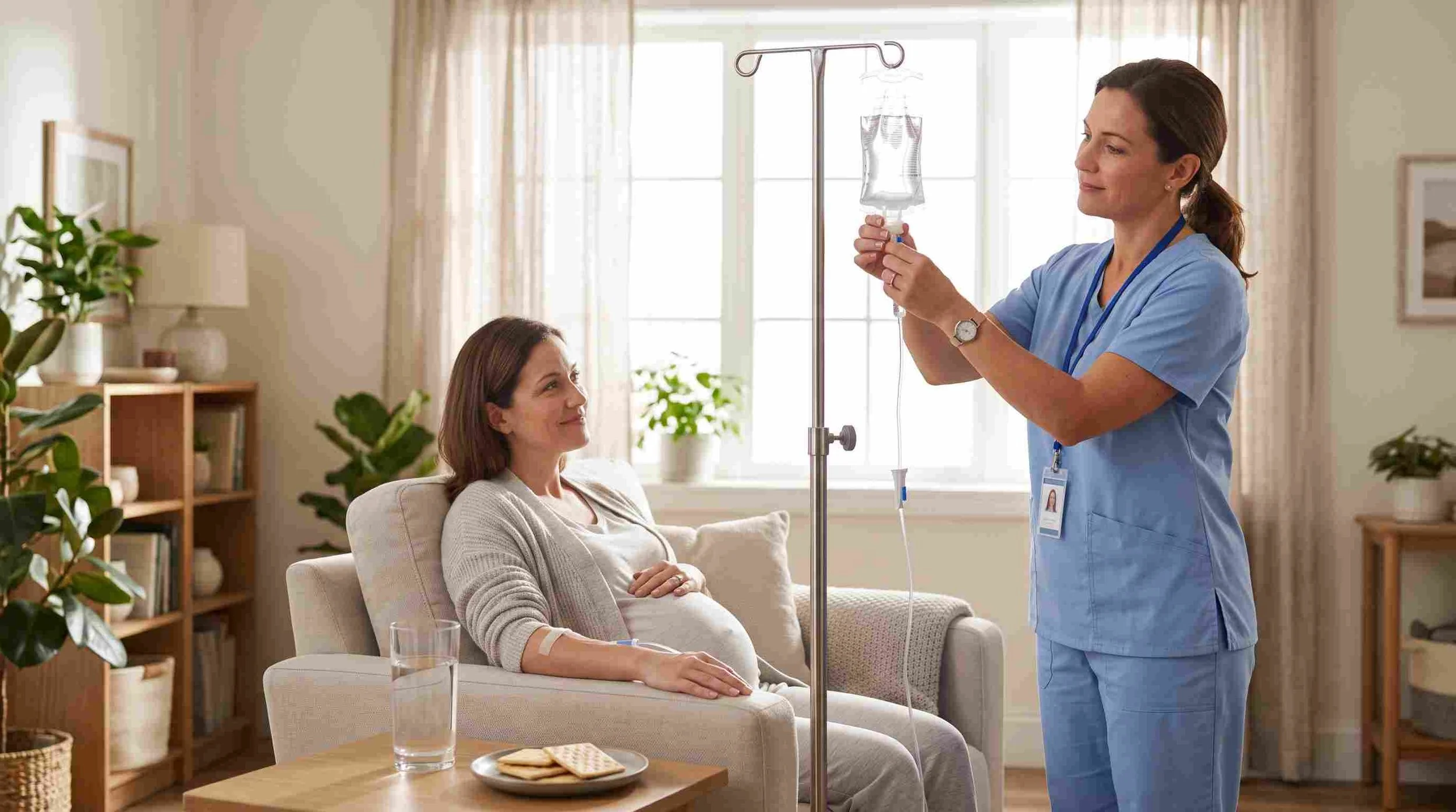
A house call solves what a camera cannot. A physician arriving at the house can examine the abdomen, check oxygen levels, draw blood, and give fluids in the living room. For an older adult who has become unsteady or confused, that avoids a move that would make the night worse.
Bedridden After an Injury or Surgery: Getting a Doctor to Come to You goes through what a home visit includes in practice, down to what the clinician brings in the bag.
Why Is Waiting Until Morning So Hard?
Because pain at two in the morning feels different from the same pain at noon. There is nothing to distract from it, the house is quiet, and the usual office is closed, so the only visible options look like doing nothing or calling an ambulance. That pressure is real, and it pushes people toward the emergency room by default.
Severe pain also deserves to be assessed rather than endured. Pain at the top of the scale, pain that is new and sharp, or pain with vomiting, fever, or breathlessness alongside it should be described to a clinician the same night rather than slept off. A short phone call can settle whether it is an emergency.
Fear of overreacting keeps many people silent. Calling about something that turns out to be minor is a normal use of an after-hours line and costs nothing but a few minutes. The clinician on the other end would rather hear about a false alarm than see the same person in an ambulance at six.
What Is a Nurse Advice Line, and Does It Just Redirect You?
It is a phone service staffed by nurses who triage symptoms, and it does more than pass you along. MedlinePlus (2024) notes that a provider's office or a health insurance plan may run a nurse telephone advice hotline, and that when an office is closed a message is forwarded to someone who can help.
The redirection complaint is fair in one respect. A nurse line cannot prescribe or examine, so a call that needs either of those ends with a handoff. What it can do is separate the problems that need attention tonight from the ones that are safe to watch, which is often the only question keeping someone awake.
Ask for the on-call clinician if the answer feels too general. Many practices route after-hours calls to a doctor on call for exactly this reason, and saying plainly that the pain is severe or that symptoms are getting worse by the hour usually moves the call up a level.
Is Urgent Care at Night an Option?
Sometimes, it depends entirely on local hours. Most urgent care clinics close in the late evening rather than running overnight, so the first step is checking tonight's hours rather than assuming. Clinics that are open handle the middle ground well, with X-rays and basic labs on site.
Urgent care suits the complaints that are annoying rather than dangerous. MedlinePlus (2024) groups colds, the flu, earaches, sore throats, low-grade fevers, limited rashes, sprains, bruises, minor cuts and burns, and minor eye injuries in this category, all of which fit a walk-in clinic better than a hospital.
Cost matters here too, and it is the clearest argument against defaulting to a hospital. MedlinePlus (2026) states that treatment in an emergency department can cost two to three times or more than the same care in a provider's office, with a higher copay in many plans.
House Call Doctors Near Me: How a Night Visit Works
You describe the problem, a clinician decides whether a visit fits, and someone travels to the address. The call is a triage step, so expect questions about symptoms, medicines, and recent hospital stays before anything is scheduled. A same day doctor visit at home works best for assessment and treatment, not for anything needing surgery or a scanner.
Internal medicine covers most of what goes wrong overnight in adults. Mark Barats, MD practices internal medicine in the Los Angeles area, including kidney care, which is the kind of background that matters when a night problem involves fluids, blood pressure, or a chronic condition rather than a simple infection.
Families often want one clinician who already knows the history. Dennis Stolpner, MD practices family medicine in Santa Monica, and continuity like that shortens an after-hours call considerably, because nothing has to be explained from scratch at midnight.
Lists of doctors who travel to patients at home are worth checking before a night when you need one. Coverage areas vary street by street, and knowing in advance whether your address is covered removes a decision at the worst possible hour.
Which Problems Still Need the Emergency Room?
Anything that could end in death or permanent harm. MedlinePlus (2026) draws the line at that point and gives examples: choking, breathing that has stopped, severe chest pain, and signs of a stroke, all of which mean calling 911 rather than arranging a visit. Trouble breathing, fainting, heavy bleeding, a suspected broken bone, and a severe allergic reaction belong in an emergency department too.
Breathlessness is the symptom people most often misjudge. Shortness of Breath: When It's Urgent sets out which versions of it need a hospital tonight and which can be assessed at home, which is a useful thing to have read before the night it happens.
A high temperature is the other common judgment call. Fever in Adults: When to Worry About a High Temperature covers the readings that justify a hospital visit and the ones that a night doctor can manage at home.
When the answer is genuinely unclear, call rather than guess. A nurse line or an on-call clinician exists for the hour when symptoms sit between inconvenient and frightening, and five minutes on the phone is a better test than an internet search at three in the morning.
Why Is the ER So Crowded at Night?
Volume, mostly. CDC data (2025) records 155.4 million emergency department visits in the United States, about 47.3 visits for every 100 people, while only 11.5 percent of those visits ended in a hospital admission. A large share of the room is therefore made up of problems that did not need a hospital bed.
Night shifts also run leaner than day shifts. Fewer clinicians are on duty, specialists are reachable by phone rather than in person, and anyone who is not critically ill waits behind those who are. That is the system working as designed, and it is also why a non-urgent problem can mean a long night on a plastic chair.
The practical conclusion is to use the hospital for what it is built for. An alternative to emergency room care exists for most night complaints, and choosing it keeps the room freer for the people arriving by ambulance.
How to Set Up Your Night Plan Before You Need It
Write the phone numbers down while nothing is wrong. MedlinePlus advises saving the numbers for your own provider, a nurse advice line, a nearby urgent care clinic, and the emergency department you would choose, so that none of it has to be looked up during a bad night.
Your doctor's office number and what happens to after-hours calls
The nurse advice line offered by your practice or your plan
Tonight's closing time for the nearest urgent care clinic
Whether a doctor visits homes at your address, and how to request one
Keep a current medication list in the same place. A clinician on the phone at night asks for it almost immediately, and reading it off a photo on your phone is far easier than opening cabinets in the dark. A list of conditions and recent hospital stays helps just as much.
People who live alone need one extra step. Living Alone and Getting Sick: What to Do When No One Can Help covers check-in routines and what to arrange before an illness, which is the difference between a manageable night and an unanswered phone.
The table below sets the night options side by side so the choice takes seconds rather than an argument.
|
Night option |
What it handles best |
How fast |
|---|---|---|
|
Nurse advice line |
Deciding whether this can wait until morning |
Minutes |
|
Video visit |
Fever, sore throat, rashes, medication questions |
Usually within the hour |
|
Urgent care still open |
Sprains, minor cuts, on-site X-ray and basic labs |
Drive time plus a wait |
|
Doctor at home |
Hands-on exam, fluids, blood draw, limited mobility |
Same night to next morning |
|
Emergency department |
Chest pain, stroke signs, heavy bleeding, breathing trouble |
Immediate for true emergencies |
Speeds in the table are typical rather than promised, and they move with where you live and how busy the night is. The column that matters most is the middle one, because matching the problem to the right setting is what saves the hours.
FAQ
-
Usually yes for ordinary treatments, and the prescription goes to a pharmacy that is open late or in the morning. Controlled medicines are handled differently and often need an in-person visit. Ask at the start of the call which pharmacy can fill it tonight.
-
Your medication list, your temperature if you have taken it, when the symptoms started, and the name of your regular doctor. Having those ready cuts the call short and makes the advice more specific.
-
It should, and you can ask for it directly. Write the advice down during the call as well, since a written note in your own words is useful if the summary takes a day or two to reach your portal.
-
Often somewhat, since after-hours work carries its own fee, and the amount depends on the provider and the plan. It is still typically well below a hospital visit for the same problem, so asking for the figure before the visit is worth the minute.
-
You get a clear reason, a recommendation about whether to drive or call 911, and often a call ahead so the department knows you are coming. That handoff is a normal part of the job rather than a failed visit.
-
Yes, and it happens constantly. Be ready to describe the symptoms, the medication list, and whether anyone is physically present with them, since that last answer often decides between a video visit and a home visit.
Sources Used
Can I use telehealth for emergency care? – Telehealth.HHS.gov, US Department of Health and Human Services (2025)
Emergency Department Visits – Centers for Disease Control and Prevention, FastStats (2025)
When to use the emergency room - adult – MedlinePlus, US National Library of Medicine (2026)
When to use the emergency room - child – MedlinePlus, US National Library of Medicine (2024)

Written by Sofiia Puhach
October 20, 2026
You May Also Like



At night a nurse line or video visit handles most problems; the ER is for true emergencies.