
Sick on Vacation: Where to Go for Care
Table of Content
Getting sick on vacation turns into two problems at once: finding care in a place you do not know, and not knowing what it will cost.
The first move is almost always the same. Call the 24/7 nurse line on the back of your insurance card before you go anywhere. That call usually tells you where you are covered nearby, whether the problem can wait, and whether a video visit would settle it faster than a taxi to a hospital.
What Should You Do First If You Get Sick on Vacation?
Call your plan's 24-hour nurse or assistance line before choosing a building to walk into.
Most health plans run one, and the number is printed on the member card. The nurse can tell you whether your symptoms point to urgent care, an emergency department or a night of fluids and rest, and which nearby places are in the network. MedlinePlus (2026) suggests exactly this call when you are not sure how serious something is.
That call also starts a paper trail. If the plan later questions the bill, a logged call on the night you got sick is useful evidence that you followed the process.
Then take two minutes to gather what any clinician will ask for: a list of your conditions, your allergies, and the medicines you take written out by their generic names. Travelling with that list already written saves a long conversation when you feel awful.
Can You Go to Urgent Care on Vacation?
Yes, and for most travel illnesses it is the right choice.
Urgent care is built for the problems that spoil a trip without threatening a life: a cold that turned into an ear infection, a sprained ankle, a cut that needs closing, a fever that will not come down, a rash after a hike. MedlinePlus (2026) describes urgent care as the place for problems that are not life-threatening when you cannot see your own provider soon enough.
Cost is the other argument. The same MedlinePlus page (2026) notes that emergency department care can run two to three times or more what the care costs in a provider's office, so walking into an ER for a sore throat is an expensive way to be seen.
Walk-in clinics inside pharmacies handle an even narrower set of things, and they are often the fastest option in a tourist town. If you are weighing the options at home rather than away, the same logic applies to urgent care, the ER and a house-call doctor.
When Is It the Emergency Room Instead?
When the problem could cause death or lasting harm, the emergency department is the only correct answer, wherever you are.
MedlinePlus (2026) puts the line plainly: if a person could die or be permanently disabled, it is an emergency. Chest pain, trouble breathing, choking, sudden weakness or drooping on one side of the body, heavy bleeding or coughing up blood all belong in that group, and several of them mean calling the local emergency number rather than driving.
A high fever together with a headache and a stiff neck also belongs in the emergency department rather than a waiting room the next morning. Fever on its own is a different question, and what the number actually means in an adult depends far more on how the person looks than on the reading.
Do not let coverage worries slow this decision down. Emergency care is the one situation where the billing rules work in your favour, as the next section explains.
Does Your Health Plan Work in Another State?
Usually yes for emergencies, and often not for routine care.
Federal rules now limit the damage. The Centers for Medicare & Medicaid Services (2024) states that emergency services from an out-of-network provider must be covered at in-network rates without prior authorization, and that balance billing for those services is banned. Your share is calculated as though the hospital had been in the network.
Non-emergency care is where plans differ most. A narrow HMO network may cover almost nothing out of state except emergencies, while a PPO often pays something toward an out-of-network visit. The nurse line can confirm which situation you are in before you spend the money.
Keep every piece of paper either way: the visit summary, the itemised bill, the receipt. Reimbursement after the fact is common, and claims are far easier to win with documentation than with memory.
How Does Overseas Health Coverage Work?
Most US coverage stops at the border, and travellers are usually asked to pay at the time of service.
The CDC travel insurance chapter (2025) notes that some US insurers do cover emergencies abroad, but only in specific circumstances, and that travellers should expect to pay up front and claim afterwards. That is the detail that catches families out, because a hospital may want payment before treatment starts.
What Medicare Does and Does Not Do Abroad
The US State Department (2025) says directly that Medicare and Medicaid do not pay for medical care outside the United States. There are narrow exceptions, but they are not something to plan a trip around.
The CDC (2025) notes that certain Medigap policies cover some emergency care abroad, subject to a yearly deductible, partial coverage and a lifetime cap, and that Medicare Advantage plans usually do not cover care overseas, although some include emergency care. Anyone relying on this should call their plan before leaving rather than read the brochure.
Medical Evacuation Is the Expensive Part
Treatment abroad can be affordable. Getting home is not. The CDC (2025) puts medical transport at roughly 25,000 US dollars within North America, rising above 250,000 dollars from distant or remote places.
That is why the State Department (2025) recommends buying medical evacuation cover for higher-risk destinations or places with limited medical facilities. It can be bought on its own or added to a travel health policy, and some policies pay hospitals directly instead of reimbursing you later.
Where Do You Find a Travel Doctor or Travel Clinic Abroad?
Through your insurer's assistance line first, and through the nearest US embassy or consulate second.
Some plans run a 24-hour hotline that connects travellers to providers they have already vetted, which saves you guessing at the quality of a clinic in a city you do not know. The CDC (2025) also advises identifying good clinics and hospitals before you travel, since urban areas have far more options than rural or remote ones.
The nearest US embassy or consulate can help locate medical services and notify family or an employer in an emergency. Emergency consular services run around the clock on 888-407-4747 from inside the United States and 202-501-4444 from abroad.
Ask for documentation of everything you receive, including the names of any medicines given, and tell your own doctors about the visit once you are home. Care received overseas in the past year is worth mentioning at your next appointment.
What If a Visiting Parent Gets Sick and Has No US Insurance?
They can still be treated, and the costs are more negotiable than most families assume.
Emergency departments assess and stabilize anyone who arrives with an emergency, regardless of insurance. That is the safety net, and it is the reason a genuine emergency should never wait for a coverage conversation.
For everything else, ask about the self-pay or cash price before the visit rather than after. Many clinics quote a flat self-pay rate that is lower than the billed insurance rate, and hospitals have financial assistance and payment plans that nobody mentions unless asked.
Telehealth is often the cheapest first step for a visiting relative with a familiar problem, and a video visit can sort out whether an in-person trip is needed at all. How a telemedicine visit works from home is much the same whether the patient lives here or is staying for a month.
How Do You Avoid a Huge Bill?
Match the problem to the smallest setting that can safely handle it, and ask the price before you are treated.
The order of cost generally follows the order of capability. A nurse line costs nothing, a video visit costs little, a pharmacy clinic costs more, urgent care more again, and an emergency department the most. Choosing one level higher than necessary is the most common way travellers overspend.
Here is the rough shape of the choice:
|
Where You Go |
Best Suited To |
Relative Cost |
|---|---|---|
|
Plan's 24/7 nurse line |
Deciding whether this needs a visit at all |
Usually included in the plan |
|
Video or telehealth visit |
Familiar problems, prescription refills, rashes, mild infections |
Lowest of the visit options |
|
Pharmacy walk-in clinic |
Minor infections, simple tests, travel paperwork |
Low |
|
Urgent care |
Sprains, cuts needing closure, stubborn fever, ear and sinus pain |
Moderate |
|
House-call doctor |
Older or frail travellers who should not sit in a waiting room |
Varies by provider and area |
|
Emergency department |
Anything that could cause death or lasting harm |
Highest |
Here is the rough shape of the choice:The table is a rule of thumb rather than a rule. A frail traveller with several conditions may need a higher level of care for a problem that would be minor in someone else, and the nurse line exists to make that call.
Getting Seen Without Leaving the Hotel
For an older traveller, the waiting room is often the hardest part of the visit.
Sitting for three hours with a fever, in a building full of other sick people, is hard on someone who is already frail, and it is the reason families sometimes put off care that should not be put off. In many areas a doctor can travel to the patient instead, which removes the transport problem entirely.
A Doctor Who Comes to the Room
Family medicine physicians who see patients this way, such as Cleo T. Williams, MD in the Pasadena area, handle the same range of acute problems a clinic would: infections, fever, stomach upset, a flare of a long-standing condition.
Planning Around Mobility Before You Go
Planning ahead helps more than improvising. Choosing destinations and routes that suit the traveller's mobility, as in these trip ideas for seniors with limited mobility, prevents a share of the problems that end in a clinic.
And if the illness starts the day you arrive home rather than abroad, the options are different again. Getting seen the same day is usually possible without an emergency room.
FAQ
-
Usually not for the medical part, since your own plan still applies inside the United States. Trip cancellation cover is a separate question and depends on how much the trip cost. Check what your card or plan already includes before buying anything.
-
Often yes. Pharmacies in the same chain can usually transfer a prescription between states, and your prescriber can send a new one to a pharmacy near you. Call ahead rather than arriving at the counter and hoping.
-
Sometimes, but licensing rules often stop a US clinician from treating you while you are physically abroad. Ask your plan what it allows before you rely on it, and have a local option in mind as a backup.
-
A short written list of your conditions, allergies and medicines by generic name, plus your medicines in their original labelled containers. Add your insurance card, the assistance line number and an emergency contact on paper, not only on your phone.
-
Use an established pharmacy rather than a street vendor or market stall, and be cautious about products priced far below everything else. Keep the packaging and show it to your own doctor when you get home.
-
Use the local emergency number first, then your plan's assistance line, which usually has interpreters. The nearest US embassy or consulate can also help locate services and reach your family.
Sources Used
Travel Insurance – U.S. Department of State (2025)
Travel Insurance, Travel Health Insurance, and Medical Evacuation Insurance – CDC Yellow Book (2025)
What are the new protections? – Centers for Medicare & Medicaid Services (2024)
What To Do When Sick Abroad – CDC Yellow Book (2025)
When to use the emergency room - adult – MedlinePlus Medical Encyclopedia (2026)
HMO vs. PPO: Understanding the key differences – Kaiser Permanente (2025)

Written by Sofiia Puhach
October 10, 2026
You May Also Like
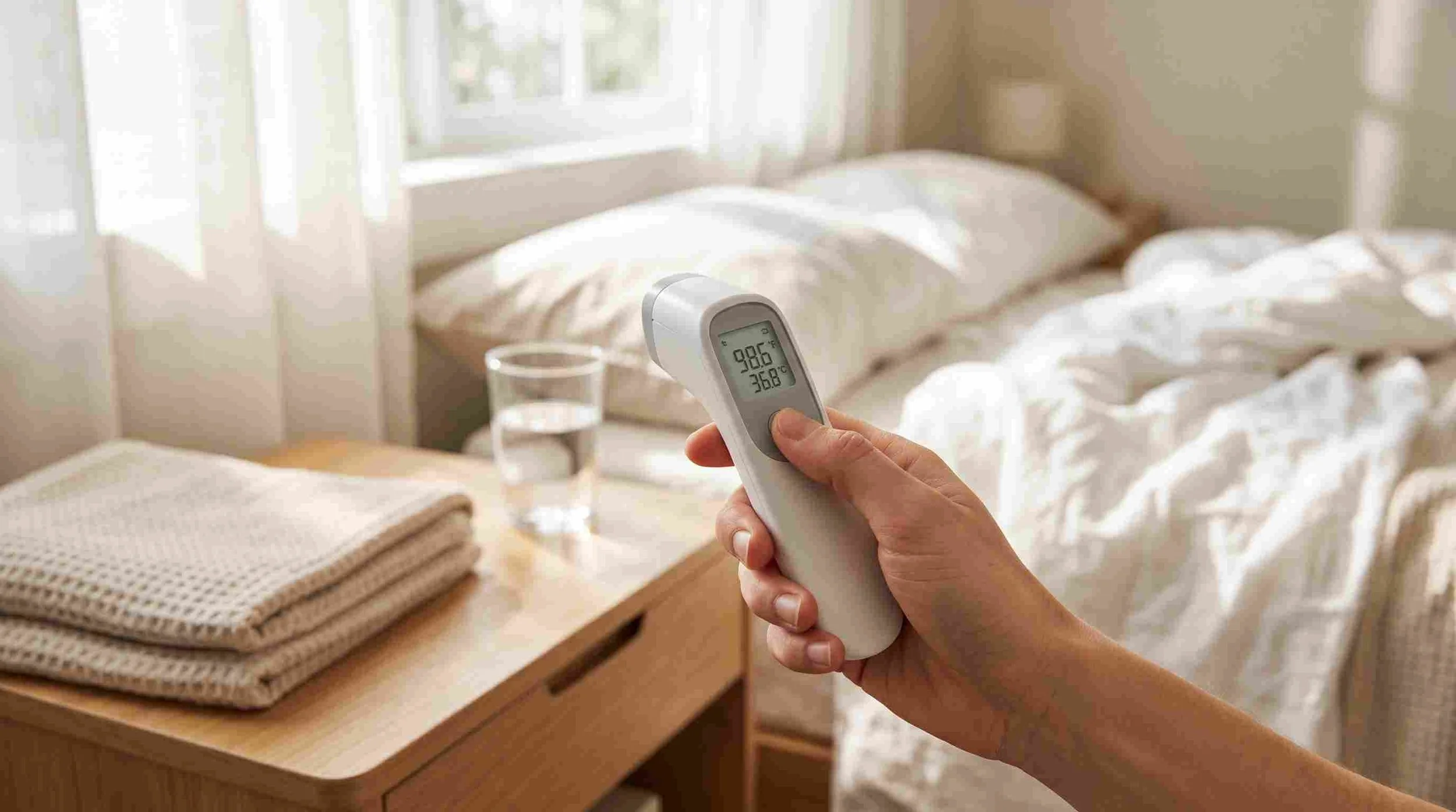



Most travel illnesses need urgent care, not an ER, and your plan's 24/7 nurse line can tell you which.