Spotting Skin Cancer Early: What to Look For
Table of Content
Skin cancer is the most common cancer in the United States, but it is also one of the easiest to treat when it is found early. The key is knowing what to look for. Most skin cancers show up as a new spot, a sore that will not heal, or a mole that starts to change. Learning the early signs of skin cancer, checking your skin often, and acting fast can save your life.
If you have noticed a spot that worries you, you do not have to wait weeks for an appointment. With Doctor2me, you can have a doctor come to your home for a private skin check, often the same day. Below is a clear, plain-language guide to what skin cancer looks like and when to get help.
What Skin Cancer Is and Why Early Detection Matters
Skin cancer starts when cells in the skin grow out of control. The skin has two main layers: the outer layer (the epidermis) and the inner layer (the dermis). Skin cancer begins in the outer layer, in cells that can turn into three main types of cancer. Most cases are caused by too much exposure to ultraviolet (UV) rays from the sun, tanning beds, or sunlamps.
The Main Types of Skin Cancer
Doctors group most skin cancer into three main types. Knowing them helps you understand why some cancer signs matter more than others.
Basal cell carcinoma: the most common type. It grows slowly and rarely spreads, but it should still be treated.
Squamous cell carcinoma: the second most common type. It can grow deeper and spread if it is ignored.
Melanoma: less common, but the most dangerous. This is why malignant melanoma cancer is considered the deadliest type, since melanoma cancer can spread to other parts of the body, including the brain and liver.
Each year, about 6.1 million adults in the U.S. are treated for basal and squamous cell skin cancers, according to federal cancer data. That number shows how common this disease is, and why it pays to know the signs of skin cancer.
Why Catching It Early Saves Lives
When skin cancer is found early, it is usually simple to remove and cure. When it is found late, treatment is harder and the outcome is less certain. This is true for all skin cancers, but it matters most with melanoma, which can spread quickly. Early detection is one of the most important parts of preventive cancer care. The good news is that most skin cancers form on skin you can see, so you have a real chance to catch them yourself.
The Warning Signs of Skin Cancer
A change in your skin is the most common sign of skin cancer. This could be a new growth, a sore that does not heal, or a change in an old mole. Not all skin cancers look the same, so it helps to know the main patterns. Watch for skin cancer spots that look or feel different from everything else around them.
The ABCDEs of Melanoma
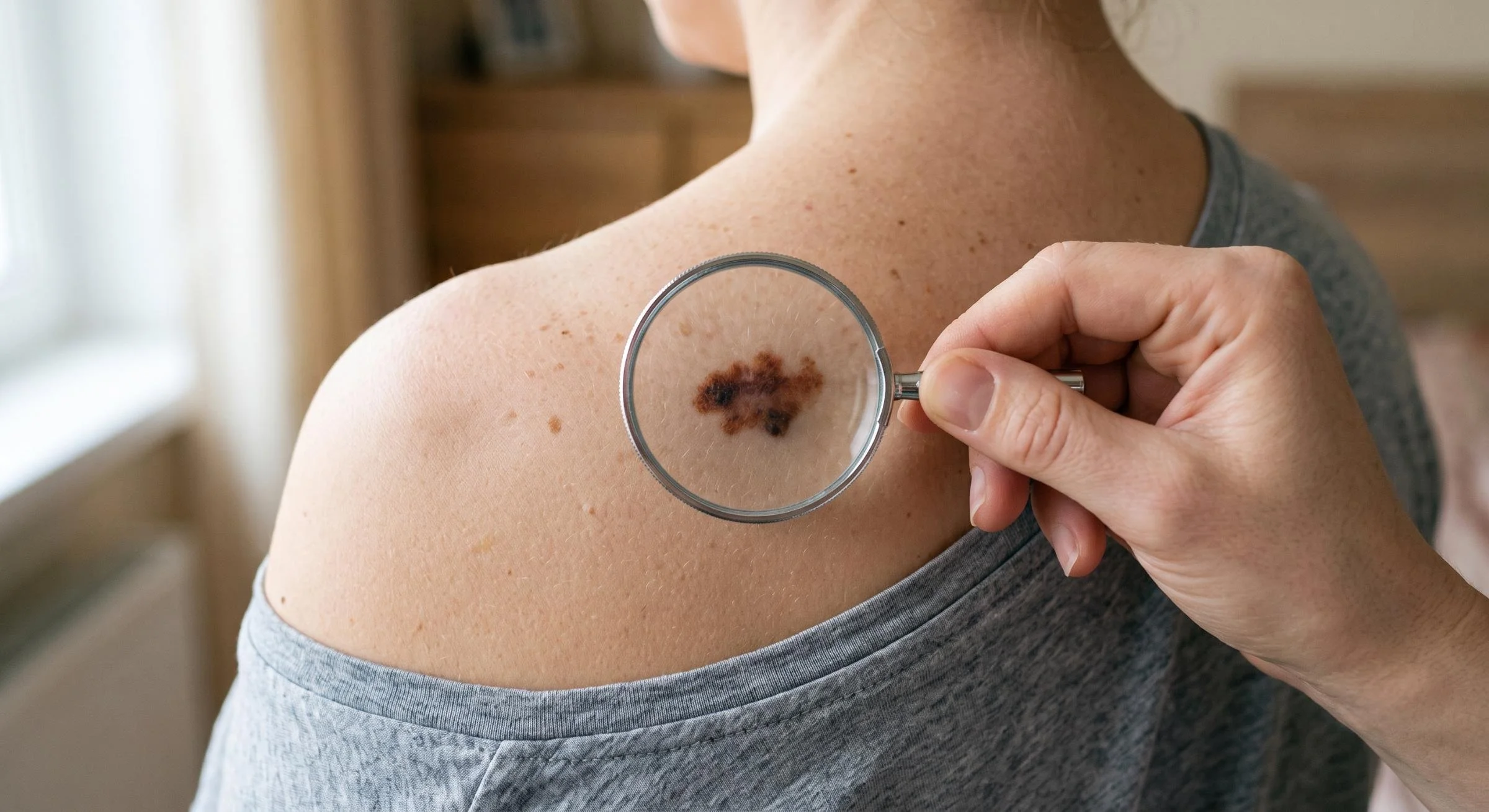
One simple way to remember the warning signs of melanoma is the A-B-C-D-E rule. Use it when you look at your cancer moles or any spot that seems new or odd.
A is for Asymmetry: one half of the spot does not match the other half.
B is for Border: the edges look irregular, jagged, or blurry.
C is for Color: the color is uneven, with shades of brown, black, tan, red, white, or blue.
D is for Diameter: the spot is larger than a pea (about 6 millimeters), though some are smaller.
E is for Evolving: the spot has changed in size, shape, or color over the past few weeks or months.
Another helpful tool is the "ugly duckling" sign. If one mole looks different from all your other skin cancer moles, it is the ugly duckling and deserves a closer look by a doctor.
Beyond Moles: Other Cancer Symptoms to Watch
Skin cancer does not always start in a mole. Many basal and squamous cell cancers show up as new growths or rough patches, not dark spots. Watch for these cancer symptoms on any part of your skin:
A pearly or waxy bump, or a flat, flesh-colored or brown scar-like patch.
A firm, red bump, or a rough, scaly spot that may crust or bleed.
A shiny spot that itches, hurts, or feels tender.
Any spot or sore that is new, changing, or simply looks out of place.
Sores That Do Not Heal
One of the most overlooked cancer signs is a sore that will not heal. A normal cut or scrape closes within a few weeks. A sore that keeps scabbing, bleeding, and opening again over a month or more is not normal and should be checked. This is especially true for a wound on the face, ears, scalp, or hands, where sun damage is highest.
Because a stubborn wound can hide a squamous cell skin cancer, it makes sense to have a hard-to-heal sore evaluated instead of waiting it out. Specialty teams like GotWound.com, which focus on wounds that will not close, can help figure out why a sore is not healing and make sure nothing serious is missed.
Who Is Most at Risk
Anyone can get skin cancer, no matter their skin color. But some people carry a higher risk than others. Knowing your own risk helps you decide how closely to watch your skin.
Sun and UV Exposure
The most preventable cause of skin cancer is too much UV light. Over time, UV damage from the sun and from tanning beds adds up in your skin cells. According to the CDC, most cases of skin cancer come from UV overexposure. A history of sunburns or tanning raises your risk the most.
Skin, Hair, and Personal History
Some traits make skin cancer more likely. You are at higher risk if you have:
Lighter skin that burns, freckles, or reddens easily.
Blue or green eyes, and blond or red hair.
A large number of moles, or certain unusual moles.
A personal or family history of skin cancer.
Older age, or a history of sunburns and tanning.
If several of these apply to you, it is worth checking your skin more often and talking with a skin cancer dermatologist about how closely you should be watched.
How to Check Your Own Skin
Checking your skin at home is one of the best ways to catch skin cancer early. It only takes a few minutes and does not cost anything. The goal is to learn how your skin normally looks so you can spot changes fast.
Doing a Skin Self-Exam
Try to check your skin about once a month in a well-lit room. Use a full-length mirror and a hand mirror so you can see hard-to-reach areas.
Look at your face, neck, ears, and scalp. Part your hair to check underneath.
Check your chest, stomach, back, and both sides of your arms and hands.
Sit down and look at your legs, the tops and soles of your feet, and between your toes.
Take a photo of any spot you want to track, so you can compare it later.
Pay special attention to less visible areas, like the soles of your feet. In people with darker skin, skin cancer often shows up on the palms, soles, and under the nails.
When to See a Doctor
Tell a doctor about any unusual mole or change in your skin, such as a new growth, a sore that does not heal, or any spot that matches the A-B-C-D-E signs. You do not need to wait for a spot to hurt; most early skin cancers do not cause pain at all. A regular skin check is also part of good preventive care. Family-focused practices such as RW Family Practice & Preventative Care make skin and preventive exams part of routine care, so concerns get caught before they grow.
If getting to a clinic is hard, or you would rather not sit in a crowded waiting room, a Doctor2me doctor can come to your home to look at a worrying spot, explain what it is, and guide your next step. You can even choose your own doctor through the Doctor2me network and book a same-day visit, which lowers stress and avoids the risk of picking up an infection in a waiting room.
How to Lower Your Risk
You cannot change your family history, but you can lower your risk of skin cancer by protecting your skin from UV rays. Sun safety matters all year, not just in summer, because UV rays reach you on cloudy days and reflect off water, sand, and snow.
Sun Safety Habits
The CDC suggests simple habits when the UV index is 3 or higher. These steps protect your skin and lower your chance of skin cancer over time.
Stay in the shade, especially from 10 a.m. to 4 p.m., when UV rays are strongest.
Wear clothing that covers your arms and legs, plus a wide-brim hat.
Use sunglasses that wrap around and block both UVA and UVB rays.
Use a broad-spectrum sunscreen with SPF 15 or higher, and reapply often.
Skip the Tanning Beds
Indoor tanning exposes you to intense UV rays, a known cause of cancer. A "base tan" is not protection; it is a sign of skin damage. Any change in skin color after UV exposure, whether a tan or a burn, is a sign of injury, not health. Tanning bed accidents and burns also send more than 3,000 people to the emergency room each year, so the safest choice is to skip them and use a spray tan instead.
FAQ
How do you tell if you have skin cancer early?
The earliest sign is usually a change you can see: a new spot, a sore that will not heal, or a mole that changes in size, shape, or color. Check your skin about once a month and use the A-B-C-D-E rule. Any spot that looks different from the rest should be shown to a doctor.
What does an early skin cancer spot look like?
Early skin cancer spots vary. Melanoma often looks like a dark, uneven mole with ragged edges. Basal and squamous cell cancers may look like a pearly bump, a red scaly patch, or a sore that keeps coming back. Most early skin cancer spots do not hurt, so a change in how they look is the main clue.
How can you tell if a mole is cancerous?
Cancer moles tend to be asymmetrical, have uneven borders and colors, are larger than a pea, or are changing over time. The "ugly duckling" mole that looks different from your others is another warning sign. Only a doctor can confirm it, usually with a small skin biopsy.
What are the warning signs of skin cancer?
The main warning signs are a new growth, a sore that does not heal, and any mole or spot that changes. Watch for the A-B-C-D-E signs of melanoma, plus rough, scaly, or bleeding patches. These cancer symptoms should be checked even if they do not cause pain.
What is the 2 week rule for skin cancer?
The "2 week rule" is a general guide that any new or changing skin spot that lasts more than two weeks should be looked at by a doctor. It is a reminder not to wait and see for too long. A sore that has not healed in a few weeks is a common reason to get a skin check.
What causes most cases of melanoma?
Most melanoma cases are linked to ultraviolet (UV) rays from the sun and from tanning beds. UV light damages the DNA in skin cells, which can lead to malignant melanoma cancer over time. This is why sun safety and avoiding tanning beds are the best ways to lower your risk.
You May Also Like