Bloating, Cramps, and Urgency: Understanding IBS
Table of Content
IBS stands for irritable bowel syndrome. It is a common, long-term problem that affects the large intestine. It brings stomach cramps, bloating, gas, and changes in your bathroom habits, such as diarrhea or constipation. IBS does not damage your gut or raise your risk of cancer, and most people can manage it with small changes to food, stress, and daily habits.
If your gut has been acting up for weeks, you do not have to wait in a busy clinic to get answers. With Doctor2me, you can have a licensed doctor come to your home the same day, talk through your symptoms in private, and help you build a plan. You can also pick your own doctor through the
What Does IBS Mean?
IBS is a group of gut symptoms that show up together. To define IBS in plain terms: the muscles and nerves in your bowel are extra sensitive, so normal digestion can feel painful or unpredictable. The Cleveland Clinic notes that about 10% to 15% of adults in the United States live with it, which makes it one of the most common gut conditions doctors treat.
The MedlinePlus adds another helpful fact about who gets IBS. It affects about twice as many women as men, and it most often starts in people younger than 45. Knowing the ibs meaning helps you see that this is a real, well-studied condition, not something you imagined.
A Long-Term but Manageable Condition
IBS is chronic, which means it lasts a long time, often for years. The good news is that symptoms come and go. You may feel fine for weeks, then have a flare-up. Once you learn your triggers, you can lower how often flare-ups happen and how strong they feel.
Common IBS Symptoms: Cramps, Bloating, and Gas
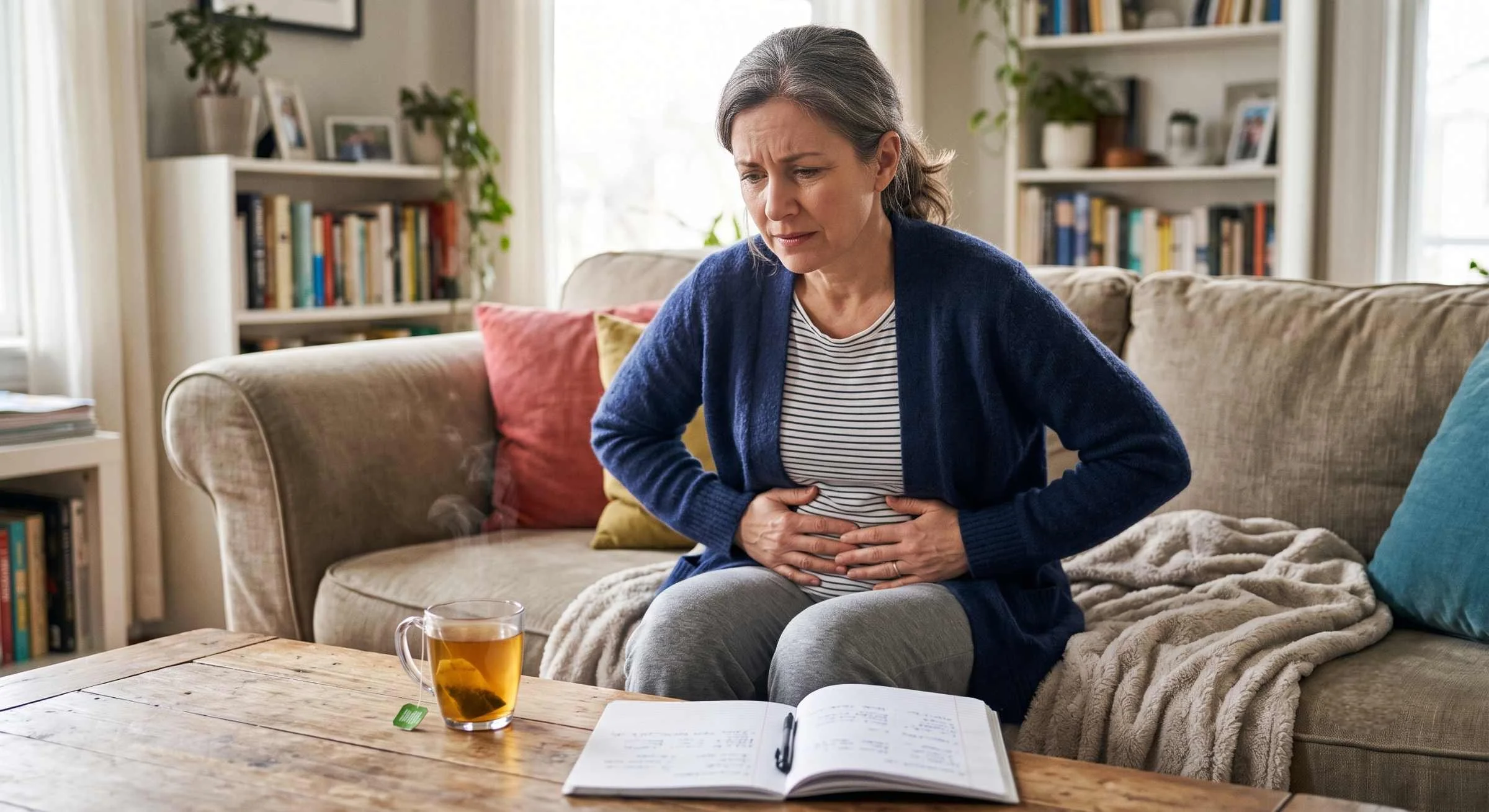
The main sign of IBS is belly pain linked to your bowel movements. Many people describe IBS cramps that feel better after they use the bathroom. Along with pain, you may notice stomach cramps, bloating, gas, and diarrhea, or the opposite problem of hard, dry stools.
Other common symptoms, listed by the Mayo Clinic, include a feeling that you did not fully empty your bowels, and whitish mucus in the stool. These symptoms are usually mild, but they can still get in the way of work, sleep, and daily life.
Pain and Bloating After Eating
Food often sets off symptoms. Some people feel IBS stomach cramps after eating, especially after a large or fatty meal. Others deal with ibs bloating after eating, where the belly feels tight and swollen within an hour. Eating smaller meals at regular times can ease this.
A swollen belly that will not go down is frustrating. If you have ibs constant bloating, try to notice which foods make it worse. Beans, dairy, and fizzy drinks are common culprits. When bloating comes with stomach cramps, bloating, gas, and diarrhea all at once, it usually points to a flare-up rather than a new problem.
The Four Types of IBS
Doctors group IBS by how your stool looks on your worst days. The Cleveland Clinic describes these main types:
IBS with constipation (IBS-C): most stools are hard and lumpy. This is the pattern behind stomach cramps, bloating, and constipation.
IBS with diarrhea (IBS-D): most stool is loose and watery, so ibs diarrhea and urgency are the main problems.
IBS with mixed habits (IBS-M): you swing between hard stools and loose stools.
Knowing your type matters because some treatments only work for one pattern. A doctor can help you figure out which type fits you best.
What Causes IBS?
Doctors do not know one single cause. The Mayo Clinic explains that several things seem to work together. IBS is often called a problem with brain-gut interaction. The nerves between your brain and bowel do not send smooth signals, so food may move too fast or too slow. Your gut can also feel pain from normal amounts of gas or stool.
Other factors may add to the problem. These include a hard bout of food poisoning, changes in the bacteria that live in your gut, a family history of IBS, and stressful events early in life. For many people, more than one of these plays a role.
Common Triggers
Triggers do not cause IBS, but they can start or worsen a flare-up. The Cleveland Clinic lists the most common ones:
Certain foods, such as dairy, wheat, and gassy foods like beans and cabbage.
Stress, which is why IBS is sometimes called a nervous or anxious stomach.
Hormone changes, since many women notice worse symptoms around their period.
How Doctors Diagnose IBS
There is no single test for IBS. Instead, a doctor looks for a clear pattern in your symptoms. The Mayo Clinic describes the Rome criteria, which look for belly pain at least one day a week over the last three months, along with changes tied to your bowel movements.
Your doctor will also rule out other conditions. Simple blood tests, stool tests, or a breath test can check for infection, celiac disease, or lactose problems. Most people do not need a colonoscopy unless they have warning signs like weight loss, bleeding, or symptoms that wake them at night.
Treatment and Daily Habits That Help
There is no cure for IBS, but most people find a plan that works. Treatment usually starts with food and lifestyle changes, and adds medicine when needed. Give each change a few weeks to work.
Food Changes
The Mayo Clinic suggests eating more high-fiber foods, drinking plenty of water, and cutting back on foods that cause gas. Some people feel better when they avoid gluten, even without celiac disease. A popular option is the low-FODMAP diet, which lowers certain hard-to-digest carbohydrates for a short time, then adds them back one by one to find your triggers.
Food changes are easier with expert help. A team like Comprehensive Natural Healthcare in Encino offers nutrition support along with acupuncture, herbal medicine, and physical therapy, which some people use to help calm gut symptoms and lower stress. A registered dietitian can also build a plan that keeps your meals balanced while you test which foods bother you.
Stress, Sleep, and Movement
Because the gut and brain are so closely linked, calming your mind often calms your gut. Regular exercise, steady sleep, and relaxation methods like deep breathing or yoga can all reduce flare-ups. Talk therapy, such as cognitive behavioral therapy, helps many people who also deal with anxiety or low mood.
Medicines
Your doctor may suggest fiber supplements or gentle laxatives for constipation, or anti-diarrheal medicine for loose stools. Other options include medicines that ease painful bowel spasms and, in some cases, low doses of certain antidepressants that calm gut nerves. Probiotics may help some people, though results vary.
Living With IBS Day to Day
Small, steady habits make the biggest difference over time. Try to eat at about the same hours each day and avoid skipping meals, since long gaps can upset your gut. Drink water through the day, and add fiber slowly so your body can adjust without extra gas.
A simple food and symptom diary is one of the most useful tools you can use. Write down what you eat, your stress level, and how your gut feels. After a few weeks, clear patterns often appear, which makes it easier to avoid the foods and habits that lead to ibs cramps and bloating.
When to See a Doctor
See a doctor if your symptoms last more than three months or start to get worse. The Mayo Clinic warns that certain signs need faster attention, including weight loss you cannot explain, rectal bleeding, fever, vomiting, or diarrhea that wakes you at night. These may point to a more serious problem than IBS.
You do not need to sit in a waiting room to get checked. A home visit lowers stress and cuts your risk of catching an infection while you wait. Family medicine doctors such as Dr. Cleo Tsolakoglou-Williams care for patients right where they live, so you can talk through your gut symptoms in a calm, private setting and leave with a clear next step.
If you would rather choose your own doctor, you can browse the Doctor2me network and book a same-day home visit. Getting the right support early makes IBS much easier to live with.
FAQ
-
The most common IBS symptoms are belly pain or cramps, bloating, extra gas, diarrhea, constipation, mucus in the stool, and a feeling that you did not fully empty your bowels. Not everyone has all of them. The pain is often linked to a bowel movement and may ease afterward.
-
IBS is grouped by your stool pattern on flare-up days. The types are IBS with constipation (IBS-C), IBS with diarrhea (IBS-D), IBS with mixed habits (IBS-M), and an undefined type. Your type helps guide which treatment will work best for you.
-
Yes. Stomach cramps and diarrhea are two of the most common IBS symptoms, and they often show up together during a flare-up. The cramps usually feel better after a bowel movement. If you also see bleeding or lose weight, see a doctor to rule out other causes.
-
IBS is a long-term gut condition that causes cramps, bloating, and changes in bowel habits. There is no cure, but most people manage it well with food changes, stress relief, better sleep, and medicine when needed. A low-FODMAP diet helps many people find their food triggers.
-
Yes. IBS does not damage your gut or shorten your life. Most people learn their triggers and build a routine that keeps flare-ups mild and less frequent. With the right plan, you can work, travel, and enjoy daily life.
-
Coping starts with finding your triggers, eating smaller and regular meals, and managing stress with exercise, sleep, and relaxation. Keeping a food and symptom diary helps you spot patterns. A doctor or dietitian can fine-tune your plan when symptoms are hard to control.
You May Also Like