Bulging, Achy Leg Veins? Understanding Varicose Veins
Table of Content
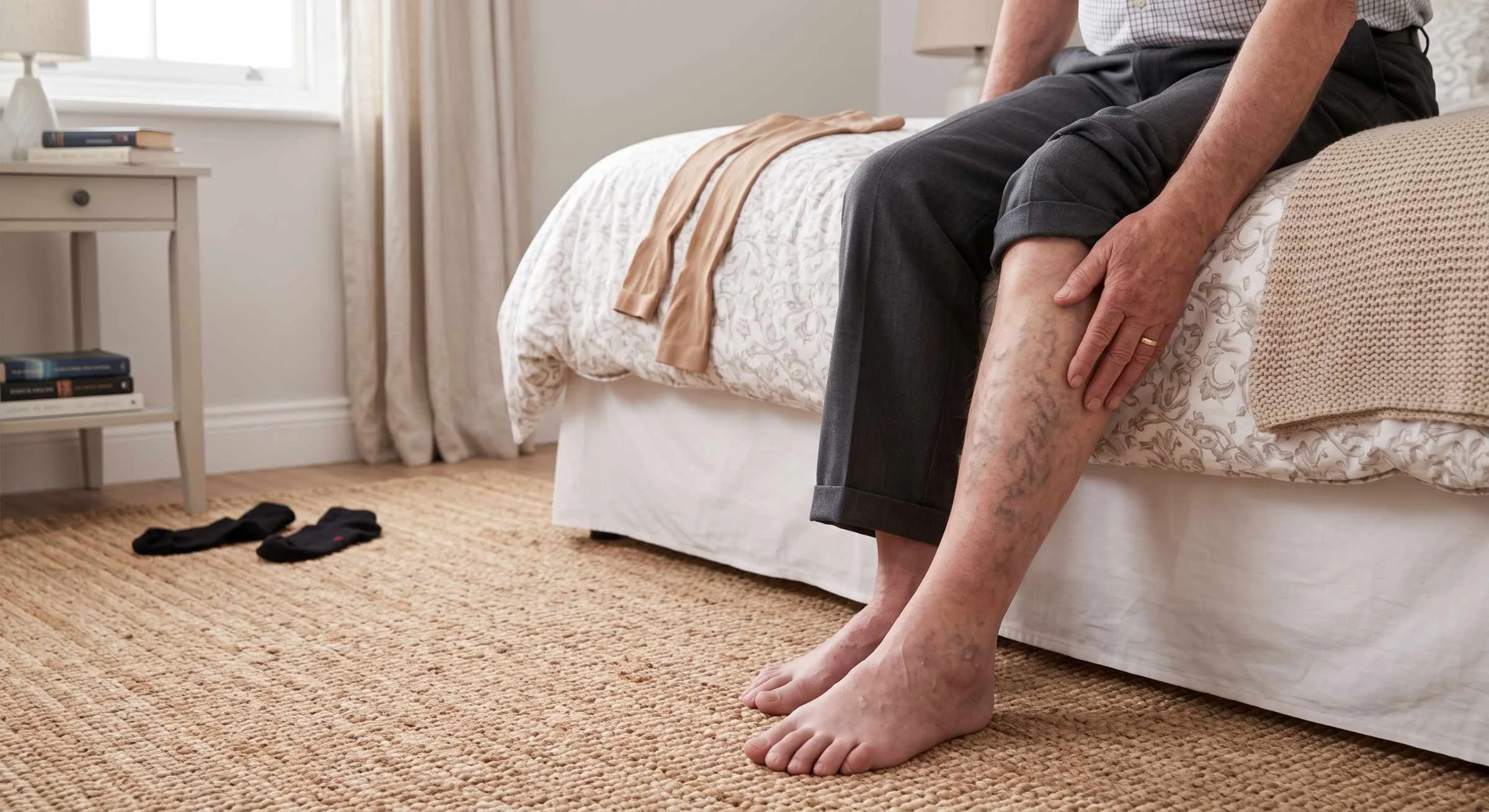
Varicose veins are swollen, twisted veins that you can see just under the skin, most often on the legs, feet, and ankles. They form when the tiny one-way valves inside your veins get weak or damaged, so blood pools instead of flowing back up to your heart. For many people they are just a cosmetic issue, but they can also ache, itch, and, in some cases, point to a bigger health problem.
The good news is that varicose veins are common and very manageable. If sore, heavy legs are slowing you down, you do not have to sit in a crowded waiting room to get answers. With Doctor2me, you can choose a doctor and have them come to your home the same day, take a look at your legs in private, and walk you through your options.
What Are Varicose Veins?
Your arteries carry blood from your heart to the rest of your body. Your veins carry it back. In your legs, the veins have to push blood upward against gravity. Small valves open to let blood move toward the heart, then close so it cannot slide back down. When those valves weaken or break, blood backs up and pools in the vein. The extra pressure makes the vein stretch, bulge, and twist, which is what you see as a varicose vein. Cleveland Clinic explains this process of weak valves and pooling blood in plain terms.
Which Body System Varicose Veins Affect
People often ask which body system varicose veins affect. Varicose veins are part of the circulatory system, the network of blood vessels that moves blood through your body. More exactly, they are a vein problem, so they affect the venous side of your circulation. When leg veins cannot return blood well, doctors call it venous insufficiency, and varicose veins are often an early sign of it.
Varicose Veins vs. Spider Veins
Spider veins are a smaller, milder version of the same problem. They sit closer to the skin and look like thin red, blue, or purple lines, a bit like a spider web or sunburst. They show up on the legs and sometimes the face. Varicose veins are larger, raised, and rope-like. Both come from valves that are not working as they should, but varicose veins are more likely to cause aching and other symptoms.
What Causes Varicose Veins?
Varicose veins form when pressure builds up inside your veins and the valves cannot keep blood moving the right way. Some of that pressure comes from things you cannot change, like age and family history. Some of it comes from daily habits. The National Heart, Lung, and Blood Institute notes that higher vein pressure can come from age, pregnancy, extra weight, and long periods of sitting or standing.
Why Standing for Long Periods Makes Them Worse
Varicose veins and standing for long periods often go together. When you stand or sit still for a long time, your leg muscles are not squeezing the veins, so blood flow slows down and pressure rises in the lower legs. That is why many people notice their varicose veins hurt when they stand up or after a long shift on their feet. Moving around, even a short walk, helps the muscles pump blood back up and eases the pressure.
Who Is Most at Risk
The two main risk factors are family history and carrying extra weight, according to Mayo Clinic. Other things can raise your risk too:
Older age, which causes normal wear on the valves
Being female, partly because of hormone changes
Pregnancy, when blood volume in the body goes up
Sitting or standing for long stretches without moving
Using tobacco, which damages blood vessels
Hormones matter as well. Female hormones can relax vein walls, so changes during pregnancy, menopause, or with estrogen-based birth control can play a part.
Common Symptoms and Warning Signs
Varicose veins do not always hurt. Many people first notice dark blue or purple veins that look twisted and bulging, like cords on the legs. When symptoms do show up, they tend to get worse after you sit or stand for a long time and better when you lie down and raise your legs.
Aching, Heaviness, and a Burning Sensation
The most common feelings are aching, throbbing, and a heavy or tired feeling in the legs. Some people feel a burning sensation in varicose veins, along with itching around them. Sometimes the veins in your leg hurt to touch, or your lower legs cramp and swell, especially at night. Skin color can change around the vein over time. These symptoms are your body's way of telling you the blood is not flowing as smoothly as it should.
Do Varicose Veins Come and Go?
A question many people have is whether varicose veins come and go. The bulging veins themselves do not truly disappear on their own, but the symptoms can flare and settle. Your legs may feel fine in the morning and achy by evening, or worse in hot weather and during pregnancy. What you may notice over time is the varicose veins getting bigger or spreading, since the underlying valve problem tends to move slowly forward without treatment. Getting care early can help stop them from worsening.
Problems Caused by Varicose Veins
For most people, varicose veins never cause serious harm. But when they are left alone for years, a few real problems caused by varicose veins can develop. Knowing them helps you spot trouble early.
Blood Clots and Skin Changes
Over time, severe varicose veins can lead to skin changes, such as discoloration, swelling, and open sores called ulcers, which often form near the ankle and heal slowly. Blood clots can also form. A clot in a surface vein causes a painful, hard, red area but is usually not dangerous. More rarely, a clot can form in a deep vein, known as deep vein thrombosis, which needs medical care right away. If a piece of that clot breaks off and travels to the lungs, it becomes a life-threatening emergency.
Varicose Veins: When to Worry
Most of the time varicose veins are not an emergency, but there are clear signs that mean you should not wait. Call your doctor or get care soon if you notice:
A varicose vein or the skin near it that is bleeding
A vein that is painful, warm, red, or discolored to the touch
A sore or ulcer on your leg that will not heal
Sudden swelling, pain, or redness in one leg, which can signal a clot
Heavy bleeding from a varicose vein is a medical emergency, so call 911 in that case. For anything that feels new or is quickly getting worse, it is worth having a doctor take a look. A same-day home visit makes that easy, with no travel and no waiting room.
How to Get Rid of Varicose Veins
Many people want to know how to get rid of varicose veins for good. There is no cure that stops them from ever coming back, but everyday habits ease symptoms, and simple procedures can close or remove the veins that bother you most.
Home Care and Lifestyle Habits
Small daily changes go a long way. Stay active, since walking makes your calf muscles pump blood back toward your heart. Take breaks to move if you sit or stand a lot. Raise your legs above the level of your heart for a few minutes several times a day. Keep a healthy weight to lower the pressure on your veins, and skip tight clothing and high heels. Compression stockings are another mainstay: they gently squeeze the legs to improve blood flow and ease aching and swelling. Ask a doctor which pressure level is right for you, and you can get fitted, medical-grade compression stockings and other home equipment through a durable medical equipment supplier such as Medlife Medical Supply.
Medical Procedures
When home care is not enough, several low-risk procedures can treat the vein directly. Most are done in a doctor's office and need little recovery time. Common options include:
Sclerotherapy, where a solution or foam is injected to seal the vein shut
Endovenous ablation, which uses laser or radiofrequency heat to close the vein
Phlebectomy, which removes small surface veins through tiny cuts
Vein ligation and stripping, a surgery for larger, deeper veins
A doctor usually starts with a physical exam and may order a duplex ultrasound to see how your veins are working. If getting to a clinic for extra tests is hard, some imaging and heart tests can be brought to you: a mobile service like Gentry Imaging provides X-ray and EKG right in the home, which helps when leg swelling needs a closer look.
Getting Care at Home With Doctor2me
Sore, heavy legs are easy to put off, but early care keeps small vein problems from turning into bigger ones. With Doctor2me, a licensed doctor comes to your home the same day, checks your legs in private, and helps you build a plan, whether that is compression, lifestyle changes, or a referral for a procedure. There is no drive, no crowded waiting room, and no extra exposure to other illnesses. When you are ready, you can pick the doctor who fits your needs and have them come to you.
FAQ
-
Red flags include bleeding from a vein, a leg sore that will not heal, and a vein that is warm, red, or painful to the touch. Sudden swelling, pain, or redness in one leg can be a sign of a blood clot. Any of these means you should see a doctor soon, and heavy bleeding is a 911 emergency.
-
Be concerned if your veins keep getting bigger, ache more than before, or cause skin changes, swelling, or open sores. It is also worth a visit if home care and compression stockings are not helping. A doctor can check for venous insufficiency and rule out clots.
-
A clot in a surface vein often feels like a firm, painful, red, and warm spot along the vein. A clot in a deeper vein can cause sudden swelling, pain, and redness in the whole leg, and it needs care right away. If you also have chest pain or trouble breathing, call 911, because a clot may have traveled to the lungs.
-
You can treat varicose veins at any stage, starting with lifestyle habits and compression when they first bother you. Treating them earlier can ease symptoms and lower the chance of complications like ulcers and clots. See a doctor sooner if the veins are painful, growing, or causing skin changes.
-
Natural steps focus on better blood flow: stay active, walk often, raise your legs, keep a healthy weight, and avoid long periods of sitting or standing. Compression stockings also help ease aching and swelling. These habits do not erase existing veins, but they relieve symptoms and slow new ones from forming.
-
Bulging varicose veins usually do not go away without treatment, though the symptoms can come and go. Home care can keep them from getting worse, but only medical procedures like sclerotherapy or ablation actually close or remove the veins. A doctor can help you decide if a procedure is worth it for you.
You May Also Like