
Valley Pines
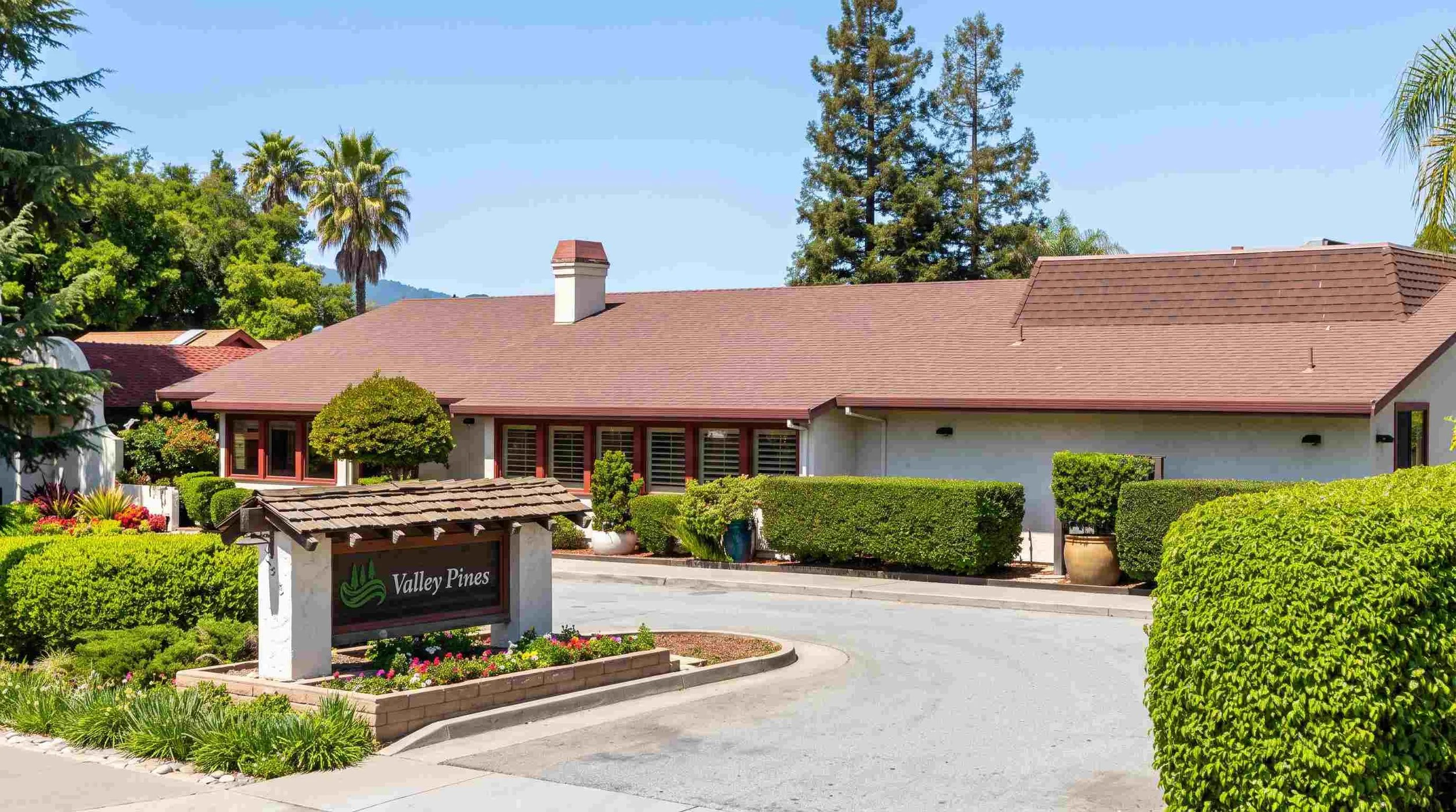
Valley Pines is at 545 East Main Avenue in Morgan Hill, holds California license number 430702352 as a Residential Care Facility for the Elderly with a capacity of 49, and can be reached at (408) 779-2855. Families searching for assisted living in Morgan Hill will find it under that license category, in Santa Clara County, licensed since December 1993.
A Family-Run Home on Two Park-Like Acres
Valley Pines is owned and operated by James and Carolyn Heinan, and the home is run as a family business rather than as part of a chain.
The home describes itself as a family-owned retirement home with 30 years of experience, set on two park-like acres with patios, gardens and walkways. It also says most of its staff have been there for more than ten years, which is unusual in this part of the industry and worth asking about when you visit.
Staff tenure matters more on a daily basis than most brochure features do. In a 49-bed home, the person who notices that your mother has been eating less this week is often the same person who was there last year, and that kind of continuity is difficult to recreate with a larger roster.
State records put the first license in December 1993, which lines up with the three decades the home claims. For families comparing senior living in Morgan Hill CA, a long run under one owner is a reasonable thing to weigh alongside the newer purpose-built communities nearby.
What the RCFE License Covers, and What It Does Not
Valley Pines holds a non-medical license, and knowing where that line falls saves a lot of disappointment later.
CANHR (2025) describes a Residential Care Facility for the Elderly as providing room, meals, housekeeping, supervision, storage and distribution of medication, and personal care help with hygiene, dressing, eating, bathing and transferring, for people aged 60 and over. These homes are not required to have nurses, certified nursing assistants or doctors on staff, and from a licensing point of view there is no difference between a home that calls itself assisted living and one that calls itself board and care.
It is also what separates this from a rented apartment. Senior housing complexes, retirement villages and retirement hotels that provide only housing, housekeeping and meals do not need an RCFE license at all, so anyone comparing senior apartments in Morgan Hill with a licensed home like this one is comparing two different products.
Staffing Rules for a Home This Size
California sets no fixed staff-to-resident ratio. The law requires enough staff, qualified and competent, to meet residents' needs, with an administrator or designated substitute on the premises 24 hours a day and at least one person trained in CPR and first aid on duty at all times.
Night cover follows facility size. In homes with 16 to 100 residents, one staff member must be awake and on the premises overnight, with a second on call and able to respond within ten minutes. For a home of 16 to 49 beds, the administrator is required to hold 15 college credits on top of the 80-hour certification program.
Some conditions fall outside the license entirely. Tube feeding and treatment of open bedsores cannot be managed in an RCFE, and any home must tell residents in writing, at or before admission, what its retention limits are, including whether it can care for someone who cannot leave the building unaided.
Memory Care in Morgan Hill: What to Ask Before You Sign
Memory care is a marketing phrase in California rather than a license category, so the useful question is which standards a home actually meets.
CANHR puts this plainly: a facility may care for people with dementia if it meets specific licensing requirements, and the term memory care is used to attract residents who need extra help rather than to describe a legal status. Dementia care training is required for all RCFE staff, not only for homes that advertise it.
So for anyone searching for memory care Morgan Hill, the questions are concrete. Ask whether the home has the licensing approvals for dementia care, how many current residents have a dementia diagnosis, what happens when someone starts walking out of the building, and what the administrator does on a difficult night. Written answers are better than spoken ones.
Medical Care While Living at Valley Pines
Day-to-day health care sits outside the license, which means somebody in the family usually ends up coordinating it.
Residents keep their own doctor. Appointments then happen either at a clinic or in the home, and Valley Pines itself handles the storage and distribution of prescribed medication along with personal care, diet and daily exercise. Anything beyond that, from wound dressing to physical therapy, is arranged separately through an outside agency.
Bringing the Clinician In
For a resident who finds leaving the building stressful, or who has several appointments in a month, the journeys can undo a good stretch. A clinician who visits residents where they live can cover routine checks, medication review and follow-up without a car trip, and staff can be in the room for the conversation.
Later-stage care is worth raising before it is needed. Some California homes hold permission to keep residents who are receiving hospice, under a specific waiver, so ask the administrator directly whether Valley Pines has it and what would trigger a move.
What It Costs and Who Pays
Most California residential care is paid for privately, and Valley Pines sets its rates from an assessment of the services each resident needs.
CANHR puts the average monthly cost of residential care in California at around $6,000, ranging from roughly $1,420 a month for a resident on Supplemental Security Income to more than $10,000. Specialized dementia or hospice care costs more, and most families end up paying from savings, a house sale or long-term care insurance.
Neither Medicare nor Medi-Cal pays directly for this kind of home. There is one route worth checking here: the Assisted Living Waiver lets Medi-Cal pay for eligible residents who need nursing-home-level care to live in an RCFE, and it operates in 15 counties, Santa Clara among them. That makes it a real question to ask rather than a long shot.
Rate Increases and Deposits
Rate rises are not capped, because residential care is a private business. Facilities must give 60 days' notice of a general increase, but they can raise charges immediately when a resident's level of care changes, with notice within two working days.
Security deposits are prohibited outright in California. A pre-admission fee is allowed, and the amounts range from nothing at all to several thousand dollars, so ask for a written description of what any such fee covers before you sign anything. The figure is also negotiable, and walking away from a high one is a reasonable response.
The Neighborhood
East Main Avenue sits on the flat eastern side of Morgan Hill, close enough to downtown that a short drive covers most errands.
The home describes itself as centrally located on a public transportation route, minutes from downtown, the senior center, the library and local medical offices. That matters on the days when a resident wants to be taken out for lunch rather than driven to an appointment.
Getting Out, and Getting to Care
The city runs the Centennial Recreation Senior Center, which serves adults aged 50 and over in Morgan Hill, San Martin and Gilroy with fitness and educational classes, social services and enrichment programs. It is open for programs Monday through Friday from 9:00 a.m. to 3:00 p.m., and the Senior Cafe serves lunch at 11:30 a.m. for a voluntary contribution of $5 for people over 60.
Hospital cover comes from the south. St. Louise Regional Hospital in Gilroy, at 9400 No Name Uno, has 93 licensed beds and describes its emergency department as the busiest in South Santa Clara County, with critical care, diagnostic imaging and stroke care on site.
For visiting families the practical questions are parking, visiting hours, and whether a resident can go out for a drive or a meal without it becoming a negotiation. Those small freedoms usually decide how a parent feels about a place within the first month, far more than the dining room or the garden does.
Taking the Next Step
One visit at an ordinary hour, not a scheduled open house, answers more than any amount of reading.
Call (408) 779-2855 and ask for a tour, then ask two things that families often forget. A facility must show you, on request, its most recent annual inspection report and any substantiated complaints from the past year. Inspection records for the last 60 months are also published online by Community Care Licensing.
Before and After the Tour
If you are comparing several homes at once, or doing it from another city, an advisor can save weeks of phone calls. Agencies that specialize in senior placement tour homes regularly and know which ones take particular care needs. Our own walk-through of how to choose an assisted living home covers what to watch for on the day.
The address is 545 East Main Avenue, Morgan Hill, CA 95037, and license number 430702352 is the one to quote in any call to Community Care Licensing. The home's own website, Valley Pines, lists its services and invites families to come for a tour.
Sources Used
Introducing Valley Pines – Valley Pines Assisted Living
Overview of Assisted Living/Residential Care Facilities for the Elderly (RCFEs) – CANHR (2025)
Quick Facts – St. Louise Regional Hospital
Senior Center – City of Morgan Hill

Written by Sofiia Puhach
Ocotober 8, 2026
Explore More Assisted Living Communities
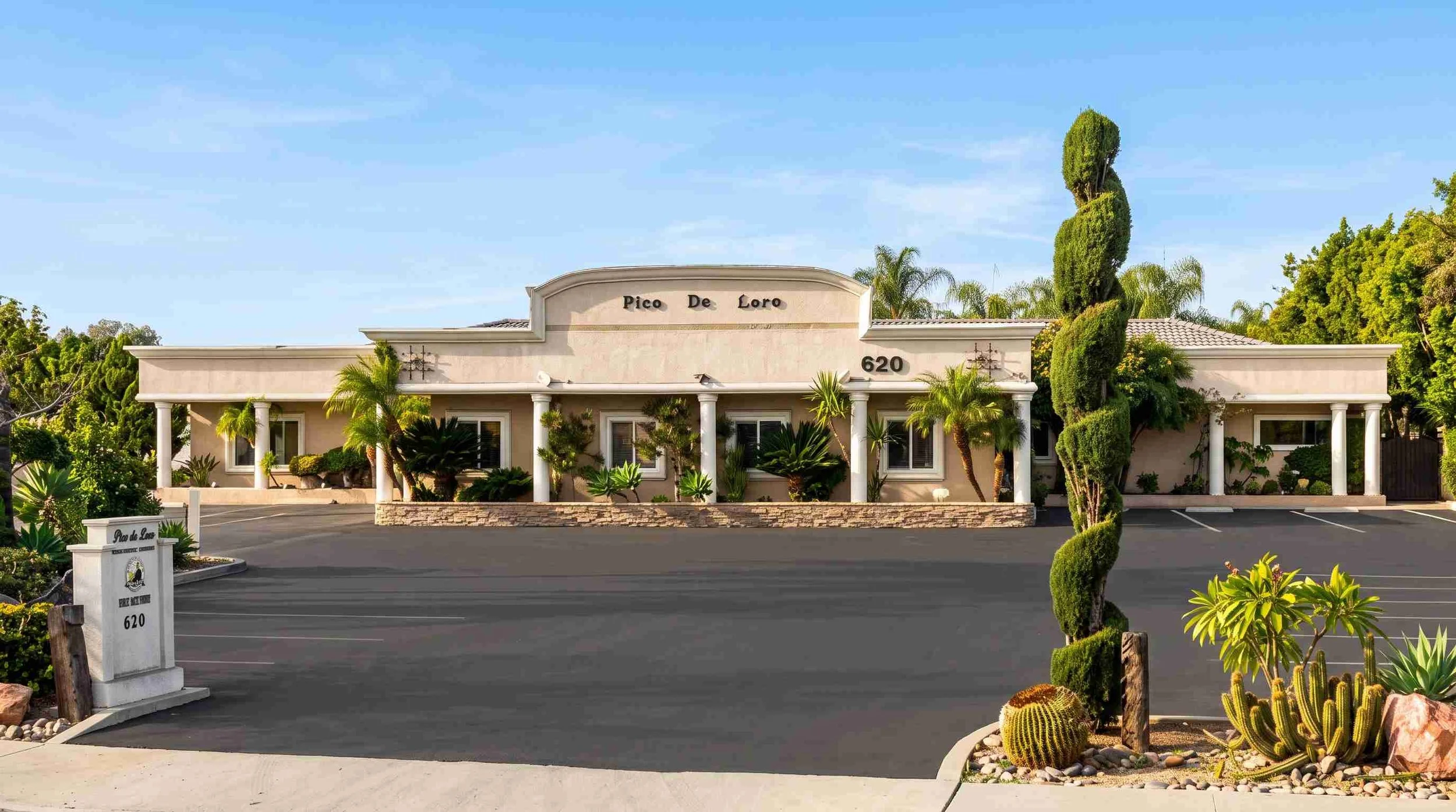

Address: 12695 Monte Vista Road, Poway, CA 92064