
Pico De Loro
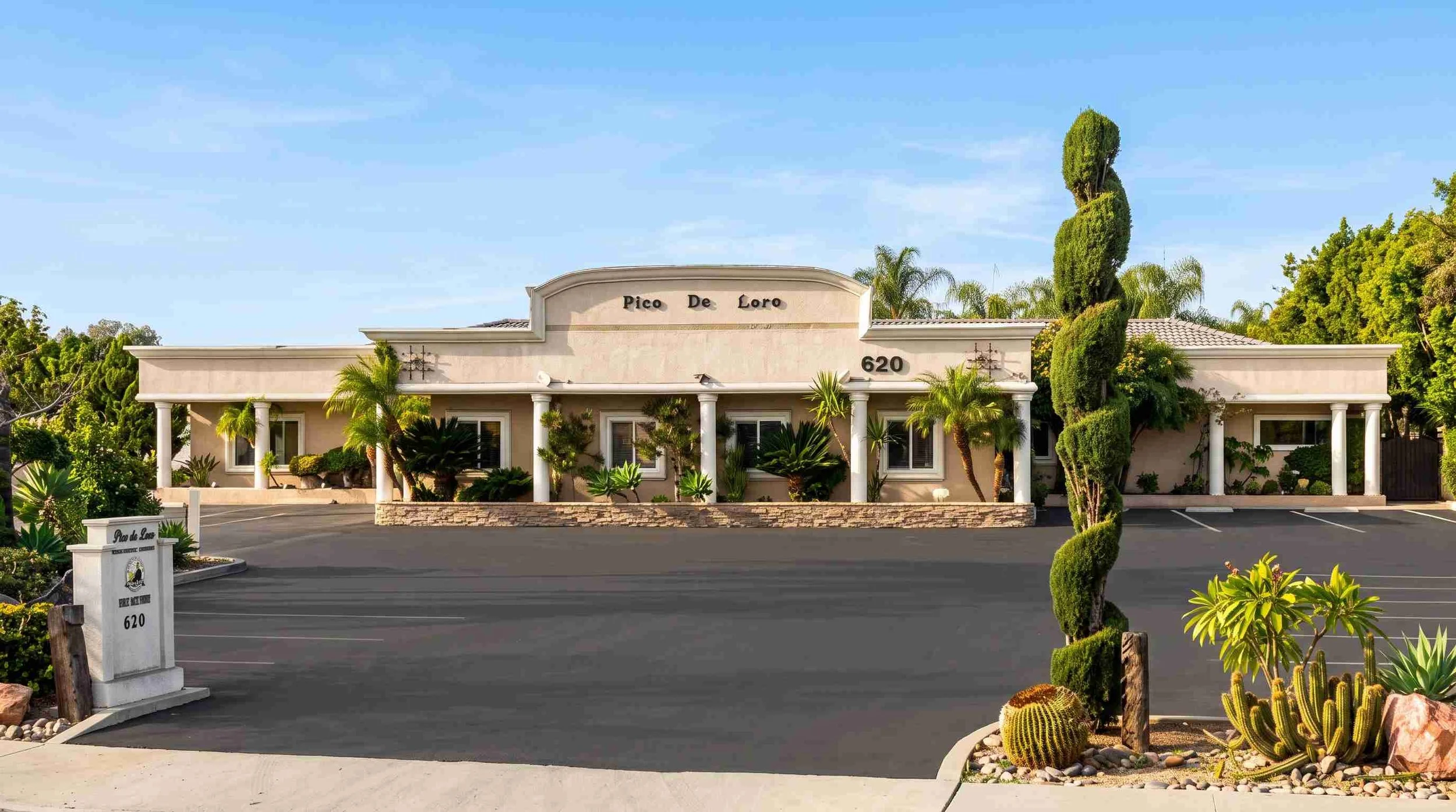
Pico De Loro is at 620 North Perris Blvd in Perris, holds California license number 336407734 as a Residential Care Facility for the Elderly with a capacity of 45, and can be reached at (951) 943-8081. For families comparing assisted living in Perris CA, it sits in Riverside County and has held its license since July 2003.
A 45-Bed Licensed Home on North Perris Boulevard
Forty-five beds puts Pico De Loro between the small six-bed houses and the large branded communities, and that middle size changes the daily feel of a place.
The license is held by Pico De Loro, Inc., with Vivien Rillo and Efren Rillo listed as the facility administrators in state records. The license has been active since July 2003, so the home has been operating under the same license number for more than two decades, which is a longer run than many homes of this size manage.
Size is worth thinking through rather than treating as a quality score. A home this size usually has enough staff on a shift to cover a bad morning without the day collapsing, and it is still small enough that staff know every resident by name instead of by room number.
What it will not have is an apartment. In homes of this size, rooms are usually private or shared bedrooms with common living and dining areas, so anyone picturing senior housing in Perris CA as a one-bedroom with its own kitchen is picturing something else entirely.
Assisted Living or a Nursing Home: Which One Is This?
This is a licensed non-medical home, not a nursing home, and the difference decides what can and cannot be handled on site.
The National Institute on Aging (2023) draws the line clearly. Nursing homes, also called skilled nursing facilities, focus on medical care: nursing care, 24-hour supervision, three meals a day, help with everyday activities, and rehabilitation services such as physical, occupational and speech therapy. Assisted living is for people who need help with daily care but not as much help as a nursing home provides.
Why People Search for Nursing Homes and End Up Here
Families often start by looking for nursing homes in Perris CA because that is the phrase they know. What most of them actually need is this level of care: help with washing, dressing, meals and medication, with a doctor coming in from outside rather than working on site.
The practical test is what happens when needs go up. Some conditions cannot be managed in a licensed care home at all, and the home must tell you in writing, at or before admission, what its retention limits are. Ask that question out loud on the first visit rather than reading it for the first time in the paperwork.
Paying for Care in Riverside County
Most residents pay privately, but Riverside County happens to be one of the places where a Medi-Cal route exists.
CANHR (2025) puts the average monthly cost of California residential care at around $6,000, with a range from roughly $1,420 a month for a resident on Supplemental Security Income to more than $10,000. Dementia and hospice care cost more, and the SSI rate is low enough that fewer homes accept it each year.
The Assisted Living Waiver
Neither Medicare nor Medi-Cal pays directly for a licensed care home, because these are not medical facilities. The exception is the Assisted Living Waiver, which lets Medi-Cal pay for eligible residents who need nursing-home-level care to live in an RCFE instead. It runs in 15 counties, and Riverside is one of them.
That makes it a question worth asking at Pico De Loro directly, since participation is up to each home rather than automatic. Ask whether the home takes waiver residents, whether it accepts SSI, and how many of its current residents are funded either way.
Watch the rate terms as well as the rate. Facilities must give 60 days' notice before a general increase, but they can raise charges straight away when a resident's level of care changes, with notice within two working days. Security deposits are not allowed at all, though a pre-admission fee is, so ask in writing what any such fee covers.
Doctors, Medication and Dementia Day to Day
The home handles medication storage and distribution and personal care; medical appointments stay with the resident's own doctor.
For a resident who gets anxious about leaving the building, or who has three appointments in a month, those trips cost more than they look like they do. A clinician who sees residents where they live can cover routine checks, a medication review and follow-up without a car journey, and a staff member can stay in the room to hear what was said.
If Dementia Is Part of the Picture
Dementia care in California is conditional rather than automatic. A home may provide it if it meets specific licensing standards, and memory care is a marketing term rather than a legal one, so ask which approvals this home actually holds and how many residents currently have a diagnosis.
Daily technique matters as much as the paperwork. How staff respond when a resident insists on something that is not true tells you a great deal about the training, and why correcting someone with dementia usually backfires is a useful thing to read before you watch a shift.
Summer Heat and an Inland Empire Address
Perris summers are long and hot, and heat is a real safety question for a home full of people over 80.
The CDC (2024) explains why age changes the risk: older adults do not adjust as well as younger people to sudden changes in temperature, they are more likely to have a chronic condition that alters the body's response to heat, and they are more likely to take prescription medicines that affect temperature control or sweating.
What to Ask About Cooling
The CDC is blunt that a fan should not be the main cooling source when it is really hot outside, and that older adults should drink more water than usual rather than waiting until they feel thirsty. Both of those translate into questions for an administrator: how is the building cooled, what happens in a power cut, and who tracks fluids on a 105-degree afternoon.
The same guidance gives families a checklist for their own visits: look in on the person at least twice a day in a heatwave, and check whether they are drinking enough, have access to air conditioning, know how to keep cool, and show any signs of heat stress.
Around Perris
North Perris Boulevard is a main road through the city, which makes the home easy to reach and worth checking for noise.
Perris itself has no general hospital, so emergency cover comes from neighboring cities. Menifee Global Medical Center, at 28400 McCall Boulevard in Menifee, runs a 24-hour emergency department with a paramedic receiving station and staff trained in emergency and trauma care. Ask the administrator which hospital the home usually transfers to and how far the ambulance run is.
For everything that is not an emergency, the free national starting points are the Eldercare Locator on 800-677-1116 and LongTermCare.gov, both of which route you to the local Area Agency on Aging. Medicare's Care Compare tool is the one to use if a skilled nursing stay ever enters the conversation.
Visiting, and Moving In Without a Fight
Visit once at an ordinary hour, and plan the move itself as carefully as you planned the search.
On the visit, ask to see the most recent annual inspection report and any substantiated complaints from the past year, which a facility must show you on request. Inspection records for the last 60 months are also published online by Community Care Licensing, and our walk-through of what to look for when choosing a home covers the rest of the tour.
The First Few Weeks
The National Institute on Aging suggests getting to know the staff before the move, being an advocate for what the older adult wants, listening to their concerns without arguing about why they need to be there, and checking in regularly once they have moved. It also suggests talking to a social worker about your own feelings, which range from guilt to relief.
If you are comparing several homes or working at a distance, agencies that specialize in senior placement tour homes regularly and know which ones take particular care needs. The address is 620 North Perris Blvd, Perris, CA 92571, and license number 336407734 is the one to quote in any call to Community Care Licensing.
Sources Used
24-Hour Emergency Care – Menifee Global Medical Center
Heat and Older Adults (Aged 65+) – Centers for Disease Control and Prevention (2024)
Long-Term Care Facilities: Assisted Living, Nursing Homes, and Other Residential Care – National Institute on Aging (2023)
Overview of Assisted Living/Residential Care Facilities for the Elderly (RCFEs) – CANHR (2025)

Written by Sofiia Puhach
Ocotober 8, 2026
Explore More Assisted Living Communities

Address: 12695 Monte Vista Road, Poway, CA 92064