
Marin Terrace
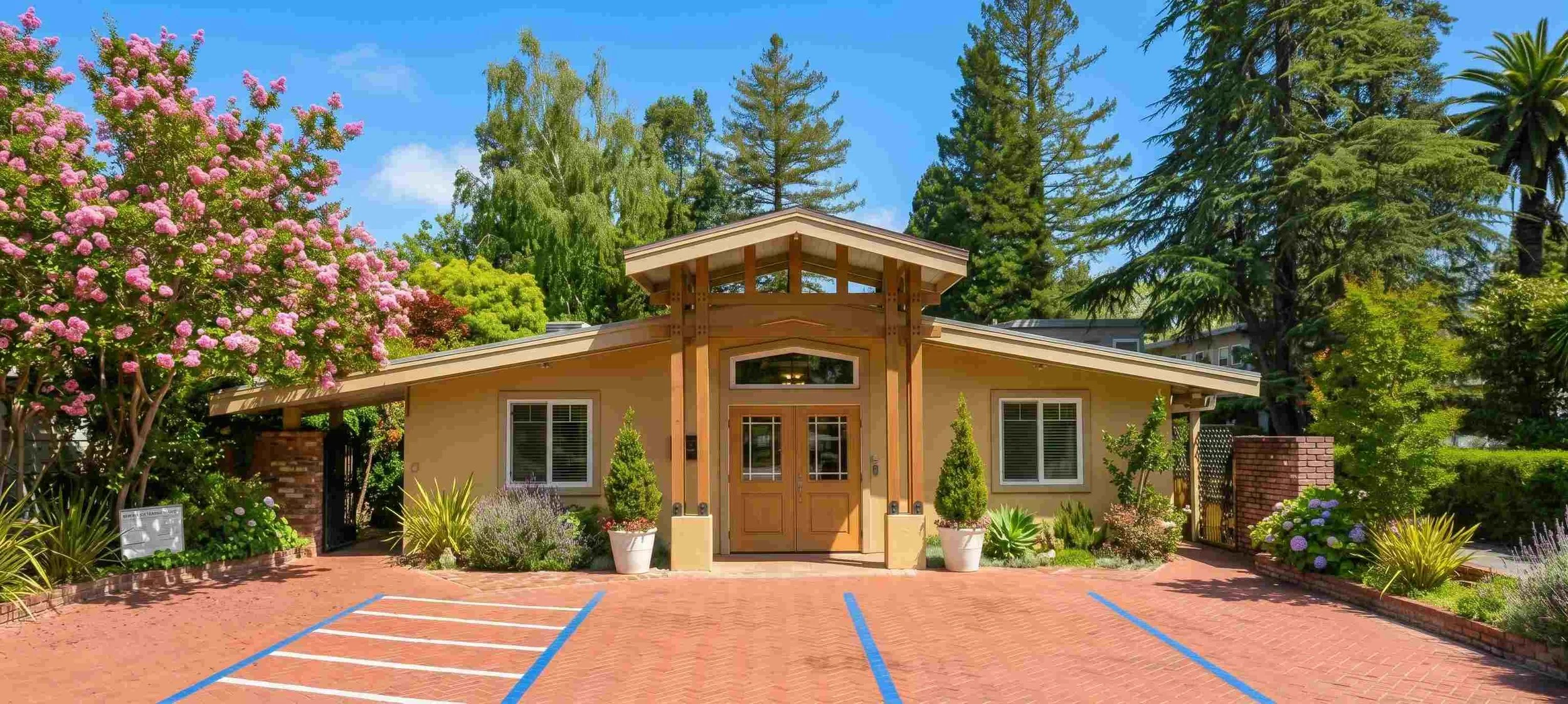
Families searching for assisted living near San Rafael and across Marin County often end up on Miller Avenue in Mill Valley. Marin Terrace is licensed for 49 residents at 297 Miller Ave, Mill Valley, CA 94941, under California license number 216803891, and reached at (415) 388-9526.
That capacity puts it in an unusual middle ground. It is far larger than the six-bed board and care homes scattered through Marin, and far smaller than the multi-building campuses most people picture when they hear the words senior living.
What Kind of Community Is It?
Marin Terrace describes itself as a boutique assisted living and memory care community, locally owned and set beside a creek in Mill Valley. The language on its own site leans on family-style care rather than amenities lists, and the size backs that up.
Forty-nine beds change the arithmetic of daily life. Staff can reasonably know every resident by name, which is difficult above a hundred, while the community is still large enough to support a real activities calendar, a dining room, and coverage around the clock.
The state record shows the license first issued in April 2020, which makes it a relatively young license in a county where many homes have operated for decades. That is worth knowing rather than worrying about, since a newer license often means newer systems rather than less experience.
Which Levels of Care Are Offered?
Three, according to the community: assisted living, memory care, and respite or hospice stays. Having all three under one license matters more than it sounds, because it can mean a resident whose needs change does not automatically face another move.
Assisted Living
This is the level most new residents arrive at. It covers help with the ordinary parts of the day that have become difficult, along with meals, housekeeping, and staff on site at all hours to respond when something is needed.
Memory Care
Marin Terrace describes its memory care as built around a familiar routine, assistance with daily tasks, and activities intended to support emotional, physical, and mental well-being. It notes that someone in the early stages may start in assisted living and move into memory care when the time comes.
That internal path is the practical advantage of a community offering both. A person who already knows the building, the staff, and where the dining room is keeps those anchors through a transition that is otherwise disorienting, and families avoid starting the whole search again under pressure.
Respite and Hospice
Short respite stays give family caregivers a genuine break, and they double as a low-commitment way to find out whether a community suits someone before committing to anything. Hospice support means end-of-life care can happen in a familiar room, with familiar faces, rather than somewhere new.
How Does the Creekside Setting Shape Daily Life?
Mill Valley's landscape does a quiet amount of work here. The property sits creekside with patios and outdoor space, and in a county where the weather cooperates most of the year, outdoor areas function as extra living room rather than as decoration.
For residents with dementia, that access matters in a specific way. Time outside, daylight, and a short walk in secure surroundings are part of how routines hold together, and a community without usable outdoor space has to work much harder to provide the same thing.
It also changes what visiting feels like for everyone involved. Families can sit outside with a parent instead of perching in a corridor or a shared lounge, which tends to make visits longer and considerably easier, particularly when grandchildren come along and need somewhere to move around.
How Does Medical Care Work in a Community This Size?
Assisted living is not a medical facility, and that distinction surprises families more often than it should. Staff assist with daily living and coordinate care, while diagnosis, prescriptions, and treatment decisions stay entirely with the resident's own doctors, exactly as they did at home.
That means appointments continue exactly as before, and the logistics land on the family unless another arrangement is made. Transport, parking, waiting rooms, and a half-day off work add up quickly when several specialists are involved and each one wants to be seen twice a year.
Bringing the physician to the building removes most of that burden. A doctor who visits residents in their community can handle routine reviews, ongoing monitoring, and the small problems that otherwise turn into emergency room visits, without anyone having to get into a car.
What Is the Mill Valley and Marin County Area Like?
Mill Valley sits in southern Marin County, wrapped in redwoods and hillside, with Miller Avenue running as its main artery through town. It is a walkable, low-rise place rather than a suburban grid, which suits residents who still like to get out.
The location matters for the people visiting as much as for the people living there. Families spread across Marin, including San Rafael and the towns along the corridor, reach Mill Valley without a long drive, and that proximity is what keeps visits frequent rather than occasional.
Marin County also has a deep supply of medical services, hospice providers, and specialists within a short radius. A resident does not have to leave the county for most of what they need, which keeps continuity intact at exactly the point when care requirements start to grow.
What Should You Ask on a Tour?
Ask the questions that brochures never answer. Any building will look good on a scheduled tour, so the genuinely useful information comes from what staff say when they are asked something specific and unrehearsed, and from how comfortable they seem answering it. Worth raising before you leave:
How many caregivers are on the floor during the day, the evening, and overnight?
What is included in the monthly rate, and what triggers an increase in the level of care fee?
How is the move from assisted living into memory care decided, and who is involved?
What happens if a resident falls, and who responds first?
How long have the current caregivers worked here?
Can we visit again unannounced at dinner time?
Then come back at a completely different hour. Late afternoon and early evening show a community as it actually runs rather than as it presents itself, and a home that stays relaxed about a second unscheduled visit is telling you something worth hearing.
Taking the Next Step
Start by contacting the community directly rather than through a third-party listing site. The Marin Terrace website carries current details on availability, rates, and tours, and the phone number shown on both the state record and the site itself is (415) 388-9526.
If you are comparing several homes across Marin at once, an advisor can shorten the process considerably. A senior placement agency tours these communities regularly and knows which ones handle increasing needs gracefully, which can save weeks of driving and unanswered phone calls.
Whichever community you choose in the end, the physician's report is the step that has to happen either way. Getting the LIC 602 completed early keeps the paperwork from quietly becoming the reason a move slips by another month while a room sits available.
Sources Used
Boutique Assisted Living & Memory Care in Mill Valley, CA – Marin Terrace
Doctor2me Provider Network | In-Home & Telehealth Care Directory – Doctor2me
Primary Care & Medical Specialists – Doctor2me
Request Form LIC602 – Doctor2me

Written by Sofiia Puhach
September 30, 2026
Explore More Assisted Living Communities in West Hills

Address: 297 Miller Ave, Mill Valley, CA 94941