
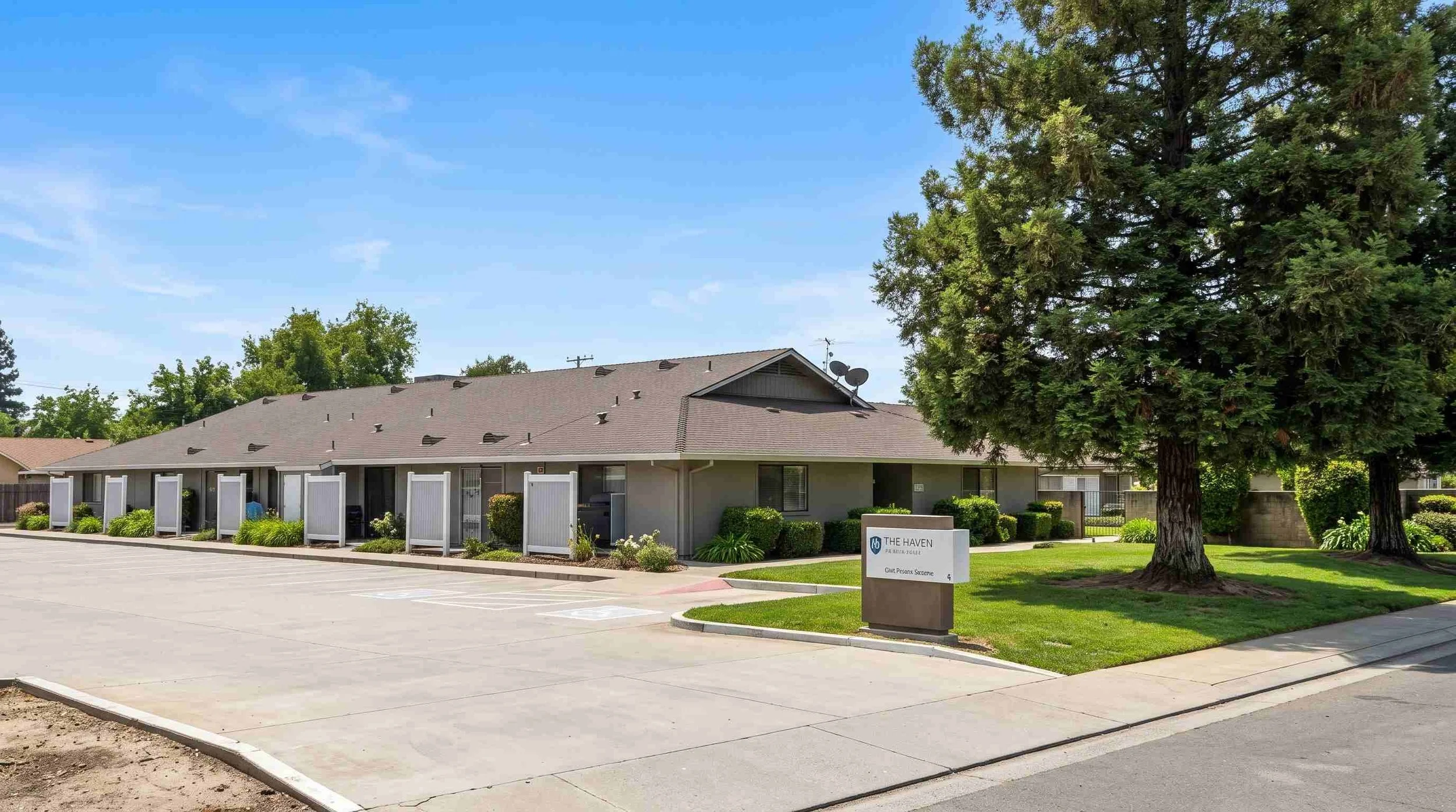
Beth Haven is a licensed assisted living community in Ripon, CA, at 368 S. Wilma Ave., Ripon, CA 95366, in San Joaquin County. It holds California license number 390312809, is licensed for 59 residents, and the state record lists its licensee as Bethany Home Society of San Joaquin County, with Jose Ventura as facility administrator. The phone number on the license record is (209) 599-7670.
A Long-Established Home in a Small Town
The detail that stands out in the state record is the date: Beth Haven has been licensed since January 17, 1990. Thirty-six years under the same licensee is unusual in this industry, where ownership often changes hands every few years and the staff turns over with it.
Longevity is not a guarantee of anything, and you should still visit and ask questions. But it does mean the place has been inspected, re-licensed, and kept open for a very long stretch, and that families in Ripon and Manteca have had decades to form an opinion about it.
Why 59 Beds Is a Useful Number
The size matters too. At 59 licensed beds, this sits in the middle of the range: larger than the six-bed board and care homes scattered through San Joaquin County, and much smaller than the several-hundred-unit communities in Stockton or Modesto.
That middle size tends to come with a particular trade-off. There are usually enough residents for a real dining room, activities, and staff on each shift, while still being small enough that the people who work there know your mother's name without checking a chart.
What Assisted Living at This Level Covers
Assisted living is for people who need help with daily living but not the medical care a nursing home provides. The MedlinePlus health library describes it as a setting for people who may need help with things like dressing, bathing, taking their medicines, and cleaning, while living more independently than in a nursing home.
In practice, that usually means a private or shared room, three meals a day, housekeeping and laundry, help with bathing and dressing on a schedule, medication reminders or administration, and someone awake overnight. Activities, outings, and transport to appointments vary a great deal from one house to another.
Where the Line Is Drawn
What it generally does not cover is skilled nursing: wound care that needs a nurse daily, IV treatment, ventilator care, or intensive rehabilitation. California licenses this type of home to provide care and supervision, not hospital-level treatment.
Ask Beth Haven directly which care levels it accepts and what each level costs, because this is where two homes with identical licenses can differ most. Two-person transfers, insulin injections, a feeding tube, or a resident who wanders are the specific questions worth raising early rather than at move-in.
Medical Care Once Someone Lives There
Residents keep their own doctors, and most medical care continues exactly as it did at home. The difference is logistics: a 59-bed house does not have a physician on staff, so appointments, lab work, and follow-ups still have to be arranged and attended.
That is where house calls save a lot of trouble. Many California care homes work with visiting primary care and specialist clinicians who come to the building, which avoids a car, a wheelchair van, and a waiting room for routine follow-ups and medication reviews.
The Form, and Who Runs the Appointments
The LIC 602A report is the first instance of this, and not the last. The form has to be completed by a physician before a move-in, and the same visit often sorts out the medication list that the home will be working from on day one.
Ask who would be doing the day-to-day medical coordination before you sign anything. Some homes handle appointments, pharmacy deliveries, and calls to the doctor for you; others expect the family to run all of it. Both are legitimate, but they are very different jobs for a daughter who works full time.
Assisted Living, Board and Care, or Memory Care?
These are different settings, and in California several of them share the same licence category, which is where the confusion starts. Families searching for memory care in Ripon, CA often find assisted living homes in the results and cannot tell which is which.
How the Settings Differ
The National Institute on Aging describes board and care homes as small private facilities, also called residential care facilities or group homes, that usually have 20 or fewer residents, and nursing homes as skilled nursing facilities whose services focus more on medical care than most assisted living facilities.
At 59 beds, Beth Haven is not a board and care home by that description, and it is not a skilled nursing facility. It sits in the assisted living band: care and supervision, meals, help with daily tasks, and medication support.
Where Dementia Fits
Memory care is not a separate California licence but an added capability, and a home must be approved to serve residents with dementia who cannot leave on their own. If dementia is part of the picture, ask specifically whether the home has a dementia care waiver, how the building is secured, and what the staffing ratio is in the evening.
Ask about the point at which the home would say it can no longer manage someone. Hearing that answer before you move in is far better than hearing it during a crisis a year later, and a straight answer is a good sign in itself.
What to Ask on the Tour
Visit in person, more than once, and at different times of day. The National Institute on Aging suggests calling and visiting several facilities, asking how many people live there and what it costs, and thinking about which features matter most to the person moving in, such as meals, activities, a religious connection, or staying close enough for family to visit easily.
Go once by appointment and once unannounced, ideally around a mealtime or in the early evening. Mealtimes show you the food, the pace, and how much help residents actually get. Evenings show you staffing when the office is closed.
Questions Worth Writing Down
What is included in the monthly rate, and what is billed separately as a care level?
How much notice do you give before raising the rate or the care level?
How many care staff are on duty at 3 p.m., at 9 p.m., and at 3 a.m.?
Who covers a shift when someone calls in sick?
What happens if my mother falls, and who decides whether to call an ambulance?
Which visiting clinicians, pharmacies, and labs do you already work with?
Under what circumstances would you ask a resident to leave?
May I see the most recent state inspection report?
The last question is worth asking out loud. California inspection reports for licensed care homes are public, and a home that hands them over without flinching is telling you something useful about how it runs.
Ripon and the Area Around It
Ripon is a small town in San Joaquin County, between Modesto and Stockton, and that location is part of the appeal for families in the area. South Wilma Avenue sits in the residential part of town rather than on a commercial strip.
The practical advantage is distance. Manteca is a few minutes north, Modesto is a short drive south, and Stockton is up Highway 99, which puts hospitals, specialists, and adult children within an easy visit rather than a day trip.
What the Location Means Day to Day
For a resident, small-town placement often means quieter streets, a walkable block, and visitors who actually come because the drive is not a chore. Frequency of visits is one of the better predictors of how a move goes, and geography drives frequency more than anyone expects.
The trade-off is choice. A town the size of Ripon has few licensed homes, so if this one does not fit, the realistic alternatives are in Manteca, Modesto, or Stockton, and the search widens to assisted living across San Joaquin County.
Your Next Step
Call (209) 599-7670 to ask about availability and current rates, then book a tour before you compare anything on paper. Availability at a 59-bed home changes week to week, and a waiting list is common.
If you are comparing several homes across San Joaquin County and do not know where to start, a senior placement agency can shortlist licensed options against the care level and budget you actually have, which saves a great deal of driving.
Before Move-In Day
Before move-in day, get the LIC 602A sorted early. It is the item that most often delays a move, because it needs a physician's examination and signature rather than a phone call, and the home cannot admit anyone without it.
Verify everything here with the facility before you decide. License status, capacity, ownership, and rates all change, and the state record is a snapshot rather than a promise.
Sources Used
Assisted Living – MedlinePlus, National Library of Medicine (2023)
How To Choose a Nursing Home or Other Long-Term Care Facility – National Institute on Aging (2023)
Long-Term Care Facilities: Assisted Living, Nursing Homes, and Other Residential Care – National Institute on Aging (2023)

Written by Sofiia Puhach
November 27, 2026
Explore More Assisted Living Communities

Address: 368 S. Wilma Ave., Ripon, CA 95366