
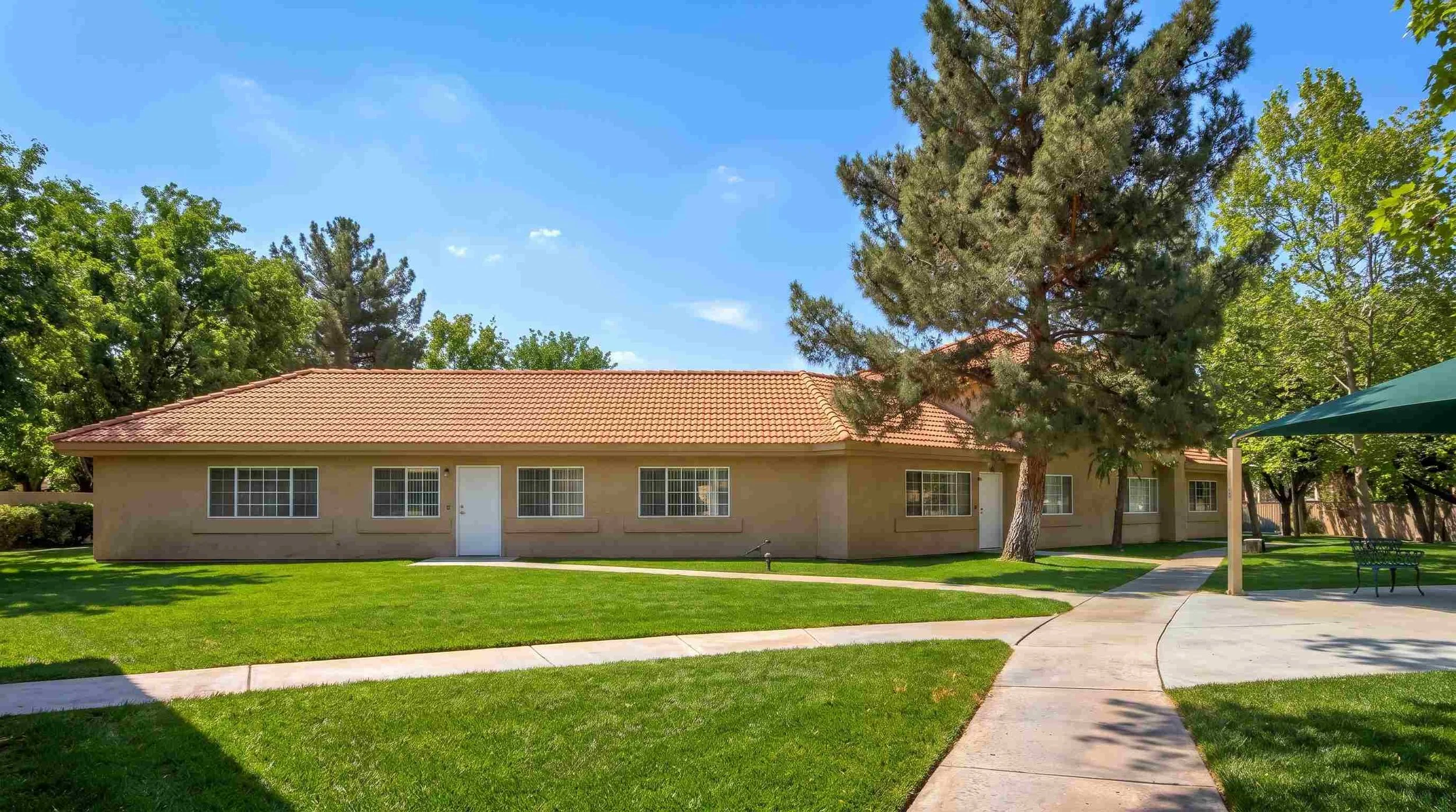
Desert Hills Memory Care Center sits at 25818 Columbia St. in Hemet, licensed by the state under license number 331880722. For families comparing memory care in Hemet, CA, the detail that shapes everything else here is what the building does not do: it runs no assisted living wing at all.
What Kind of Community Is Desert Hills?
It is a residential care facility for the elderly that offers two things only: memory care and respite care. There is no independent living, no assisted living side, and no tiered campus behind it.
The license record places it in Riverside County with a capacity of 58 residents, first licensed in January 2020, and the licensee listed is Cascade Lvg Grp Hemet together with KRE Tiger Desert Hills OP. The administrator of record is Chantelle Hudson, and the phone number is 951-652-1837.
Fifty-eight beds puts it in an awkward and useful middle. It is far bigger than a six-bed board and care home in a Hemet neighborhood, and far smaller than the multi-building communities that advertise a continuum of care. Everything in the next few sections follows from that number and from the single-purpose license.
Why a Memory-Care-Only Building Changes Things
Because nothing in the layout has to serve two populations at once. In a community that runs assisted living and memory care side by side, the secure area is usually a wing, with its own door code, grafted onto a building designed for people who come and go freely.
Here the whole building is the secure area. The facility describes an intimate design intended to benefit people with memory loss, a welcoming lobby, common spaces for resting or socializing, and a spacious, secure outdoor courtyard used for activities, visits and events. An open kitchen sits at the center as the hub of the community.
What That Buys
Freedom of movement inside a boundary. The community says its design lets residents move about freely, safely and easily while staying close enough for staff to keep an eye on well-being, and that it is small enough for care teams to get to know residents. For someone who paces, that is a materially different day than being redirected away from a coded door.
What It Costs You
Flexibility later. A person who arrives with early memory loss and stays for years will not transfer to an assisted living apartment in the same building, because there is not one, and if care needs shift toward skilled nursing the move is to another address entirely. That is the trade-off to weigh at the start, not at the point it becomes urgent.
What Does the Mosaic Program Actually Mean?
It is the community's own named memory care program, and the facility says it is based on Teepa Snow's Positive Approach to Care. The stated idea is to honor the pieces that make up a resident's life and meet them where they are in the illness rather than correcting them back toward the present.
That philosophy has a practical shape. A morning begins with an associate greeting the resident and helping them start the day, followed by planned activities: a drive through the San Jacinto Valley, a group puzzle, a cooking or baking demonstration, an art project, a community film, or a nap.
If the approach sounds abstract, the everyday version of it is worth reading about separately, because it is the single habit that changes most for visiting families: why correcting someone with dementia backfires covers the same ground in plain terms.
What Is the Respite Care Option For?
Short stays, so a family caregiver can stop for a while. Desert Hills lists respite care alongside memory care, describing it as short-term stays for people caring for an aging relatives who are going on vacation or who simply need a break.
That is the standard definition. The National Institute on Aging (2023) describes respite care as short-term relief for primary caregivers, giving them time to rest, travel or spend time with other family and friends, and notes that the care may last anywhere from a few hours to several weeks at a time.
Why Families Use It as a Trial
A respite stay in a memory care community is also the closest thing to a test drive that exists. You see how the person settles, how staff handle a difficult evening, and whether the building suits them, without signing a long-term agreement first. NIA notes that most private health plans do not cover respite costs, though some long-term care policies do, so ask what the stay will cost before booking it.
Which Stage of Memory Loss Fits Here?
A secure memory care building is built around the problems of the middle stretch of the illness. The NIA (2023) lists wandering and getting lost, trouble handling money and paying bills, repeating questions, taking longer over ordinary daily tasks, and changes in personality and behavior among the problems that appear in mild Alzheimer's disease.
As the disease moves into its moderate stage, NIA describes damage spreading to the parts of the brain that handle language, reasoning, conscious thought and sensory processing. That is the stage at which a familiar house stops being a safe one and a courtyard with a boundary starts to matter more than an extra bedroom.
NIA also describes the severe stage, in which people cannot communicate and are completely dependent on others for care. A 58-bed memory care community may or may not be the right place at that point, and the honest question to put to the administrator is where their current residents sit on that range and what triggers a move elsewhere.
How Do Families Pay for Memory Care Here?
Mostly privately, and the community does not publish a rate. Desert Hills says monthly rent varies with the level of care and support required, and directs families to contact them for pricing, so any number you see quoted elsewhere is not theirs.
For orientation rather than a quote, NCOA (2026) puts the national average cost of assisted living above $6,000 a month, running closer to $10,000 in some states, and memory care generally sits above assisted living because of the staffing. NCOA lists home equity, a reverse mortgage, a home equity loan and a home equity line of credit among the ways families cover it.
Two cautions belong beside that. California memory care in a licensed RCFE is not a Medicare benefit, and what Medi-Cal will and will not pay toward residential care depends on the program and the person, which is a question for a county eligibility worker rather than for a tour guide. Ask the community directly what the base rate covers, what counts as an extra, and how a care-level increase is priced.
What Happens About Medical Care?
The community provides care and supervision, not medical treatment, which means the resident keeps their own doctor. In California an RCFE is licensed for care and supervision; diagnosis, prescriptions and clinical review stay with the physician.
That becomes a transport question quickly. Moving someone with moderate dementia to a clinic for a twenty-minute review is disruptive out of proportion to the appointment, which is why many Hemet families arrange for a physician to see the resident at the community instead, including the examinations the LIC 602A and its annual updates require.
Worth asking on the tour: which physicians already visit the building, who calls the doctor when something changes at 2 a.m., and how medication support is documented. Those three answers tell you more about day-to-day medical coverage than any brochure page.
What Is the Area Around Columbia Street Like?
Quiet and residential. The community describes itself as nestled in a quiet neighborhood with landscaped grounds in a Southwestern style, which matches the Columbia Street address: single-story housing rather than a commercial strip.
Hemet sits in Riverside County's San Jacinto Valley, and the places the community names as nearby are the valley's own landmarks: the Western Science Center on Searl Parkway, the Hemet Museum on West Florida Avenue, the Ramona Bowl Amphitheatre on Ramona Bowl Road, and the Estudillo Mansion over in San Jacinto. Those are also the destinations behind the scenic drives on the activity calendar.
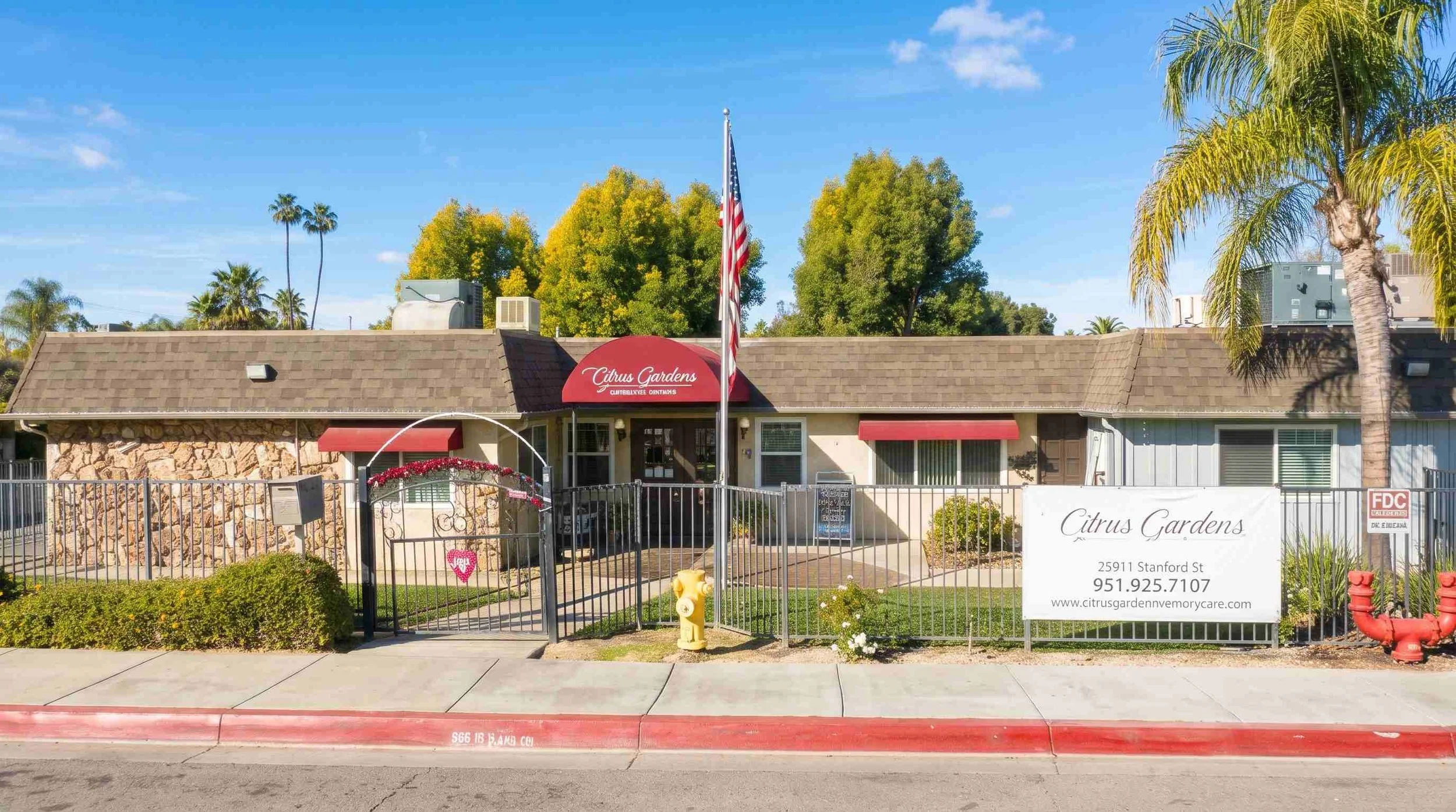
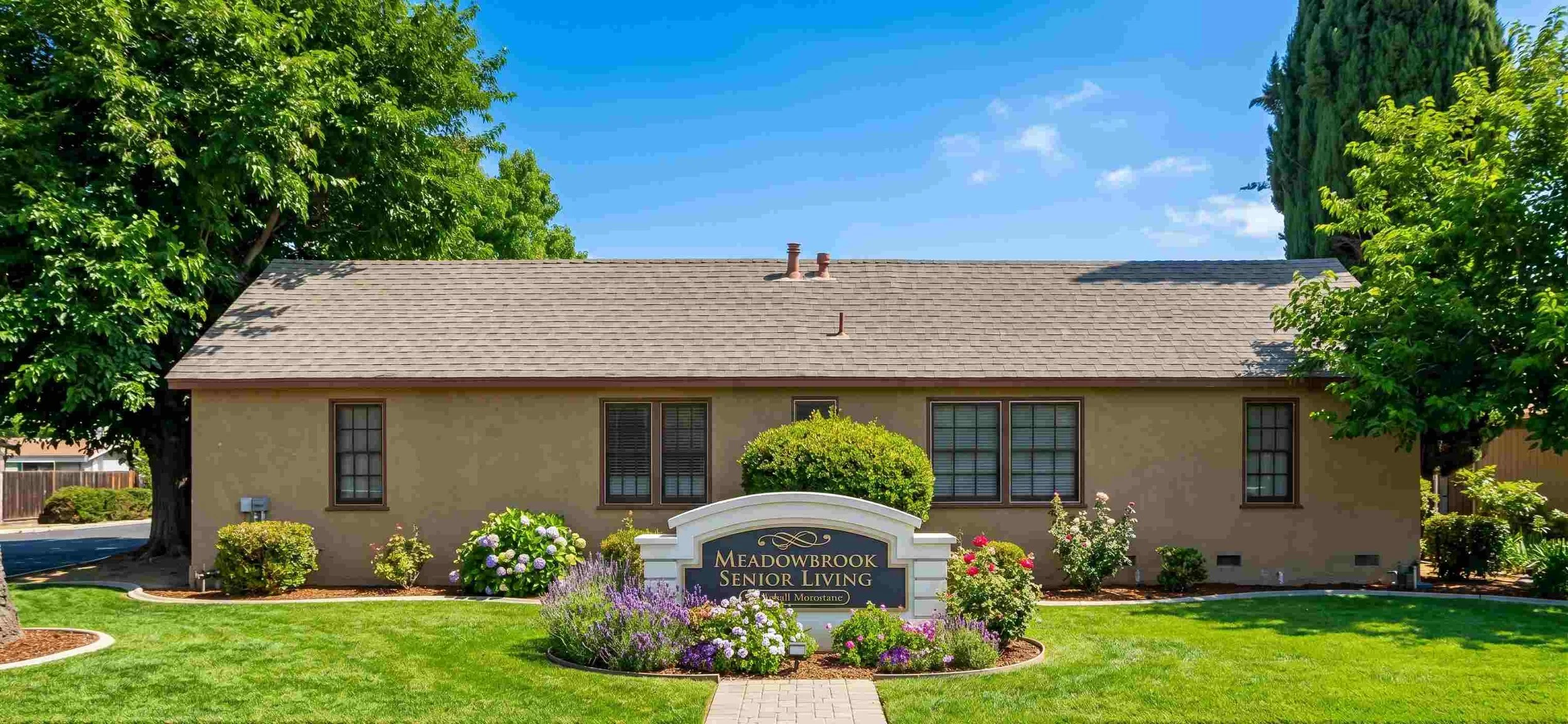
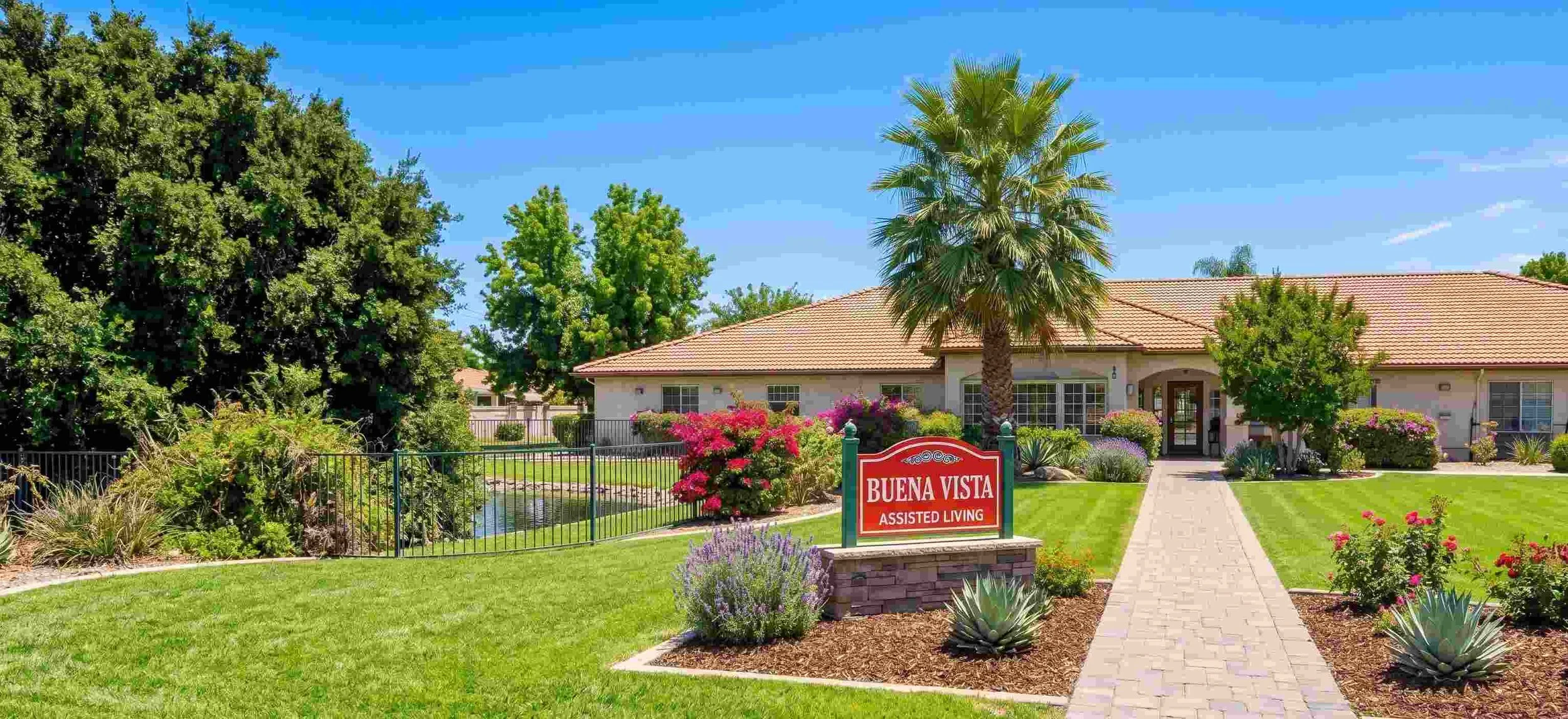
For families weighing Hemet addresses against each other, there are other licensed options in the same city with different layouts and different license types. Citrus Gardens runs cottages around a courtyard with assisted living and memory care side by side, Meadowbrook Assisted Living is a smaller operation, and Buena Vista Assisted Living is another Hemet address worth putting on the same shortlist.
How Do You Judge It on a Tour?
By watching the parts nobody scripts. The building will look its best; the residents and the staff will be whatever they are.
What to Look At
Where residents actually are at 3 p.m.: the courtyard, the common rooms, or their own rooms
Whether the open kitchen is in use or just on display
How staff speak to someone who is repeating a question for the fourth time
Whether the secure courtyard door is genuinely usable by residents, or kept shut
Smell, noise level, and how the building sounds after dinner rather than at 11 a.m.
Whether the people you meet on the tour are the people who work the floor
What to Ask
What is the staffing ratio overnight, not just during the day
How long have the current care partners worked here
What specifically triggers a notice that the community can no longer meet a resident's needs
What does the base monthly rate include, and what is billed on top of it
How is the Mosaic program delivered on a short-staffed day
Which physicians visit, and who handles the LIC 602A updates
Ask for the last state inspection report and read it in the parking lot before you leave. A community that hands it over without a pause is telling you something useful on its own.
The Next Step
If Desert Hills is on the shortlist, call 951-652-1837 to arrange a tour, and read the current details on the community's own site before you go, since availability and pricing change faster than any overview can.
If the shortlist itself is the problem, a placement agency does this comparison for a living and knows which Riverside County buildings currently have a bed. Assisted Living Solutions works across Riverside, San Diego and Ventura counties on assisted living, board and care and memory care placement, including for families whose relative has an Alzheimer's or dementia diagnosis, and other placement agencies in the network cover other parts of the state.
Whichever building wins, the LIC 602A has to be signed before the move-in date, not after it. That form is the one item on the list that depends on a physician's calendar rather than on yours, so it is the one to start first.
Sources Used
Alzheimer's Disease Fact Sheet – National Institute on Aging (2023)
Desert Hills Memory Care Center Dementia Care in Hemet, CA – Cascade Living Group
How to Pay for Assisted Living: 10 Creative Ways to Cover Your Costs – National Council on Aging (2026)
What Is Respite Care? – National Institute on Aging (2023)

Written by Sofiia Puhach
November 25, 2026
Explore More Assisted Living Communities

Address: 25818 Columbia St., Hemet, CA 92544