
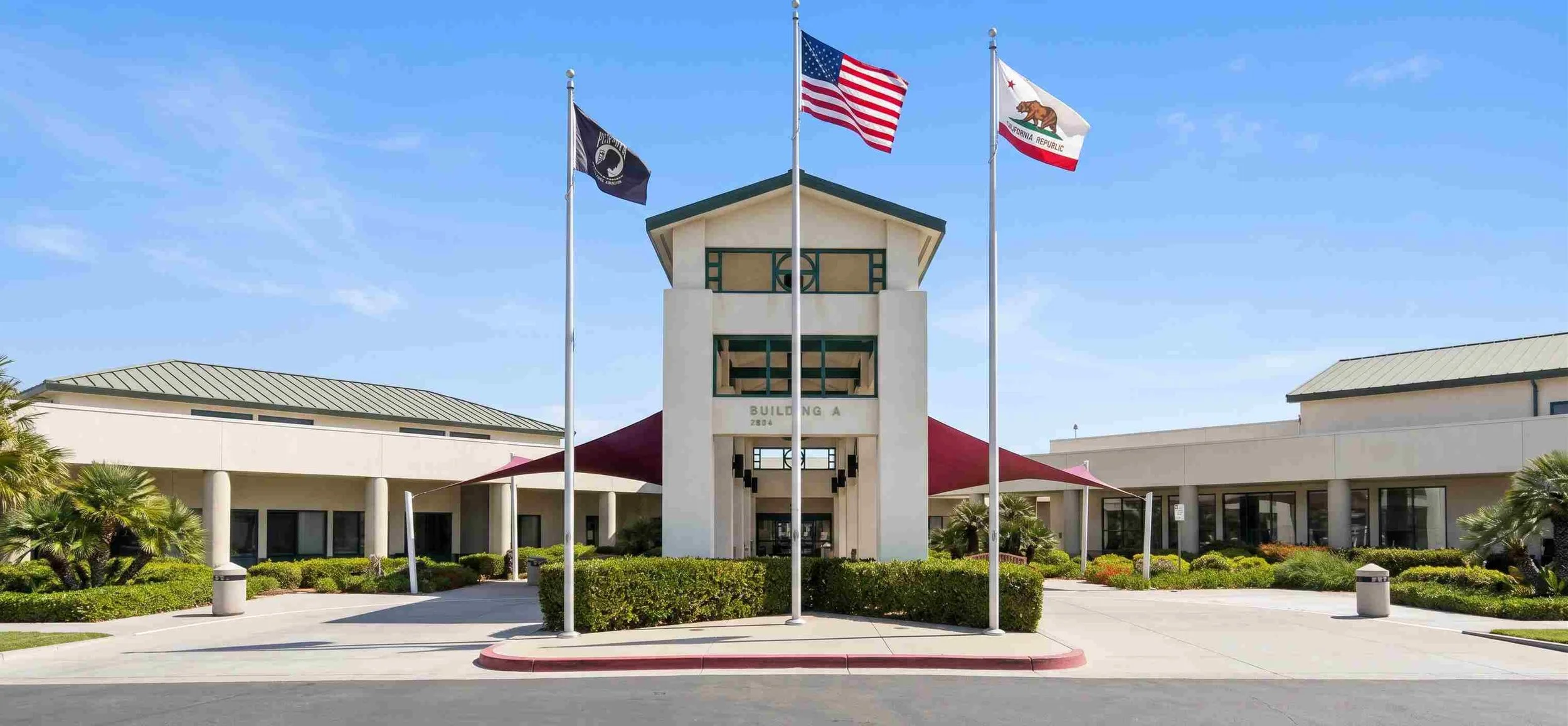
Veterans Home Chula Vista sits at 700 East Naples Court, Chula Vista, CA 91911, and its residential care license number is 374601005. It is one of eight state veterans homes run by California, and the only one in the coastal, urban southern part of the state.
The unusual part is the layout. Three different levels of care sit on the same 30-acre site, from fully independent living through to round-the-clock nursing, so a veteran whose needs change can move between them without changing address or leaving behind the people they eat lunch with.
What Kind of Home Is This?
It is a state-run long-term care home for veterans, not a private assisted living business. The National Association of State Veterans Homes describes it as a 297-bed facility completed in May 2000, offering domiciliary independent living, licensed residential care and skilled nursing care on one campus.
That scale changes the feel of the place. A small board and care home holds six residents in a converted house, and our guide to small group homes covers how different that experience is. A 297-bed campus with 365 full-time staff runs more like a small community with its own clinic.
The site sits off Telegraph Canyon Road, directly next to Sharp Chula Vista Medical Center, with views toward the Pacific and downtown San Diego. For families in San Diego County, that is a short drive rather than a trip up the state.
Who Can Move In?
Eligibility is set by the state, not by the home. A veteran has to be a California resident, aged 55 or older, or younger if disabled, and must have served honorably. Those three conditions are the gate; everything else is paperwork and availability.
The age rule catches people out in both directions. Fifty-five is young for long-term care, which means the domiciliary section often houses people who are independent and simply want the security of the campus. The disability exception means a much younger veteran can qualify when the need is real.
The Three Levels of Care, Explained
The names are bureaucratic and the differences are not. Which tier someone lands in decides how much privacy they keep, how much help arrives each morning, and what the monthly cost looks like. Here is what each one means in practice on this campus, and roughly how many beds sits behind each label.
Domiciliary, or Independent Living
Domiciliary care is the independent tier, and it is the largest residential section here with 84 beds. Residents live on their own schedule, handle their own routines, and use the campus services when they want them. Nobody is checking on medication or helping with a shower.
Licensed Residential Care
This is the assisted living tier, licensed by the state as a Residential Care Facility for the Elderly. Staff help with bathing, dressing, medication reminders and meals. It is for someone who needs a hand through the day but does not need nursing care.
Skilled Nursing Care
Skilled nursing is the medical tier, and with 180 beds it is the largest part of the home. Licensed nurses are on duty around the clock, and care here covers wound management, complex medication schedules and conditions that need daily clinical attention rather than help with chores.
What the Residential Care License Tells You
A license number is more useful than a brochure, because it opens a public record. This home's residential care license, number 374601005, has been active since 29 August 2000 and allows a licensed capacity of 55 residents in that section.
California inspects licensed facilities and publishes what it finds. The county's Choose Well San Diego directory, which pulls its data from the state's Community Care Licensing Division, lists the last state inspection of this home as 16 April 2026. Any family touring a licensed facility can ask to see the inspection history.
Two questions are worth asking on a tour, whatever the record shows. Ask what happens when a resident's needs grow beyond the current level of care, and ask how a move between the levels is handled in practice. The answers vary more than the paperwork suggests.
Medical Care on the Campus
Doctors are employed directly by the home rather than visiting from outside. Physicians provide care in both the licensed outpatient clinic and the inpatient skilled nursing section, which means routine appointments happen without anyone leaving the grounds, and without a family member taking a morning off to drive.
Acute care is handled off site, and the arrangement is unusually convenient. Serious episodes go to the U.S. Department of Veterans Affairs Medical Center in La Jolla or to Sharp Chula Vista Medical Center, the hospital immediately next door to the campus.
Before a move, when the LIC 602A is due and the clinic is still someone else's, a physician who travels to the patient can carry out the exam at home. Our guide to home-based primary care explains how that works for a parent who rarely leaves the house.
The Neighborhood Around the Home
Chula Vista sits between San Diego and the border, and this corner of it is residential and quiet. The home occupies a hillside site off Telegraph Canyon Road, which is one of the main east-west routes through the city, so visitors arrive without crossing town.
Having Sharp Chula Vista Medical Center as a direct neighbor matters more than the view. An emergency transfer is measured in minutes, and a family member can visit the hospital and the home on the same afternoon without moving the car.
The coastal position is the reason veterans apply here from across the state. It is the only California veterans home in coastal, urban Southern California, which concentrates demand from a very large population into one campus. Anyone considering it should ask about current availability early rather than late.
If This Home Is Not the Right Fit
Eligibility rules, waiting lists and timing all knock people out of this option, and none of that is a dead end. The county has a large number of licensed residential care homes, from six-bed houses to large communities, and the right one usually depends on budget and the level of help needed.
Working through those options is a job in itself. A placement service covering San Diego County can narrow the list, arrange tours and handle the comparison work, which saves families weeks of phone calls at a point when they have none to spare.
Money shapes the decision too. If the plan involves selling a family home to pay for care, our guide to capital gains on the sale of a primary residence covers the timing question that comes with it. Other placement agencies are listed by specialty if you want to compare approaches first.
Contact and Verification
The home's address is 700 East Naples Court, Chula Vista, CA 91911, and its main telephone number is (619) 482-6010. The residential care license on file with the state is number 374601005, first issued on 29 August 2000, with a licensed capacity of 55 in that section.
Confirm everything before you act on it. Availability, admission timing and the services offered in each section change, and the state licensing record is the one source that updates on a schedule. The facility itself is the right place to ask about current openings.
Sources Used
Veterans Home Chula Vista – Choose Well San Diego, using California Community Care Licensing Division data (2026)
Veterans Home of California – Chula Vista – National Association of State Veterans Homes

Written by Sofiia Puhach
November 5, 2026
Explore More Assisted Living Communities

Address: 700 East Naples Court, Chula Vista, CA 91911